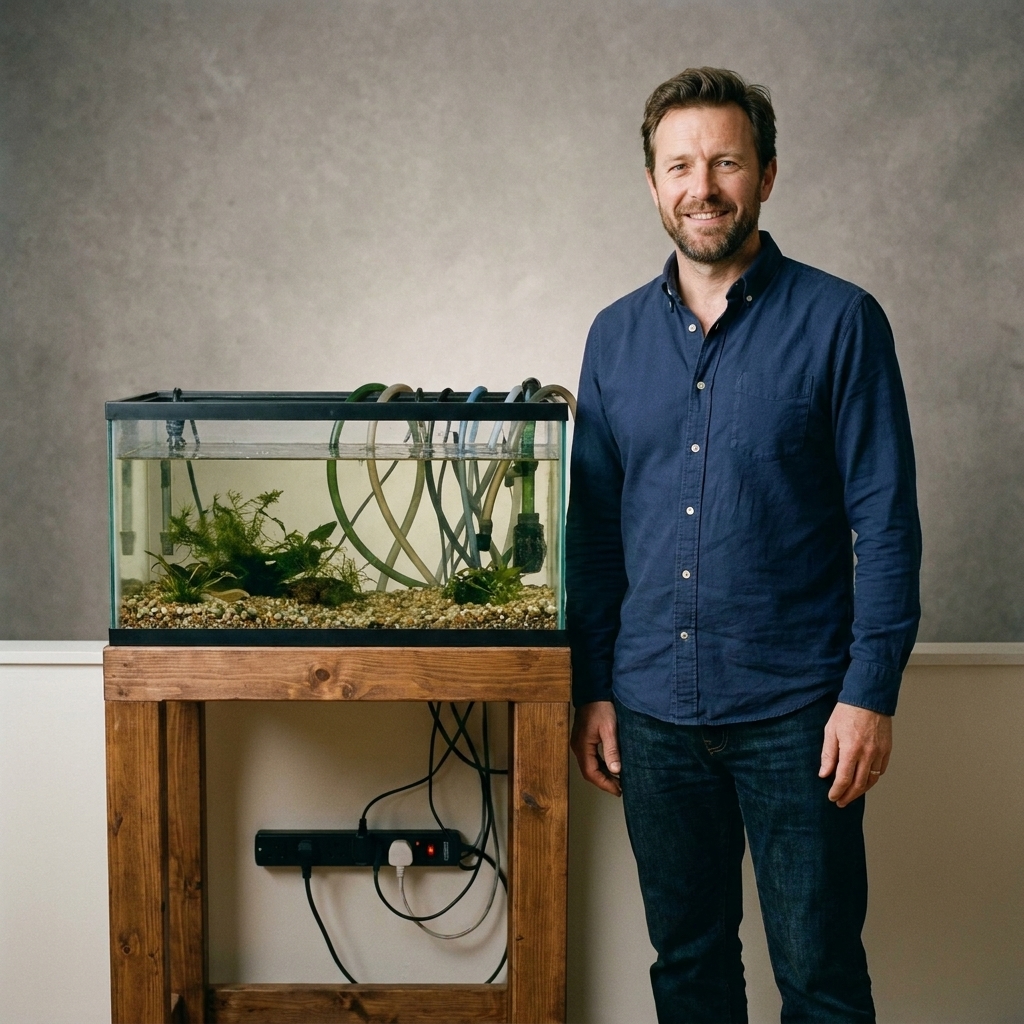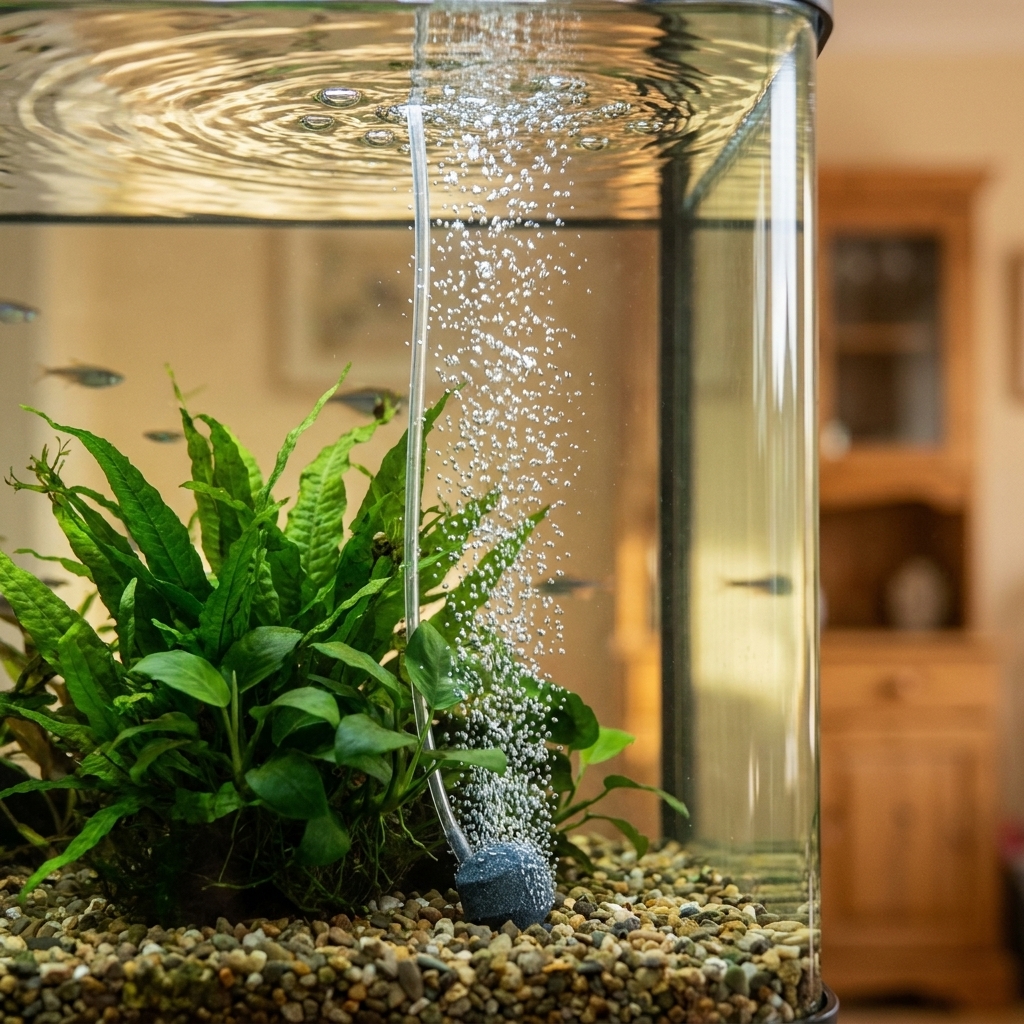
Do you really need an air pump or air stone? A practical, evidence-based look at oxygenation, surface movement, filtration flow, planted tank CO2 tradeoffs, ...
Freshwater aquarium guidance
Sponge vs. HOB vs. Canister Filters
A practical, experience-based comparison of sponge, hang-on-back, and canister filters. Learn how each works, what they’re best at, and which one fits your tank size, fish, and maintenance style.

Written by
Oliver Bennett
Oliver Bennett is a lifelong aquarist with over 15 years of experience in freshwater tank setup, aquascaping, and fish health. Through TankRoot, he shares his passion for creating balanced underwater ecosystems, helping hobbyists of all levels build thriving, beautiful homes for their fish.
Published: October 17, 2026
•
Updated: October 17, 2026
When I was ten, I kept a carnival goldfish in a tiny bowl with no filter and a lot of good intentions. The water turned cloudy, the fish struggled, and I learned the hard way that a filter is not just a box that “cleans” water. A filter is a life support system that moves water, grows beneficial bacteria, traps debris, and can improve oxygenation by keeping water circulating and the surface gently agitated.
Today, the three filter types I see freshwater keepers wrestle with most are sponge filters, hang-on-back (HOB) filters, and canister filters. All three can keep fish healthy when they’re sized correctly and maintained well. The best choice depends on your tank size, stocking, plants, noise tolerance, and how hands-on you want to be.

What a filter does
Most filter marketing focuses on “gallons per hour” and fancy cartridges. The real work happens in three jobs:
- Mechanical filtration: physically catches gunk like fish waste, uneaten food, plant debris, and mulm (the soft brown sludge that collects in established tanks).
- Biological filtration: provides surface area for beneficial bacteria that convert toxic ammonia to nitrite, then to nitrate (the nitrogen cycle).
- Chemical filtration (optional): uses media like activated carbon to remove some dissolved compounds. Useful sometimes, not mandatory for most healthy planted community tanks.
The “best” filter is usually the one that provides stable biological filtration with appropriate flow for your fish, and that you will actually maintain consistently.
Quick comparison
| Filter type | Best for | Main strengths | Main tradeoffs |
|---|---|---|---|
| Sponge | Fry and shrimp, quarantine tanks, small to mid tanks, gentle-flow setups | Super safe intake, great bio, inexpensive, simple | Needs an air pump, weaker mechanical polishing, visible in-tank |
| HOB | Most beginner community tanks, budget upgrades, easy maintenance | Good mechanical + bio, easy access, affordable | Intake can be shrimp-unfriendly without a prefilter, can be noisy, limited media volume |
| Canister | Medium to large tanks, heavily stocked tanks, planted aquascapes needing clear water | Huge media capacity, strong mechanical filtration, customizable, quiet when set up well | Higher cost, more setup, maintenance is less frequent but more involved |
Sponge filters
How they work
A sponge filter is powered by an air pump. Rising bubbles pull water through a sponge, where debris gets trapped and beneficial bacteria colonize the pores. Think of sponge filtration as stable bio filtration plus coarse mechanical capture, with very gentle flow.

Where sponge filters shine
- Shrimp tanks: no dangerous intake, baby shrimp can graze on the sponge biofilm.
- Fry grow-out and breeding tanks: gentle flow plus stable bacteria.
- Quarantine and hospital tanks: easy to disinfect or replace, and you can keep a sponge “seasoning” in your main tank to instantly cycle a QT tank.
- Betta and low-flow fish: helpful when you want circulation without blasting the tank.
Limitations to understand
- Mechanical filtration is modest. Sponges trap debris, but they do not “polish” water like fine floss in a canister can.
- They take up in-tank space and are visible.
- Air pump noise can be the real sound issue, not the sponge itself.
Maintenance basics
Rinse the sponge in a bucket of old tank water during water changes. Squeeze gently until it runs mostly clean. Do not rinse under tap water if your tap contains chlorine or chloramine, because that can damage beneficial bacteria. If you only have tap water available, treat it with a dechlorinator first, then rinse.
HOB filters
How they work
A HOB hangs on the rim of the tank. An impeller pulls water up an intake tube, through media, and returns it as a spillway. This can add oxygen by keeping the surface moving, and that forgiving surface agitation is one reason HOBs work well for newer hobbyists.

Where HOB filters shine
- Beginner community tanks: strong all-around performance for the price.
- Easy routine maintenance: lift the lid, rinse media, done.
- Flexible customization: many HOBs improve dramatically when you replace disposable cartridges with sponge and bio media.
Common problems
- Noisy splashing: keep the water level high so the return does not fall loudly. Some HOBs also accept a small sponge baffle on the outflow.
- Shrimp and fry getting pulled in: add a sponge prefilter over the intake. It also increases bio filtration.
- Cartridge culture: many HOBs ship with carbon cartridges meant to be replaced frequently. If that cartridge is your main bio surface area, replacing it can remove a big chunk of your beneficial bacteria and trigger a mini-cycle. A better approach is to run a coarse sponge plus bio rings and only use carbon when you have a specific reason.
Maintenance basics
Every 2 to 4 weeks, rinse the sponge or floss in old tank water and clean the impeller well. Most HOB issues trace back to a dirty impeller or clogged intake, not “bad bacteria.”
Canister filters
How they work
A canister filter sits below the tank. It pulls water down through intake tubing, pushes it through multiple media baskets, then returns it through an output nozzle or spray bar. Think of it like a large, sealed filtration workspace you can customize.
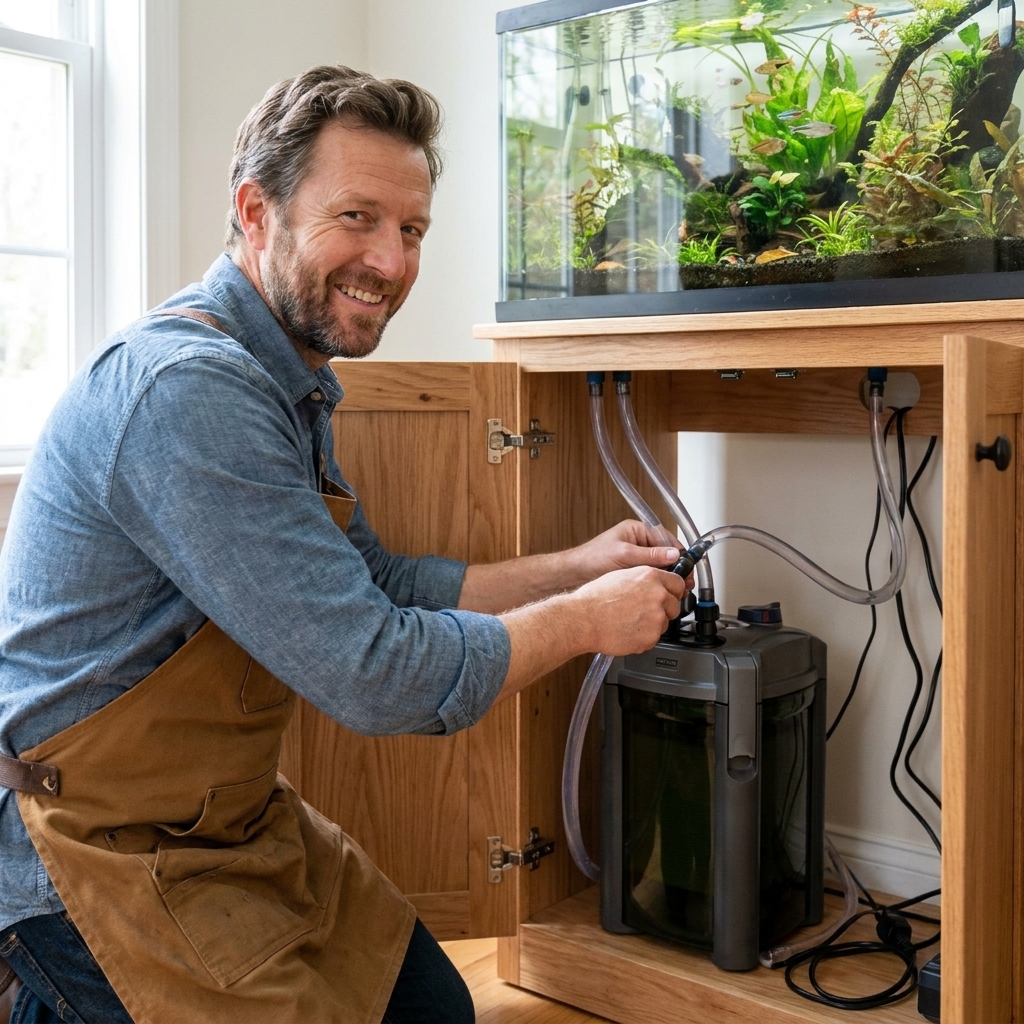
Where canister filters shine
- Clear water and heavy mechanical filtration: you can stack coarse-to-fine media for excellent debris capture.
- High bio media capacity: more stable bacteria colony, especially useful in larger or more heavily stocked tanks.
- Planted aquascapes: easy to run a spray bar for gentle, even flow across the tank, and the clean look keeps equipment out of the display.
- Quiet operation: a properly primed canister with no trapped air is often quieter than many HOB setups.
Tradeoffs to be honest about
- Upfront cost is higher, plus tubing and media.
- Maintenance is less frequent but more involved. When canister filters get neglected, flow drops and performance can fall off a cliff.
- Flow can be too strong for slow-water fish unless you use a spray bar, lily pipes, or baffles.
Maintenance basics
As a starting point, many tanks do well with canister maintenance every 4 to 8 weeks, but it varies a lot with stocking, prefiltration, and plant load. Clean mechanical media first, and avoid over-cleaning bio media. The goal is restoring flow, not sterilizing the filter.
Pick the right filter
By tank size
- 5 to 10 gallons: sponge or a small HOB with a sponge prefilter. Canister filters are usually overkill here, though nano canisters can be great when you want a clean look.
- 10 to 29 gallons: HOB is a common sweet spot. Sponge works well for shrimp, bettas, fry, and calmer community setups. Canister is great if you want very clear water and hidden equipment.
- 29 to 75 gallons: in my experience, a canister filter becomes more attractive for media volume and stability. A strong HOB can still work on many 29 to 40 gallon tanks, especially moderately stocked communities.
- 75 gallons and up: canister filters are often the most practical single-filter solution. Many keepers also run two filters for redundancy.
By fish and livestock
- Bettas, gouramis, long-finned fish: sponge or gentle-flow HOB. Prioritize adjustable flow and calm surface movement.
- Shrimp and nano fish: sponge is the safest. If using HOB or canister, use a sponge intake guard.
- Goldfish: canister filtration (or multiple filters) is usually the most stable path in my experience. Goldfish are messy, and you will appreciate high mechanical capacity.
- Cichlids (especially larger species): canister filters shine for mechanical load and bio stability.
By plants
- Heavily planted, CO2-injected tanks: canister filtration for steady circulation and customizable flow patterns.
- Low-tech planted tanks: any filter can work. Choose based on stocking and how much debris you want removed.
By your maintenance style
- “I like quick weekly routines”: HOB is easy to access and rinse.
- “I prefer fewer, longer maintenance sessions”: canister filters, as long as you commit to periodic deep cleaning.
- “I want the simplest, most forgiving setup”: sponge filters, especially for smaller tanks and quarantine setups.
Filter sizing basics
Flow rate matters, but the number on the box is not the whole story. Manufacturer GPH is usually measured with an empty filter, clean media, and minimal head height. In real life, media, gunk, and hose length reduce flow.
- Adjustable flow helps: it is easier to oversize a filter and tame the output than to run a weak filter at its limit.
- Prefilters buy you time: an intake sponge keeps the main filter from clogging, which keeps real flow closer to what you expect.
- Watch the tank: good circulation is about where debris goes and how fish behave, not just a turnover rule.
Flow myths
You will often see rules like “turn over the tank volume 5 to 10 times per hour.” That can be a helpful starting point, but it is not a universal truth. Stocking, fish behavior, plants, and hardscape all change what flow feels like in the tank.
Instead of chasing a number, look for these signs:
- Good signs: no oily film on the surface, debris gradually moves toward the intake, fish are not fighting the current, and water stays clear between maintenance.
- Bad signs: dead spots where waste piles up, persistent haze, stressed fish that hide from flow, or plants constantly flattened.
Start a new filter safely
The easiest way to hate a new filter is to install it with sterile media, then assume it is instantly doing the biological part of the job.
- Seed it if you can: move a bit of established sponge, bio rings, or even a seasoned intake sponge into the new filter. That bacteria jump-start is huge.
- Test during the transition: if you are switching filters, run the old and new together for a few weeks and monitor ammonia and nitrite.
- Go slow on big changes: avoid changing a bunch of media and increasing stocking at the same time.
Get the best from any filter
1) Protect your bio media
Most beneficial bacteria live on your filter media, not in the water column. Avoid replacing all media at once. If you must replace something, do it in stages.
2) Add prefiltration
A cheap intake sponge does three things at once: protects shrimp and fry, adds bio surface area, and keeps your main filter cleaner longer.
3) Stage mechanical before bio
In canister filters especially, arrange media so coarse mechanical catches big debris first, then finer mechanical, then bio media. This keeps bio media from clogging and losing flow.
4) Clean impellers and tubing
Flow problems are often gunk problems. A clean impeller and clear tubing can make an old filter feel new again.
Leak and power safety
Most filter problems are preventable with boring habits:
- Use drip loops on power cords so water cannot run into outlets.
- Check seals: keep O-rings clean and lightly lubricated (with an aquarium-safe lubricant) on canister filters, and make sure latches and gaskets are seated.
- Prime carefully: trapped air can make canister filters noisy and reduce performance. After maintenance, tip and rock the canister gently (as the manual allows) to purge air.
- Plan for outages: during a long power cut, any sealed filter can lose oxygen. When power returns, get water moving and consider cleaning out stagnant canister water if it sat unpowered for many hours.
My recommendations
Shrimp tank (10 to 20 gallons)
Sponge filter with a quality air pump and a check valve. Quiet, safe, and shrimp will actively graze on it.
Beginner community tank (20 long)
HOB filter with a sponge prefilter and reusable media (sponge plus bio rings). This is my favorite balance of cost, performance, and ease.
Planted show tank (40 to 75 gallons)
Canister filter with layered mechanical media and plenty of bio media, returning through a spray bar for even circulation and minimal equipment visible in the display.
Goldfish (40 breeder and up)
Canister filter (often paired with a sponge filter for extra bio and aeration). Goldfish make canister filtration earn its keep.
FAQ
Is a sponge filter enough by itself?
Often, yes, especially in small tanks, shrimp tanks, quarantine setups, and lightly to moderately stocked communities. If you want crystal-clear water with very little visible debris, you may prefer a HOB or canister filter with finer mechanical media.
Are canister filters too powerful for small tanks?
They can be if the output is not managed. A spray bar, lily pipe, or directional nozzle can tame flow. For very small tanks, a nano canister or sponge filter is usually simpler.
Do I need carbon?
Not as a default. Carbon is useful for removing medication after treatment or addressing specific odor or discoloration issues, but a healthy tank does not require constant carbon. Stable bio filtration and good maintenance matter more.
Can I run more than one filter?
Absolutely. Two filters give redundancy and flexibility. A common pairing is a canister filter for primary filtration plus a sponge filter for backup bio and extra aeration, especially in larger tanks or tanks with sensitive fish.
Bottom line
If you want the simplest, gentlest, most shrimp-safe choice, go sponge. If you want an affordable, all-around workhorse that is easy to maintain, go HOB. If you want maximum media capacity, excellent water clarity, hidden equipment, and strong long-term stability, go canister.
Whatever you choose, size it for your real stocking level, keep the intake from clogging, and treat your beneficial bacteria like the quiet livestock they are. Your fish will tell you you got it right, not with words, but with color, appetite, calm behavior, and steady health.