A practical, beginner-friendly guide to cycling a freshwater aquarium. Learn the nitrogen cycle, the safest fishless cycling method, testing milestones, and ...
Freshwater aquarium guidance
How to Set Up a Thriving Freshwater Aquarium on a Tight Budget
Build a healthy freshwater aquarium without overspending. Learn what to buy used, what to buy new, and the budget-friendly choices that keep fish healthy and plants growing.

Written by
Oliver Bennett
Oliver Bennett is a lifelong aquarist with over 15 years of experience in freshwater tank setup, aquascaping, and fish health. Through TankRoot, he shares his passion for creating balanced underwater ecosystems, helping hobbyists of all levels build thriving, beautiful homes for their fish.
Published: October 17, 2026
•
Updated: October 17, 2026
I get it. You want a tank that looks peaceful, runs reliably, and keeps fish genuinely healthy, not just “alive until next month,” but you also do not want to drop a small fortune at a big-box pet store on day one.
The good news is that a thriving freshwater aquarium is more about stability than fancy gear. If you put your money into the few things that truly matter (a non-leaking tank, a dependable filter, and a heater if needed) and go smart everywhere else, you can build an aquarium you are proud of.
Budget mindset
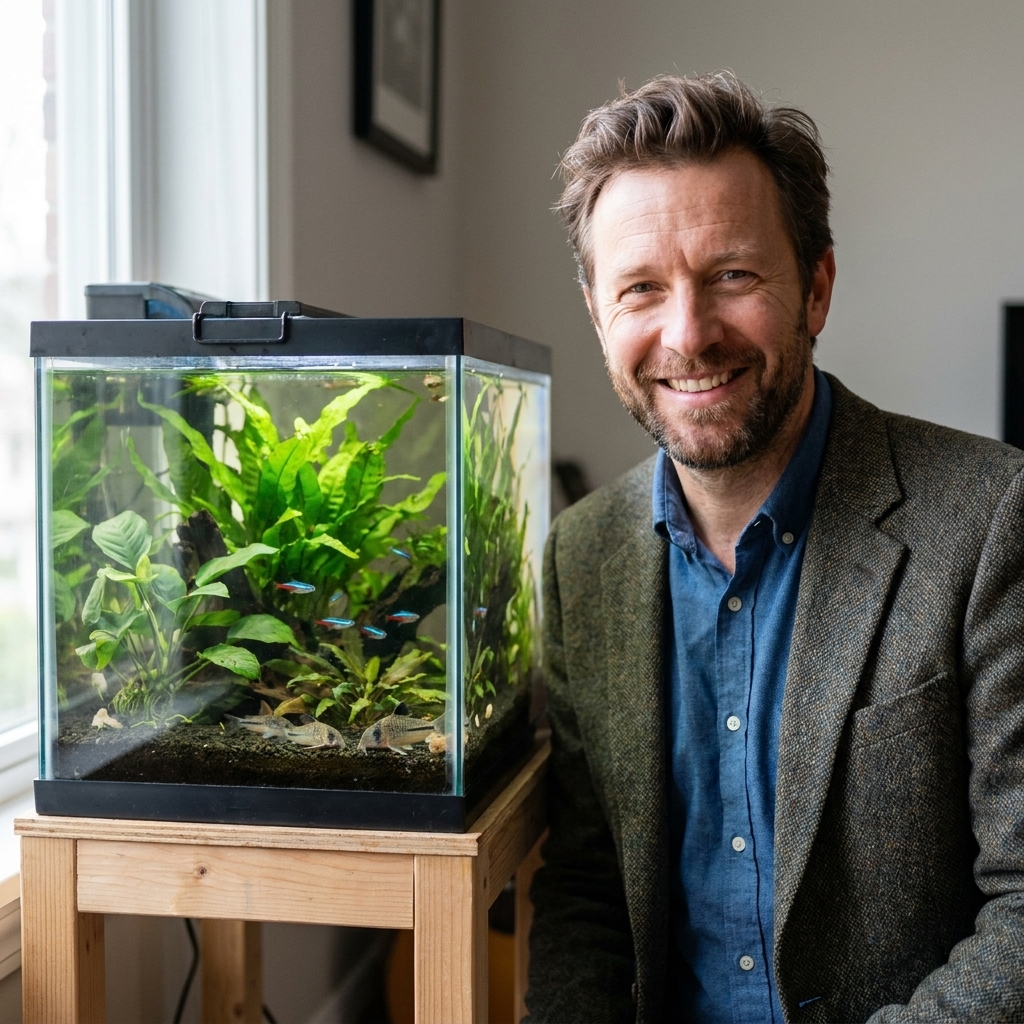
If you remember one rule, make it this: pay for the stuff that prevents crashes. Most beginner heartbreak comes from unstable temperature, poor filtration, overfeeding, and skipping the nitrogen cycle, not from not owning a fancy light or a “premium” substrate.
Worth paying for (or buying used carefully)
- Tank that holds water (obvious, but leaks ruin budgets fast)
- Filter with room for real media (sponge, biomedia)
- Heater if you keep tropical fish
- Water test kit (ammonia, nitrite, nitrate)
- Dechlorinator (untreated chlorine or chloramine can harm or kill fish and beneficial bacteria)
Easy places to save
- Gravel or sand instead of expensive designer substrates
- Hardscape sourced cheaply (with safe prep)
- Used lights, especially for low light plants
- DIY backgrounds and lids
- Skipping “miracle bottles” and single-purpose gadgets
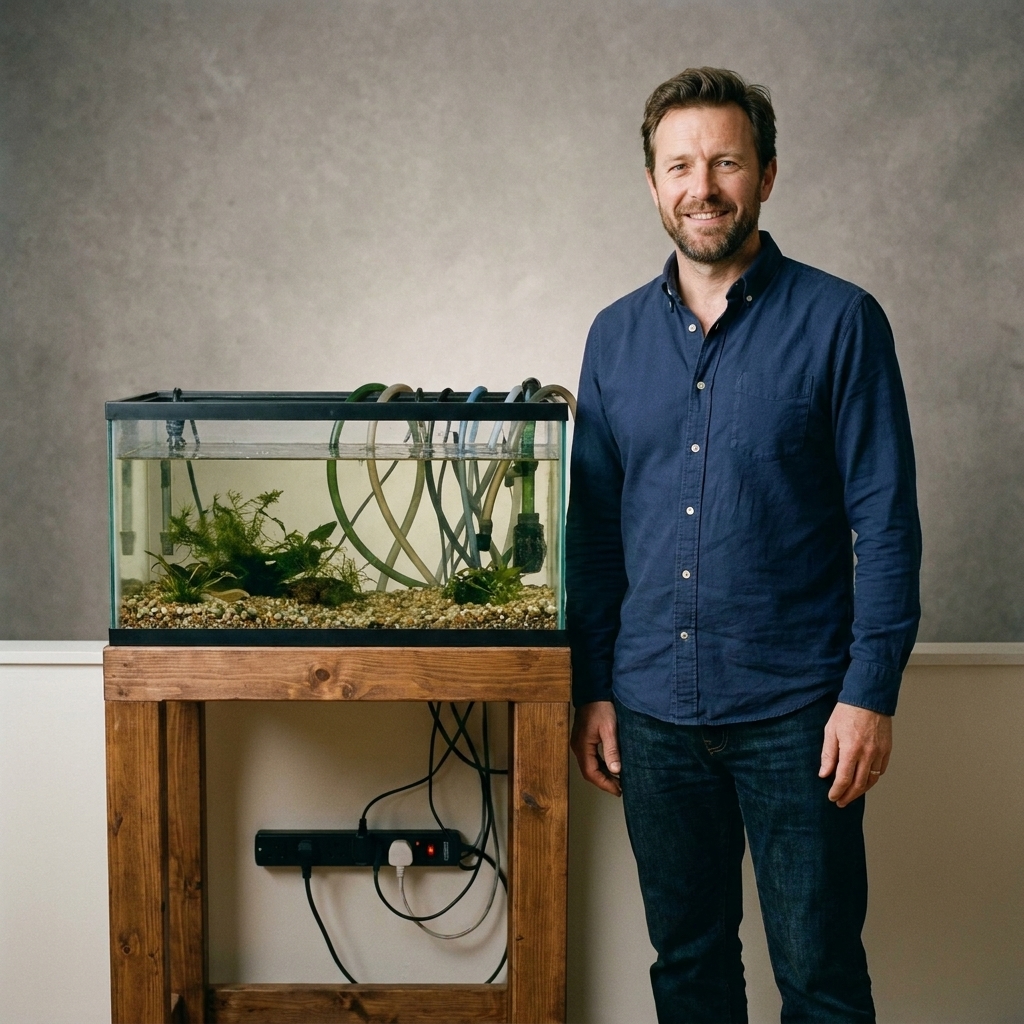
Pick a forgiving tank size
Counterintuitive truth: tiny tanks are harder. A 2 to 5 gallon bowl can swing from safe to dangerous in hours. A slightly larger tank is often both more stable and not much more expensive on the used market.
Sweet spot for most tight budgets
- 10 gallon: usually the cheapest “real aquarium” size, widely available used, stable enough to learn on
- 20 gallon long: even more forgiving, great footprint for aquascaping and community fish, still easy to find second-hand
If you already own a smaller tank, you can absolutely use it. Just stock it lightly and be strict about maintenance. But if you are shopping from scratch, I would rather see you with a used 10 or 20 than a brand-new nano kit.
Buying used gear safely
Used aquarium gear is where budgets stretch the farthest. It is also where people accidentally inherit problems. Here is how to buy second-hand without buying someone else’s headaches.
Best places to find deals
- Local aquarium clubs and swap meets
- Facebook Marketplace and local buy/sell groups
- Craigslist
- College move-out season and estate sales
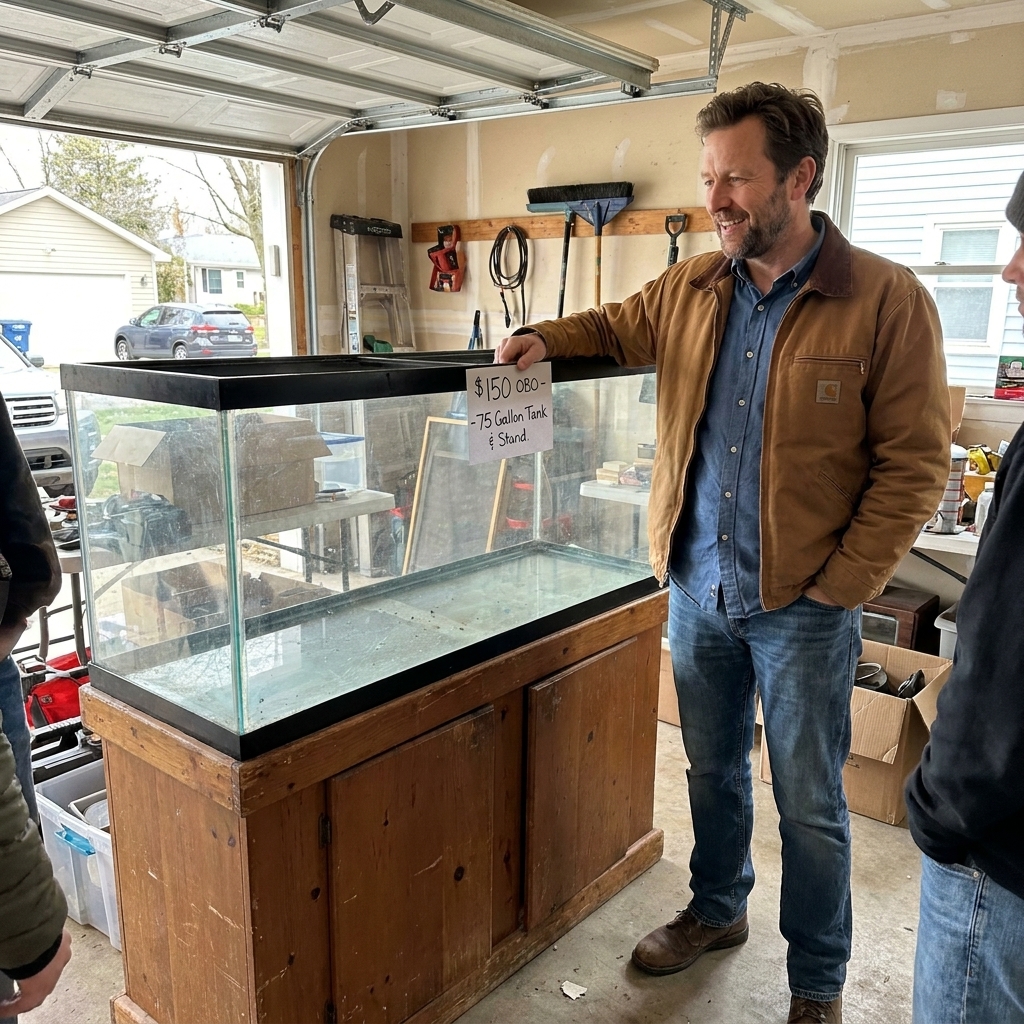
Used tanks: inspect first
A used tank can be an amazing deal. A failed seam can also turn your living room into a shallow lake.
Quick inspection checklist
- Check silicone seams: you want continuous silicone with no gaps, bubbles, peeling, or brittle edges.
- Look for chips and cracks, especially on corners and along the bottom pane.
- Smell test: avoid tanks that smell strongly of chemicals or cleaners. You do not want residue leaching into water.
- Ask how it was stored: tanks stored dry for years are often fine, but seals can still degrade. Inspect closely and assume you will leak test.
- Leak test at home: fill it outside or in a garage, let it sit 24 hours on a level surface.
Avoid used acrylic tanks unless you know what you are looking at. Scratches can be a pain, and repairs are not always budget-friendly.
Clean and disinfect used gear
Second-hand equipment can carry mineral buildup, algae, and sometimes disease. You do not need harsh chemicals for everything, but you do need a plan.
Simple cleaning rules
- Never use soap. Residue can be dangerous in aquariums.
- For hard water deposits: white vinegar and a scrub pad work well on glass and plastic. Rinse thoroughly.
- For disinfecting non-porous items (nets, heaters, plastic decor, empty tanks): a diluted unscented bleach soak can be used, followed by thorough rinsing, dechlorinator, and full air-drying.
- Do not reuse old filter media from a used filter. It can carry pathogens. Start with fresh sponge and biomedia, then build bacteria the safe way.
If you are ever unsure, skip the gamble. A cheap used decoration is not worth wiping out your fish.
Filters that work
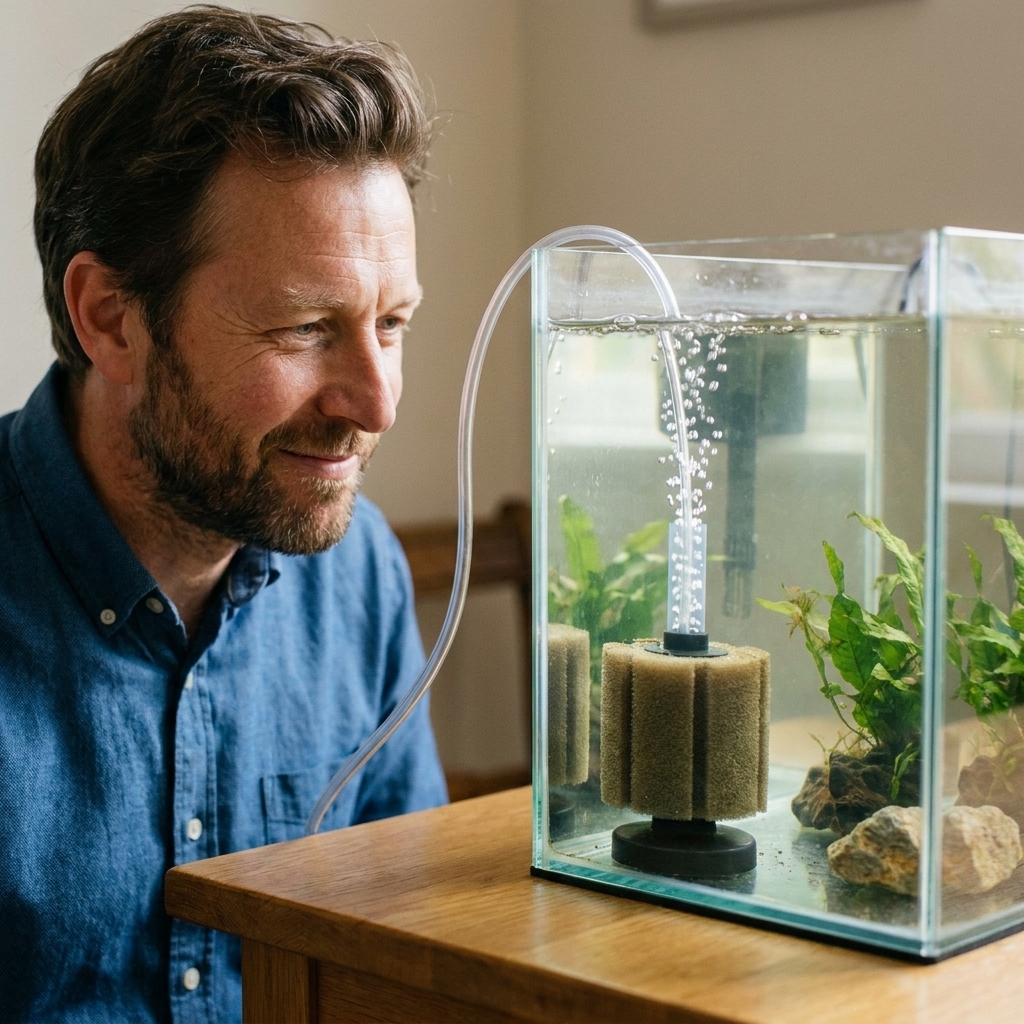
You do not need the fanciest filter. You need consistent flow and a place for beneficial bacteria to live.
Cheapest reliable options
- Sponge filter + air pump: incredibly affordable, gentle for small fish and shrimp, easy to maintain, very hard to mess up.
- Hang-on-back (HOB) filter: common used, simple, decent turnover. Choose one with a roomy basket.
How to avoid cartridge traps
Many HOB filters push replaceable cartridges. Replacing them can remove a significant chunk of your biofiltration and may destabilize the cycle, especially if the cartridge is the primary media.
- Swap cartridges for coarse sponge and biomedia (ceramic rings or bio-balls).
- Rinse media in old tank water during water changes, not under chlorinated tap water.
Heaters
If you keep tropical fish, a heater is not optional, and this is one of the few areas where ultra-cheap can backfire.
Smart heater tips
- Buy a reputable adjustable heater, ideally used lightly or new on sale.
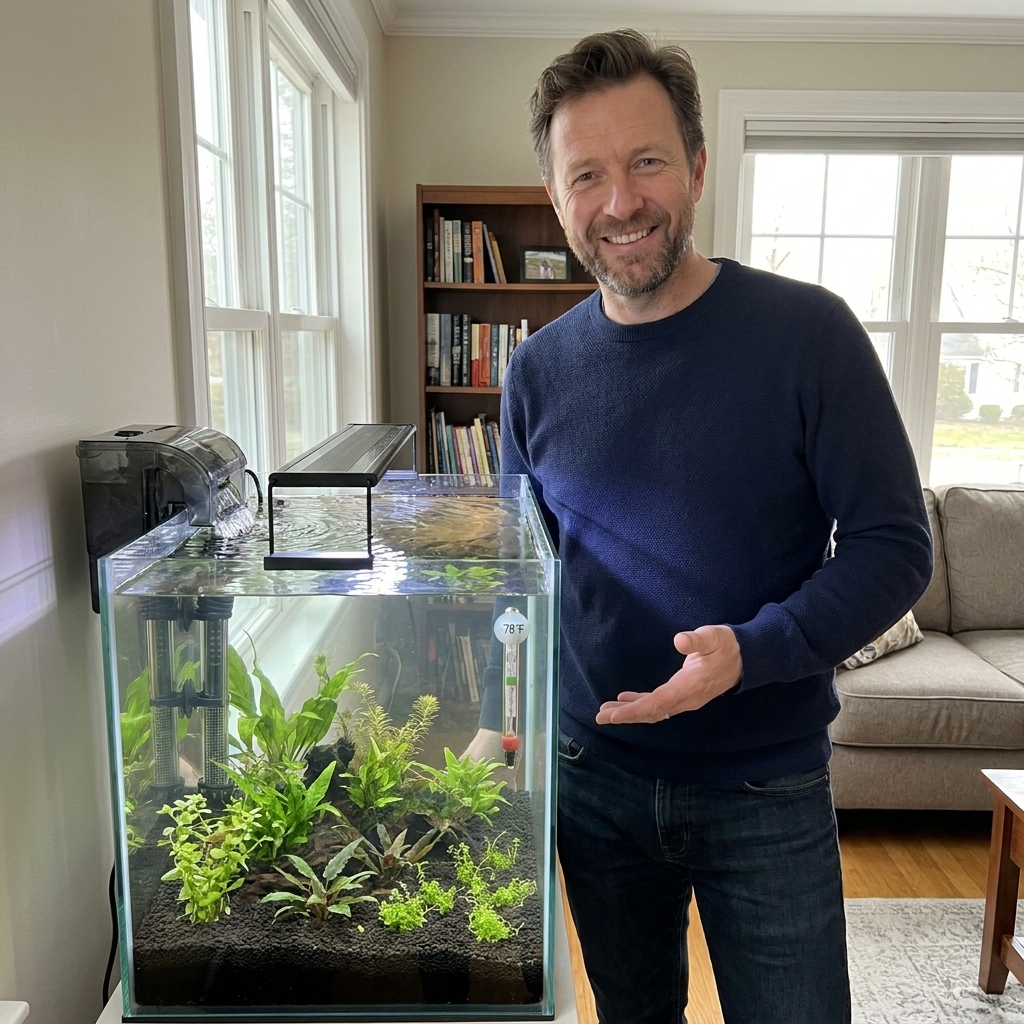
- Add a simple thermometer so you notice problems early.
- Use a heater guard if you keep fish that can burn themselves (some cichlids, loaches) or if the heater sits near hardscape.
If your home is consistently warm and you choose true cool-water species, you may be able to skip a heater. Just do not assume that because a fish “can handle” cooler water, it will thrive through temperature swings.
Lighting on the cheap
Lights get oversold. For simple tanks, the goal is “enough light for your plants,” not stadium lighting.
Ways to save
- Buy a used aquarium LED from a known brand.
- For low-tech planted tanks, a basic LED strip can be enough if it fits and is protected from splashes.
- Start with low-light plants so you do not need high output lighting.
Plants that thrive in modest light
- Anubias
- Java fern
- Cryptocoryne (crypts)
- Water wisteria
- Hornwort
- Floating plants like frogbit or salvinia (great for nitrate control)
Pro tip: start with a reasonable photoperiod. 6 to 8 hours is a solid starting point for most beginner planted tanks. If algae shows up, reduce hours before you buy anything.
Substrate
You do not need boutique substrate to grow plants. Many gorgeous aquascapes are built on plain, inexpensive materials.
Affordable substrate choices
- Inert gravel: easy, forgiving, great for most community tanks.
- Pool filter sand: cheap, clean-looking, great for bottom dwellers. Rinse well.
- Play sand: sometimes works, but can be dusty. Rinse aggressively and test in a bucket first.
Plant growth without pricey soil
- Use root tabs for heavy root feeders (crypts, swords).
- Keep water column plants (wisteria, hornwort) that feed from the water.
- Consider a small layer of nutrient-rich substrate only in the back under gravel if you find a deal, but it is not required.
Hardscape for cheap
Hardscape is where people overspend fast. You can absolutely source beautiful stone and wood without paying premium aquarium-store prices, but you must be picky.
Low-cost options
- Local fish clubs often sell driftwood and stone cheap.
- Landscape supply yards sometimes carry stone that works well (you must identify it and test it).
- Second-hand bundles from hobbyists leaving the hobby.
Rules I do not skip
- Do not use anything painted, sealed, or treated.
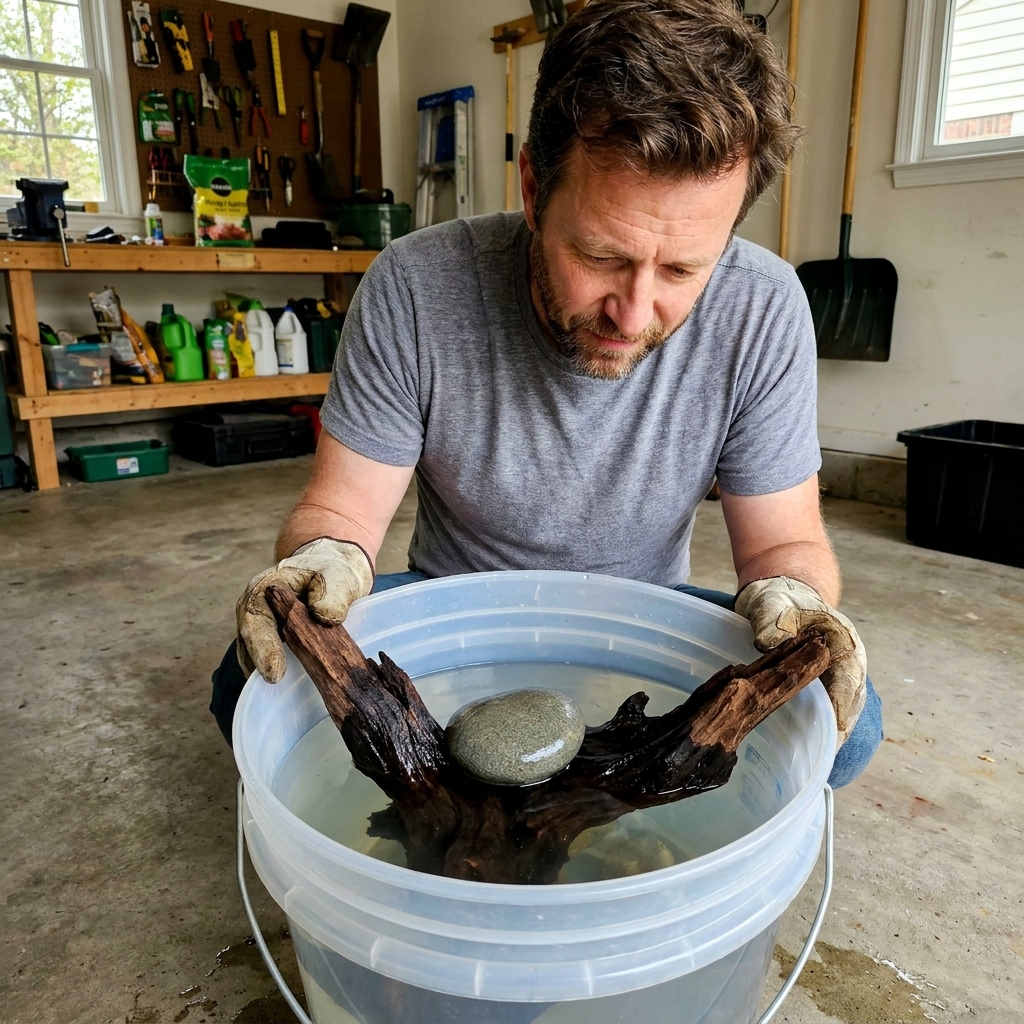
- Be cautious with outdoor-collected rocks and wood. Road salt, pesticides, fertilizers, and unknown metals are real risks. If you cannot confidently ID it and clean it, skip it.
- Test rocks for carbonate content: put a few drops of vinegar on a dry rock. If it fizzes, it may raise hardness and pH. That is great for some setups (many livebearers), not ideal for others (many soft-water tetras).
- Boiling driftwood is not always safe (large pieces can crack pots and cause burns). Instead, scrub it and soak it, changing water until it sinks or you can secure it.
Fish: save money by not replacing them
This is where empathy meets reality. When money is tight, losing fish hurts twice, emotionally and financially. The smart play is to stock slowly and choose hardy species that match your water and tank size.
Stocking rules
- Cycle the tank first. Buying fish before the tank can process ammonia is the fastest way to burn money.
- Start with fewer fish than you think. You can add later.
- Match fish to your tap water when possible. Constantly adjusting pH and hardness with chemicals is expensive and unstable.
Often budget-friendly fish (when properly kept)
- Livebearers like guppies and platies (they reproduce fast, so plan ahead)
- Zebra danios
- White cloud mountain minnows (cool-water fish, often happiest around 18 to 22°C or 64 to 72°F, so they can work in heater-free setups if your room stays in range and does not overheat in summer)
- Corydoras (choose species appropriate for tank size, keep in groups)
- A single betta in a 10 gallon (with gentle filtration and compatible tankmates if any)
Two safe example stocking plans
- 10 gallon: one betta + one nerite snail (or a small group of shrimp if your betta is calm). Simple, low bioload, easy to maintain.
- 20 gallon long: 8 to 10 ember tetras + 6 pygmy corydoras. Peaceful, active, and realistic for a beginner who keeps up with weekly water changes.
Where to buy: hobbyist groups and reputable local stores often have healthier fish than chain stores, which can save you money in losses and medications.
The nitrogen cycle
If I could prevent one beginner mistake forever, it would be this. The nitrogen cycle is not a nice-to-have. It is the biological engine that turns toxic waste into less toxic compounds.
Minimal cycling setup
- Filter running with media in place
- Dechlorinated water
- A source of ammonia (pure ammonia or fish food)
- Test kit to track ammonia, nitrite, nitrate
A common fishless-cycle target is to dose ammonia to roughly 1 to 2 ppm and work toward a point where the tank can process that dose to 0 ammonia and 0 nitrite within about 24 hours. Think of 24 hours as a goal, not a universal rule. Temperature, pH, and how much media you have all matter.
If you can get it from a healthy, disease-free tank, a small piece of established sponge or biomedia from another hobbyist can dramatically speed things up. It is one of the best money-saving moves in fishkeeping, because it saves fish and time.
Skip these money pits
Some products exist mostly because beginners are overwhelmed and want a quick fix. I am not judging. I bought plenty of them when I was ten, staring at a cloudy tank and hoping a bottle could save me.
- Replace-every-month filter cartridges as your primary plan
- pH up/down chemicals for routine use (stability beats chasing numbers)
- Algae remover potions as a first response (fix lighting, feeding, and maintenance instead)
- Unnecessary gadgets like in-tank “disposable” bio packs and mystery stones
- Overpriced beginner kits where the included gear is underpowered or locks you into cartridges
Maintenance that stays cheap
Once the tank is running, your best budget tool is consistency.
Weekly routine
- Water change: 25 to 40% for most community tanks (adjust based on stocking and nitrate).
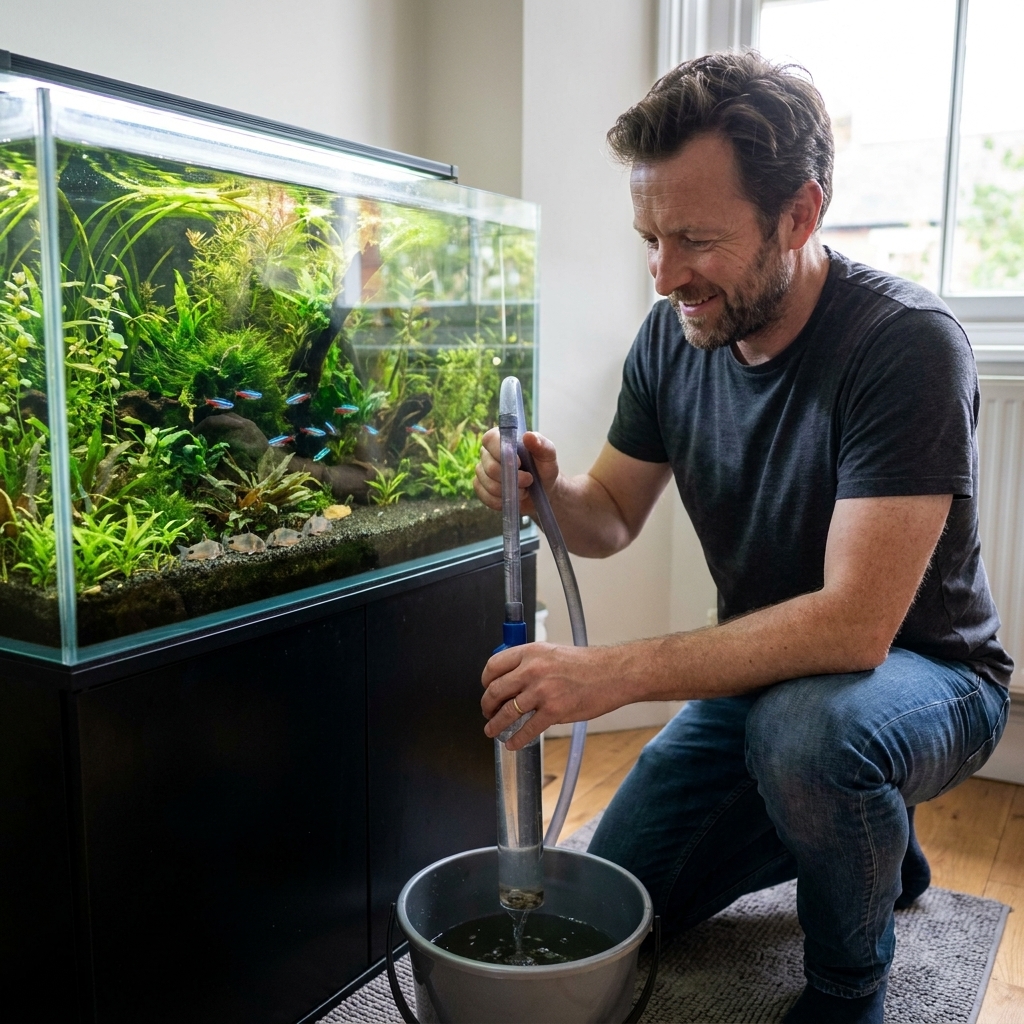
- Gravel vac: lightly in open areas, especially if you keep messy eaters.
- Glass wipe: a simple algae pad or clean sponge.
- Test water: especially in the first few months or anytime fish act off.
Save on consumables
- Use a bucket and siphon instead of fancy water-changing systems.
- Buy fish food in a size you will use within a few months, so it stays fresh and you do not overfeed to use it up.
- Keep a small spare sponge and air pump. Emergency redundancy is cheaper than emergency livestock replacement.
Ongoing costs
A budget aquarium is not just the startup. Plan for the small, recurring costs so nothing surprises you.
- Electricity: filter and air pump are usually cheap to run; heaters cost more and spike in winter.
- Water care: dechlorinator and occasional test kit refills.
- Food: a small container is usually enough for a modest community tank for months.
- Plant support: root tabs or a basic fertilizer if you keep heavy root feeders.
- Problem fund: a little set aside for a replacement heater, air pump, or medication is not pessimism. It is how you avoid panic spending.
A simple low-cost build
If a friend told me, “I want a healthy freshwater tank, but I have to keep it tight,” this is a setup I would feel good about:
- Used 10 to 20 gallon glass tank (inspected and leak-tested)
- Sponge filter plus air pump, or a used HOB with sponge and biomedia
- Adjustable heater if keeping tropical fish, plus a basic thermometer
- Pool filter sand or inexpensive gravel
- Low-light plants from a local hobbyist trim (anubias, java fern, crypts, floaters)
- A simple LED light on a timer (even a cheap timer is worth it for consistency)
- Liquid dechlorinator and a liquid drop test kit
This is not flashy, but it is stable. And stability is what grows plants, keeps algae manageable, and lets fish live long enough for you to actually enjoy them.
FAQ
Is it okay to buy a used filter?
Yes, as long as the motor runs reliably and the housing is not cracked. Replace worn impellers if needed, and plan to use sponge and biomedia instead of disposable cartridges. Skip any old used media and start fresh.
Should I buy used heaters?
Heaters are the riskiest used item. If you do buy used, test it in a bucket with a thermometer for a few days. When possible, I prefer buying a heater new on sale.
Are test strips good enough?
In a pinch, strips are better than guessing. But for long-term value and reliability, a liquid drop test kit is usually more accurate and more cost-effective per test.
Can I start a tank without live plants to save money?
You can, but a handful of easy plants often saves money long-term by stabilizing the tank and reducing algae headaches. Local hobbyist plant trimmings are usually the cheapest way to start.
What is the single most important item to budget for?
A good test kit and dechlorinator. They prevent the most common early losses and help you diagnose problems before they turn expensive.