A practical breakdown of aquarium water test kits and the parameters that keep freshwater fish safe: ammonia, nitrite, nitrate, pH, KH, GH, plus when to test...
Freshwater aquarium guidance
Guppies vs. Mollies: Which Livebearer Is Right for Your Freshwater Aquarium?
Guppies and mollies are both hardy livebearers, but they differ in size, bioload, water preferences, and how fast they multiply. Here’s how to choose the right fit for your tank.

Written by
Oliver Bennett
Oliver Bennett is a lifelong aquarist with over 15 years of experience in freshwater tank setup, aquascaping, and fish health. Through TankRoot, he shares his passion for creating balanced underwater ecosystems, helping hobbyists of all levels build thriving, beautiful homes for their fish.
Published: October 17, 2026
•
Updated: October 17, 2026
Livebearers are the gateway fish for a lot of us because they are active, colorful, and seem to thrive even when the tank is still finding its rhythm. But “livebearer” is a big category, and two of the most common choices, guppies and mollies, are not interchangeable.
If you have ever brought home a few “easy” fish and then found yourself staring at a surprise nursery of fry a month later, you already understand why this choice matters. The right livebearer depends on your water, your tank size, and your tolerance for bioload and baby fish.
At-a-glance differences
- Adult size: Guppies stay small. Mollies get much larger.
- Bioload: Mollies produce noticeably more waste than guppies.
- Water preferences: Both prefer hard, alkaline water, but mollies are far less forgiving of soft, acidic setups.
- Breeding rate: Both breed fast. Mollies often have larger fry, and bigger adults mean a growing colony can overwhelm smaller tanks faster.
- Temperament: Both are generally peaceful, but mollies can be pushier in tight quarters.
Meet the fish
Guppies (Poecilia reticulata)
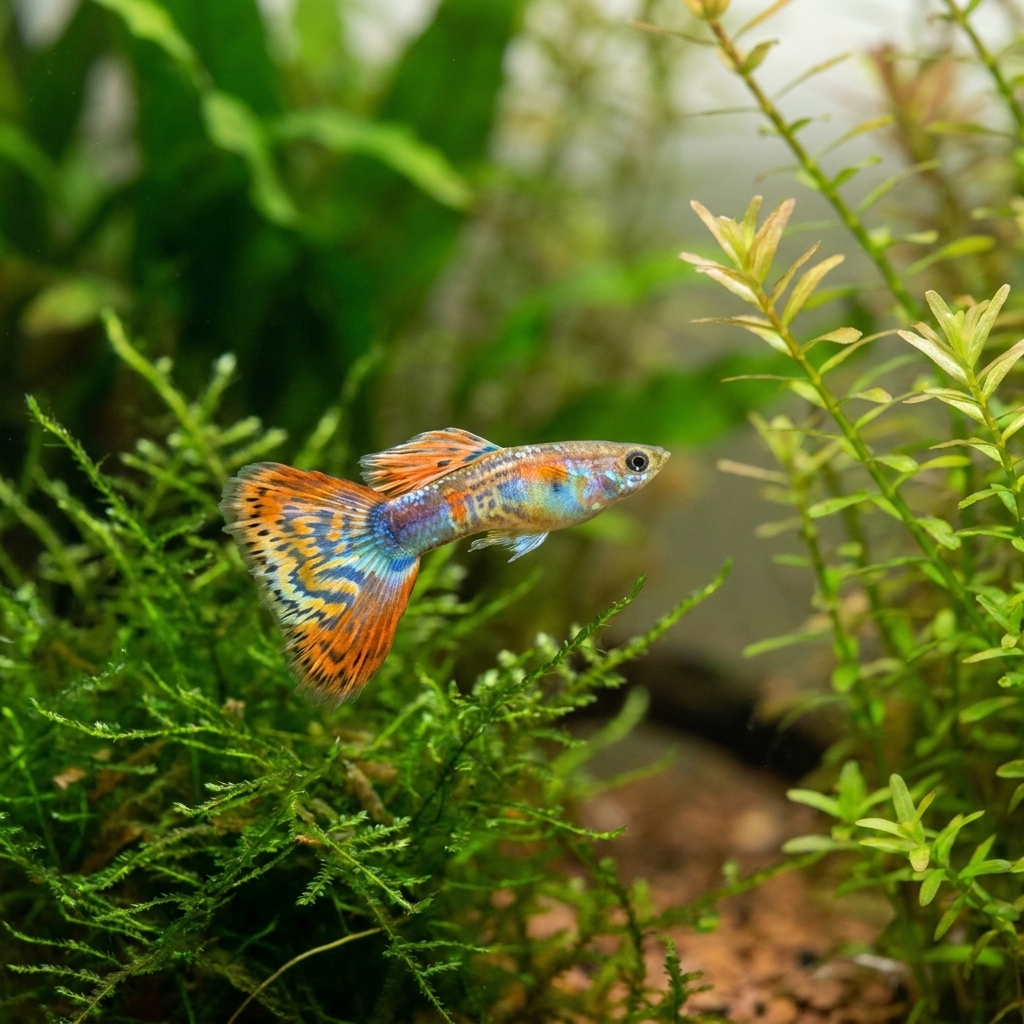
Guppies are small, constantly moving fish with endless color and tail variations. Males are the showstoppers, females are larger and usually more plainly colored. They are ideal for smaller community tanks as long as you manage breeding and keep water quality stable.
Mollies (Poecilia sphenops and relatives)
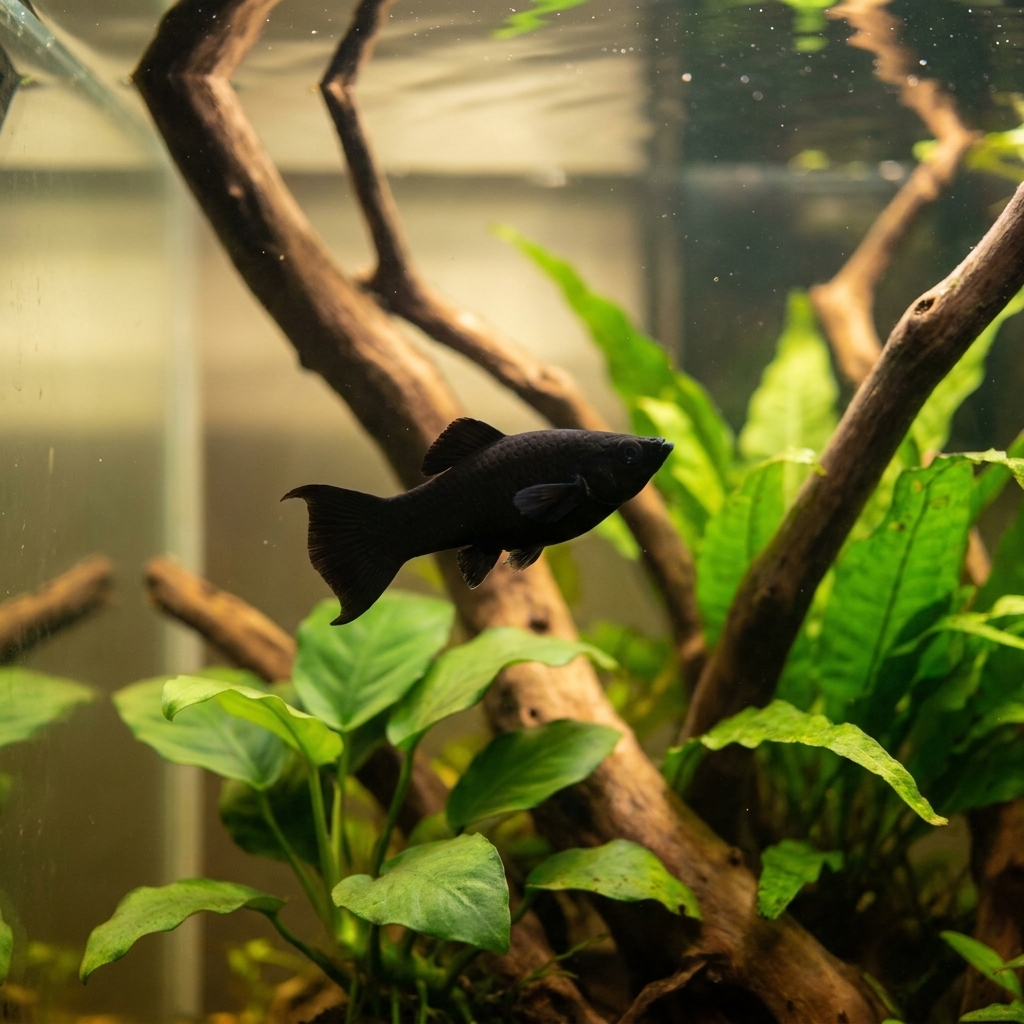
“Molly” can mean several closely related species and varieties, including common mollies, sailfin mollies, lyretails, and balloons. What they share is a bigger body, bigger appetite, and a bigger impact on your filtration and maintenance routine. This is also why two fish sold as “mollies” can have slightly different needs and adult sizes.
Water parameters
Big-box advice often treats guppies and mollies as “adaptable” and leaves it at that. In reality, their best health happens in mineral-rich, hard water with a stable pH. If your water is naturally soft and acidic, guppies can sometimes muddle through, but mollies often struggle long-term unless you remineralize consistently.
Typical ranges (practical targets)
- Temperature: Guppies often do well around 22 to 26 C (72 to 79 F). Mollies typically prefer it a bit warmer, around 24 to 28 C (75 to 82 F). Stability matters more than chasing a perfect number.
- pH: Neutral to alkaline is the comfort zone. As a rough target, guppies usually do well around 7.0 to 8.0, while mollies tend to shine around 7.5 to 8.2. Avoid sudden pH swings.
- Hardness (GH): Medium-hard to hard. For livebearers, steady minerals often matter more than the exact pH.
- Alkalinity (KH): Moderate to high KH helps keep pH steady, which livebearers appreciate.
Rule of thumb
If your tap water is naturally hard and alkaline, both species are on the table. If your water is soft (low GH) and tends to run acidic, guppies are usually the safer choice unless you are willing to remineralize and test often.
Do mollies “need” salt?
This one refuses to die. Mollies are often sold with the idea that they require aquarium salt. Most mollies in the hobby are kept as freshwater fish, and you can keep them without salt if the water is hard, clean, and stable.
What mollies truly need is minerals and consistency. Also, “aquarium salt” (sodium chloride) is not the same thing as setting up a brackish tank with marine salts. Brackish conditions are optional and strain-dependent, not a requirement for a healthy molly in a typical freshwater community.
Bioload
Bioload is where guppies and mollies separate sharply. A fish’s waste output is tied to size, appetite, and activity. Mollies are bigger and eat like it, so they demand more filtration, more water changes, and more patience.
What that looks like
- Guppies: Great for smaller tanks when stocked reasonably. Their waste output is modest, but it climbs fast if you let fry grow out unchecked.
- Mollies: Plan as if you are stocking a larger, messier fish. They can overwhelm under-filtered tanks and newly set up aquariums.
Tank size guidance
- Guppies: 10 gallons can work for a small group, but 15 to 20 gallons is dramatically easier and more stable.
- Mollies: 20 gallons is a minimum for a small group of smaller varieties, but 29 gallons or larger is where they start to look and behave their best, especially sailfins.
If you are cycling a brand-new tank, guppies are generally the gentler choice once the tank is properly cycled. Mollies are not “hard,” they are just less forgiving of a tank that is not mature.
Breeding
Both guppies and mollies are livebearers, meaning females give birth to free-swimming fry instead of laying eggs. That makes breeding feel “easy,” but it also makes population control a very real part of keeping them.
How it works
- Females can store sperm and have multiple broods after a single mating.
- Gestation: Often around 4 to 6 weeks, depending on temperature and conditions.
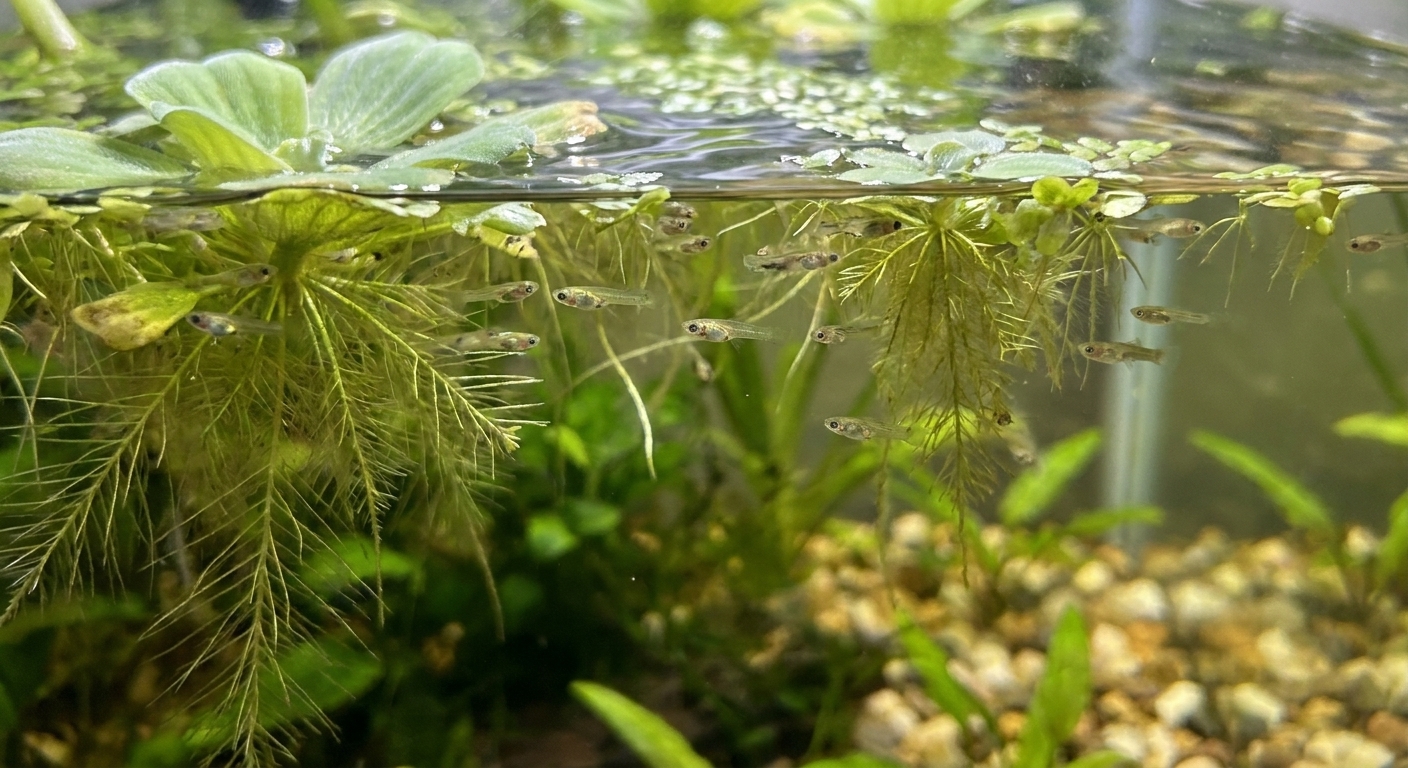
- Fry survival: In heavily planted tanks, more fry survive. In bare tanks with hungry adults, fewer do.
Typical brood sizes
- Guppies: Often around 20 to 60 fry, with big variation by strain, age, and conditions.
- Mollies: Commonly around 20 to 100+ fry, with even more variation depending on the type of molly and the size and age of the female. Molly fry are usually larger at birth than guppy fry.
Humane population control
- Keep a single sex group: All-male guppy tanks are popular and colorful. With mollies, single-sex groups can work too, but confirm sex carefully at purchase.
- Plan a rehoming outlet: A local fish club is often more reliable than hoping a store will take them.
- Accept “some survival”: In community tanks, not every fry will make it. That is normal. The goal is avoiding a crowded tank, not trying to raise every baby.
If you want livebearers but do not want a constant fry situation, consider choosing only males from day one. Just remember that male-only tanks can still have chasing and sparring, so keep a proper group and give them cover.
Temperament
Both species are generally peaceful, but your experience depends on space, ratio, and stress level.
Guppies in community tanks
- Peaceful and small, but long fins can invite nipping from fin-biters like some barbs.
- Active males can harass females if the ratio is off.
- Do best in groups so attention is spread out.
Mollies in community tanks
- More assertive at feeding time, especially in smaller tanks.
- Can be pushy even when you have plenty of females.
- Do better with room and steady, clean water. When stressed, they are more prone to issues that ripple through a tank.
Ratios and group size
If you keep mixed sexes, aim for at least 2 to 3 females per male for either species. For guppies, a group of 5 to 6+ usually settles better than keeping just a couple. For mollies, a trio (one male, two females) can work in a properly sized tank, but larger groups need space and filtration to match.
Health and hardiness
Neither guppies nor mollies are “bulletproof.” They just tolerate beginner mistakes better than some species. The difference is that mollies often show stress from mineral-poor water, while guppies often suffer from genetics and chronic low-grade issues if water quality slips.
Common guppy problems
- Fin rot: Often tied to poor water quality or chronic stress. Address with water change discipline first.
- Lethargy or shimmying: Can be water quality, temperature swings, or mineral issues.
- Short lifespans in some strains: Heavily line-bred fancy guppies can be fragile compared to plainer lines.
Common molly problems
- Shimmying: A classic stress sign, often linked to low minerals, unstable parameters, or poor water quality.
- Stress after transport: Like any fish, stressed mollies can be more vulnerable to parasites such as ich after shipping or a temperature dip.
- Wasting and chronic stress: Often a husbandry issue: too small a tank, too much waste, not enough stability.
If you want the most forgiving path, choose fish that match your tap water rather than trying to force your water to match the fish.
Feeding
Both guppies and mollies are omnivores. They do well on a high-quality staple food with some variety. The catch is that mollies eat more and produce more waste, so sloppy feeding hits your water faster.
What I feed
- Staple: A quality micro pellet or flake as the base.
- Protein treats: Frozen baby brine shrimp, daphnia, or brine shrimp 1 to 3 times per week.
- Plant matter: Spirulina-based foods help, especially for mollies.
Feeding tip
Feed small portions they can finish quickly. For livebearers, chronic overfeeding is one of the fastest ways to trigger algae, cloudy water, and recurring disease.
Which should you choose?
Choose guppies if you want
- A great fish for 10 to 20 gallon tanks
- Lower bioload and easier maintenance
- Bright colors with smaller adult size
- The option for a stunning all-male display (best with a real group, not just two or three)
- More flexibility if your water is only moderately hard
Choose mollies if you want
- A fish that feels more substantial and interactive
- A better fit for hard, alkaline water
- A 20 to 40+ gallon tank where their size and energy make sense
- A livebearer that pairs well with other robust community fish
If you are on the fence
If your tank is under 20 gallons or you are still building consistent water change habits, start with guppies. If you have a larger tank, naturally hard water, and a filter that can handle a messier fish, mollies can be incredibly rewarding.
Can they live together?
Yes, sometimes, but it depends on tank size and your water. Both species prefer similar hard, alkaline conditions, which is a point in their favor. The problems usually come from:
- Overstocking from breeding
- Feeding competition where mollies outcompete guppies
- Tank size that is fine for guppies but cramped for mollies
Also keep in mind that “molly” covers multiple Poecilia species and domestic mixes. Two fish labeled “molly” may not behave identically, and compatibility can vary by variety and size.
If you mix them, I recommend a tank 29 gallons or larger, lots of plant cover, and a plan for fry. Watch guppies for fin nipping and watch feeding time closely so guppies are not constantly outmuscled.
Quick setup checklists
Guppy setup
- Tank: 15 to 20 gallons (10 minimum with restraint)
- Filter: gentle but effective, with plenty of biological media
- Heat: stable 22 to 26 C (72 to 79 F)
- Plants: stem plants, mosses, floating plants for cover
- Stocking plan: consider all-male to avoid constant fry
Molly setup
- Tank: 29 gallons or larger when possible
- Filter: robust, prioritize oxygenation and bio capacity
- Water: hard, mineral-rich, stable
- Decor: open swimming space plus plant thickets
- Maintenance: commit to regular water changes, not “when it looks dirty”
FAQ
Are mollies harder to keep than guppies?
They can be, mostly because they are larger and less forgiving of soft, low-mineral water and poor water quality. In the right water and tank size, mollies are not difficult.
Do guppies breed faster than mollies?
Both breed quickly. Guppies often feel “faster” because people keep them in smaller tanks where even one or two surviving batches can change stocking levels dramatically.
Which has the higher bioload?
Mollies. Their adult size and appetite mean more waste, more filtration demand, and more maintenance.
Can I keep only male guppies?
Yes, and it is one of the best ways to enjoy guppies without turning your aquarium into a constant grow-out tank. Keep a proper group, provide plants or other cover, and avoid keeping just a couple of males where sparring becomes constant.