Sponge, HOB, and canister filters all work, but they shine in different tanks. Compare flow, bio filtration, noise, cost, and maintenance so you can pick the...
Freshwater aquarium guidance
Aquarium Air Pumps and Air Stones: Do You Really Need Them?
Air pumps can help, but they are not mandatory for every tank. Learn what actually oxygenates aquarium water, when surface movement matters, and how to tell if your filter already does the job.

Written by
Oliver Bennett
Oliver Bennett is a lifelong aquarist with over 15 years of experience in freshwater tank setup, aquascaping, and fish health. Through TankRoot, he shares his passion for creating balanced underwater ecosystems, helping hobbyists of all levels build thriving, beautiful homes for their fish.
Published: October 17, 2026
•
Updated: October 17, 2026
I still remember the first time I bought an air pump as a kid, convinced my fish were “running out of air.” The bubbles felt reassuring, like I was actively doing something to help. Years later, after keeping planted community tanks, breeding projects, and the occasional overcrowded beginner disaster, I can tell you this: the bubbles themselves are not the point. What matters is what those bubbles do to your water’s surface.
This article will help you decide, without guesswork, whether your aquarium actually needs an air pump and air stone, or whether your existing filter and flow already cover oxygenation just fine.
What an air stone really does
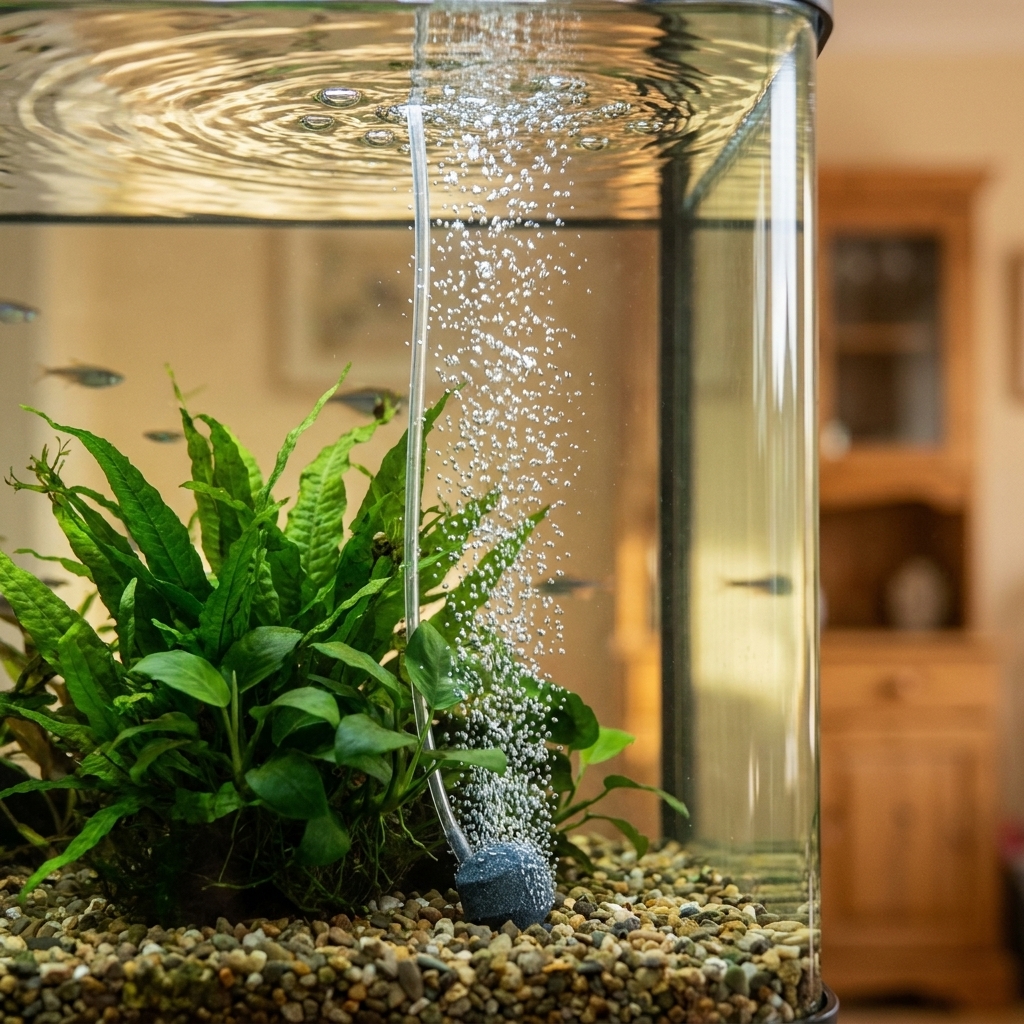
An air pump pushes air through tubing into an air stone or diffuser. The stone breaks the air into many small bubbles. Most people assume the bubbles “add oxygen to the water.” That is only partly true.
Most gas exchange happens at the surface
In an aquarium, oxygen enters and carbon dioxide leaves mainly through gas exchange at the water’s surface. Anything that increases surface movement and refreshes that surface layer improves gas exchange.
An air stone helps because the rising bubbles:
- Agitate the surface and break up biofilm.
- Create circulation that moves low-oxygen water up and oxygen-rich water down.
- Help stabilize oxygen before dawn in some planted tanks when oxygen can dip.
Bubbles can add oxygen, but usually less than you think
A rising bubble has limited contact time with the water before it pops. Some diffusion does happen, and in certain setups (very fine bubbles, deeper water columns, long “hang time”) that contribution can be meaningful. But in most home aquariums, the bigger oxygen boost still comes from the surface movement the bubbles create, not from oxygen dissolving directly out of the bubbles.
That is why a tank with strong surface movement from a filter can have excellent oxygenation even with zero bubbles.
Do you need one?
Here is my practical rule: If your tank has steady surface movement and decent circulation, you usually do not need an air pump. But there are common exceptions.
You probably do not need an air pump if:
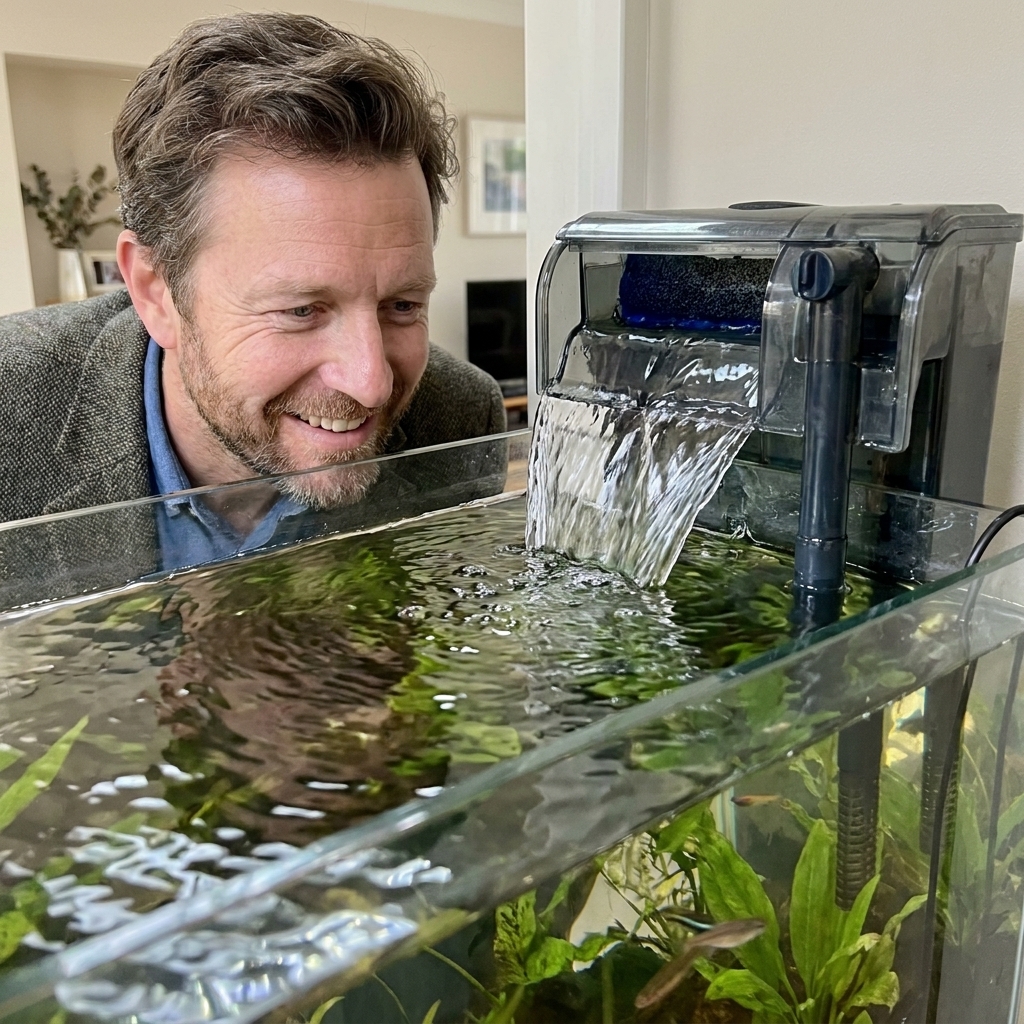
- You run a hang-on-back (HOB) filter with the outflow disturbing the surface.
- You have a canister filter with a spray bar aimed slightly upward to move the surface.
- You have a sponge filter already (which is powered by an air pump anyway).
- Your tank is lightly to moderately stocked and not overheated.
- Fish show normal behavior, and you do not see persistent surface gasping.
You should strongly consider an air pump if:
- Your surface is too still, especially if you see a film forming.
- Your tank runs warm (common in tropical setups), because warm water holds less dissolved oxygen.
- You keep high-bioload or high-activity fish, or species that prefer high oxygen and flow (many river fish, larger goldfish setups, big messy eaters).
- You are treating the tank with medications that can irritate gills or reduce oxygen availability, or you are using strong reducing agents or heavy conditioner overdoses and want an extra safety margin.
- You use a CO2 system for plants and intentionally keep the surface calmer during the photoperiod.
- Your tank is heavily stocked, or you are raising fry in dense numbers.
Oxygen vs circulation
Oxygen issues and flow issues can look similar, and people often try to fix both with bubbles.
Oxygenation is about the surface
If oxygenation is the problem, you will usually improve things by increasing surface movement: adjusting your filter output, adding a spray bar, or using an air stone to disturb the surface.
Keep in mind that more surface movement also means more CO2 leaving the water. In planted tanks, that can affect growth. In non-CO2 tanks, it can still shift your CO2 level and nudge pH upward a bit. That is not automatically bad, but it matters for sensitive setups and for anyone chasing a stable routine.
Circulation is about dead spots
Circulation is about getting water moving throughout the tank so detritus does not accumulate and so oxygenated water reaches every corner. An air stone can help with circulation in small tanks, but it is not always efficient for larger aquariums with hardscape and dense plants.
If you have dead spots behind wood or thick plant walls, a small powerhead or better filter outlet placement often does more than extra bubbles.
Signs of low oxygen
Fish rarely “suddenly need an air pump” out of nowhere in a stable tank. Low oxygen is usually the result of something changing: higher temperature, more bioload, clogged filter media, a bacterial bloom, or an overdose of something.
Watch for these red flags
- Surface gasping, especially early morning before lights come on.
- Fish hanging near the filter outflow where oxygen is highest.
- Lethargy or rapid gill movement across multiple fish.
- Snails climbing above the waterline more than usual (not always oxygen, but worth attention).
Rule out the usual suspects first
Before you buy gear, check the basics:
- Is your filter intake clogged or your flow reduced?
- Is the water warmer than normal?
- Did you overfeed or stir up detritus?
- Is there a bacterial bloom (milky water) consuming oxygen?
- Did you recently treat with medication or add a large dose of a reducing conditioner?
In true emergencies, adding aeration is a good move, but long-term stability comes from fixing the cause.
Planted tanks and CO2
Planted tanks are where the air pump question gets complicated, because planted aquariums often balance two competing goals:
- Good oxygenation for fish and beneficial bacteria
- Maintaining dissolved CO2 for plant growth
During the day: keep it efficient
If you inject CO2, a roaring air stone during the photoperiod can strip CO2 out faster than you can add it. That can make plant growth harder and algae easier.
At night: aeration can help
Plants respire all the time, but at night they are net oxygen consumers because photosynthesis stops. In heavily planted, heavily stocked tanks, oxygen can dip before dawn. Many CO2 aquascapers run an air stone on a timer at night to stabilize oxygen without wasting daytime CO2.
If you do not inject CO2, the tradeoff is simpler: aim for consistent surface movement and stable fish behavior.
Choosing a setup
Air stone
Best for: adding surface movement, breaking surface film, emergency oxygen boost.
Tips that matter:
- Position it so bubbles disturb the surface, not just rise in the middle of the tank.
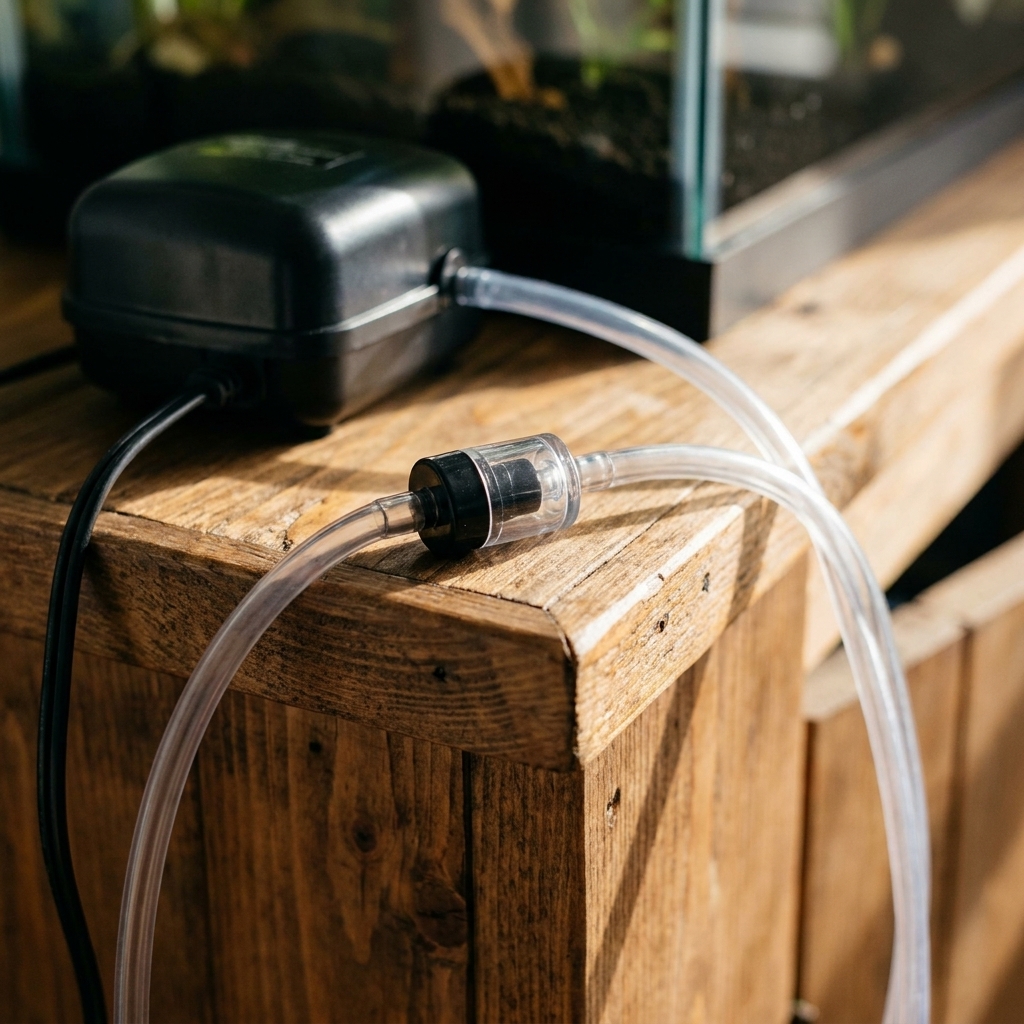
- Use a check valve to prevent back-siphon during power loss.
- Fine bubbles are nice, but surface movement is still the goal.
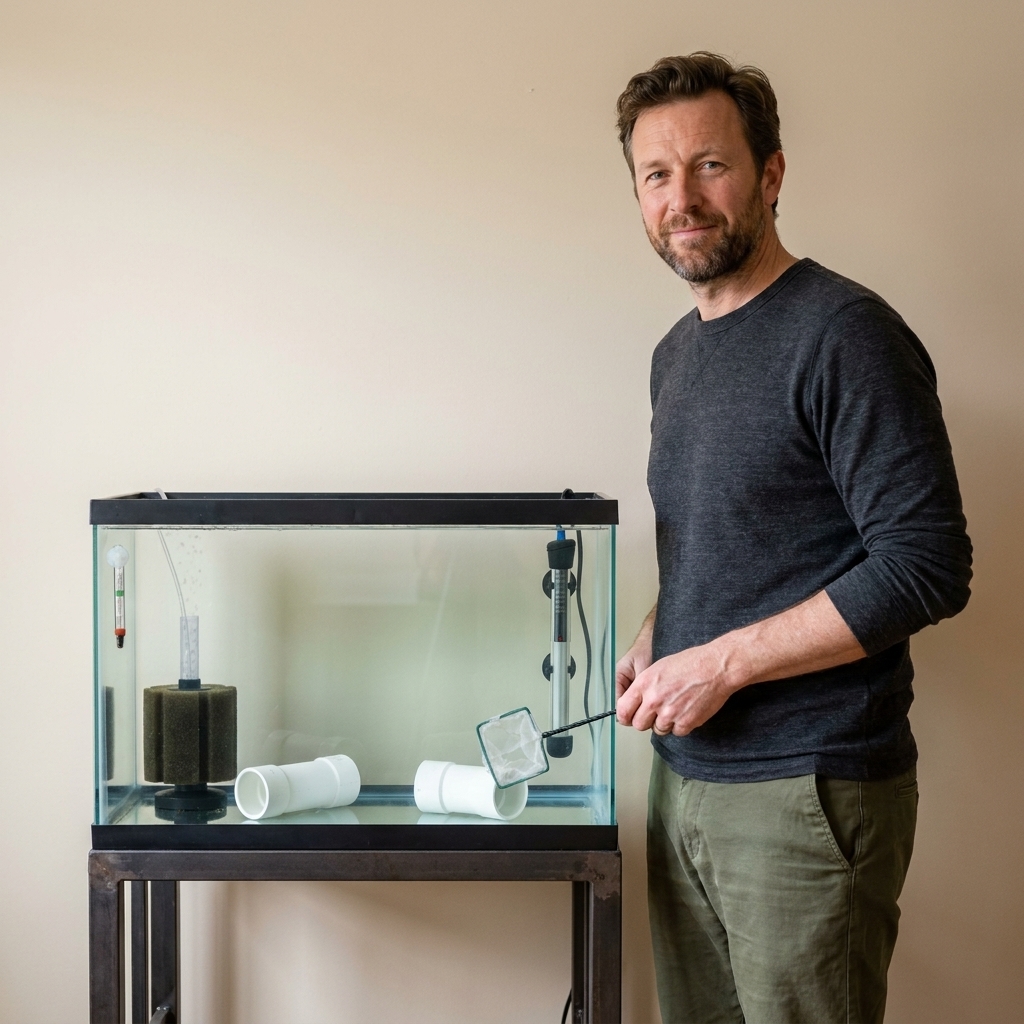
Sponge filter (air-driven)
Best for: quarantine tanks, fry tanks, shrimp tanks, gentle community tanks, biological filtration.
Sponge filters are one of my favorite “quiet workhorse” tools. They provide aeration and biological filtration together, and they are hard to mess up.
Bubble wall or decorative diffusers
Best for: aesthetics, plus some agitation.
They can help with gas exchange, but many are louder and less efficient than a simple stone placed correctly. If you like the look, enjoy it, just do not assume more bubbles automatically equals better oxygenation.
Power outages
If you keep fish long enough, you will get hit with a power outage or a filter failure. In that moment, an air pump can go from “optional accessory” to “most important piece of gear you own.”
- A battery air pump (or a pump on a battery backup) can keep oxygen levels from crashing while your main filter is off.
- If you do not have one, even manual surface agitation (stirring the surface with a clean cup) buys time in a pinch.
Downsides
I love simple gear, but air pumps are not “set and forget.” Here are the common annoyances people run into.
- Noise and vibration: Most air pumps hum. Put them on a soft mat and avoid letting them touch the stand walls.
- Mineral residue: Fine spray and deposits can form around splashy outlets in hard water areas.
- Clogging: Air stones clog over time and need replacement. Some hobbyists clean them, but if you use oxidizers like diluted hydrogen peroxide, be careful, rinse extremely well, and dechlorinate before putting anything back on the tank.
- Back-siphon risk: Without a check valve or proper placement, water can run down the airline during a power outage.
Better than an air pump?
If your goal is oxygen stability, you may get a cleaner result by optimizing what you already have.
Easy upgrades that work
- Aim your filter outflow up slightly to move the surface.
- Add a spray bar to a canister filter and run it close to the surface.
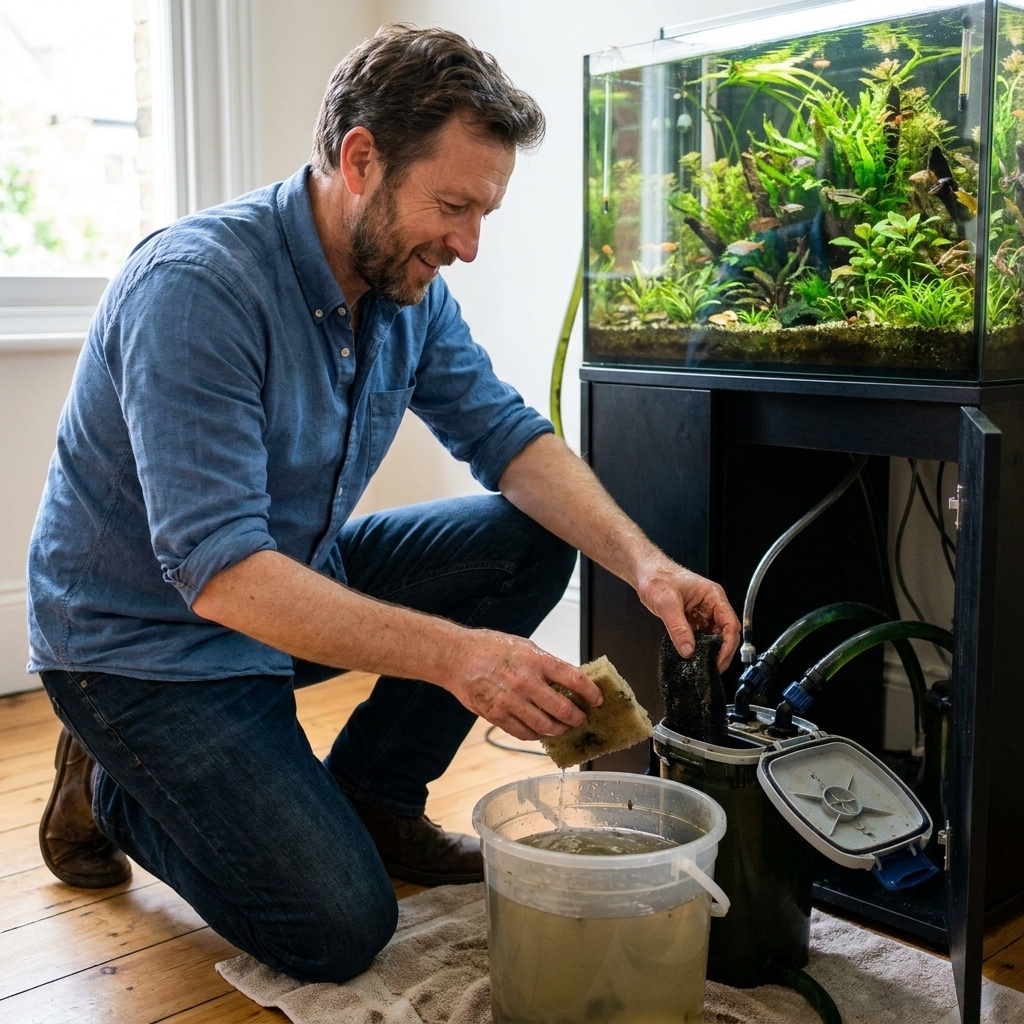
- Clean your filter media gently in tank water to restore flow without nuking beneficial bacteria.
- Reduce temperature a degree or two if safe for your species.
- Lower organic load by improving feeding habits and maintenance routine.
An air stone is a great tool, but it should not be a bandage over chronic overstocking or neglected flow.
FAQ
Do air pumps increase oxygen in a fish tank?
They can, mainly by increasing surface movement and circulation. The oxygen boost usually comes from improved gas exchange at the surface, not because bubbles dissolve huge amounts of oxygen on the way up.
Can a filter provide enough oxygen without an air stone?
Yes. Many aquariums run perfectly healthy with just a HOB, internal filter, or canister filter, as long as the surface is moving and the tank is not overheated or overstocked.
Is it okay to run an air stone 24/7?
Generally yes for non-CO2 tanks, especially if you like the extra movement. In CO2-injected planted tanks, 24/7 aeration can strip CO2 and make it harder to keep plants thriving. Many aquascapers use aeration only at night.
Will an air stone stress fish?
It can if the flow is too aggressive for the species, or if it creates constant turbulence in a tank meant for calmer fish like bettas. You can often reduce stress by using a smaller stone, lowering pump output, or placing it where it does not turn the whole tank into a washing machine.
What size air pump do I need?
Match the pump output to your tank size and the number of devices (one stone, two sponge filters, etc.). Bigger is not always better, because excess air can be noisy and unnecessarily turbulent. If possible, choose a pump with an adjustable output, or add an in-line valve to fine-tune the airflow.
My bottom line
If your filter keeps the surface moving and your fish behave normally, you probably do not need an air pump. But air stones are not snake oil either. They are one of the simplest, cheapest ways to add a safety margin, especially in warm tanks, heavy stocking, planted tanks at night, quarantine setups, and any situation where oxygen might dip.
When in doubt, remember the goal: healthy gas exchange at the surface and good circulation through the tank. If bubbles help you achieve that, they are doing their job.