An in-depth, hobbyist-tested look at aquarium test strips vs liquid drop kits, including accuracy, long-term costs, and when each makes the most sense.
Freshwater aquarium guidance
Essential Water Testing Kits for Freshwater Aquariums
Liquid kit or strips? Here’s what to buy and what to test: ammonia, nitrite, nitrate, pH, KH, GH, plus practical add-ons like chlorine checks, thermometer, and TDS.

Written by
Oliver Bennett
Oliver Bennett is a lifelong aquarist with over 15 years of experience in freshwater tank setup, aquascaping, and fish health. Through TankRoot, he shares his passion for creating balanced underwater ecosystems, helping hobbyists of all levels build thriving, beautiful homes for their fish.
Published: October 17, 2026
•
Updated: October 17, 2026
I still remember the first time I tested ammonia correctly. I was ten years old, staring at a little tube that had turned the wrong shade of green, while my “fine” carnival goldfish hovered at the surface. The pet store had told us the water was “clear,” so it must be healthy. It was not.
That early lesson never really leaves you: aquarium water can look perfect and still be chemically unsafe. A good water test kit is not a gadget. It is life support monitoring.

What to test first
If you only buy one kit, it must reliably cover the nitrogen cycle. These three parameters tell you whether your tank is cycled, cycling, or crashing.
- Ammonia (NH3/NH4+): The primary fish toxin from waste, food, and decay. In a healthy cycled tank it should read 0 ppm. One nuance that matters: most hobby kits measure total ammonia (NH3 + NH4+). The more toxic fraction is NH3, which increases as pH and temperature rise.
- Nitrite (NO2-): Also highly toxic. In a healthy cycled tank it should read 0 ppm.
- Nitrate (NO3-): Much less toxic, but still a long-term stressor. Typical community tanks do well when kept below 20 to 40 ppm. Sensitive livestock (some shrimp, fry, and certain soft-water species) often do better at much lower levels.
After that, you want to understand how stable your water chemistry is. This is where many mystery deaths and chronic stress problems come from.
- pH: Acidity and alkalinity. Fish can adapt to a range, but they struggle with swings.
- KH (carbonate hardness, alkalinity): Your pH buffer. In plain terms: low KH means acids can build up faster, and pH can drop quickly between water changes.
- GH (general hardness): Calcium and magnesium availability. Critical for livebearers, snails, shrimp, and healthy osmoregulation in many fish.
And then there are situational tests that are absolutely worth owning if your tank, tap water, or livestock calls for them.
- Chlorine/chloramine: Important if you suspect a dechlorinator issue or you are doing large water changes.
- Phosphate: Helpful when chasing stubborn algae, especially in high-light planted tanks.
- Copper: Essential if you keep shrimp or snails and you medicate with copper-based treatments. Copper plumbing is usually not a problem by itself, but it can become one with corrosive, low-pH water, brand-new plumbing, or water that has been sitting in pipes for hours.
- Iron: Useful for dialed-in planted tanks using fertilizers, particularly if plants show deficiency signs.
Freshwater note: This guide is for freshwater aquariums. Saltwater and reef systems need additional testing, including salinity, alkalinity, calcium, and magnesium.
Liquid kits vs strips
Both can work, but they are not equal. The right choice depends on what you are testing for and how precise you need to be.
Liquid test kits
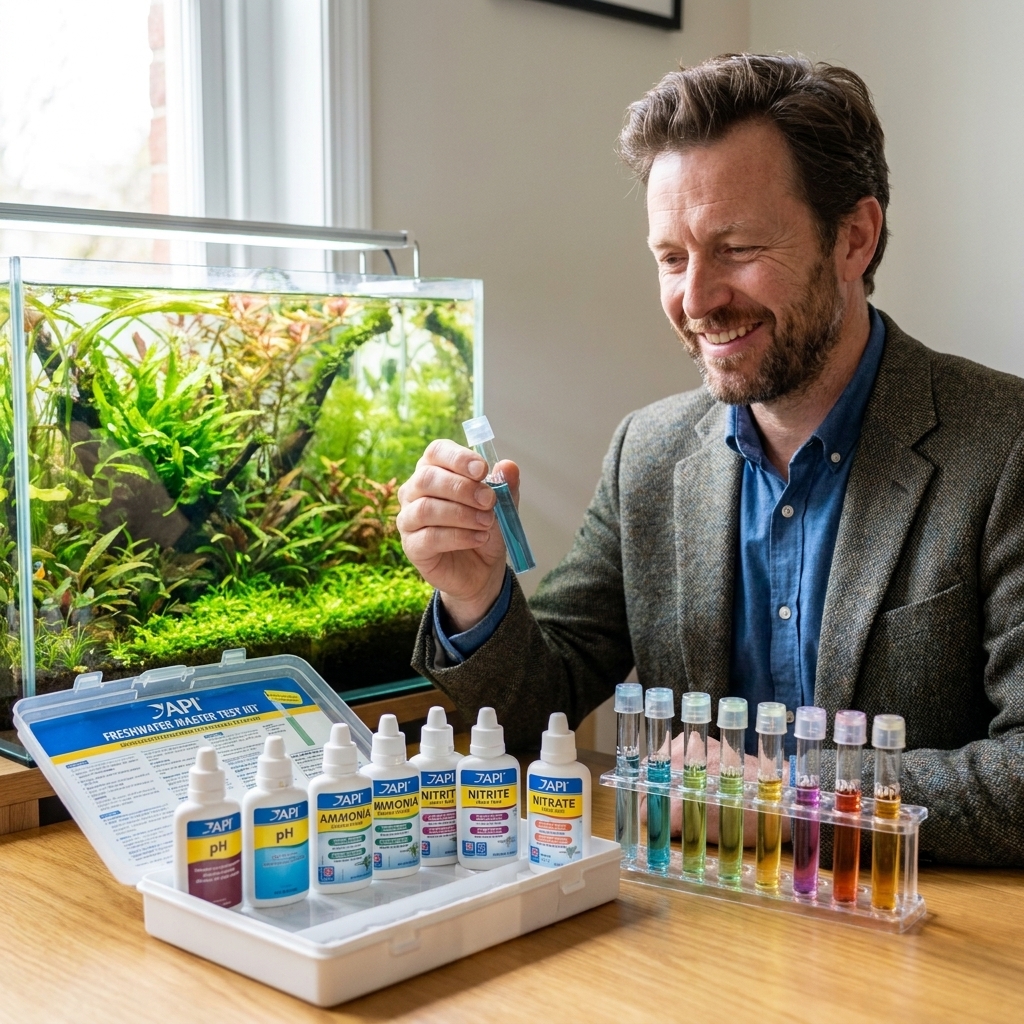
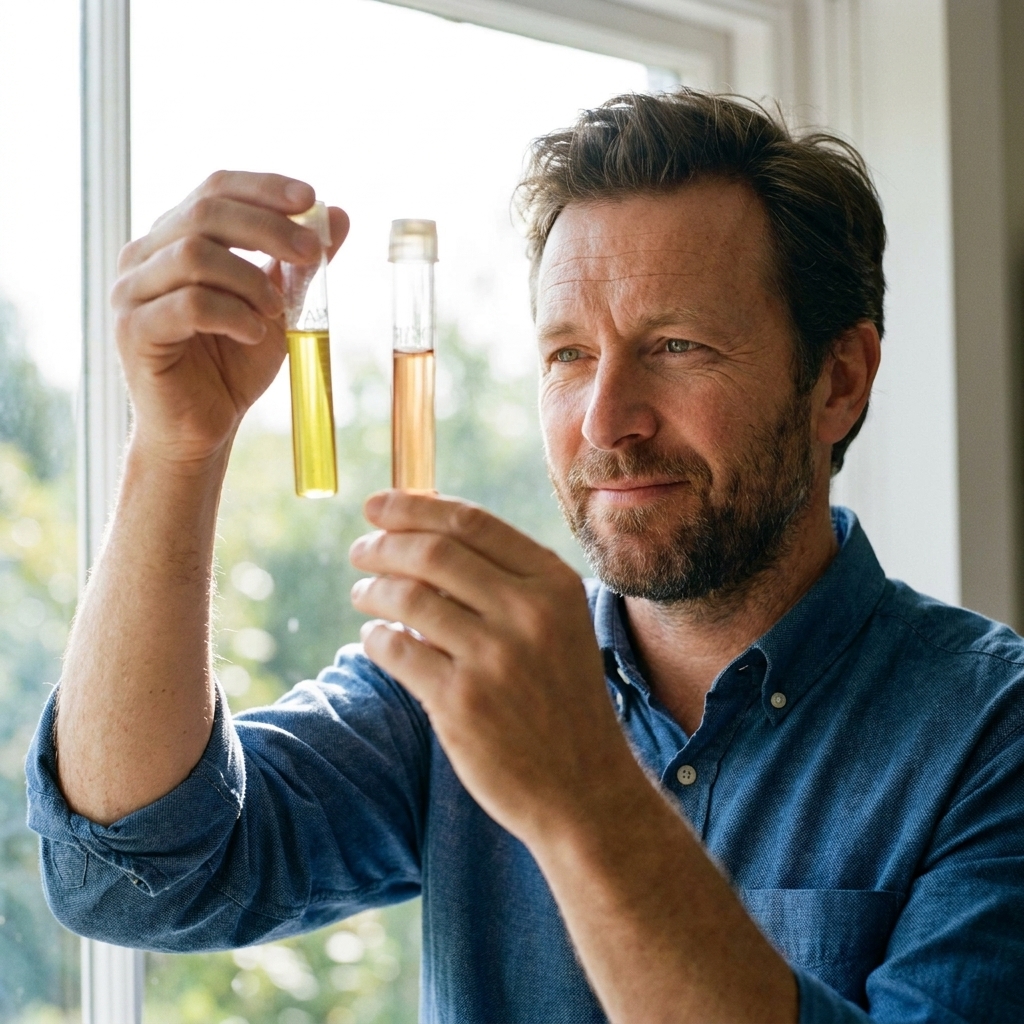
Liquid kits use reagents and a color card. They take a few minutes, but for most freshwater keepers they are often the most reliable option, especially for cycling and troubleshooting.
- Pros: Better accuracy and resolution, usually more tests per dollar, more dependable for ammonia and nitrite.
- Cons: Slower, more steps, requires clean tubes and decent lighting for reading colors.
Test strips
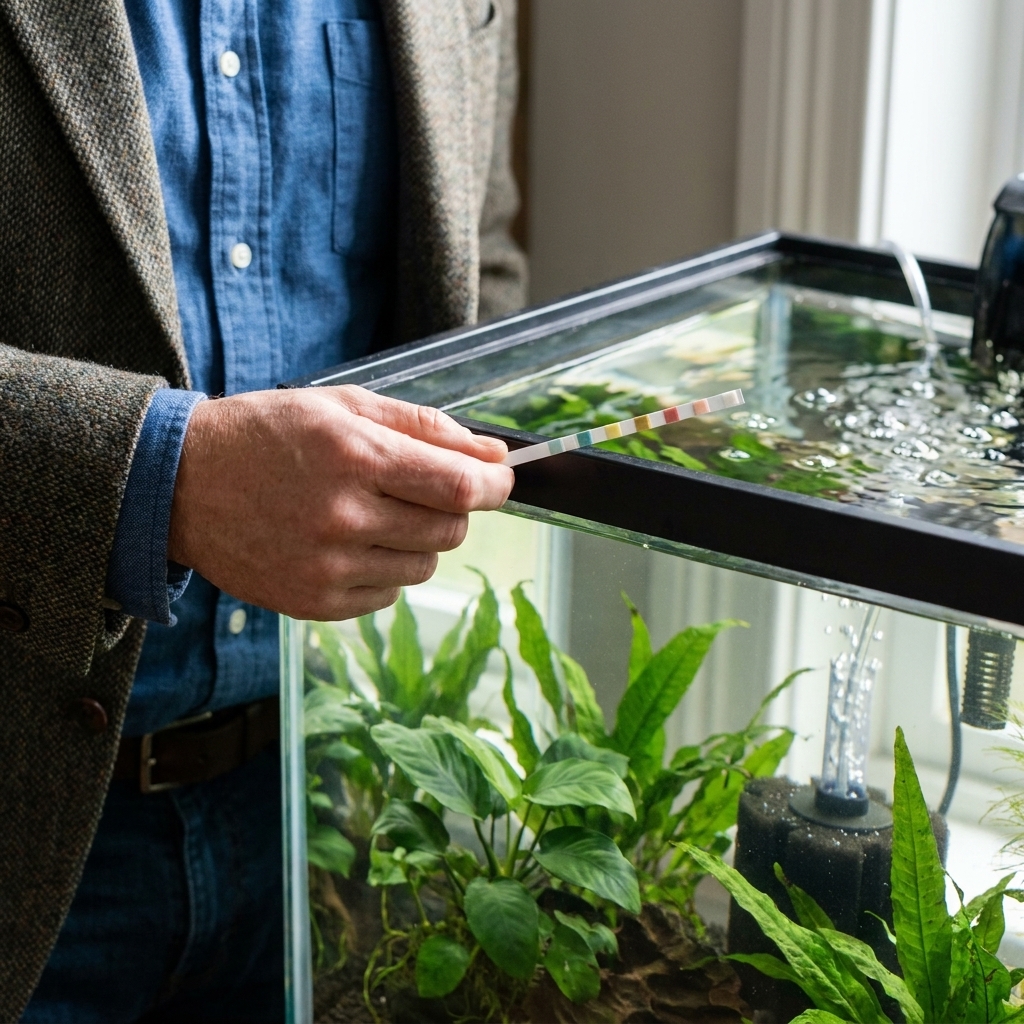
Strips are fast. Dip, wait, compare. That convenience is real, especially when you are tired or in a hurry.
- Pros: Very quick, low-friction testing means you do it more often, handy for travel and quick checks.
- Cons: Can be inconsistent if the bottle gets humid, some brands struggle with ammonia accuracy, color blocks can be broad so small changes get missed.
My practical rule: use liquid tests for ammonia and nitrite (and ideally nitrate). Use strips as a convenience tool for GH, KH, and pH spot checks, or as a “something feels off” first glance.
The core kit to buy
If you are building a smart, minimal setup that still protects fish, aim for this lineup.
1) A liquid master kit for the nitrogen cycle
You want a liquid kit that includes ammonia, nitrite, nitrate, and pH. This is the kit that tells you whether your biological filtration is doing its job.
- Must have: ammonia, nitrite, nitrate
- Nice to have: both low-range and high-range pH readings, depending on your water
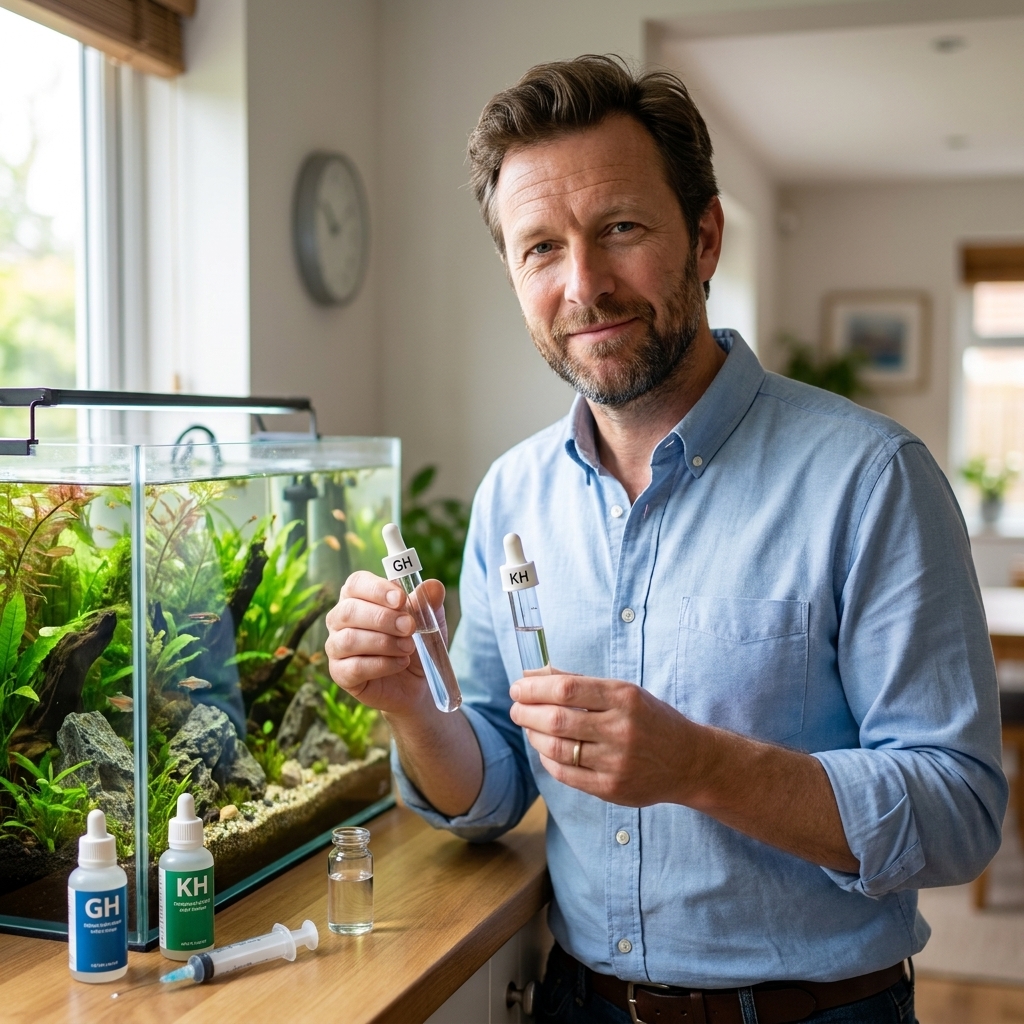
2) A separate GH and KH test
Many “master” kits do not include GH and KH. For planted tanks, livebearers, African cichlids, shrimp, snails, and anyone dealing with pH instability, GH and KH are not optional.
- GH helps you: avoid molting issues in shrimp, shell erosion in snails, and chronic stress in hard-water fish kept too soft.
- KH helps you: prevent pH swings, understand why pH keeps drifting down, and plan water changes intelligently.
3) A chlorine or chloramine check
If your city uses chloramine, or if you do large water changes, a chlorine or chloramine test can catch rare but catastrophic mistakes: under-dosing dechlorinator, a bad bottle, or a sudden change in municipal water treatment.
4) Two small tools people forget
- A thermometer: Temperature is not a “test kit” item, but it is a parameter that can swing fast and change how fish handle stress (and how toxic ammonia can be).
- TDS or conductivity meter (optional): Not required for most basic community tanks, but extremely helpful if you use RO water, remineralize for shrimp, or want a quick way to spot “something changed” in your source water.
When to test
Most hobbyists do not need to test everything every day. You need the right tests at the right times.
During cycling
- Ammonia: daily or every other day
- Nitrite: daily or every other day
- Nitrate: 1 to 2 times per week
- pH: a couple times per week, especially if KH is low
If you are doing a fish-in cycle, increase testing and treat numbers like an emergency early warning system. The goal is to keep ammonia and nitrite at or near 0 with water changes and strong aeration. Some keepers use detoxifiers to temporarily bind ammonia or nitrite, but I still treat those as a backup, not a substitute for testing and water changes.
First month after the cycle completes
- Test ammonia and nitrite weekly
- Test nitrate weekly to set your water change rhythm
- Test GH and KH once or twice to learn your baseline
Established tanks
- Nitrate: weekly or every other week
- pH and KH: monthly, or anytime you notice pH drift, unexplained stress, or increased algae
- Ammonia and nitrite: after major changes (new fish load, filter change, power outage, medication, deep substrate cleaning)
My personal habit: I test nitrate weekly because it tells me whether my routine is keeping up with the tank. Ammonia and nitrite are my alarm tests any time something changes or feels off.
How to test accurately
Bad readings lead to bad decisions. These simple habits prevent most testing headaches.
- Use clean tubes every time: Rinse with tap water, then a final rinse with tank water before filling for the test.
- Follow the timer, not your intuition: Many tests develop color over a specific window. Too early or too late can shift results.
- Read colors in neutral light: Daylight near a window is ideal. Warm indoor bulbs can make nitrate and pH look off.
- Shake nitrate reagents hard: Many nitrate liquid tests require vigorous shaking for accurate readings. This is not optional.
- Store reagents like they matter: Keep bottles sealed, cool, and out of direct light. Replace old reagents, especially if results start to look inconsistent or you are past the expiration date.
- Keep strip containers dry: Do not open them with wet hands over the tank. Humidity ruins strips and creates weird results.
- Track trends: A notebook or phone note with dates is more valuable than a single reading.
Match kits to livestock
The “essential” kit changes slightly depending on what you keep. Here are a few common scenarios.
Community tropical tanks
- Ammonia, nitrite, nitrate, pH
- GH and KH strongly recommended
Planted tanks with CO2
- Ammonia, nitrite, nitrate
- KH (very important for understanding pH behavior)
- Optional: phosphate and iron if you are troubleshooting algae or dialing in fertilization
Shrimp and snails
- Ammonia, nitrite, nitrate
- GH and KH are essential
- Copper test is a smart safety net if you medicate or worry about water sources
- Optional: TDS meter if you remineralize or want a quick stability check
African cichlids
- Ammonia, nitrite, nitrate
- pH and KH are important because stable alkalinity matters
- GH is useful depending on your source water and salt or mineral routine
Target numbers
There is no single perfect universal pH or hardness. Healthy tanks are about stability and keeping toxins at zero. Still, these targets are solid for most freshwater setups.
- Ammonia: 0 ppm
- Nitrite: 0 ppm
- Nitrate: ideally under 20 ppm for many community tanks; under 40 ppm is often acceptable if fish are otherwise thriving and water changes are consistent (aim lower for sensitive species)
- pH: stable, appropriate for your species, and not swinging between water changes
- KH: enough to prevent pH instability (what that means depends on your water and whether you use CO2, botanicals, or very soft water sources)
If you are keeping a species with strict needs, use their requirements as the final word. The kit’s job is to help you match and maintain those conditions.
Quick buying checklist
If you want the just-tell-me-what-to-buy version, this is it.
- Mandatory: liquid tests for ammonia, nitrite, nitrate (often sold together), plus pH
- Strongly recommended: GH and KH test
- Situational add-ons: chlorine or chloramine, copper, phosphate, iron, TDS meter
- Nice to have: a thermometer and a small notebook or app log for results
FAQ
Are test strips accurate enough?
They can be accurate enough for quick trend checks, especially for GH, KH, and pH. For cycling and fish safety decisions, I do not rely on strips for ammonia and nitrite. Those are the readings where precision and repeatability matter most.
Why does my tank show 0 ammonia and 0 nitrite but fish still look stressed?
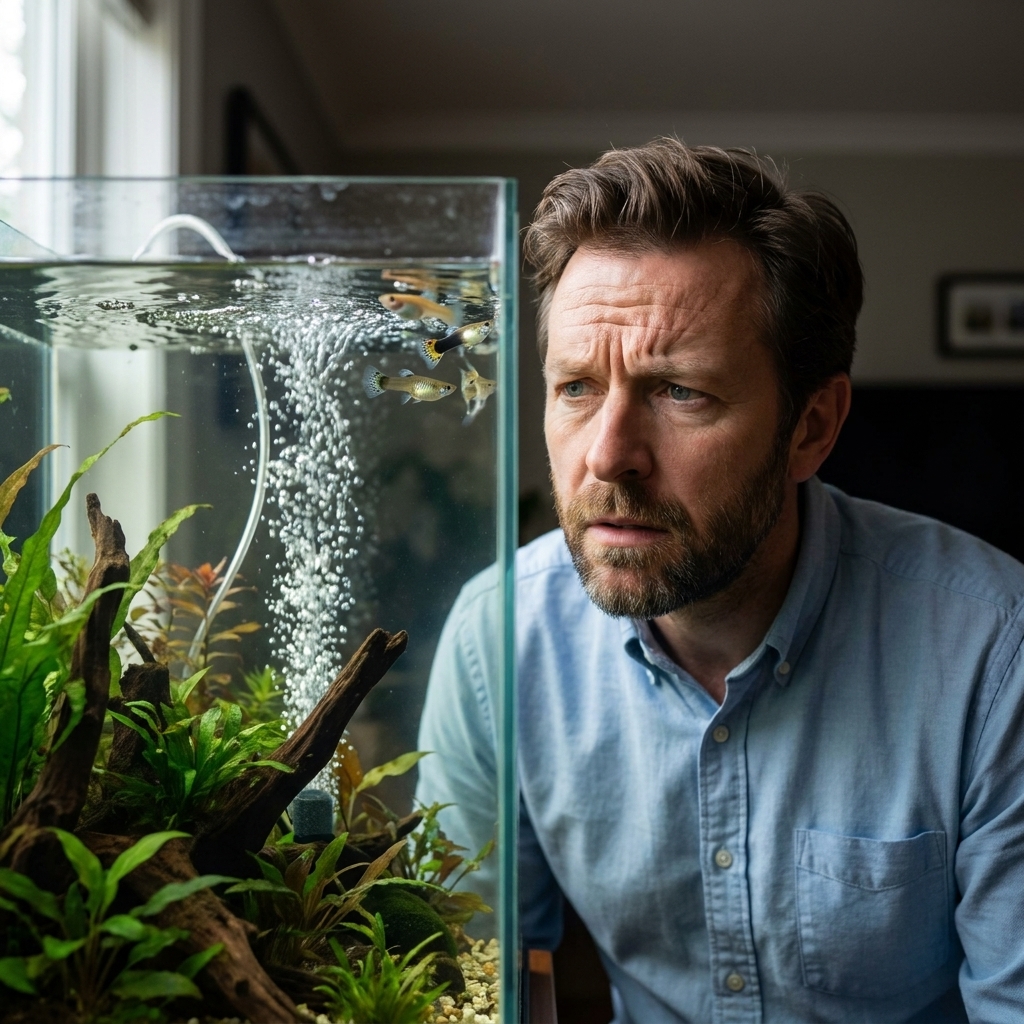
That is when you zoom out: check nitrate, temperature, dissolved oxygen (surface agitation), and stability of pH and KH. Also consider non-water issues like aggression, overstocking, and disease. Water tests are essential, but they are not the only diagnostic tool.
Do I need to test every week forever?
Not everything. Most established tanks can get by with regular nitrate testing and occasional pH and KH checks, plus ammonia and nitrite anytime you change something significant. The goal is fewer surprises, not living in a lab.
What is the fastest way to know if my cycle crashed?
Test ammonia and nitrite immediately with a liquid kit. If either is above zero, treat it like an emergency: stop feeding, increase aeration, and do water changes while you troubleshoot the cause.
Bottom line
If I could only give a new fish keeper one piece of gear, it would be a reliable liquid kit for ammonia, nitrite, and nitrate. Everything else builds from there. When you can measure what is happening, you stop guessing, you stop chasing myths, and your tank becomes calmer for you and safer for your fish.