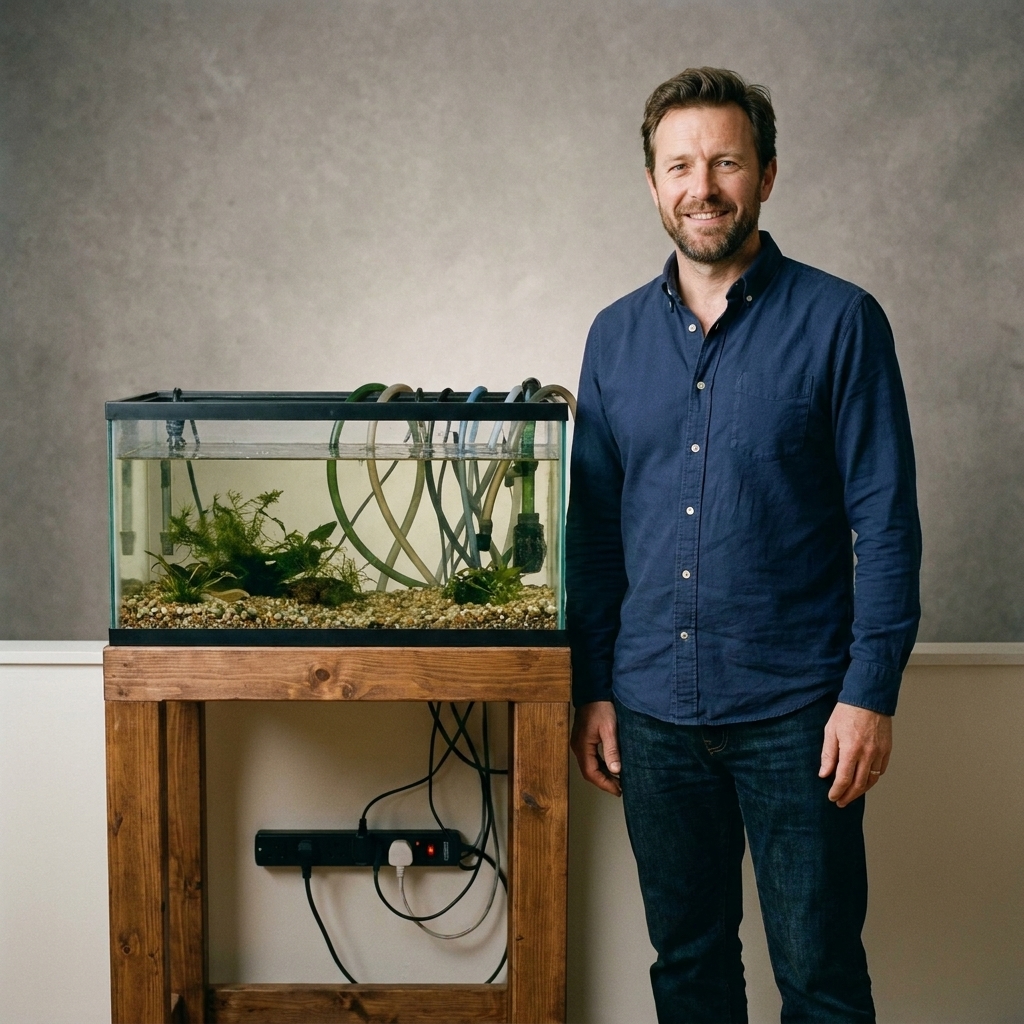
A beginner-friendly, step-by-step guide to setting up a 20-gallon freshwater aquarium, from choosing a safe spot and installing gear to cycling the tank and ...
Freshwater aquarium guidance
15 Peaceful Community Fish That Won’t Nip Fins or Bully Tank Mates
A curated list of calm freshwater fish for mixed community tanks, with temperament notes, swimming levels, and pairing tips to avoid fin nipping and bullying.

Written by
Oliver Bennett
Oliver Bennett is a lifelong aquarist with over 15 years of experience in freshwater tank setup, aquascaping, and fish health. Through TankRoot, he shares his passion for creating balanced underwater ecosystems, helping hobbyists of all levels build thriving, beautiful homes for their fish.
Published: October 17, 2026
•
Updated: October 17, 2026
I still remember my first “community” tank turning into a stress factory because I trusted the label on a store tank that said peaceful. The fish were not peaceful. The fins told the story.
If your goal is a calm, mixed-species aquarium where everybody eats, colors up, and acts like themselves, you want fish that are naturally non-territorial, not mouthy, and not wired to chase anything that moves.
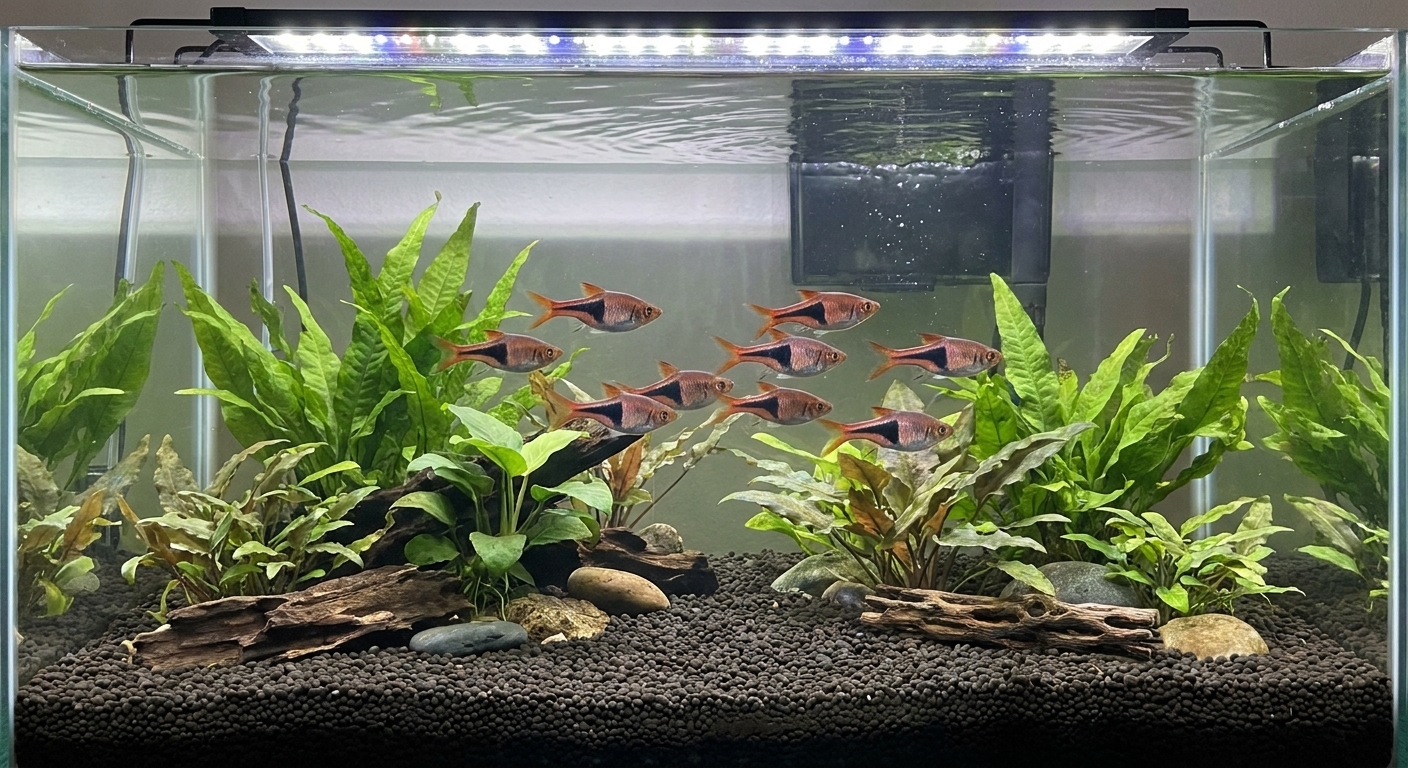
Below are 15 peaceful community fish I regularly recommend for beginners and seasoned aquascapers alike. For each one, I will call out temperament, swimming level, and a couple of realistic watch-outs so you can avoid the fin-nip roulette.
What “peaceful” means
A fish can be labeled peaceful and still cause problems if the tank setup is wrong. When people see fin damage or bullying, it usually comes from one of these issues:
- Too few of a schooling fish, which makes them anxious and more likely to chase.
- Not enough space or sight breaks, so fish cannot get away from each other.
- Long-finned tank mates (bettas, guppies, veil angelfish varieties) paired with fish that are “curious” with their mouths.
- Wrong species mix, like a calm fish forced to share territory with a pushy bottom-dweller.
Every fish below has a strong track record for calm behavior in an appropriately sized tank, with the right group sizes and hiding spots.
Before you mix fish
Peaceful stocking is not just about temperament. It is also about matching the tank’s “comfort settings.” Two quick guardrails save a lot of regret:
- Pick a temperature lane. Some fish here are cool-tolerant (like white clouds). Others are true tropical fish (like cardinals, rummy noses, and gouramis). Build your community so everyone is comfortable at the same temperature, not just surviving.
- Match water chemistry when you can. Soft-water fish (often cardinals and rummy noses) tend to thrive in lower hardness, while livebearers like Endler’s often do best in harder water. Many tank-bred fish adapt, but your easiest “peaceful” tank is the one where nobody is stressed by the basics.
15 peaceful community fish
1) Harlequin Rasbora (Trigonostigma heteromorpha)
Temperament: Exceptionally peaceful, steady schooling behavior.
Swimming level: Mid to upper.
Best kept: Group of 8+.
Why I like them: They are “all business” in the nicest way: they school, they eat, and they rarely pick fights. Great with tetras, Corydoras, and gouramis that are not aggressive.
Watch-outs: Keep them in a real group. In tiny numbers they can become skittish and hide, which makes the tank feel empty.
2) Lambchop Rasbora (Trigonostigma espei)
Temperament: Gentle, slightly smaller and more delicate than harlequins.
Swimming level: Mid.
Best kept: Group of 10+ if possible.
Why I like them: A top-tier nano community fish for planted tanks. They stay compact, look great in a school, and almost never nip.
Watch-outs: Avoid pairing with larger, boisterous fish that rush food. They do best in calmer tanks where feeding is not a stampede.
3) Glowlight Tetra (Hemigrammus erythrozonus)
Temperament: Peaceful, mild schooling fish.
Swimming level: Mid.
Best kept: Group of 8+.
Why I like them: Glowlights are one of the safer tetra choices when your main fear is fin nipping. They look fantastic under planted-tank lighting without acting like piranhas.
Watch-outs: Like most tetras, they can get nippy if cramped or under-schooled. Give them room to cruise and a proper group.
4) Rummy Nose Tetra (Hemigrammus bleheri / H. rhodostomus)
Temperament: Very peaceful, tight schooling.
Swimming level: Mid.
Best kept: Group of 10+.
Why I like them: When rummy noses are comfortable, they form one of the most cohesive schools in freshwater. That “one mind” behavior tends to reduce random chasing.
Watch-outs: They are more sensitive than many beginner fish and they like stability. They reward excellent water quality, a mature tank, and a longer footprint so the school can move naturally.
5) Cardinal Tetra (Paracheirodon axelrodi)
Temperament: Calm, non-nippy when kept correctly.
Swimming level: Mid.
Best kept: Group of 10+.
Why I like them: Cardinals are generally less “pecky” than some smaller tetras, and their calm schooling vibe suits peaceful community layouts.
Watch-outs: They do best in stable, established aquariums. If your tank is brand new, consider hardier schooling fish first.
6) Zebra Danio (Danio rerio)
Temperament: Hardy and community-friendly, but very high energy.
Swimming level: Upper to mid.
Best kept: Group of 8+.
Why I like them: Danios are great when you want motion and durability. In a proper group, they focus on each other and the zoomies, not bullying slower fish.
Watch-outs: This is the big one: zebra danios have a real reputation for chasing and fin nipping when paired with slow or long-finned fish. Skip them with bettas, fancy guppies, veil angelfish, or anything that moves like it is towing a parachute. They also do best in longer tanks with strong flow and open swimming space.
7) White Cloud Mountain Minnow (Tanichthys albonubes)
Temperament: Peaceful, lightly active.
Swimming level: Mid to upper.
Best kept: Group of 8+.
Why I like them: A classic gentle schooler that does well in slightly cooler community tanks. They are one of the easiest fish to keep peaceful.
Watch-outs: Match temperature to their comfort zone. If you run a consistently warm tropical tank, choose a warmer-water schooler instead.
8) Kuhli Loach (Pangio semicincta and related Pangio species)
Temperament: Extremely peaceful, shy.
Swimming level: Bottom.
Best kept: Group of 6+.
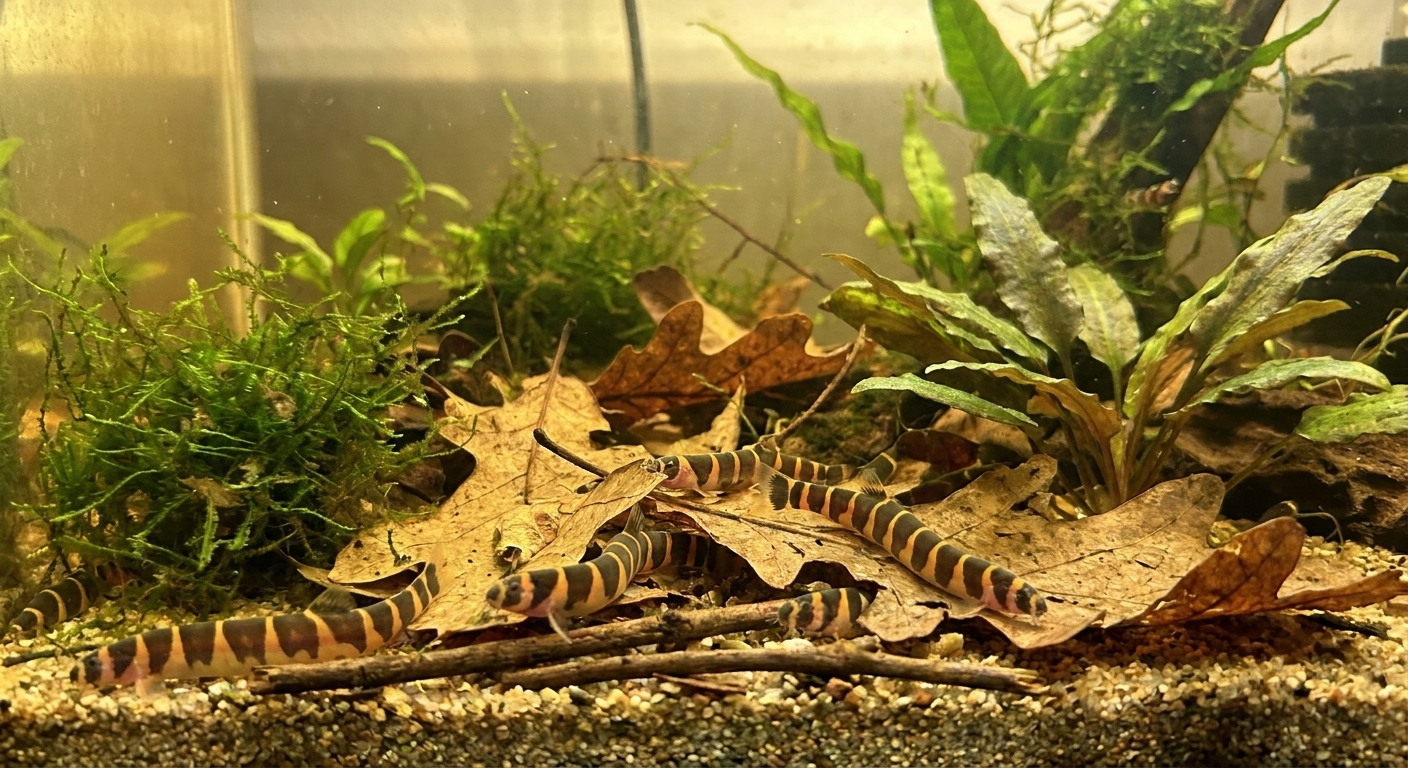
Why I like them: If you want a bottom-dweller that will not bully anybody, kuhlis are hard to beat. They are more “noodly scavenger” than “territorial catfish.”
Watch-outs: Provide hiding spots like caves, driftwood, and leaf litter. Use sand or very smooth gravel to protect their sensitive bodies.
9) Corydoras Catfish (Corydoras spp.)
Temperament: Peaceful, social, goofy in the best way.
Swimming level: Bottom (with frequent midwater dashes).
Best kept: Group of 6+ of the same species.
Why I like them: Corys are community tank glue. They rarely bother anyone, they reduce leftover food (they are not “cleaners,” but they do help), and they bring life to the lower half of the aquarium.
Watch-outs: Keep them on sand if possible. Many Corydoras species wear their barbels down on sharp substrate.
10) Otocinclus (Otocinclus spp.)
Temperament: Very peaceful, non-territorial.
Swimming level: Bottom to mid (mostly on surfaces).
Best kept: Group of 6+.
Why I like them: Otos are one of the safest algae grazers for peaceful communities. They tend to ignore fish completely and focus on biofilm and soft algae.
Watch-outs: They should go into a mature tank with established biofilm and aufwuchs. Be prepared to offer supplemental foods (algae wafers, gel foods, blanched vegetables, fine sinking foods) and actually monitor bellies. A “too clean” tank can be a quiet starvation trap for otos.
11) Bristlenose Pleco (Ancistrus sp.)
Temperament: Generally peaceful, but can be territorial with other plecos, especially males.
Swimming level: Bottom (wood, glass, rocks).
Best kept: Usually one per tank. If you keep more, aim for one male max and provide multiple caves with line-of-sight breaks.
Why I like them: Bristlenoses are a practical, community-friendly pleco choice that usually avoids drama. They are far less likely to become an oversized wrecking ball than common plecos.
Watch-outs: Provide driftwood and a cave. And do not expect them to solve an algae problem by themselves. Algae control is mostly light and nutrients.
12) Honey Gourami (Trichogaster chuna)
Temperament: One of the gentlest gouramis.
Swimming level: Mid to upper.
Best kept: Single, pair, or small group in a calm tank.
Why I like them: Honey gouramis are a wonderful centerpiece fish when you want personality without bullying. In planted tanks, they glide rather than patrol.
Watch-outs: Avoid pairing with fin nippers or hyperactive fish that harass them at the surface. Floating plants help them feel secure.
13) Sparkling Gourami (Trichopsis pumila)
Temperament: Peaceful, shy, micro-predator that prefers small live or frozen foods.
Swimming level: Mid to upper (often among plants).
Best kept: Pair or small group with cover.
Why I like them: A small, charming centerpiece for nano communities that will not shred fins. They love dense planting and calm tank mates.
Watch-outs: They can be outcompeted at feeding time. Offer small foods and make sure they are actually eating.
14) Cherry Barb (Puntius titteya)
Temperament: Generally peaceful, especially in groups.
Swimming level: Mid.
Best kept: Group of 8+ with a good male-to-female balance.
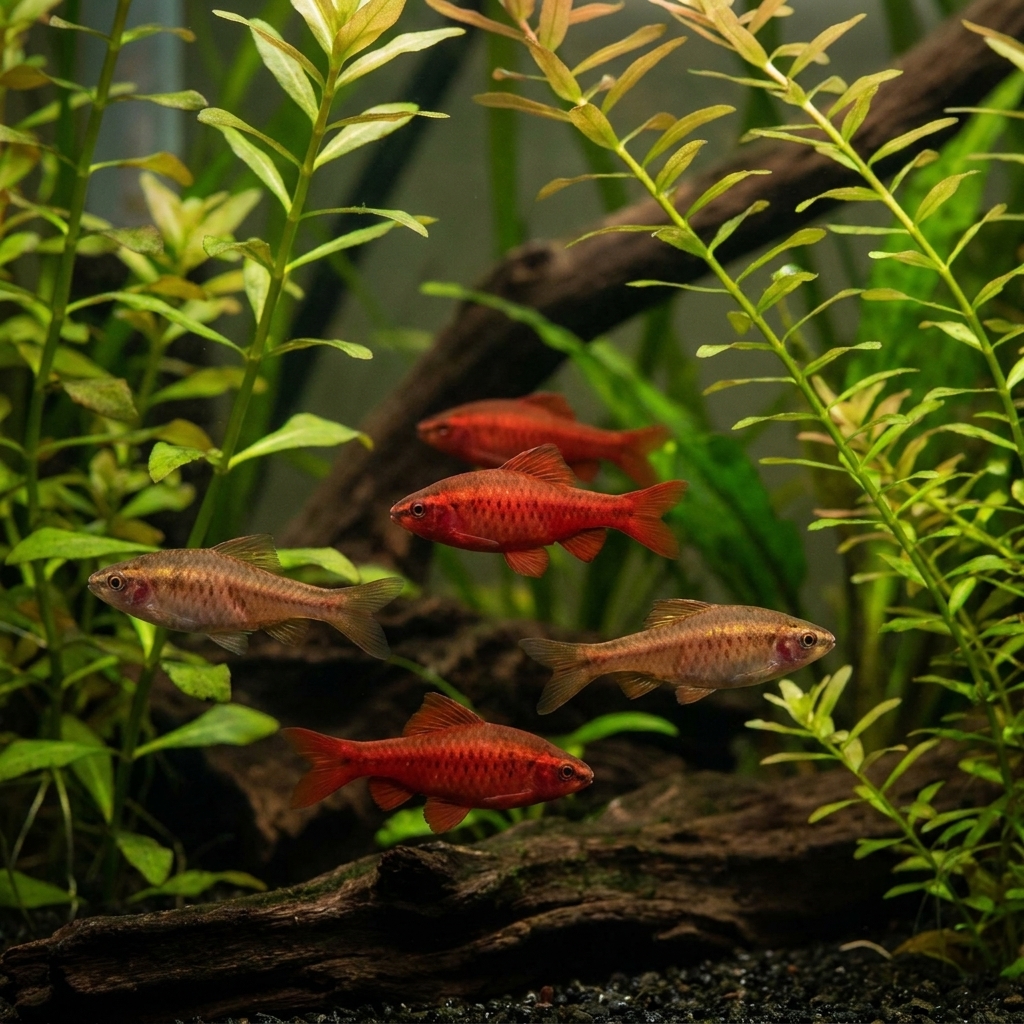
Why I like them: Cherry barbs are one of the safest barb species for community tanks. They are far less nippy than tiger barbs and usually keep to themselves.
Watch-outs: Like many fish, they behave best with enough numbers and enough space. They can also get a little too curious with very long fins if they are stressed or kept too few, so stick to the group-size rule and avoid pairing with extreme long-finned show fish.
15) Endler’s Livebearer (Poecilia wingei)
Temperament: Peaceful, constantly active, rarely bothers fins.
Swimming level: Upper to mid.
Best kept: Group, often male-only to prevent endless breeding.
Why I like them: Endlers bring color and motion without the “I must nip that” habit some community fish develop. They are a great choice for hardier planted communities.
Watch-outs: They reproduce quickly if you keep mixed sexes. Also, their small size makes them poor choices with larger fish that might view them as snacks. They also tend to do best in harder water, so plan your mix accordingly.
Rules that prevent nipping
- Schooling fish need schools. If a species is listed as 8+, believe it. Under-schooled fish are stressed fish.
- Mix swimming levels on purpose. A calm tank often looks like: schoolers in the midwater + a bottom group (Corydoras or kuhlis) + one gentle centerpiece.
- Avoid temptation fins in mixed tanks. Long-finned guppies and fancy bettas can invite trouble from fish that are otherwise fine.
- Use plants and hardscape to break sight lines. Tall stems, wood, and rockwork reduce chasing because fish cannot see each other constantly.
- Feed like a calm adult, not a confetti cannon. Spread food across the tank, use sinking foods for bottom fish, and avoid letting the fastest fish control every meal.
- Respect tank footprint for active fish. Some peaceful fish still need runway. Give fast schoolers enough length to move, or they will burn that energy on tank mates.
Peaceful fish that can bully
Some “usually peaceful” fish are only peaceful in the right setup. If you are dealing with fin damage, these are frequent culprits:
- Tiger barbs: Not a peaceful community fish unless kept in a large group in a species-leaning setup.
- Serpae tetras: Beautiful, but infamous for nipping slow or long-finned fish.
- Male livebearers in cramped tanks: Sometimes the “bully” is really constant mating harassment.
- Angelfish: Can be calm when young, then become territorial as they mature or pair off.
FAQ
What is the most peaceful fish for a community tank?
If I had to pick one “safe bet,” it is Corydoras catfish for the bottom and harlequin rasboras for the midwater. Both are reliably calm when kept in proper groups and given clean, stable water.
How do I stop fin nipping without rehoming fish?
First, increase the school size of the suspected nipper (if it is a schooling species), add plant cover to break sight lines, and make sure the tank is not overcrowded. Also check feeding. Underfed or outcompeted fish are more likely to act out.
Are guppies good peaceful community fish?
Guppies can be peaceful, but their long fins make them a target. If your priority is no fin damage, consider Endler’s livebearers or a rasbora school instead of fancy guppies.
What tank size helps keep a community peaceful?
Peace is easier in bigger water. Many of the fish above can live in smaller aquariums, but a 20 gallon long (or larger) is a sweet spot for mixing species because it gives schooling fish room to move and everyone else room to get away.
A final note
Peaceful community tanks are not about finding “nice” fish. They are about stacking the deck in your favor: correct group sizes, compatible energy levels, enough space, and a layout that gives every fish a place to breathe.
If you are planning a community, build it on paper first: tank size, temperature, hardness, and the exact fish you want. Do that, and this list becomes a menu instead of a gamble.