A practical breakdown of aquarium water test kits and the parameters that keep freshwater fish safe: ammonia, nitrite, nitrate, pH, KH, GH, plus when to test...
Freshwater aquarium guidance
10 Most Resilient Freshwater Fish for Beginners
Start your first aquarium with hardy fish that handle common new-tank hiccups. Here are 10 resilient freshwater species, with care notes, tank size tips, and compatibility advice.

Written by
Oliver Bennett
Oliver Bennett is a lifelong aquarist with over 15 years of experience in freshwater tank setup, aquascaping, and fish health. Through TankRoot, he shares his passion for creating balanced underwater ecosystems, helping hobbyists of all levels build thriving, beautiful homes for their fish.
Published: October 17, 2026
•
Updated: October 17, 2026
I still remember my first “beginner proof” fish: a carnival goldfish in a tiny bowl, fed like a puppy, and slowly poisoned by its own waste. It was a rough lesson, but it taught me the most important truth in fishkeeping: hardy fish help, but stable water is what keeps fish alive.
That said, choosing resilient species absolutely stacks the odds in your favor while you learn the rhythm of water changes, testing, feeding, and stocking. Below are 10 freshwater fish that tend to tolerate the most common beginner mistakes, like mild parameter swings, an early algae phase, or the occasional missed water change.
What “resilient” means
When I call a fish resilient, I mean it usually does well when:
- Water parameters are not perfect (but still within safe ranges).
- The tank is new and you are still learning consistency.
- Feeding is a little uneven (overfeeding is common early on, and these fish are less likely to crash immediately).
- Minor stress happens, like a small temperature change during a water change.
Resilient does not mean “can live in ammonia.” Any fish will suffer in an uncycled tank. If you are still cycling, focus on completing the nitrogen cycle first, or use a proven fish-in approach with testing, conditioner, and daily diligence.
My rule: If you cannot test for ammonia, nitrite, and nitrate, you are not ready to stock based on “hardy fish.” Test kits are cheaper than replacing livestock.
10 resilient freshwater fish
1) Zebra Danio (Danio rerio)
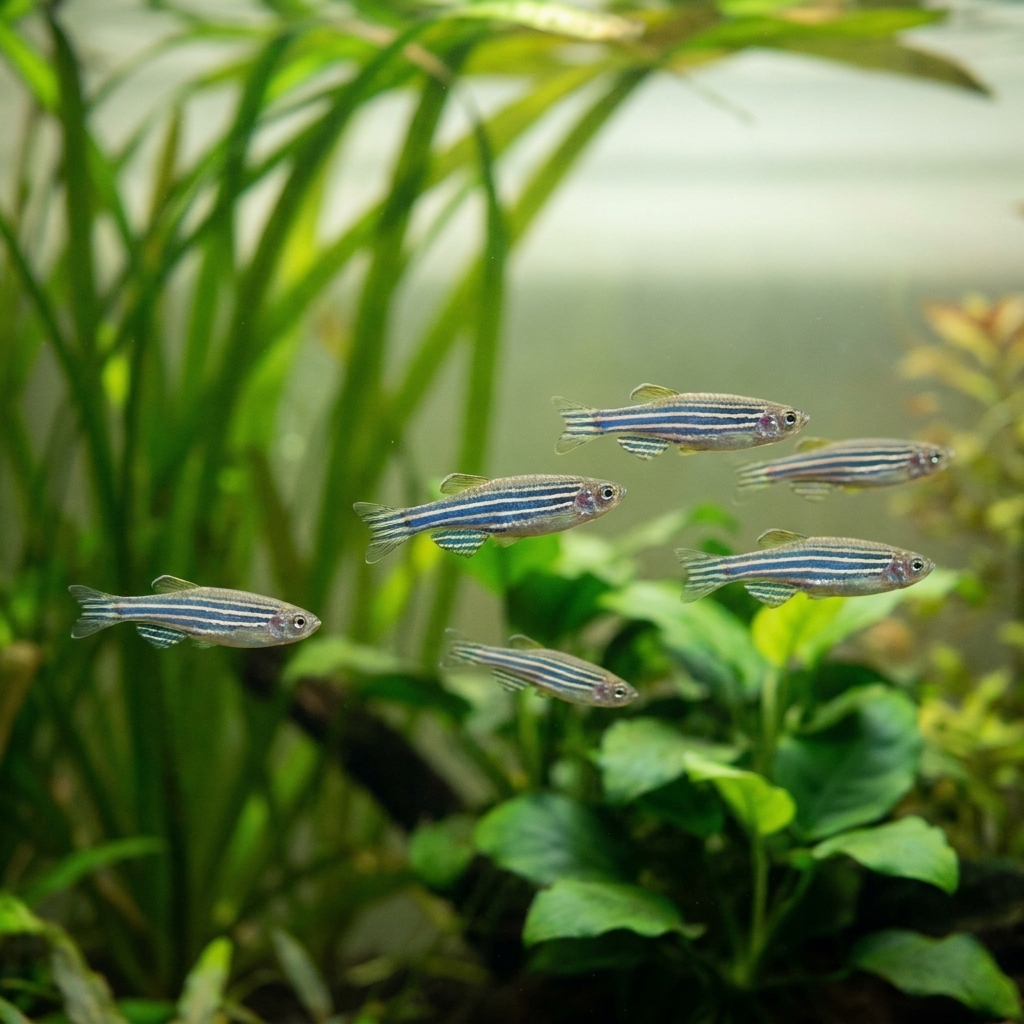
If I had to pick one classic starter fish that reliably forgives beginner stumbles, it is the zebra danio. They are active, tough, and quick to show you when something is off because they are always out and moving.
- Best in: groups of 6 or more
- Minimum tank: 10 gallons (a longer footprint like a 20 long is even better for swimming room)
- Temperature: roughly 64 to 78°F (they tolerate cooler “room-temp” setups; mid to upper 70s is fine when stable)
- Personality: energetic, can be nippy in small groups
- Beginner mistake they tolerate: mild temperature shifts and slightly imperfect numbers (not toxic ammonia or nitrite)
Keep them happier: Give them flow, open swimming space, and a tight lid. Danios can jump.
2) Cherry Barb (Puntius titteya)
Cherry barbs are one of my favorite “calm hardy” fish. They handle typical community tank conditions well and bring a warm red glow that looks incredible against plants.
- Best in: groups of 6 or more, with a mix of sexes
- Minimum tank: 20 gallons recommended
- Temperature: roughly 72 to 79°F
- Personality: peaceful, slightly shy without cover
- Beginner mistake they tolerate: modest nitrate creep from imperfect maintenance, as long as it is corrected
Keep them happier: Add plants or wood so they feel secure. A stressed cherry barb hides and loses color.
3) White Cloud Mountain Minnow (Tanichthys albonubes)
White clouds are famously hardy and often overlooked. They are an excellent choice if your home runs cooler, or if you do not want to use a heater.
- Best in: groups of 8 or more
- Minimum tank: 10 gallons (20 gallons for a bigger school looks amazing)
- Temperature: prefer roughly 64 to 72°F, and tolerate warmer water short-term, but do best long-term on the cooler side
- Personality: peaceful, active schooler
- Beginner mistake they tolerate: skipping a heater in a comfortably cool home
Watch out: Do not pair them with tropical fish that need sustained 78 to 80°F. White clouds can survive it, but they do not thrive long-term.
4) Platy (Xiphophorus maculatus)
Platys are one of the best “first fish” for a lot of beginners because they are sturdy, friendly, and easy to feed. They also come in tons of colors.
- Best in: small groups, ideally more females than males
- Minimum tank: 10 to 20 gallons
- Temperature: roughly 70 to 78°F
- Personality: peaceful, always cruising
- Beginner mistake they tolerate: moderately hard water and some nitrate drift (within reason)
Real talk: Platys are livebearers. If you keep males and females together, you will likely get fry. Have a plan before you accidentally create a fish factory.
5) Guppy (Poecilia reticulata)
Guppies are often recommended for beginners for good reason: they are tough, personable, and will teach you a lot fast. The key is buying healthy stock, because guppies can be sensitive to poor genetics from mass production.
- Best in: groups, often male-only groups are easiest
- Minimum tank: 10 gallons
- Temperature: roughly 72 to 80°F
- Personality: peaceful, active near the surface
- Beginner mistake they tolerate: typical community parameters, especially in moderately hard water
Keep them healthier: Prioritize stable temperature and avoid overfeeding. Constipation and bloat are common guppy problems in new tanks with heavy feeding.
6) Swordtail (Xiphophorus hellerii)
Swordtails are like platys turned up a notch: bigger, bolder, and generally resilient. They are a great choice if you want a centerpiece livebearer for a medium tank.
- Best in: groups, with extra females if keeping males
- Minimum tank: 20 gallons (30+ gallons is better for adults)
- Temperature: roughly 72 to 79°F
- Personality: active, can be pushy in cramped tanks
- Beginner mistake they tolerate: small parameter swings that would stress more delicate fish
Heads up: A 10 gallon is not a good long-term swordtail home, even if the fish is sold small. They grow, and they like to move.
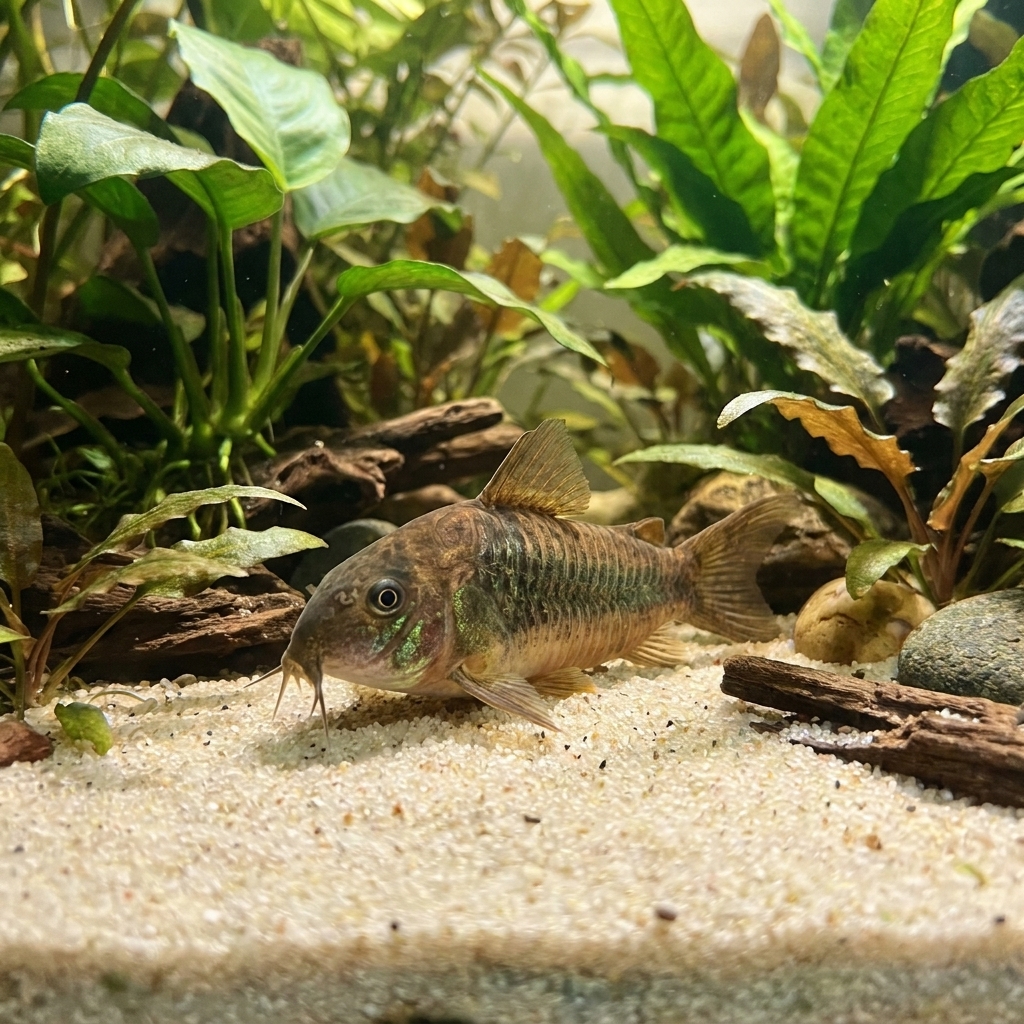
7) Bronze Corydoras (Corydoras aeneus)
For bottom dwellers, bronze cories are one of the most forgiving choices. They are peaceful, sociable, and constantly “busy,” which makes a tank feel alive.
- Best in: groups of 6 or more
- Minimum tank: 20 gallons recommended
- Temperature: roughly 72 to 78°F
- Personality: gentle, social
- Beginner mistake they tolerate: imperfect feeding routines, as long as they get sinking foods
Non-negotiable: Use soft sand or smooth fine gravel. Rough substrate can contribute to barbel wear, especially when the substrate is dirty and bacteria levels are high.
8) Peppered Corydoras (Corydoras paleatus)
Peppered cories are another excellent hardy Corydoras species, and they often do especially well in slightly cooler tanks compared to some tropical staples.
- Best in: groups of 6 or more
- Minimum tank: 20 gallons
- Temperature: roughly 68 to 77°F
- Personality: peaceful, active on the bottom
- Beginner mistake they tolerate: a cooler room and modest temperature fluctuation
Feeding tip: Corydoras are not algae eaters. They need sinking foods like wafers, pellets, and occasional frozen foods.
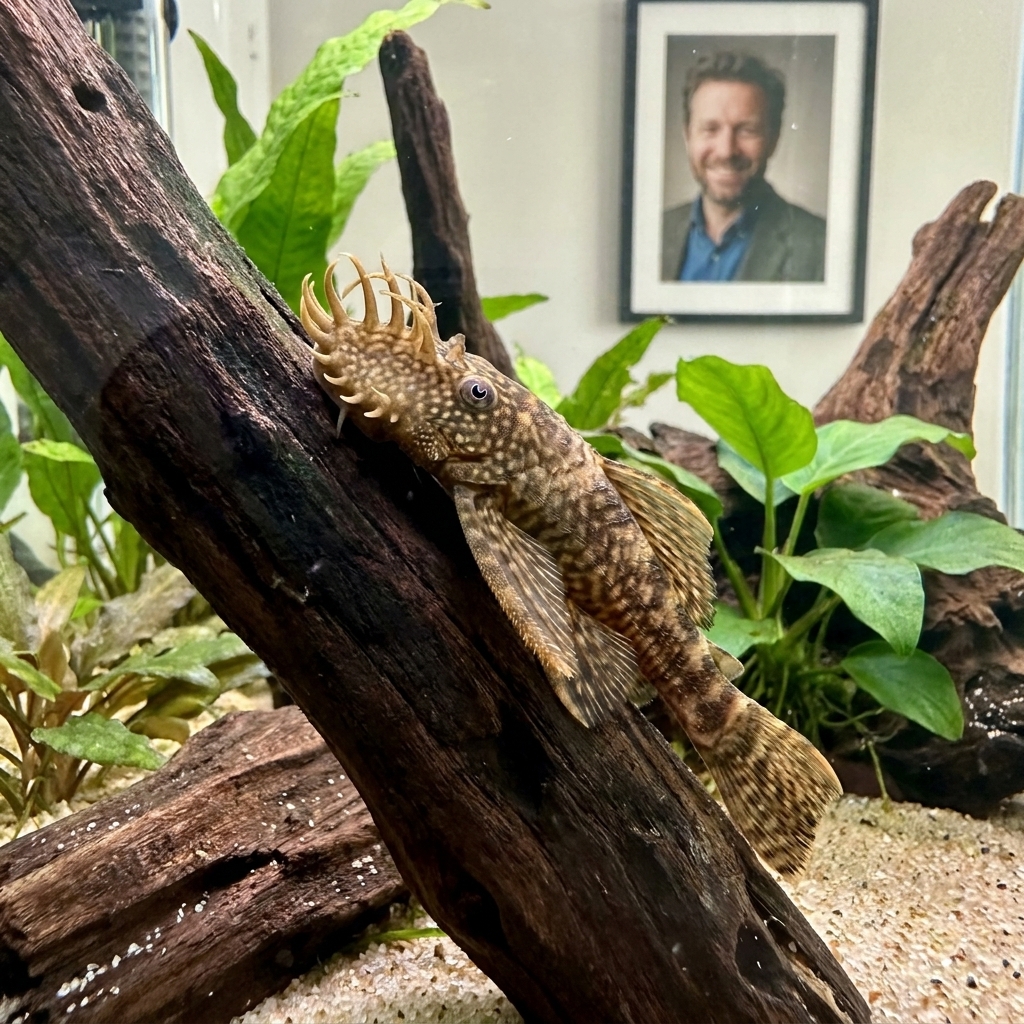
9) Bristlenose Pleco (Ancistrus sp.)
If you want an algae grazer that actually fits in a typical home aquarium, the bristlenose pleco is a far better beginner choice than “common plecos,” which can become massive.
- Best in: solo, or a male and female in larger tanks
- Minimum tank: 20 gallons (30+ gallons ideal)
- Temperature: roughly 73 to 80°F
- Personality: peaceful, mostly nocturnal
- Beginner mistake they tolerate: early-stage algae and mildly messy tanks better than delicate species (not neglected tanks)
Important: Algae is not a complete diet. Provide driftwood and offer wafers and blanched vegetables. A hungry pleco will slowly starve even in a green tank.
10) Honey Gourami (Trichogaster chuna)
If you want a gentle centerpiece fish, honey gouramis are often a more beginner-friendly choice than some other gourami species. They are not bulletproof, but in a stable, cycled tank they are surprisingly resilient and very personable.
- Best in: solo, a pair, or a small group in a well-planted tank
- Minimum tank: 10 gallons for one, 20 gallons for a group
- Temperature: roughly 74 to 82°F
- Personality: peaceful, calm
- Beginner mistake they tolerate: learning curves around community stocking, as long as tankmates are peaceful
Keep them happier: Provide floating plants or tall stems and keep flow moderate. Gouramis like calmer water near the surface.
Shopping list
The most resilient fish on Earth cannot outswim ammonia. If you are trying to keep things simple, these are the items that prevent most early problems:
- Liquid test kit for ammonia, nitrite, nitrate, and pH.
- Adequate filter media and patience. Do not replace all media at once.
- Heater (if tropical) plus a separate thermometer.
- Water conditioner that neutralizes chlorine and chloramine.
- A gravel vacuum for water changes that actually remove waste.
Stocking tips
- Buy a school, not a “couple.” Danios, barbs, white clouds, and cories are social fish. Too-small groups cause stress, nipping, and hiding.
- Add fish slowly. Even a cycled tank can be overwhelmed if you dump in a full community at once. Add a small group, wait a couple of weeks, then add more.
- Match temperament first, then looks. A peaceful tank is easier to maintain because fish are not stressed, injured, or constantly competing for food.
- Do not treat algae with panic. New tanks often go through algae phases. Fix lighting duration, feeding, and maintenance before reaching for harsh chemicals.
Easy combos that work
Here are a few realistic mixes that tend to be stable for new hobbyists. Always confirm your tank size and filtration can support your final stocking.
10 gallon tropical
- 6 male guppies or 1 honey gourami with 6 male guppies (pick peaceful tankmates and keep the heat stable)
Note: Zebra danios can work in a 10 gallon, but many do better with more horizontal swimming space. If you want danios, consider a longer tank like a 20 long.
20 gallon community
- 8 cherry barbs
- 6 bronze or peppered cories
- Optional: 1 bristlenose pleco if algae and space justify it
Cool-water (often no heater)
- 10 white cloud mountain minnows
- 6 peppered cories (only if your temperatures stay in their comfort range)
One compatibility note: Avoid mixing long-finned guppies with known fin-nippers, and avoid pairing very active fish with shy fish in small tanks.
Water chemistry notes
If you want an easier first year, aim for fish that like your tap water instead of fighting it.
- Livebearers (guppies, platys, swordtails) usually do best in moderately hard, more alkaline water.
- Corydoras often prefer softer, gentler water and consistently clean substrate.
You can mix these groups successfully in many “middle of the road” community setups, but if your water is extremely soft or extremely hard, choose species that match it, or be prepared to adjust intentionally and consistently.
Quarantine and acclimation
A lot of “hardy fish” losses are not about toughness, they are about stress and disease introduction. If you can, quarantine new fish in a simple separate tank for a couple of weeks. At minimum, acclimate slowly to temperature and water chemistry, keep the lights low on arrival day, and do not dump store water into your aquarium.
FAQ
Are “hardy fish” okay for cycling a tank?
I do not recommend using fish as disposable cycling tools. If you must do fish-in cycling, do it intentionally: stock lightly, test daily, use conditioner appropriately, and be ready for frequent water changes. It is more work, not less.
What is the most common beginner mistake these fish still cannot handle?
Ammonia and nitrite. Even “tough” fish can suffer permanent gill damage from exposure. If your test shows ammonia or nitrite above zero, treat it as urgent.
How do I know if my fish are stressed?
Common signs include clamped fins, hiding, gasping at the surface, flashing against objects, loss of color, rapid breathing, and refusing food. Test your water first before guessing at disease.
Which of these fish are best for a planted aquarium?
Cherry barbs, cories (with a plant-friendly substrate), honey gouramis, and bristlenose plecos all pair nicely with planted tanks. Danios also work well, but they are so active they can make a small planted tank feel hectic.
Final advice
There is no shame in starting with resilient fish. In fact, it is smart. Build consistency first, learn what “normal” looks like in your tank, and once your maintenance routine is solid, you will be in a great position to branch into more sensitive species.
Before you buy, take stock of your tank size, heater availability, and current water test results, then choose fish from this list that match those conditions and share a similar temperament.