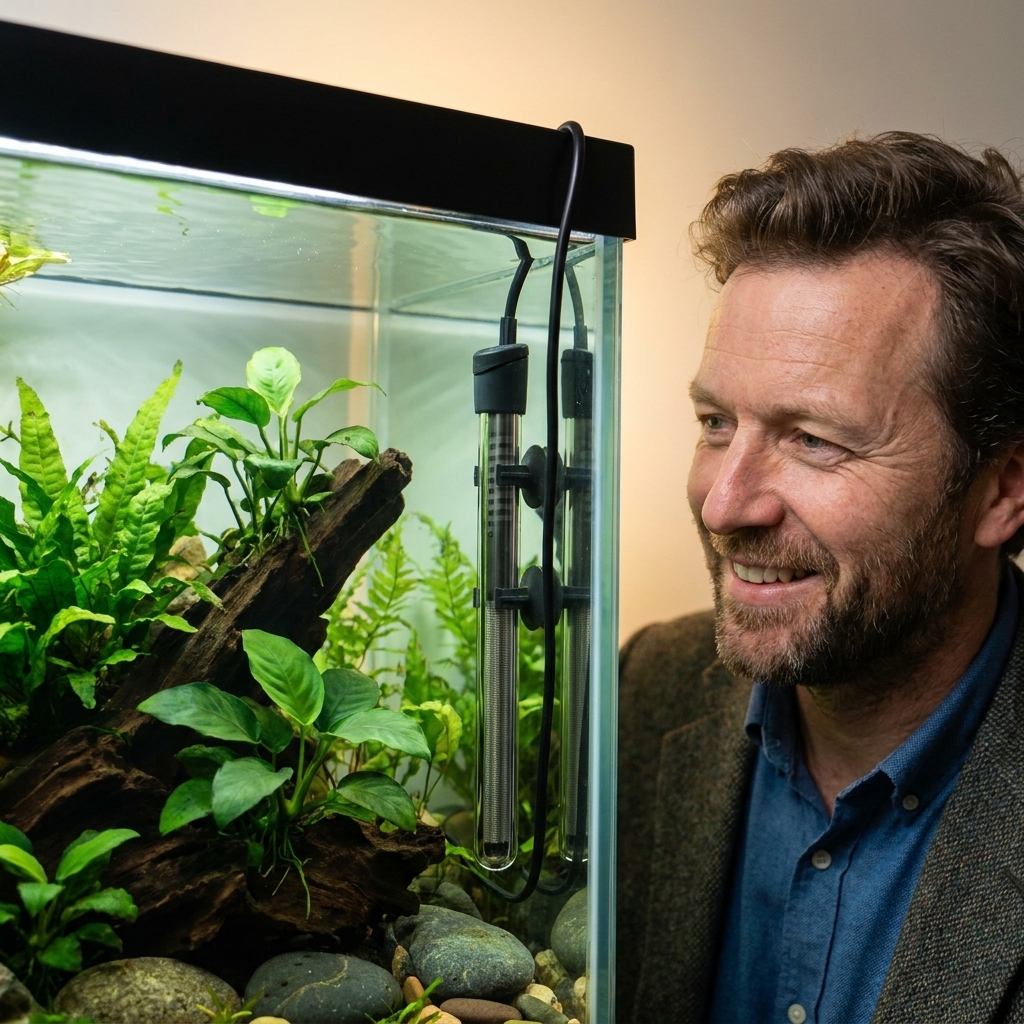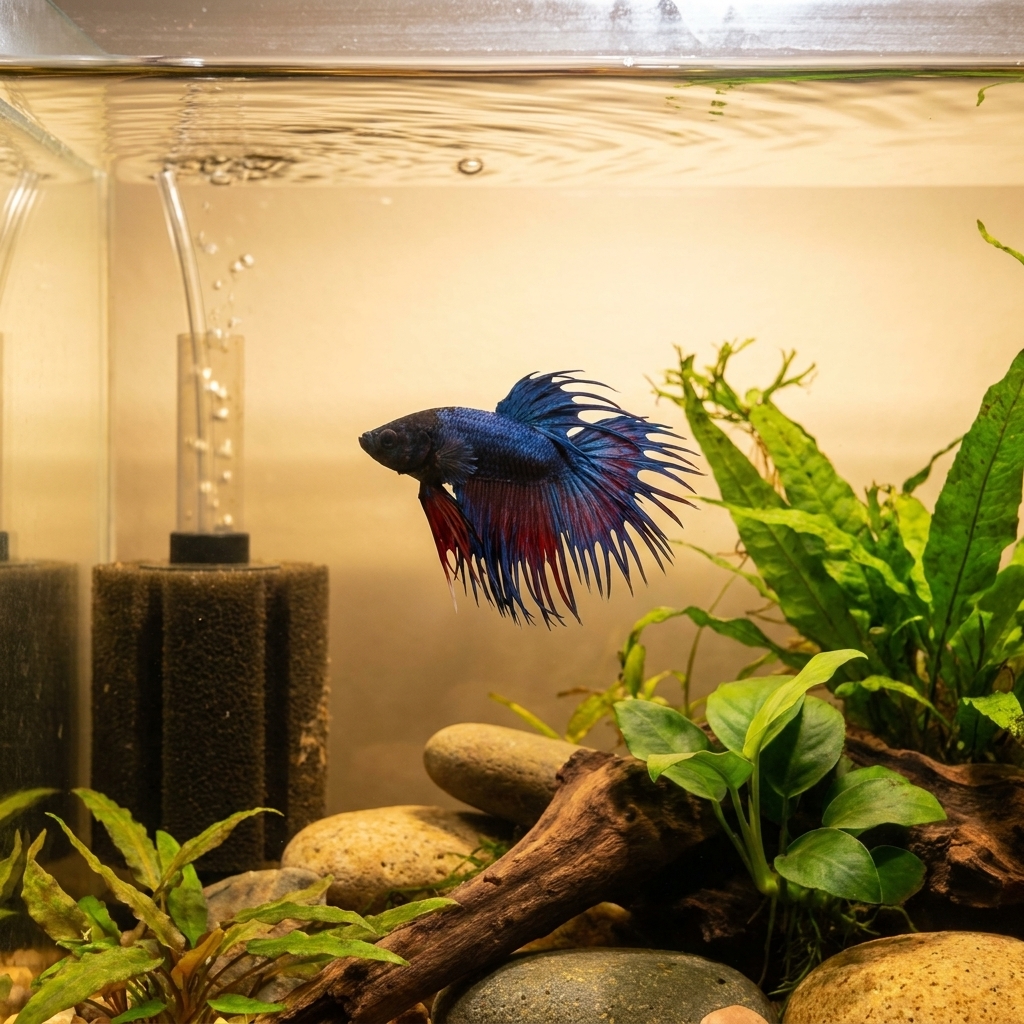
A practical betta setup checklist from a lifelong aquarist: tank size, heater, calm filtration, safe décor, cycling, and water-care basics for a thriving be...
Freshwater aquarium guidance
Betta Fish Care: Diet, Tank Setup, and Tank Mates
Everything you need to keep a Betta splendens healthy: the right tank size, heater and filter choices, water parameters, feeding plan, enrichment, and safe tank mates.

Written by
Oliver Bennett
Oliver Bennett is a lifelong aquarist with over 15 years of experience in freshwater tank setup, aquascaping, and fish health. Through TankRoot, he shares his passion for creating balanced underwater ecosystems, helping hobbyists of all levels build thriving, beautiful homes for their fish.
Published: October 17, 2026
•
Updated: October 17, 2026
I still remember my first betta, bought with birthday money and put into a tiny plastic “tank” because the cup at the store made it look normal. He survived, but he did not thrive. If you have ever felt confused by conflicting advice about bettas, you are not alone. Betta splendens are tough enough to endure bad setups for a while, which unfortunately makes them the poster fish for misinformation.
This guide is the care sheet I wish I had on day one: what a betta actually needs to live a long, active life, how to set up a tank that stays stable, and how to choose tank mates that do not turn into a slow-motion disaster.
Betta basics at a glance
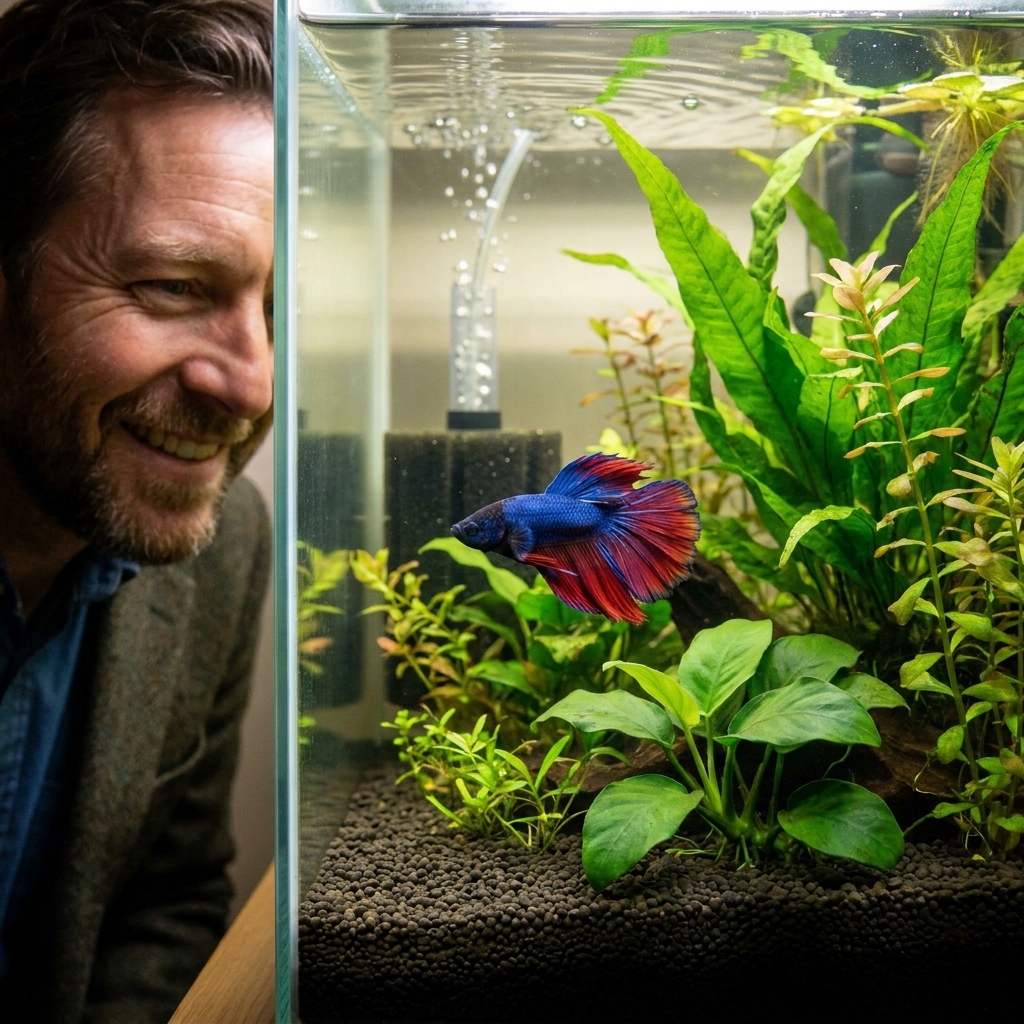
- Scientific name: Betta splendens
- Common name: Siamese fighting fish
- Adult size: about 2.5 to 3 inches (6 to 8 cm)
- Typical lifespan: 3 to 5 years (sometimes longer with excellent care)
- Temperament: territorial, varies by individual
- Best setup: heated, filtered, fully cycled tank with gentle flow
- Minimum tank size: 5 gallons for one betta (10+ gallons is easier and more stable)
Tank size and layout that actually work
Minimum tank size
Five gallons is the realistic minimum for a single betta. Could a betta “fit” in less? Sure. But stable water quality and steady temperature are what keep bettas healthy, and those are dramatically harder in tiny volumes. If you are new, a 10 gallon is often easier than a 5 because the tank forgives small mistakes.
Tank shape and lid
Bettas are surface breathers and enthusiastic jumpers. Choose a tank with a tight-fitting lid and leave a small gap of humid air above the waterline. Long, shallow tanks are great for bettas because they maximize swimming space and surface access.
Substrate and plants
Bettas shine in planted tanks. Live plants can improve comfort and help use up some nitrogen waste, but they are not a substitute for cycling, filtration, or water changes. You still need 0 ammonia and 0 nitrite, always.
- Beginner-proof live plants: anubias, java fern, cryptocoryne, vallisneria, water sprite, floating salvinia or frogbit (great for comfort and bubble nests)
- Substrate: sand or fine gravel both work. Nutrient-rich aquasoil is optional, not required.
Aim for a mix of open swimming lanes and dense cover. Bettas like to “disappear” and reappear. It is a security thing.
Also, skip sharp or scratchy decor. Many fin issues start with torn fins. Live plants or silk plants are safer than rigid plastic.
Heating: non-negotiable for Betta splendens
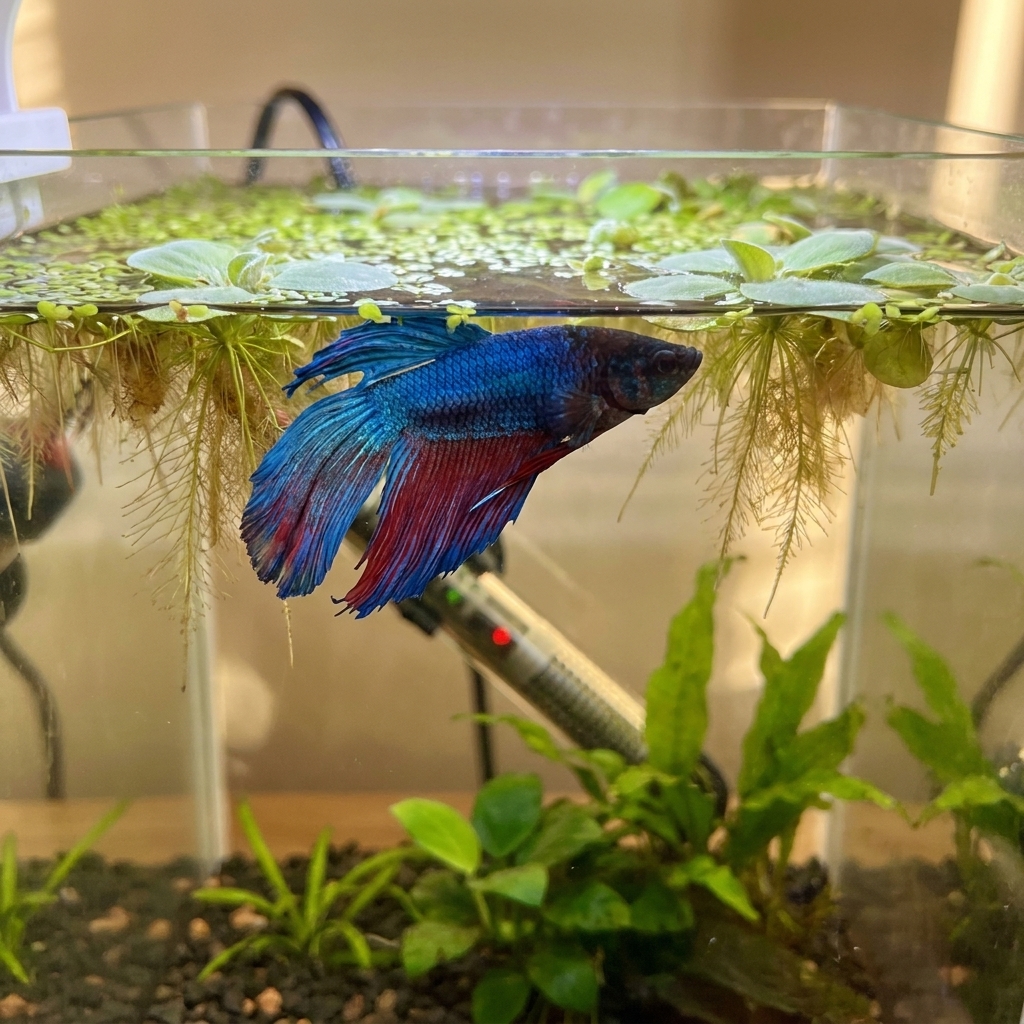
Bettas are tropical fish. A room that feels comfortable to you can still swing cold at night for a fish, especially in winter. Chronic chill is one of the most common slow killers I see, showing up as lethargy, poor appetite, bloating, and repeated illness.
Target temperature
- Ideal range: 78 to 80°F (about 25.6 to 26.7°C)
- Acceptable short-term: 76 to 82°F (about 24.4 to 27.8°C), if stable
Heater tips
- Use an adjustable heater, not a preset one, when possible.
- Pair it with a reliable thermometer (digital or alcohol thermometer).
- Heater size depends mostly on the difference between room temperature and your target temperature. As a rough starting point, many people land around 3 to 5 watts per gallon, but colder rooms and larger tanks often need more stable heating than a simple rule can capture.
Filtration: keep the water clean without blasting your betta
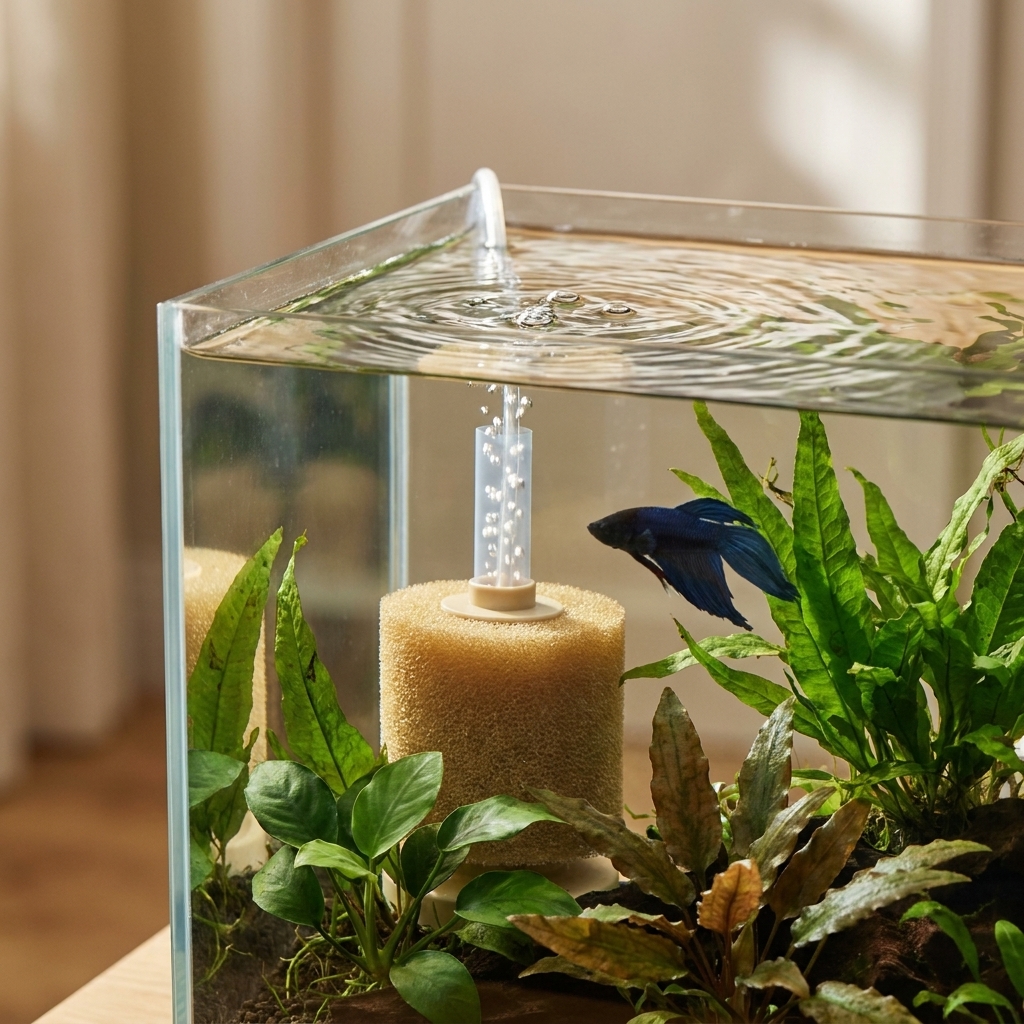
Bettas can live in slow water, but they do not thrive in dirty water. A filter provides mechanical cleanup and, more importantly, a home for beneficial bacteria that process toxic waste.
Best filter types for bettas
- Sponge filter: my favorite for most betta tanks. Gentle flow, excellent biological filtration.
- Hang-on-back filter (HOB): works well if you baffle the outflow to reduce current.
- Internal filter: fine if adjustable and not too strong.
Signs the flow is too strong
- Your betta is constantly being pushed around
- He hides all day to avoid the current
- Long-finned varieties show frayed fins from stress or being pinned against decor
If you see this, slow the flow immediately. “Exercise” is not worth chronic stress.
Water parameters and the nitrogen cycle (without the headache)
If you only remember one thing: ammonia and nitrite must always be zero. Bettas are hardy, but they are not immune to chemistry.
Target parameters
- Ammonia: 0 ppm
- Nitrite: 0 ppm
- Nitrate: keep it as low as practical, with many tanks doing best under 20 ppm. Chronically high nitrate can contribute to stress over time, even when everything else looks “fine.”
- pH: 6.5 to 7.5 is a comfortable range, but stability matters more than chasing a number
- GH/KH: moderate is generally fine. If your water is extremely soft or extremely hard, focus on stability and choose compatible tank mates accordingly.
Cycling your tank
A betta tank should be fully cycled before the fish goes in. That means beneficial bacteria are already converting ammonia into nitrite, then nitrate. Real life happens, though. If you already brought the fish home, you can still do a “fish-in cycle,” but you must be diligent with testing and water changes to protect the fish.
Tools that make this easy: a liquid test kit (ammonia, nitrite, nitrate, pH), a dechlorinator, and a simple schedule.
Water changes and maintenance (simple routine)
Even with a filter, water changes are how you reset the system and keep nitrate, dissolved waste, and hormones from building up.
Important: if you use tap water, treat new water with a dechlorinator every time. Chlorine and chloramine can harm fish and crash your cycle.
Good starting routine
- 5 gallons: 25 to 35% weekly
- 10 gallons: 20 to 30% weekly
- Heavily planted, lightly stocked tanks: may need less, but test first before you reduce
If you are doing a fish-in cycle, temporarily tighten the routine: test daily at first, and do partial water changes whenever ammonia or nitrite is above 0. In many new tanks, that can mean 20 to 50% changes as needed, sometimes multiple times per week, until the tank is stable.
Do not do this
- Do not replace all the water unless there is an emergency contamination issue
- Do not rinse filter media under tap water. Swish it in removed tank water instead.
Betta diet: what to feed and how often
Bettas are insectivores. In the wild, they pick off insect larvae and small invertebrates at the surface. The healthiest captive bettas I see are the ones fed a small, high-protein staple plus a rotation of frozen or live foods.
Staple foods
- High-quality betta pellets should be your base. Look for fish or insect protein listed first.
- Micro pellets can be easier for smaller mouths.
Great “rotation” foods (a few times per week)
- Frozen: brine shrimp, daphnia, bloodworms (treat), mysis shrimp
- Live (if available and safe): blackworms, live brine shrimp, mosquito larvae from a controlled source
Feeding schedule that prevents bloat
A reliable plan for most adult bettas:
- Once or twice daily small meals
- Feed what they can eat in about 30 to 60 seconds
- Consider one fasting day per week if your betta is prone to constipation or you tend to overfeed
Common overfeeding signs: swollen belly, stringy poop, spitting food, lethargy after meals, rising nitrate that seems “mysterious.”
Enrichment and comfort: how to reduce stress
Stress is the quiet trigger behind fin biting, recurring disease, and “my betta just isn’t himself” stories.
Must-haves for comfort
- Hiding spots: caves, dense plants, driftwood
- Resting places near the surface: broad-leaf plants, a betta leaf, or a smooth piece of hardscape
- Gentle lighting: use a timer. 6 to 8 hours of strong plant light is plenty in many setups
- Low-current zones: especially for long-finned males
A note on mirrors
Brief mirror time can be enrichment, but it is also a stressor. If you use a mirror, keep it short, and watch your betta’s behavior. If he stays “amped” long after you remove it, is glass surfing, or is flaring nonstop at reflections already, skip it.
Tank mates: what is safe, what is risky, what to avoid
Most betta tank mate problems come from one of three things: too small a tank, too much fin-nipping activity, or the betta being asked to “share” the surface with a fish that will not yield.
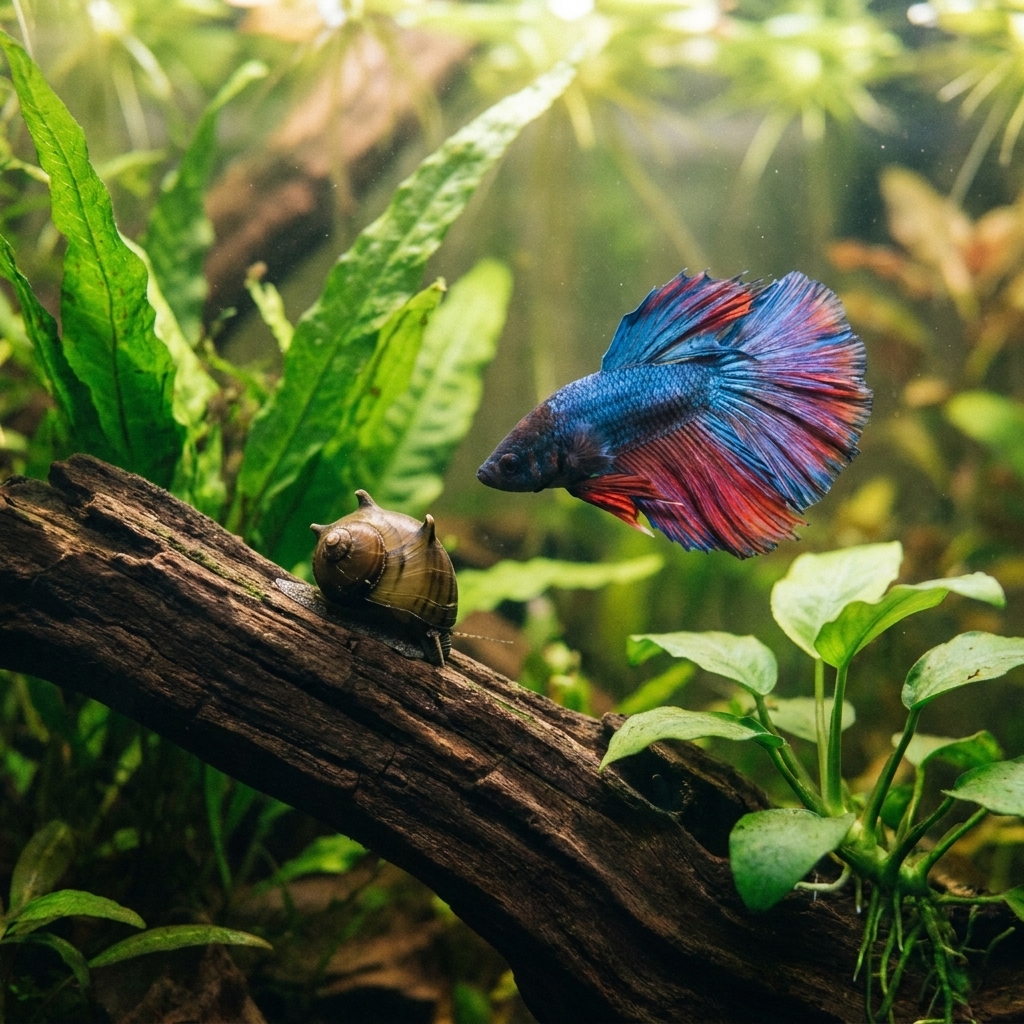
Non-negotiable rule: do not add fish tank mates to a 5 gallon. A single betta with a snail is often fine, and shrimp can work sometimes, but once you try to run a “community” in 5 gallons, you are usually stacking stress on top of stress.
For community attempts, 10 gallons is the bare minimum, and 15 to 20 gallons is where success becomes much more likely.
Best tank mates (with the right tank size)
- Snails: nerite snails are excellent algae grazers and usually ignored by bettas
- Shrimp (sometimes): adult Amano shrimp have the best odds. Cherry shrimp are often hunted, especially in smaller tanks
- Corydoras (larger tanks): peaceful bottom dwellers, best in groups, better in 20+ gallons depending on species
- Small rasboras: harlequin rasboras in bigger setups, or smaller rasbora species in well-planted tanks (avoid cramped quarters)
- Tetras (selectively): ember tetras are often calmer than fin-nippy types, but always watch closely
Tank mates that are risky
- Guppies: flashy tails can trigger betta aggression, and guppies may nip back
- Dwarf gourami: similar body language, can become territorial, higher disease concerns in some lines
- “Busy” fish: anything that constantly darts and crowds the surface
Tank mates to avoid
- Other male bettas: almost always ends poorly
- Most cichlids: wrong temperament and often wrong water needs
- Fin-nippers: tiger barbs, serpae tetras, many “semi-aggressive” schooling fish
- Goldfish: incompatible temperature and waste production
Can bettas live with female bettas?
“Sororities” are often marketed as easy. They are not. Female bettas can still be aggressive, and the stress can be chronic even when there is no obvious fighting. If you want to attempt it, treat it as an advanced project: large tank, heavy planting, careful selection, backup tanks ready, and constant monitoring. For most hobbyists, a single betta in a well-designed tank is kinder and far more enjoyable.
Introducing a betta to a new tank
Acclimation
Use a calm, simple acclimation:
- Float the bag or cup for 15 to 20 minutes to match temperature
- Add small amounts of tank water every few minutes for another 15 to 20 minutes
- Net the betta into the tank. Avoid adding store water into your aquarium
Lights off, hands off
Keep the lights low for the first day. A betta exploring slowly, resting, or even refusing food the first 24 hours can be normal. What you do not want is frantic glass surfing for days, clamped fins, or heavy breathing.
Quarantine and disease prevention
Most outbreaks start with something new. If you can, quarantine new fish in a separate tank before adding them to your betta’s setup. For plants and decor, at least rinse and inspect them carefully, and consider a plant quarantine if you have had parasite issues before. It is a boring step that saves a lot of heartbreak.
Common betta health problems (and what usually causes them)
Most betta illnesses have the same root causes: cold water, poor water quality, stress, and injury. Fix the environment first, then treat.
Fin rot
- Common causes: elevated ammonia or nitrite, high nitrate, dirty substrate, stress, fin nipping
- First steps: test water, increase water change frequency, ensure stable heat, reduce sharp decor and aggression
Ich (white spot disease)
- Common causes: stress and introduction of parasites via new fish or plants
- First steps: confirm spots look like salt grains, raise temperature gradually only if appropriate for all tank inhabitants, treat with an ich medication and follow the label carefully, increase aeration
Bettas can be sensitive to some medications. When in doubt, dose conservatively, increase oxygenation, and never mix treatments unless you know they are compatible. If you use activated carbon in your filter, remove it during most medication courses, or it can strip the medication out.
Swim bladder issues and bloating
- Common causes: overfeeding, constipation, cold water, poor diet, stress
- First steps: check temperature, fast 24 to 48 hours, then offer daphnia, reduce pellets and portion size
If buoyancy problems persist, or you see pineconing scales, open sores, rapid decline, or severe swelling, treat it as urgent. At that point you may be dealing with infection or organ issues, not just constipation, and you should escalate care quickly.
Velvet
- Clues: very fine gold or rust dusting, flashing, rapid breathing, clamped fins
- First steps: darken the tank, raise temperature carefully if appropriate, treat promptly with a velvet-appropriate medication and increase aeration
If your betta is sick and you are unsure, do not guess blindly with a cabinet full of meds. Test the water first. Clean, warm, stable water solves more “mystery illnesses” than any bottle.
Breathing air is normal, gasping is not
Bettas have a labyrinth organ that lets them take gulps of air from the surface. That is normal behavior. What is not normal is constant surface gasping, hanging at the top with rapid gill movement, or acting “drunk.” Those are often signs of:
- Ammonia or nitrite poisoning
- Low dissolved oxygen (often from warm water with poor surface movement, or an overdose of certain treatments)
- Gill disease or parasites
In those situations: test immediately, do a partial water change with dechlorinated water, and increase aeration.
FAQ
Can a betta live in a bowl?
A betta can survive in a bowl, but it is rarely stable enough for good long-term health. Without a heater and filter, temperature swings and waste buildup catch up fast. A 5 to 10 gallon heated, filtered tank is the humane baseline.
Do bettas need a bubbler?
Not usually, as long as you have gentle surface movement from your filter. If you are treating illness, running warmer water, or your tank is heavily stocked, an air stone can be very helpful.
Why is my betta flaring at everything?
Flaring is normal in short bursts. Constant flaring is usually triggered by reflections, bright lighting, seeing other fish too often, or stress. Add floating plants, reduce lighting intensity, block reflective sides temporarily, and make sure the tank is not too small.
How do I know if my betta is happy?
Look for steady appetite, curious exploration, relaxed fins, rich coloration, and regular resting. A betta that builds bubble nests is often comfortable, but bubble nests are not required for health.
The betta setup that solves most problems
If you are feeling overwhelmed, here is the simplest “high success” betta formula:
- 5 to 10 gallon tank with a lid
- Adjustable heater set to 78 to 80°F
- Sponge filter or baffled HOB filter
- Fully cycled aquarium with 0 ammonia and 0 nitrite
- Live plants and at least one easy hiding spot
- High-quality pellets plus frozen foods a few times per week
- Weekly water changes, dechlorinator for new water, and consistent testing
Do that, and you will avoid the majority of betta health issues before they start. Your betta will not just survive, he will behave like the bold, interactive little water dragon he is supposed to be.