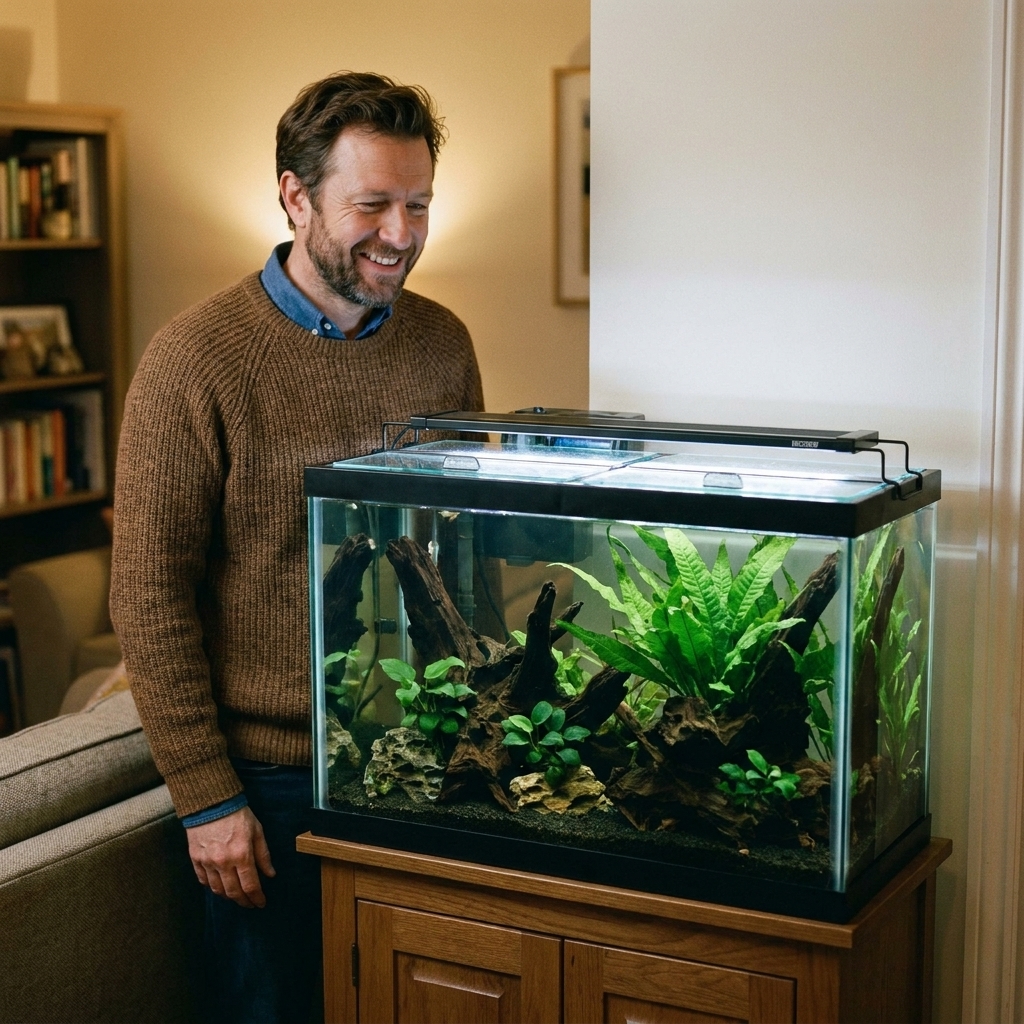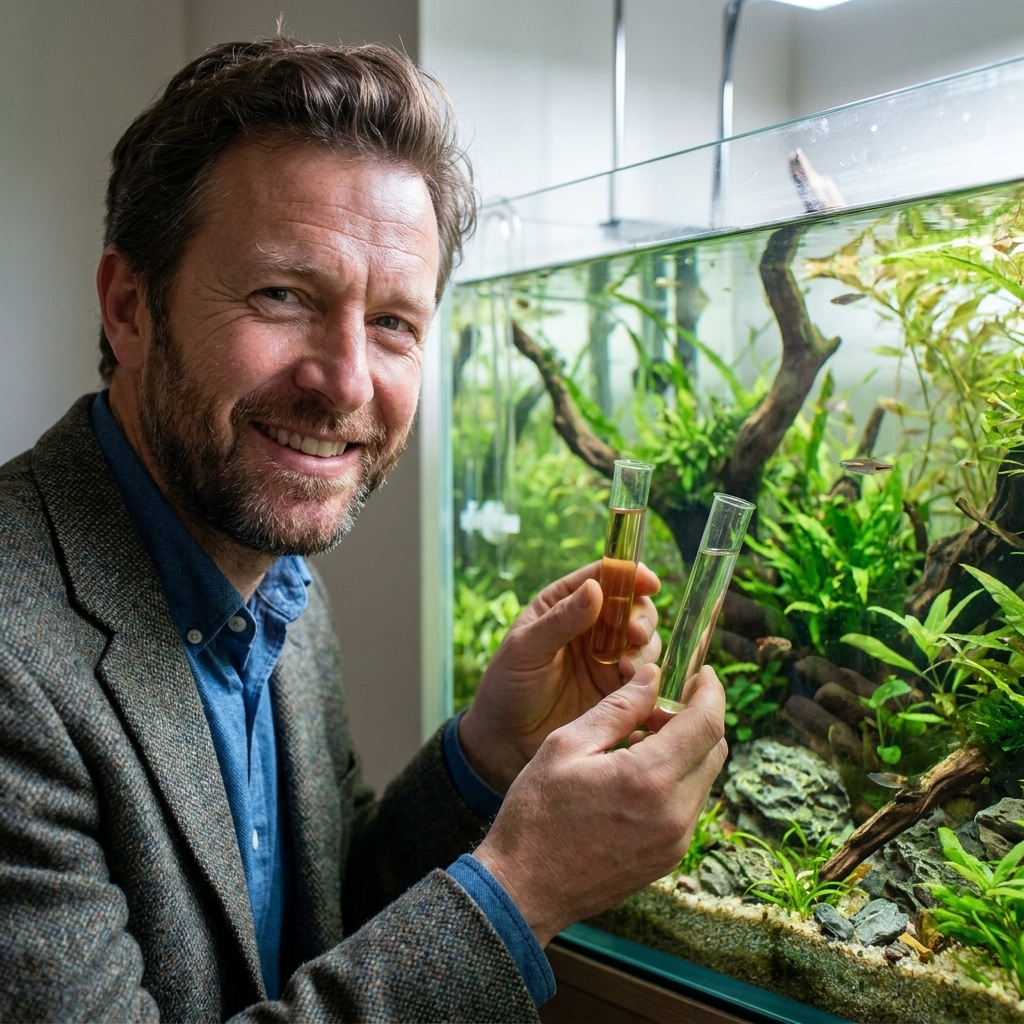
Algae is usually a symptom of imbalance, not “dirty water.” Learn how to test NO3 and PO4, choose realistic targets for your tank and livestock, and tune...
Freshwater aquarium guidance
7 Proven Ways to Get Rid of Aquarium Algae Permanently
Tired of algae taking over your tank? Here are 7 proven, natural methods to remove aquarium algae and keep it from coming back, without stressing your fish or crashing your cycle.

Written by
Oliver Bennett
Oliver Bennett is a lifelong aquarist with over 15 years of experience in freshwater tank setup, aquascaping, and fish health. Through TankRoot, he shares his passion for creating balanced underwater ecosystems, helping hobbyists of all levels build thriving, beautiful homes for their fish.
Published: October 17, 2026
•
Updated: October 17, 2026
I still remember the first time algae “won” in one of my early tanks. I scrubbed the glass until my arms hurt, did a huge water change, and felt proud for about 48 hours. Then it all came back, thicker and meaner. That is the moment most fishkeepers learn the hard truth: algae is not the problem. The conditions that feed it are.
The good news is that you can absolutely beat algae long term without nuking your tank with harsh chemicals. The goal is not a sterile aquarium. A little algae is normal. The goal is to keep algae outcompeted, underfed, and easy to manage so it never becomes a takeover again.
Before you start: name the algae
Different algae respond to different fixes. You do not need a microscope, just a quick visual check.
- Green dust or green film on glass: often light and nutrients out of balance, common in newer or brightly lit tanks.
- Green hair or string algae: usually excess light plus available nutrients, often worsened by inconsistent CO2 in planted tanks.
- Brown “dust” (diatoms): common in new tanks, low light setups, or tanks with silicates, usually fades as the tank matures.
- Black beard algae (BBA) or dark tufts: commonly tied to fluctuating CO2, high organics, and inconsistent maintenance.
- Blue-green slime: this is cyanobacteria, not true algae. It often shows up in dead spots and organic buildup, and it can also appear in low-nitrate or imbalanced tanks. Either way, it is a sign the tank needs better circulation and more stable basics.
If you are not sure which one you have, focus on the fundamentals below. These methods work because they remove algae’s fuel, not just the visible growth.
Algae type: top fixes
If you want a quick “what should I prioritize” guide, start here.
- Diatoms (brown dust): keep water changes steady, avoid overfeeding, check your source water for silicates if it will not fade, and consider nerite snails once the tank is stable.
- Green film or dust: lock in a shorter photoperiod, clean glass consistently, and stabilize nutrients so plants can grow without stalling.
- Hair or string algae: reduce light intensity or hours, add fast-growing plants, and in injected tanks, stabilize CO2 day to day.
- BBA: improve maintenance and flow, reduce organics, keep CO2 consistent if you run it, and consider careful spot treatment only as a backup.
- Cyanobacteria: fix dead spots with better circulation, remove mats manually, and focus on balanced nutrients (including not bottoming out nitrate in planted tanks).
1) Fix lighting first
Lighting is the algae accelerator pedal. Most tanks do best with a consistent, boring schedule.
What to do
- Set a timer and stop adjusting the schedule day to day.
- Start at 6 to 8 hours/day for most freshwater tanks, especially if algae is already present.
- If you run high light for plants, lower intensity before you extend hours. Too much intensity for too long is algae-friendly.
- Avoid direct sunlight on the glass. Even short periods of sun can contribute to blooms in some tanks, especially when nutrients are already available.
If your plants struggle at 6 hours, that is a sign that something else is limiting them (CO2, nutrients, plant mass), and algae is simply taking advantage.
2) Feed less
In most community tanks, algae is downstream from one thing: too much food becoming too much waste.
What to do
- Feed what your fish finish in 30 to 60 seconds for most dry foods.
- Skip one feeding day per week for healthy adult fish (most species do fine, and it helps you reset habits).
- Remove uneaten food after a few minutes, especially frozen foods.
- Do not “feed the algae eaters” extra when algae is present. Add algae wafers only in controlled amounts, and remove leftovers.
Algae does not appear because your fish are hungry. It appears because nutrients are freely available, all day, every day.
3) Make nutrients steady
This is where a lot of common advice goes sideways. You will often hear “keep nitrates at 0” or “phosphate causes algae.” In reality, unstable nutrients and imbalances are what set algae up to win, especially in planted tanks.
Ranges that often work
- Planted community tanks: many do well with nitrate roughly 10 to 30 ppm and phosphate roughly 0.5 to 2 ppm, but ranges vary with light, CO2, tap water, and livestock. Prioritize stability and healthy plant growth over chasing a specific number.
- Low tech or lightly planted tanks: nitrate can be lower, but avoid wild swings caused by huge cleanups followed by heavy feeding.
What to do
- Test weekly for a month (nitrate at minimum, and phosphate if you can). You are looking for patterns, not perfection.
- If nitrates are sky high, increase water change volume and fix feeding and filtration habits.
- If nitrates are bottoming out in a planted tank, plants stall and algae can exploit the instability. Consider a complete fertilizer dosed consistently at a low level.
Algae thrives when plants cannot access what they need. Healthy plant growth is one of the most reliable algae preventers you can build.
4) Add fast growers
Think of plants as nutrient sponges and stability machines. One of the fastest ways to change who “wins” in the tank is to increase plant mass, especially fast growers.
Strong algae-fighting plant picks
- Hornwort (floats or planted, tough and hungry)
- Water sprite (fast growth, great for fry and shrimp)
- Anacharis/Elodea (classic nutrient hog)
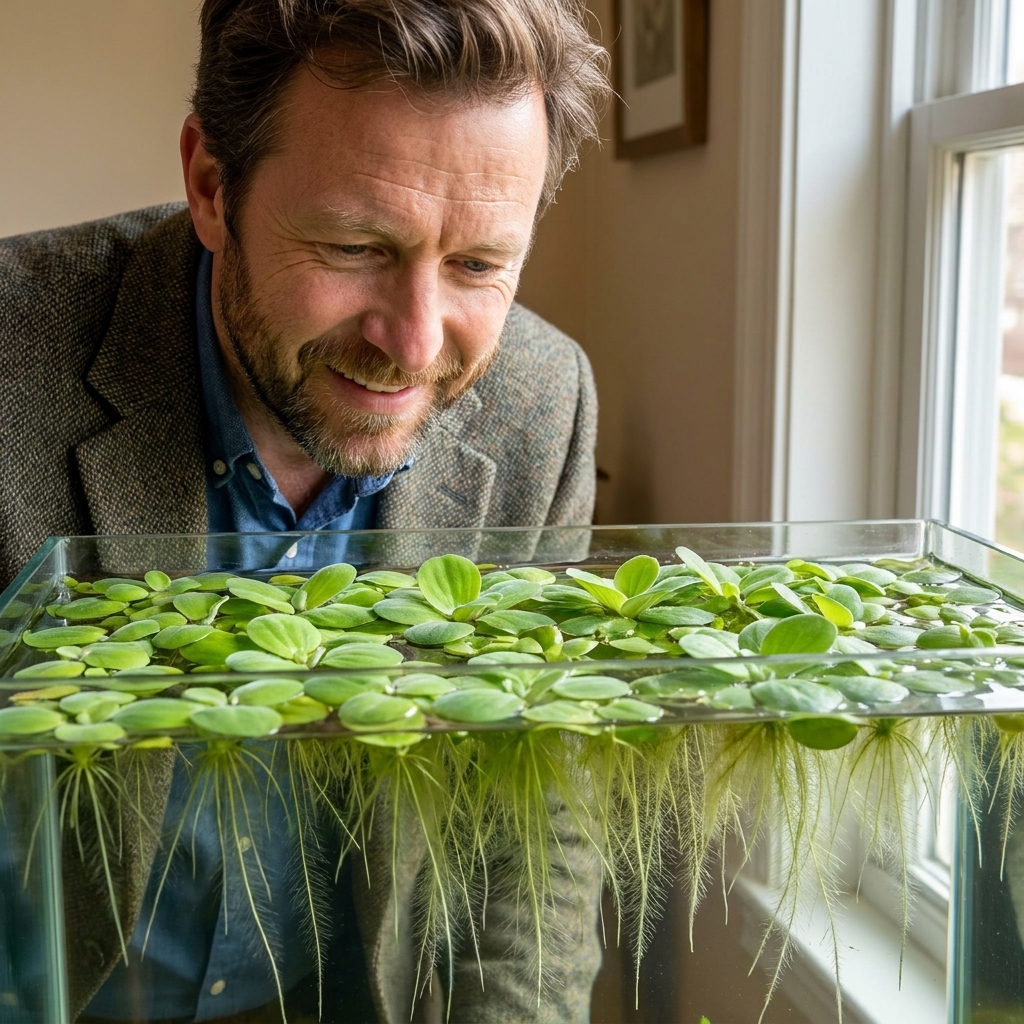
- Frogbit or red root floaters (excellent nutrient uptake when growing well, also softens light)
- Hygrophila species (easy stems that bounce back fast)
In my experience, floating plants are the closest thing to a shortcut for stubborn algae because they pull nutrients directly from the water column and they shade the tank slightly, which many algae types dislike.
5) Improve flow and filtration
Algae loves places where waste settles and water barely moves. This is especially true for cyanobacteria and black beard algae hotspots on slow-flow leaves and hardscape.
What to do
- Aim your filter outlet so it creates gentle circulation across the whole tank, not just a strong blast in one corner.
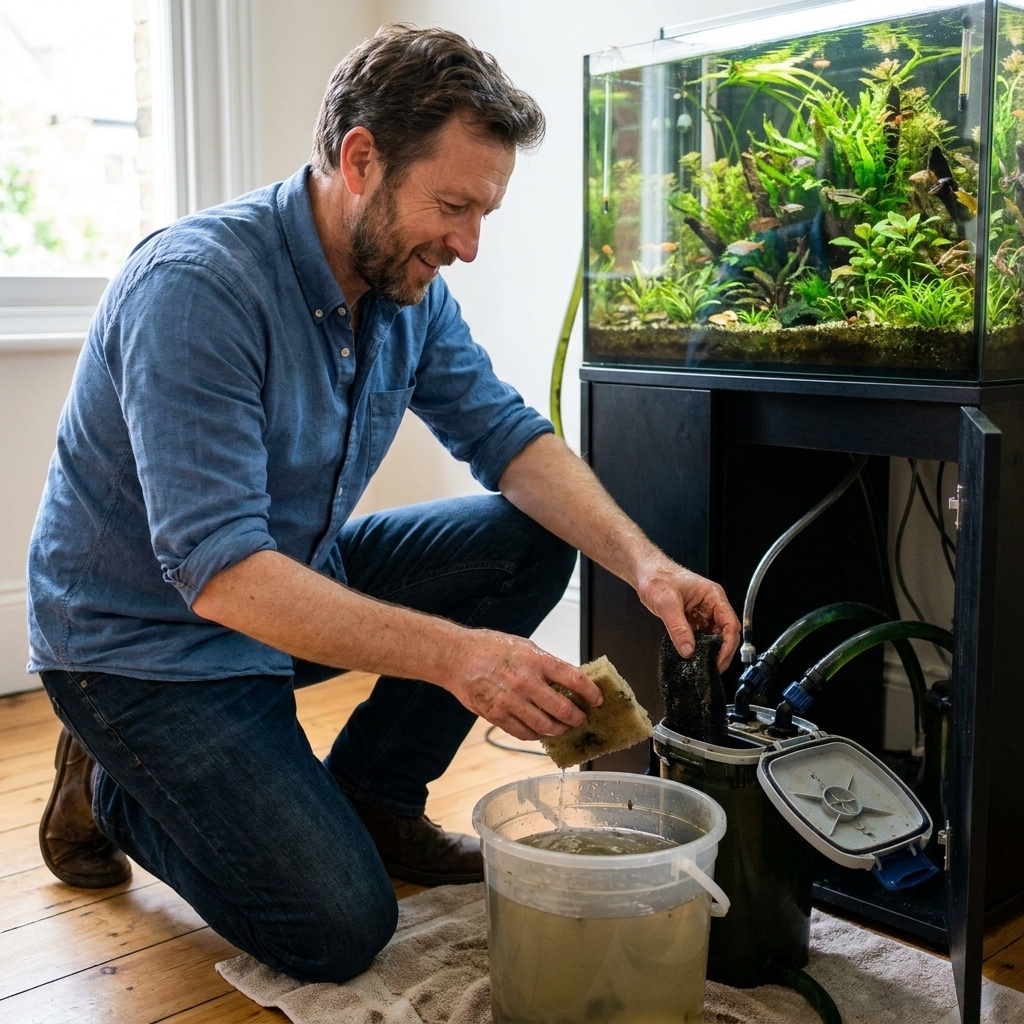
- Clean mechanical media regularly (sponges, floss) in old tank water. If it is clogged, it is storing nutrients.
- Do not overclean biological media (ceramic rings, bio-balls). Rinse lightly only when flow drops.
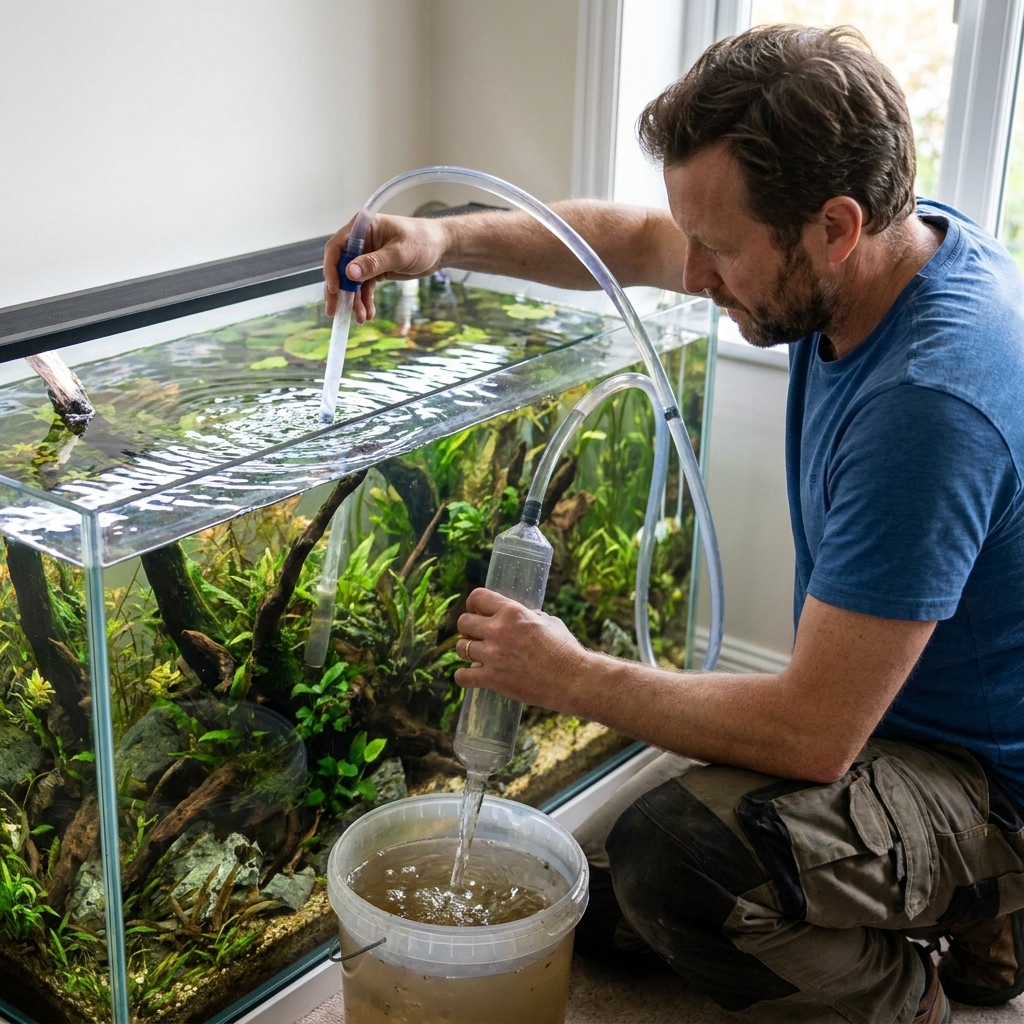
- Vacuum detritus from obvious collection zones: behind driftwood, under dense plants, and along the front edge of substrate.
Better flow does not starve algae directly. It prevents the conditions algae loves: stagnant zones, mulm buildup, and nutrient pockets that leak into the water.
6) Use a clean-up crew wisely
Algae eaters are helpful, but they are not magic. If the tank is overlit and overfed, you will simply have well-fed algae eaters living in an algae farm.
Reliable options for many community tanks
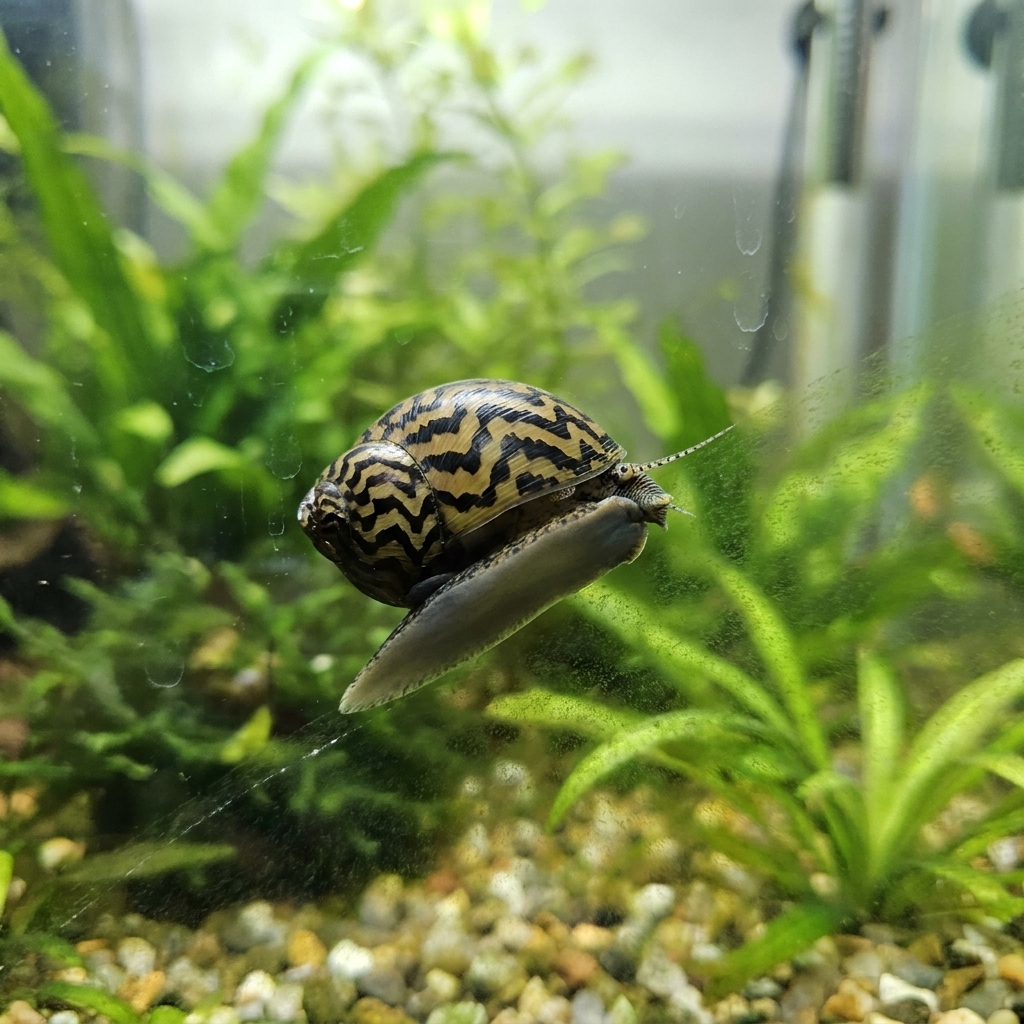
- Nerite snails: fantastic glass and hardscape grazers, and while they may lay eggs, they typically will not successfully breed and populate most freshwater tanks.
- Amano shrimp: strong appetite for soft algae and biofilm, best in stable, peaceful tanks.
- Otocinclus: great for soft film algae, best kept in groups and only in mature, stable tanks.
- Siamese algae eater (true SAE): one of the better fish options for hair algae in larger tanks, but can get pushy with age and needs space.
Common mistakes
- Adding algae eaters to a brand-new tank with unstable parameters.
- Buying a pleco “for algae” without planning for adult size and waste production. Many plecos create more algae fuel than they remove.
- Letting shrimp and snails run out of food once algae improves. They can lose condition, and some may begin grazing softer plants or other surfaces you would rather they ignore.
Pick a crew that fits your tank size, temperature, and stocking, and treat them as maintenance helpers while you fix the root cause.
7) Clean, then stay consistent
If you only do big cleans when algae looks bad, you end up with a boom-and-bust cycle: algae grows, you panic, parameters swing, algae returns. Permanent control comes from small, predictable actions.
What to do this week
- Physically remove as much as possible (algae scraper, toothbrush for hardscape, siphon for loose mats).
- Prune affected leaves in planted tanks. Old algae-covered leaves rarely recover, and they keep leaking organics as they deteriorate.
- Do a moderate water change (often 25 to 40 percent) instead of a huge one, unless parameters demand otherwise.
- Clean your pre-filter sponge or intake sponge if you have one. It is an algae fuel trap.
Then keep this simple routine
- Weekly: water change, quick glass wipe, light substrate vacuum in problem zones, rinse mechanical media.
- Monthly: deeper trim, re-check light schedule, inspect flow patterns, test nitrate to confirm trends.
Manual removal is not admitting defeat. It is how you remove the existing algae biomass so your corrections can actually catch up.
Water source basics
If algae keeps returning even when your habits look solid, your tap water can be part of the story.
- Diatoms that never fade: some water supplies run high in silicates. Good maintenance still helps, but persistent diatoms sometimes improve only after the tank matures further, you add consistent grazers, or you address source water.
- Phosphate in tap water: some cities have measurable phosphate, which is not automatically a problem, but it does mean you may need to lean harder on plants and consistency instead of trying to hit “zero phosphate.”
- Always dechlorinate: if your water contains chlorine or chloramine, use a conditioner every time. It is not an algae fix, but it protects your cycle and keeps the tank stable.
If you run CO2: keep it stable
I mention CO2 a lot because inconsistency is a common algae trigger in injected planted tanks.
- Be consistent day to day: same bubble rate, same on and off times, same surface agitation.
- Start CO2 before lights: many people aim to have CO2 up and steady by lights-on, not ramping up mid-photoperiod.
- Do not chase high light growth: in non-CO2 tanks, keep light moderate and let plants grow slower on purpose. High light without CO2 support is a classic algae setup.
Spot treatments (optional)
Sometimes you need an extra nudge, especially with black beard algae. Spot treatments can help, but they are not the foundation. If you find yourself doing this weekly, the root cause is still active.
- Hydrogen peroxide (3%): for many tanks, a conservative total-tank dose often cited by hobbyists is up to about 1 ml per gallon, but sensitive fish, shrimp, and plants can react badly. Safer approach: use it as a true spot treatment with a syringe, keep the filter running for circulation but turn off UV and ozone if you use them, and avoid blasting livestock directly. When in doubt, do less.
- Liquid carbon products: some hobbyists use them against BBA, but they are not true CO2 and can be risky for certain species and plants (including Vallisneria and some mosses). Follow the label, start low, and stop if you see stress.
Quick troubleshooting
“I cleaned everything and it returned in days.”
That is usually too much light, too long of a photoperiod, or a nutrient source that was not addressed (overfeeding, clogged media, detritus pockets).
“My tank is new and it is covered in brown algae.”
Diatoms are extremely common in young tanks. Keep up with water changes, do not overfeed, and consider adding nerite snails once the tank is stable. In many cases it fades on its own as the biofilm community matures.
“Only my slow plants get algae.”
Slow growers like Anubias and Java fern collect algae because they sit still under light for a long time. Move them to shadier spots, improve flow, and add faster-growing plants to carry the nutrient load.
“I have black beard algae on the filter outlet and hardscape.”
This often points to inconsistent CO2 (in injected tanks), excess organics, or flow patterns that create localized issues. Tighten your maintenance routine and keep lighting reasonable while plants recover.
My simple algae plan
If you want a straightforward plan that works for most freshwater tanks, here is the sequence I use when helping friends rescue an algae-ridden setup:
- Day 1: reduce lighting to 6 to 8 hours, manually remove algae, clean mechanical media, water change 30 percent.
- Week 1: feed less, vacuum detritus pockets, add fast-growing plants or floaters.
- Weeks 2 to 4: keep the schedule consistent, test nitrate weekly, adjust water change volume to keep nitrate stable, not swinging.
- After month 1: fine-tune light intensity upward only if plants truly need it and algae is under control.
Algae control is not about one miracle product. It is about giving plants and beneficial microbes a stable environment, and making algae fight for scraps.