Stop algae at the source with 7 practical, fish-safe methods: better lighting control, balanced nutrients, smarter feeding, plant competition, targeted clean...
Freshwater aquarium guidance
Balancing Nitrates and Phosphates to Beat Algae Naturally
Learn how nitrate (NO3) and phosphate (PO4) levels influence algae and plant growth. Test correctly, choose realistic target ranges for your tank, and adjust feeding, water changes, light, and fertilizers to keep planted aquariums clear.

Written by
Oliver Bennett
Oliver Bennett is a lifelong aquarist with over 15 years of experience in freshwater tank setup, aquascaping, and fish health. Through TankRoot, he shares his passion for creating balanced underwater ecosystems, helping hobbyists of all levels build thriving, beautiful homes for their fish.
Published: October 17, 2026
•
Updated: October 17, 2026
When I was ten, I thought algae meant I was failing at fishkeeping. I scrubbed glass like it was a punishment, swapped random “algae fixes” from the pet store, and never once asked the obvious question: what is the algae eating?
In freshwater tanks, nuisance algae is often less about “dirty water” and more about plants losing the nutrient race. Two macronutrients sit right at the center of that tug of war: nitrate (NO3) and phosphate (PO4).
This guide will show you how to test both accurately, choose sensible target ranges for your setup, and adjust your routine so you reduce problem algae without starving your plants or stressing your fish.
What NO3 and PO4 do
Nitrate (NO3): the end of the nitrogen cycle
Nitrate is produced as your biofilter processes fish waste and uneaten food. It is far less toxic than ammonia and nitrite, but it is still a nutrient. Both plants and algae can use it as a nitrogen source.
If nitrate climbs, you may see more algae pressure, especially under strong light. Still, nitrate is usually better treated as a proxy for overall nutrient and organic loading (feeding, stocking, detritus, weak plant mass) than a single dial that “causes algae” all by itself.
If nitrate bottoms out in a planted tank, plants can stall, shed older leaves, and lose momentum. That slow, stressed growth gives algae opportunity.
Phosphate (PO4): not the villain
Phosphate enters your aquarium mainly through food, fish waste, and sometimes tap water. For years, phosphate got blamed for algae all by itself. In reality, phosphate is simply another plant nutrient. Algae problems are more commonly about imbalance, excess light, unstable CO2, dead spots, or weak plant growth than phosphate existing at all.
In planted tanks, phosphate that is too low can stall plants. When plants stall, algae gets time and space.
The goal: stable, nonzero nutrients
In a healthy planted aquarium, you are not trying to hit a magical “perfect ratio.” You are trying to do three practical things:
- Keep NO3 and PO4 nonzero so plants never hit starvation mode.
- Keep them stable from week to week so plants grow predictably.
- Match nutrients to light and CO2, because brighter light increases demand.
Target ranges (most planted community tanks)
These are widely used, workable targets for many tanks with real plants (not plastic), moderate lighting, and typical community fish:
- Nitrate (NO3): 10 to 30 ppm
- Phosphate (PO4): 0.5 to 2.0 ppm
They are targets, not rules. If you keep sensitive livestock (some shrimp, some soft-water fish), run a very low-tech tank, or keep plants that grow slowly, you may prefer the lower end. If you run high light and injected CO2 with fast growth, you can often run the higher end. Trends and plant response matter more than a single number.
A ratio you can use (lightly)
Many planted tank keepers do well with a rough NO3:PO4 ratio around 10:1 to 20:1 by ppm (example: 20 ppm nitrate with 1 ppm phosphate). It is not a law of nature, and it is not required for success. It is just a sanity check when something is clearly out of whack.
One important clarification: those ppm values refer to NO3 and PO4 as reported by common hobby test kits, not elemental nitrogen (N) and phosphorus (P). Also make sure your phosphate test reports PO4 (most do). Some lab-style tests report phosphorus (PO4-P), which uses different numbers.
How to test without getting fooled
Pick tests that are consistent
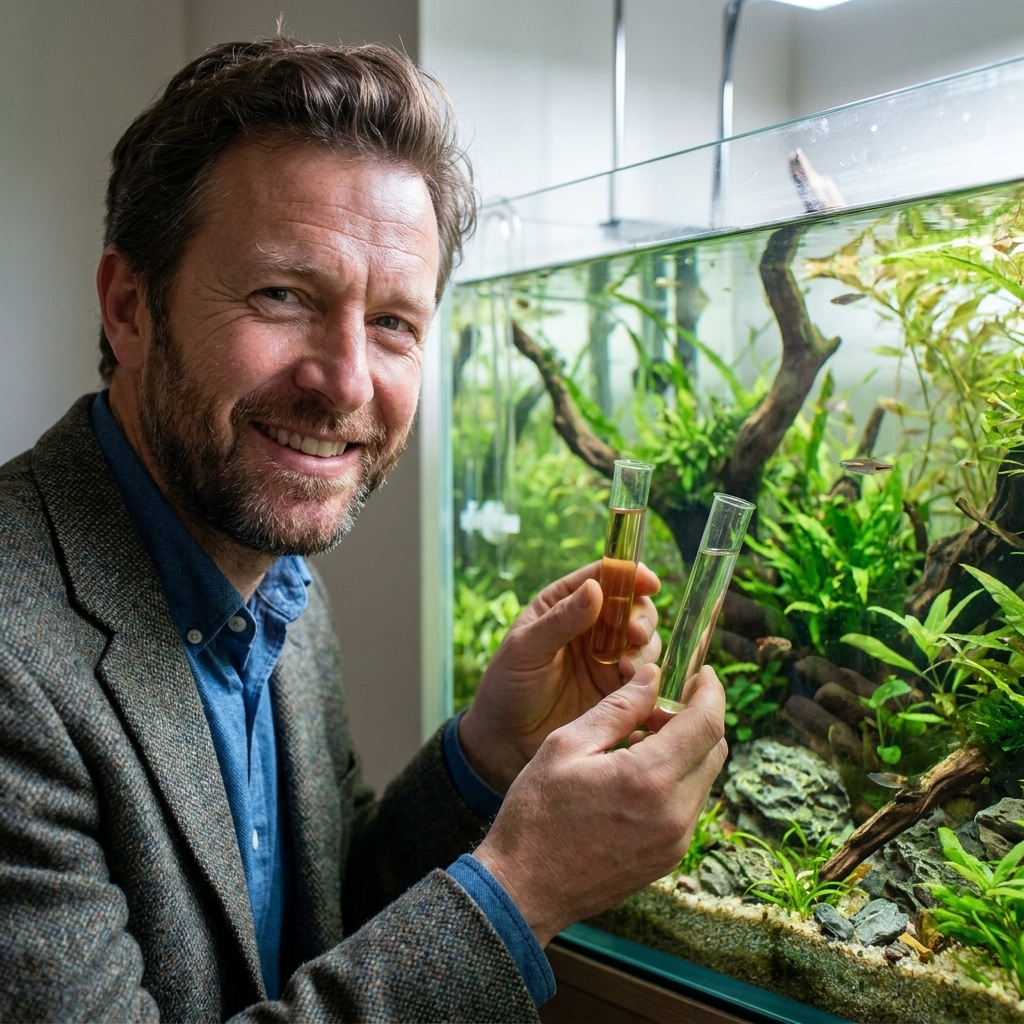
Liquid drop tests are usually the most practical choice. Whatever brand you use, consistency matters more than brand loyalty. The biggest “test kit problem” I see is user error, old reagents, and rushing color matching.
- Check expiration dates and replace at or near expiration. Replace sooner if the kit was stored hot or humid, or results stop making sense.
- Shake nitrate reagents aggressively if your kit instructs it (some nitrate kits need very hard shaking to resuspend settled solids).
- Use clean glass tubes and rinse with tank water before testing.
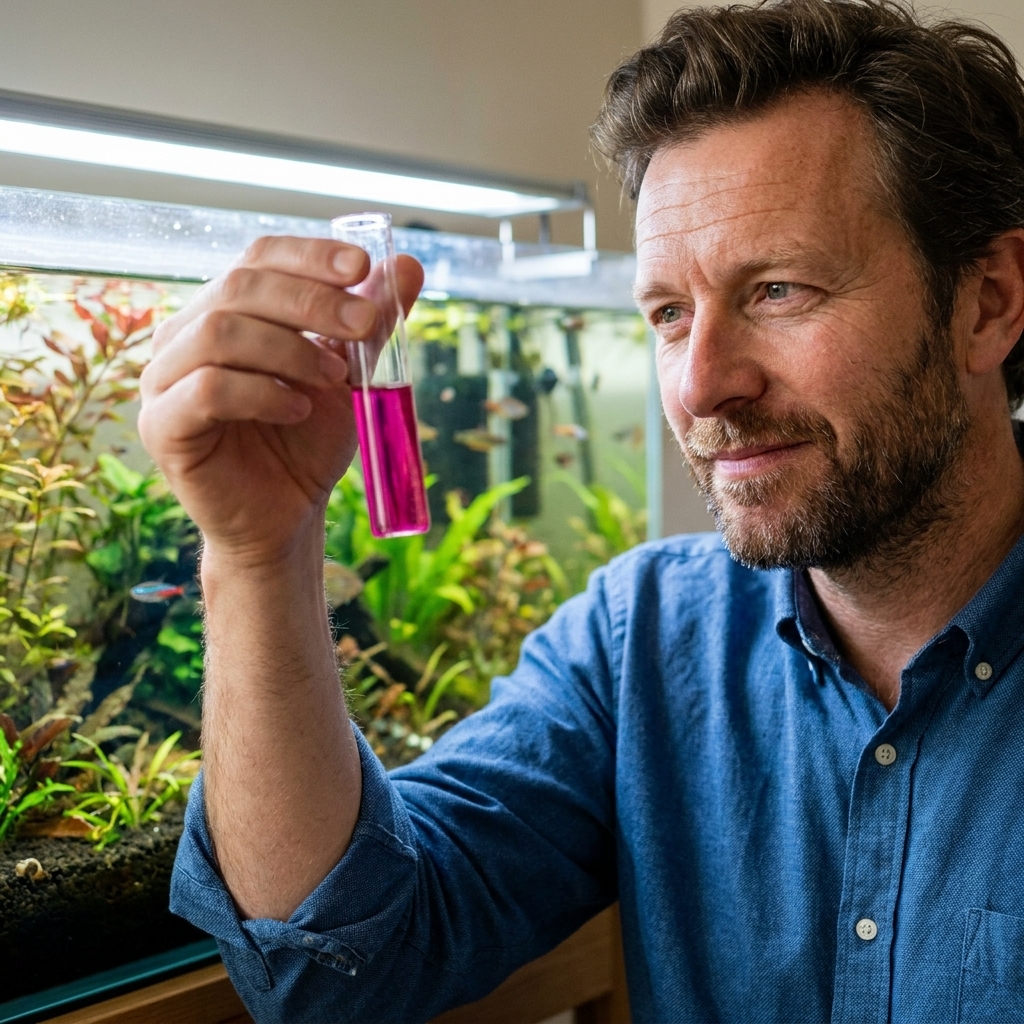
- Read colors under neutral light (daylight, not yellow room lighting).
Test timing
Your numbers can swing depending on when you test. Choose a routine and stick to it so you are comparing apples to apples.
- For non-CO2, lightly fertilized tanks: test once weekly, right before your water change.
- For fertilized planted tanks: test twice per week for a couple of weeks, then reduce once you know your pattern.
Write down results. A notebook beats memory every time.
Respect kit limitations
Single readings can lie. Nitrate tests are infamous for user technique issues, and phosphate tests can be noisy at the low end. Treat your results as trend data. If something looks wildly wrong, re-test, double-check your steps, and consider testing your tap water to rule out surprises.
Diagnosing algae with patterns
Different algae can show up for different reasons, but nutrient patterns can still point you toward the likely pressure points.
1) Zero nitrate, very low phosphate, algae anyway
This is common in lightly stocked tanks with decent lighting. Plants are underfed, growth is slow, and algae takes advantage of the stagnation.
What usually helps: bring NO3 up to 10 to 20 ppm and PO4 up to 0.5 to 1.5 ppm, then keep them stable.
2) High nitrate, detectable phosphate, lots of green algae
This often points to a tank that is receiving more total input than plants can use at that light level. Think overfeeding, a buildup of detritus, weak plant mass, or maintenance that is not keeping up. Nitrate is rarely the “cause” by itself here. It is a clue that the tank is nutrient-rich.
What usually helps: tighten feeding, increase water change volume temporarily, clean filters gently, and make sure plant mass matches the light you are running.
3) Phosphate reads zero but algae persists
PO4 can be taken up quickly by plants and algae, so a zero reading does not always mean none is present. It can also mean the tank is phosphate-limited, which can stall plants.
What usually helps: dose a small amount of phosphate, then re-test later the same day and again the next day. If the reading never rises, consider kit resolution, adsorption to substrate, and fast uptake. The goal is not to “prove consumption in one hour.” The goal is to confirm you can maintain a measurable, stable range.
4) Nutrients look good but algae blooms
If NO3 and PO4 are in range and algae is still exploding, look at:
- Light intensity and photoperiod (too bright or too long is a classic trigger)
- CO2 stability (injected CO2 that swings daily can cause chronic algae)
- Flow and dead spots (nutrients and CO2 not reaching plants)
- Plant health (melting leaves can contribute nutrients and surfaces for algae to grab)
5) Blue-green “algae” shows up
Cyanobacteria is not actually algae. It is bacteria, and it often shows up where flow is weak, organics build up, and plants are not growing well. Do not fixate on one nutrient number. Improve circulation, siphon it out, shorten light if needed, and stabilize the tank. Nutrient balance still matters, but cyano is usually a bigger signal that something is stagnant.
Lowering NO3 and PO4
If your nutrients are truly excessive for your setup, the cleanest fixes are usually the boring ones. Boring is good in aquariums.
Adjust feeding first
- Feed smaller portions and watch fish finish within about a minute or two for many community species. Adjust for slow feeders, shy fish, and bottom feeders.
- Rotate foods but avoid constant heavy, messy foods if you are battling algae.
- Remove uneaten food promptly.
Increase plant biomass
Add fast growers that happily “eat” nitrate and phosphate:
- Hygrophila species
- Limnophila sessiliflora
- Water sprite
- Hornwort (if you do not mind the needles)
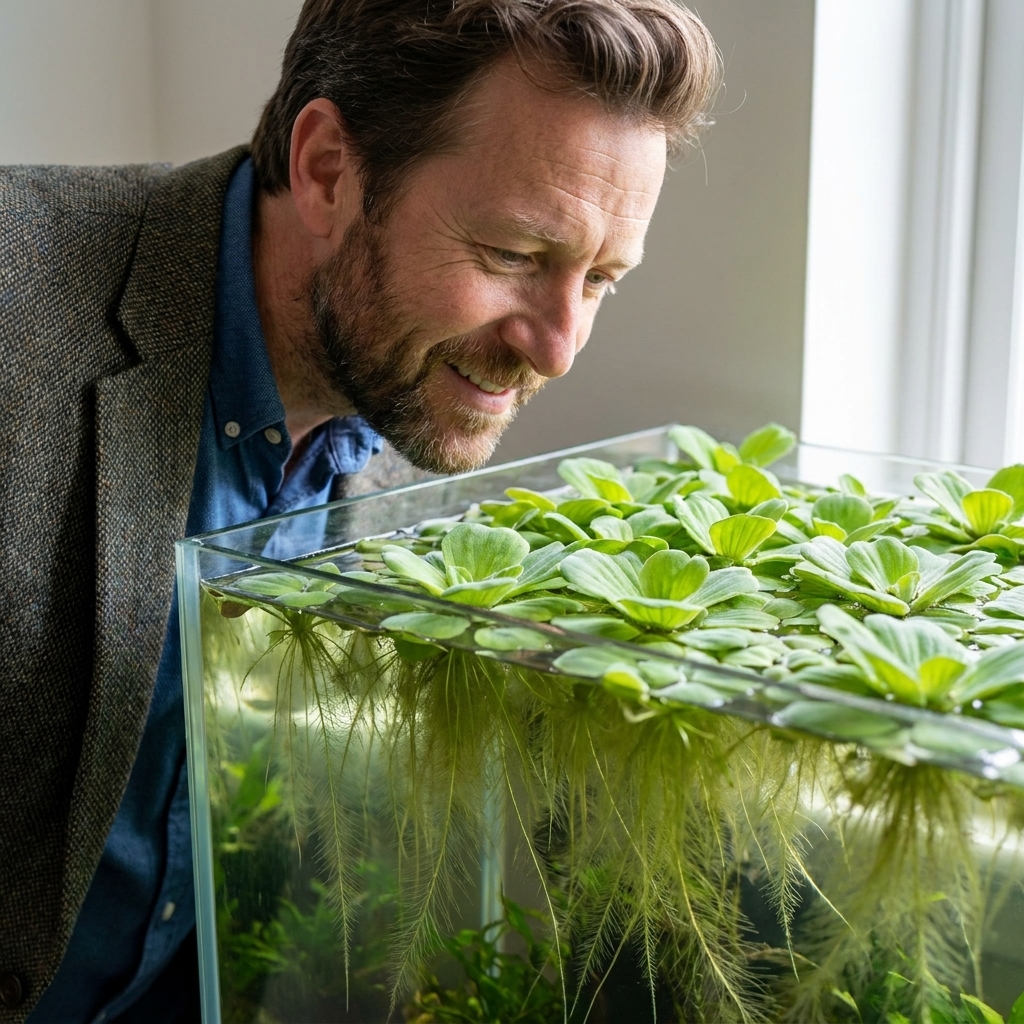
- Floating plants like frogbit or salvinia (nutrient sponges)
Improve maintenance without nuking the biofilter
- Water changes: for high NO3 or PO4, do 30 to 50 percent weekly until stable.
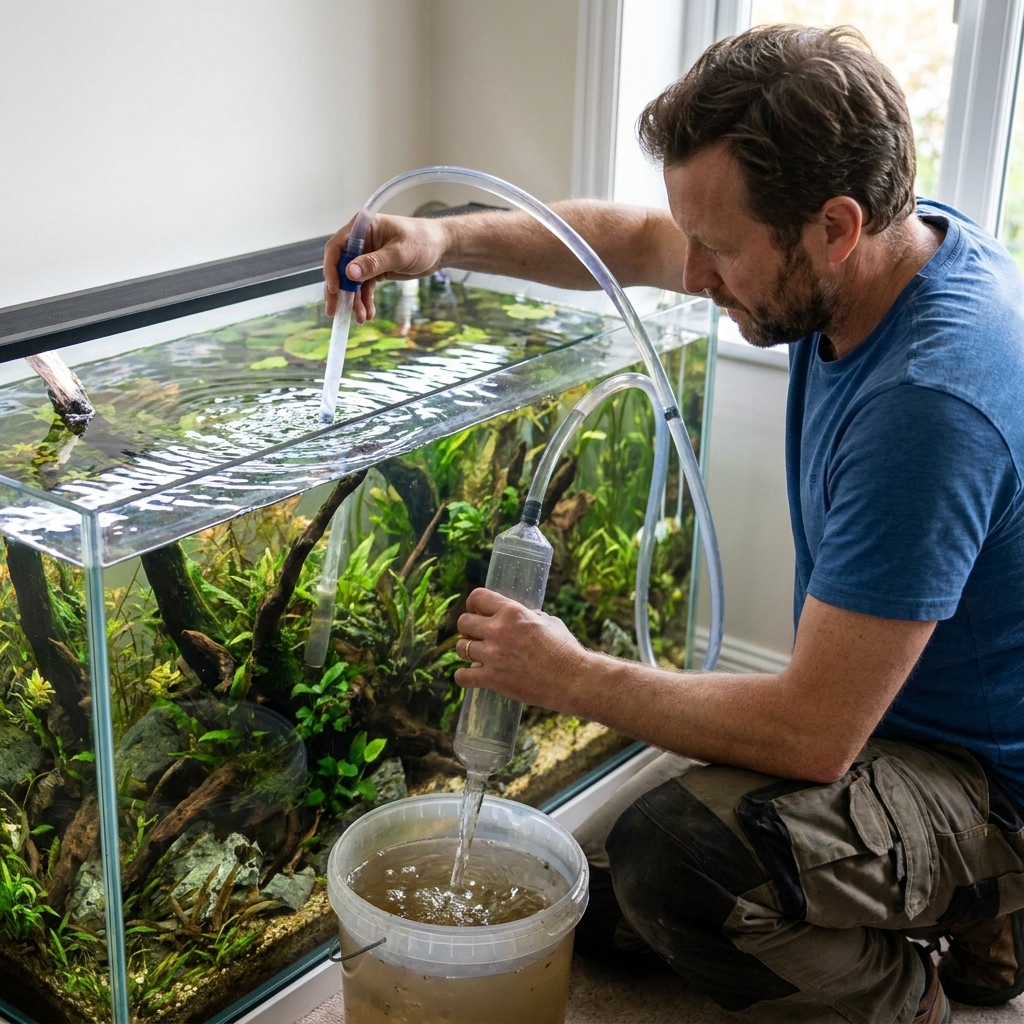
- Gravel vacuum: focus on open areas where waste collects, not deep plant root zones.
- Filter cleaning: rinse media in removed tank water, not tap water.
Check your source water
Some tap water contains measurable nitrate or phosphate. Test your tap. If it is high, you have options:
- Use a mix of reverse osmosis water and tap water
- Increase plant mass and water change frequency
- Consider a phosphate-removing media temporarily if PO4 is extreme, but treat it as a short-term tool, not a lifestyle
Raising NO3 and PO4 safely
This is the part big-box advice often skips: some algae problems improve when you add nutrients. The key is dosing intentionally, then measuring.
Option 1: All-in-one fertilizer
Most all-in-one plant fertilizers include nitrogen and phosphorus. Dose according to the bottle, then test after a week. If your NO3 and PO4 still read near zero, your tank is consuming it quickly and can often handle more plant nutrition.
Option 2: Dose separately
Separate macros let you correct a true imbalance. This is especially useful if nitrate is high from fish waste but phosphate is low, or vice versa.
- To raise nitrate: products based on potassium nitrate are common in planted tanks.
- To raise phosphate: products based on potassium phosphate are common.
Safety note: always dose in small steps, test, and repeat. Sudden large jumps are where people get spooked and blame the nutrient when the real issue was instability.
Option 3: More fish is not a nutrient plan
More stocking increases waste, but it also increases stress, oxygen demand, and long-term maintenance. If your plants need nutrition, fertilize the plants. Let stocking decisions be about fish welfare first.
Light, CO2, and flow
Light sets demand
If your light is strong or your photoperiod is long, your plants demand more CO2 and nutrients. If they do not get them, algae can take advantage of the excess light energy.
For most community planted tanks, a very workable starting point is 6 to 8 hours of consistent light per day. If algae is rampant, reducing photoperiod is often more effective than chasing numbers.
CO2 stability beats bubble rate
In injected CO2 tanks, unstable CO2 often shows up as persistent algae even when your NO3 and PO4 look “good.” Make sure your CO2 comes on early enough, your drop checker solution is appropriate, and your surface agitation is not stripping CO2 excessively.
Flow delivers nutrients
Plants cannot use what never reaches them. Dead spots can lead to local algae even when the tank-wide test looks fine. Aim for gentle circulation that moves leaves slightly and eliminates stagnant corners.
Common algae: first moves
Green dust algae on glass
- Shorten photoperiod to 6 to 7 hours
- Keep NO3 and PO4 stable in range
- Wipe glass, then keep up weekly maintenance
Hair algae on slow plants
- Add fast-growing stems or floaters
- Confirm NO3 is not bottoming out at 0
- Check flow to that area
- Reduce light intensity if possible
Black beard algae on hardscape
- In CO2 tanks: focus on CO2 consistency and flow first
- Stop big day-to-day swings in fertilizer dosing
- Manually remove worst patches and prune affected leaves
A simple weekly routine
If you want a low-stress routine that works for most planted community tanks, use this as your baseline:
- Once per week: test NO3 and PO4 before your water change
- Water change: 25 to 40 percent (adjust higher temporarily if nutrients are excessive)
- After water change: dose fertilizers consistently (same days, same amounts)
- Midweek (optional at first): re-test to learn how quickly your tank consumes NO3 and PO4
- Every week: prune dying leaves and remove visible algae, because decaying plant matter can contribute to outbreaks
After 2 to 4 weeks, the tank usually tells the truth. If plants are pushing new growth and algae is slowing, you are on the right track.
Safety notes
Most planted tank nutrient advice is written from the plant perspective, but fish health comes first.
- Nitrate: many fish tolerate moderate nitrate well, but sensitivity varies by species, and long-term high nitrate is not something to normalize. If your nitrate is climbing fast or sitting very high, prioritize water changes and reducing inputs. Use plant targets as guidance, not permission to ignore livestock stress.
- Phosphate: phosphate is usually not the emergency parameter people fear, but extreme readings still point to heavy input or source water issues that are worth fixing.
If fish are gasping, clamped, or acting off, do not troubleshoot algae first. Test ammonia and nitrite, increase aeration, and do a water change.
FAQ
Will lowering phosphate get rid of algae?
Sometimes, but it is rarely the most reliable fix. If plants become phosphate-limited, they often stall, and algae can still persist. It is usually better to keep PO4 in a reasonable range and manage light, maintenance, flow, and plant mass.
Is 0 ppm nitrate bad?
For fish, 0 ppm nitrate is not inherently dangerous. For planted tanks, it often means plants are nitrogen-starved and will struggle. In that case, bringing nitrate up into the 10 to 20 ppm range can reduce algae by improving plant growth.
What if nitrate is high but phosphate is low?
That can happen in heavily stocked tanks where fish waste drives nitrate up while plants and algae consume phosphate quickly. You may need better nitrate export (water changes, more plants, less feeding) while still dosing small phosphate amounts to keep plants from stalling.
Do I need a specific NO3:PO4 ratio?
No. Consistency and overall plant health matter more. Ratios can be a helpful clue when something is extreme, but they are not a substitute for stable light, good flow, and healthy plant growth.
Does this apply to tanks without plants?
Not in the same way. In unplanted or lightly planted tanks, chasing planted-tank nutrient targets is often unnecessary. Focus on appropriate feeding, stocking, filtration, and water changes. Nutrient testing still helps, but the “plants outcompete algae” strategy requires actual plant mass.
The takeaway
Algae control gets much easier when you stop thinking in terms of “clean vs dirty” and start thinking in terms of nutrient balance and plant momentum. Keep nitrate and phosphate in sensible ranges for your livestock and plant load, keep them stable, and make sure your light and CO2 match your plant goals. When plants are thriving, algae usually becomes a minor housekeeping chore instead of a weekly crisis.
If you want a starting point you can trust: aim for 10 to 30 ppm NO3 and 0.5 to 2.0 ppm PO4, then adjust slowly based on trends, test-kit limits, and what your plants show you over a few weeks.