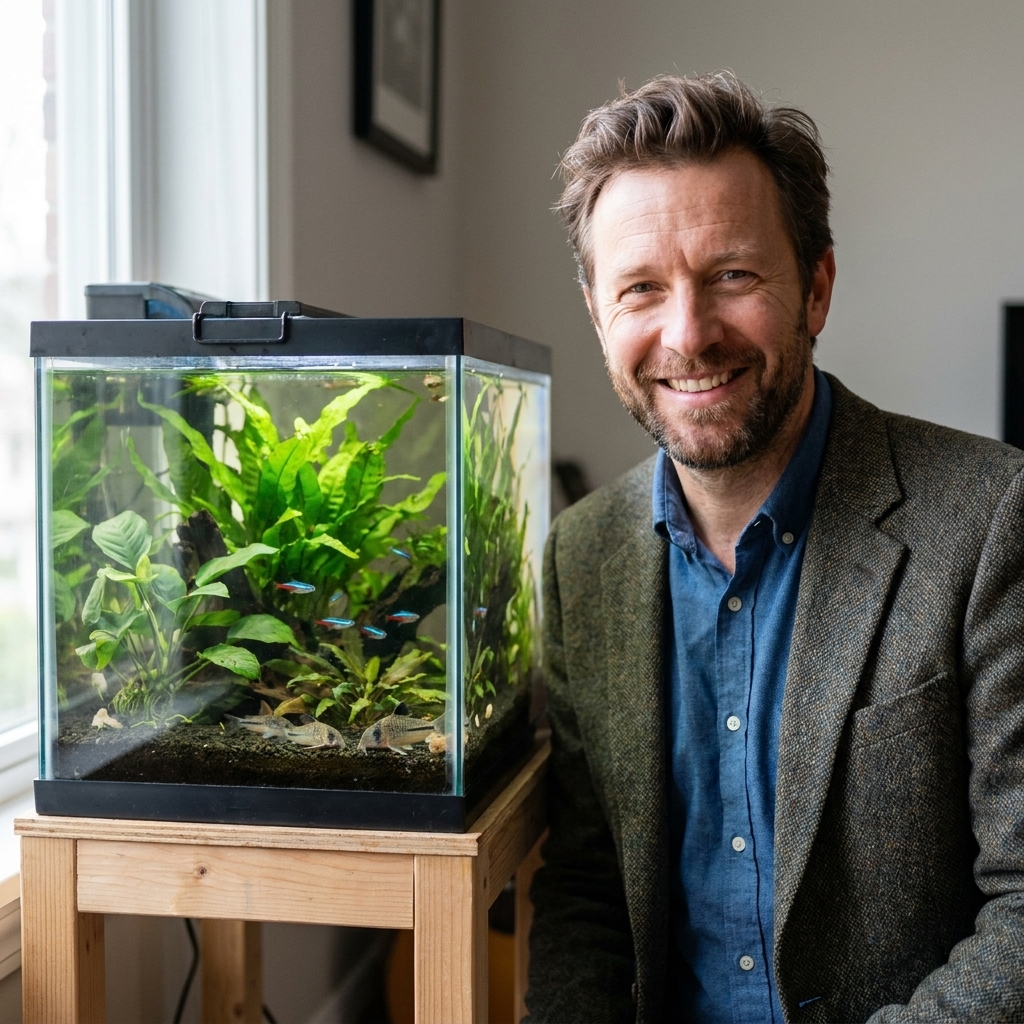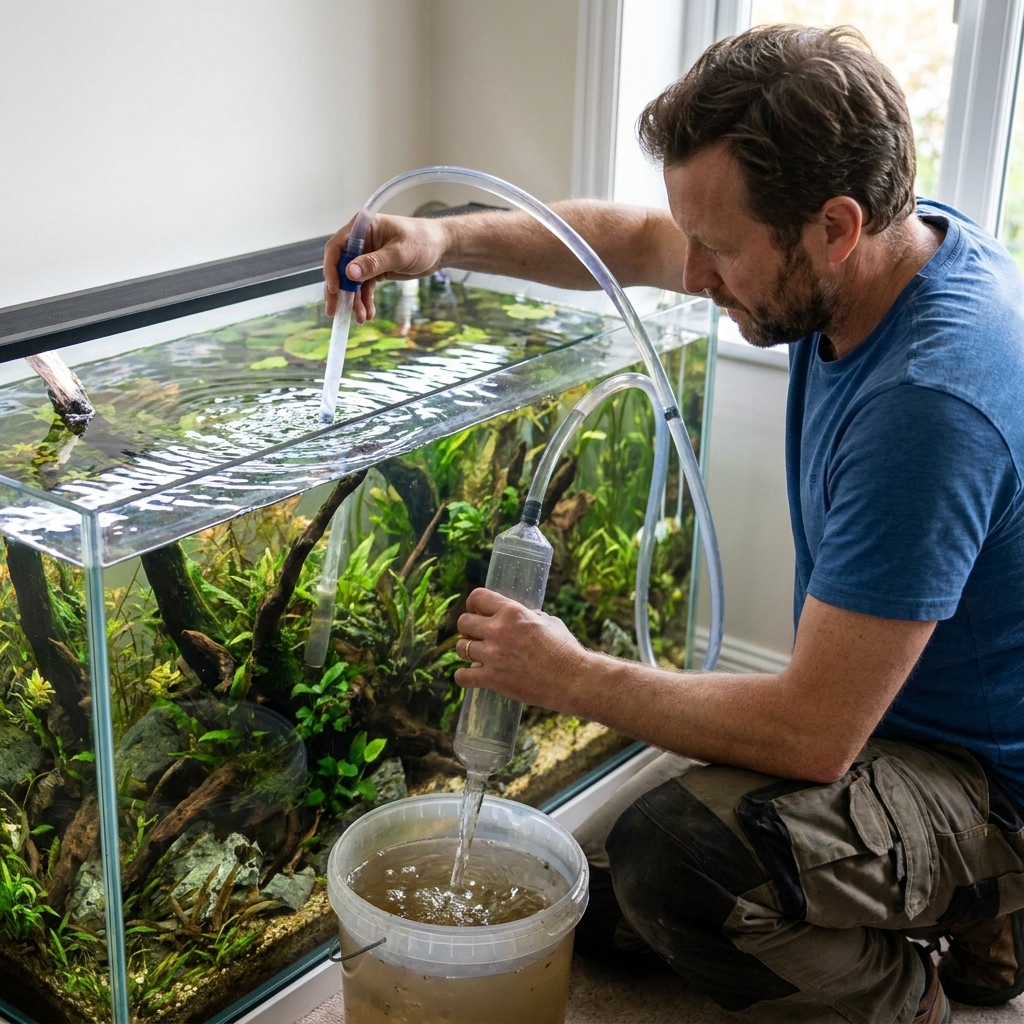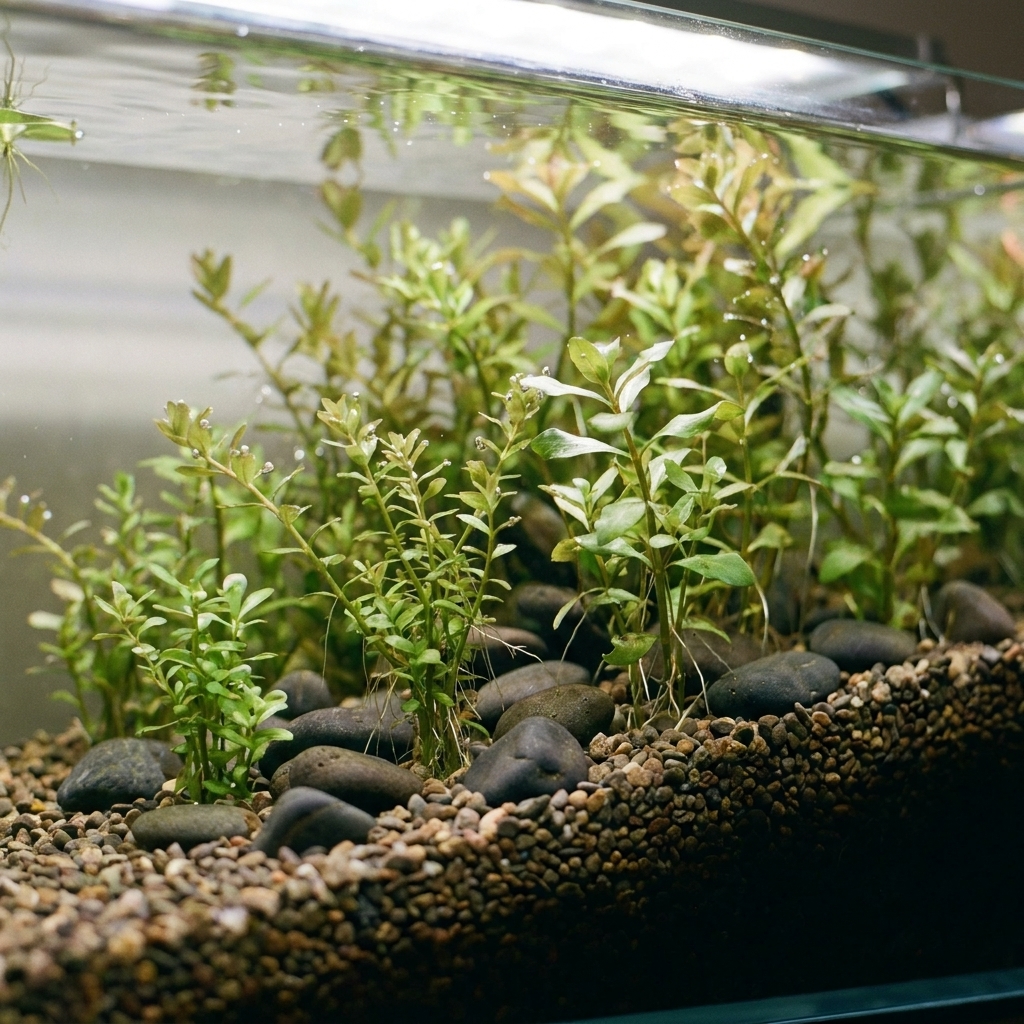
Sand, gravel, and active aqua soil each behave differently in a freshwater aquarium. Learn the real pros and cons, what’s best for bottom-dwelling fish and...
Freshwater aquarium guidance
The 7 Best LED Lights for Low-Tech Planted Aquariums
A low-tech planted tank does not need a “sun” overhead. Here are 7 budget-friendly LED lights that grow common aquarium plants with steady, algae-resistant output, plus a simple buying guide.

Written by
Oliver Bennett
Oliver Bennett is a lifelong aquarist with over 15 years of experience in freshwater tank setup, aquascaping, and fish health. Through TankRoot, he shares his passion for creating balanced underwater ecosystems, helping hobbyists of all levels build thriving, beautiful homes for their fish.
Published: October 17, 2026
•
Updated: October 17, 2026
Low-tech planted tanks are my favorite kind of aquarium, not because they are “easy,” but because they reward patience. A good light is the difference between a calm, stable little ecosystem and a tank that sprints straight into green hair algae the second you overdo it.
The trick is not blasting your plants with the brightest fixture you can afford. It is choosing a light with sensible intensity, decent spread, and predictable control, then pairing it with a photoperiod your tank can actually balance.
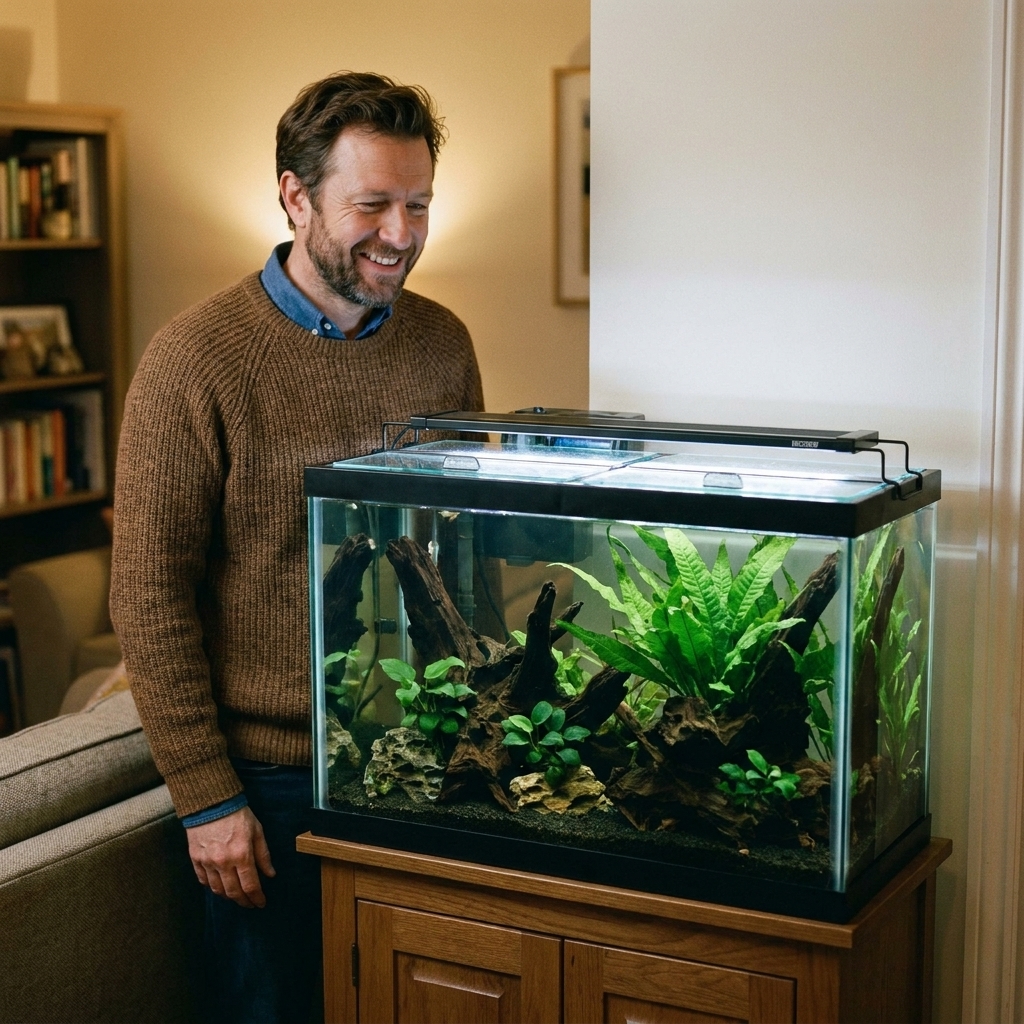
Below are seven LED lights I recommend for low-tech planted aquariums, plus a practical buying guide so you can pick the right model for your tank size and plant list.
Quick picks
- Best overall value: NICREW ClassicLED Plus
- Best upgrade for spread and color: Hygger 24/7 Aquarium Light (full spectrum)
- Best for plant-focused low-tech tanks: Finnex Stingray 2
- Best for tiny tanks: NICREW Clip-on (planted clip light)
- Best for “set it and forget it” scheduling: Fluval Plant Nano (for small tanks)
- Best budget light with timer options: AQUANEAT Full Spectrum LED
- Best premium pick for low-tech (run dimmer): Chihiros A Series (dimmable models)
The 7 best LED lights for low-tech planted aquariums
All of these can grow common low-tech plants like anubias, java fern, cryptocoryne, vallisneria, dwarf sagittaria, water sprite, and many stems, as long as you keep your photoperiod reasonable and do not overfeed.
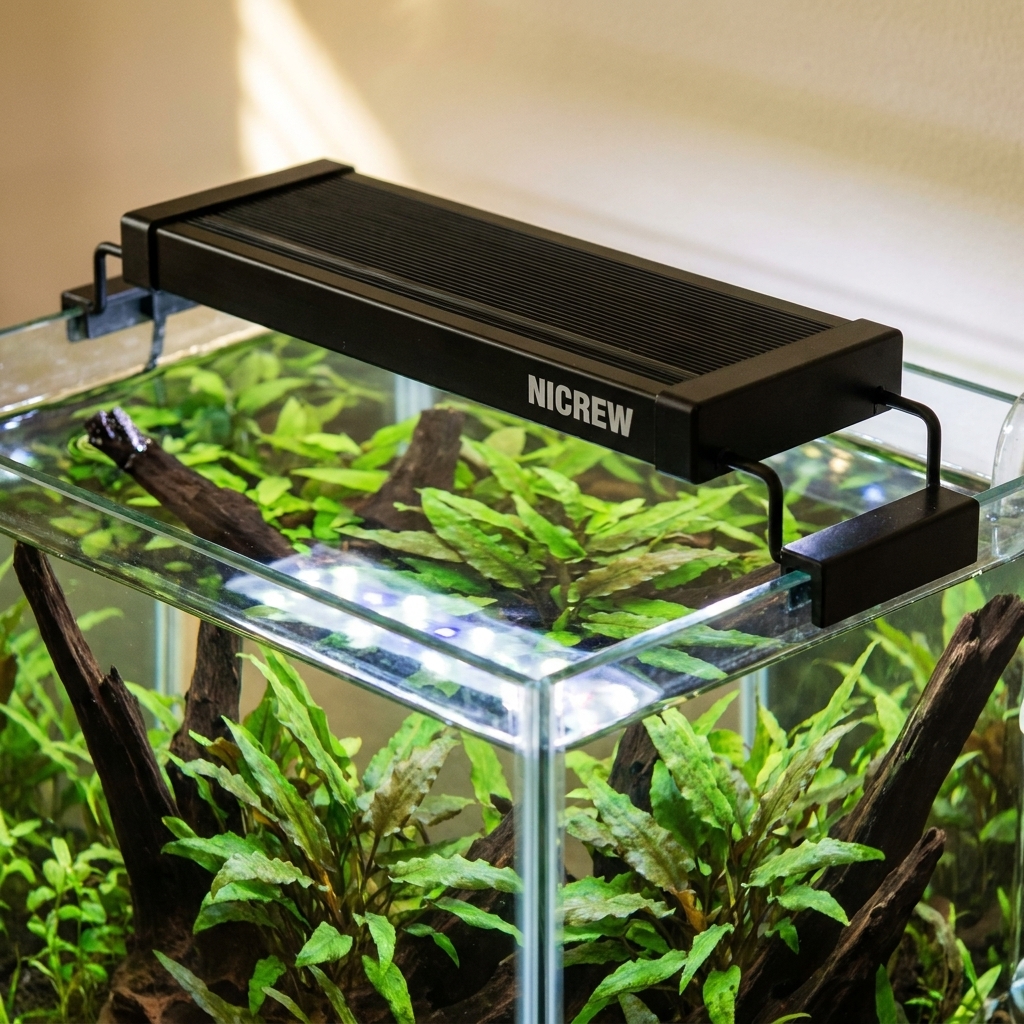
1) NICREW ClassicLED Plus (best overall value)
If you want a dependable, widely available light that simply works, the ClassicLED Plus is hard to beat. It is bright enough for most non-CO2 setups, spreads light evenly across typical rectangular tanks, and it avoids the harsh “spotlight” look you get with some cheap diode clusters.
- Why I like it: Great value, solid spread, grows common plants without forcing high light.
- Best for: 10 to 55 gallon community tanks with easy plants.
- Algae risk level: Low to moderate, mostly depends on how long you run it.
- Tip: Pair it with a simple outlet timer and start at 6 hours/day for the first two weeks.
2) Hygger 24/7 Full Spectrum (best day schedule on a budget)
Hygger’s 24/7 models are popular for a reason. The built-in schedule ramps brightness and color through the day, which feels gentler than flipping to full intensity instantly. In a living room tank, that is a real quality-of-life upgrade.
Note: Hygger sells several “24/7” variants, and controls vary by version. Some let you adjust overall intensity and custom time blocks; others are more locked-in. Always double-check the exact model’s settings before you buy.
- Why I like it: Built-in ramping schedule makes it easier to avoid abrupt full-intensity spikes.
- Best for: Planted community tanks where you want a consistent daily routine.
- Algae risk level: Moderate if you run long bright periods at high output.
- Tip: If your model allows intensity adjustment, run it around 60 to 80% and keep total bright time around 6 to 7 hours.
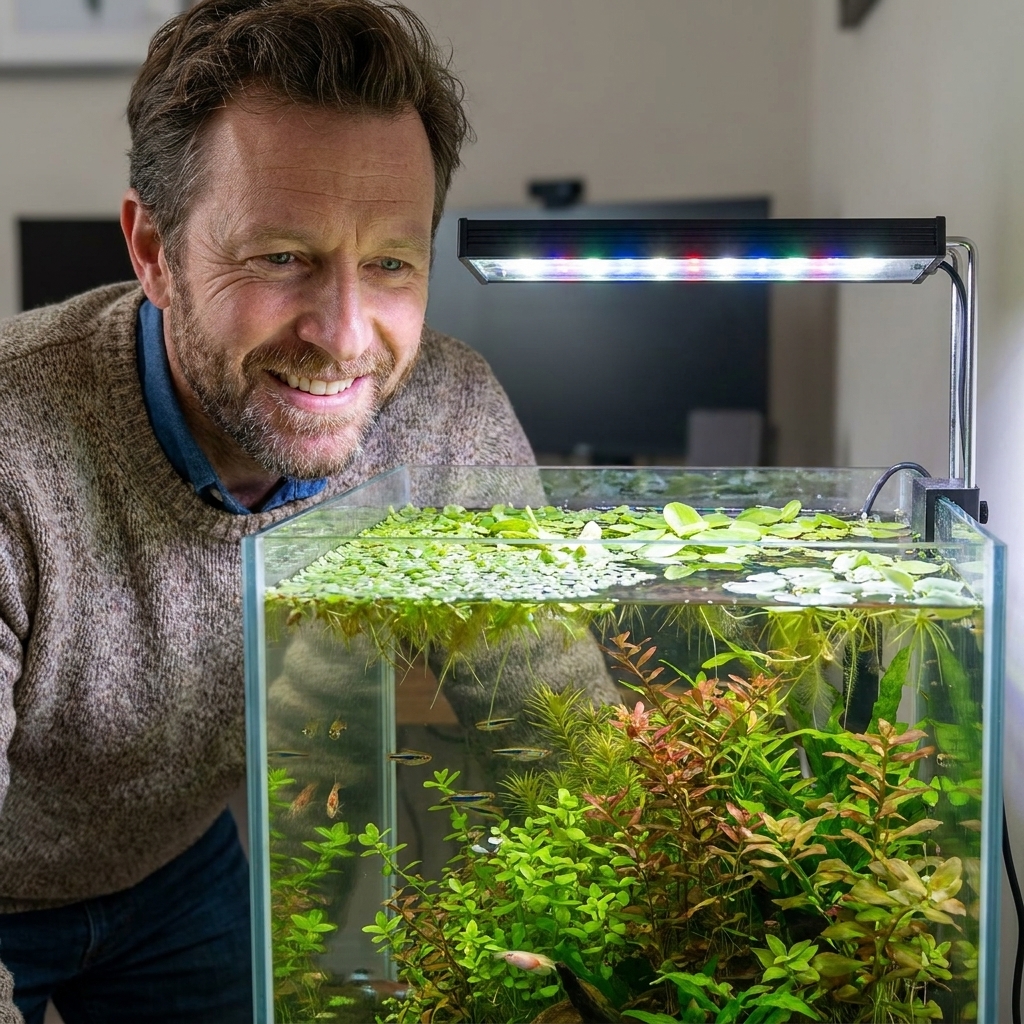
3) Finnex Stingray 2 (best plant-forward light that still behaves)
The Stingray line has been a planted-tank staple for years. The Stingray 2 hits a sweet spot for low-tech keepers who want stronger plant growth and nicer color rendition, but do not want to jump into pressurized CO2.
To my eye, it produces a cleaner, more “crisp daylight” look than many bargain fixtures, which helps greens look green instead of washed out.
- Why I like it: Strong, clean light output with good coverage and pleasing color.
- Best for: Easy-plant tanks that are heavily planted or deeper than average.
- Algae risk level: Moderate, because it can be plenty bright over shallow tanks.
- Tip: If algae shows up, do not panic and buy chemicals. Cut photoperiod to 5.5 to 6 hours first.
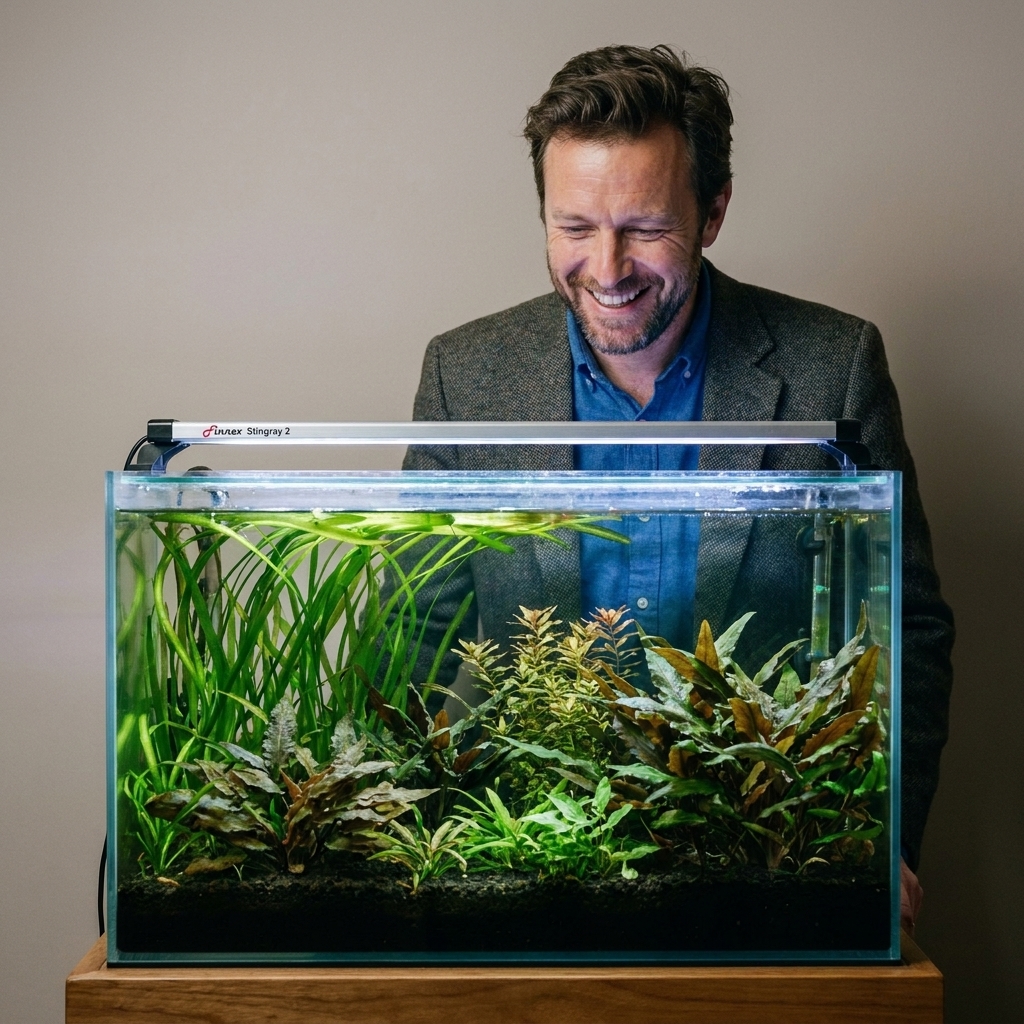
4) NICREW Clip-on Planted Light (best for small tanks and odd setups)
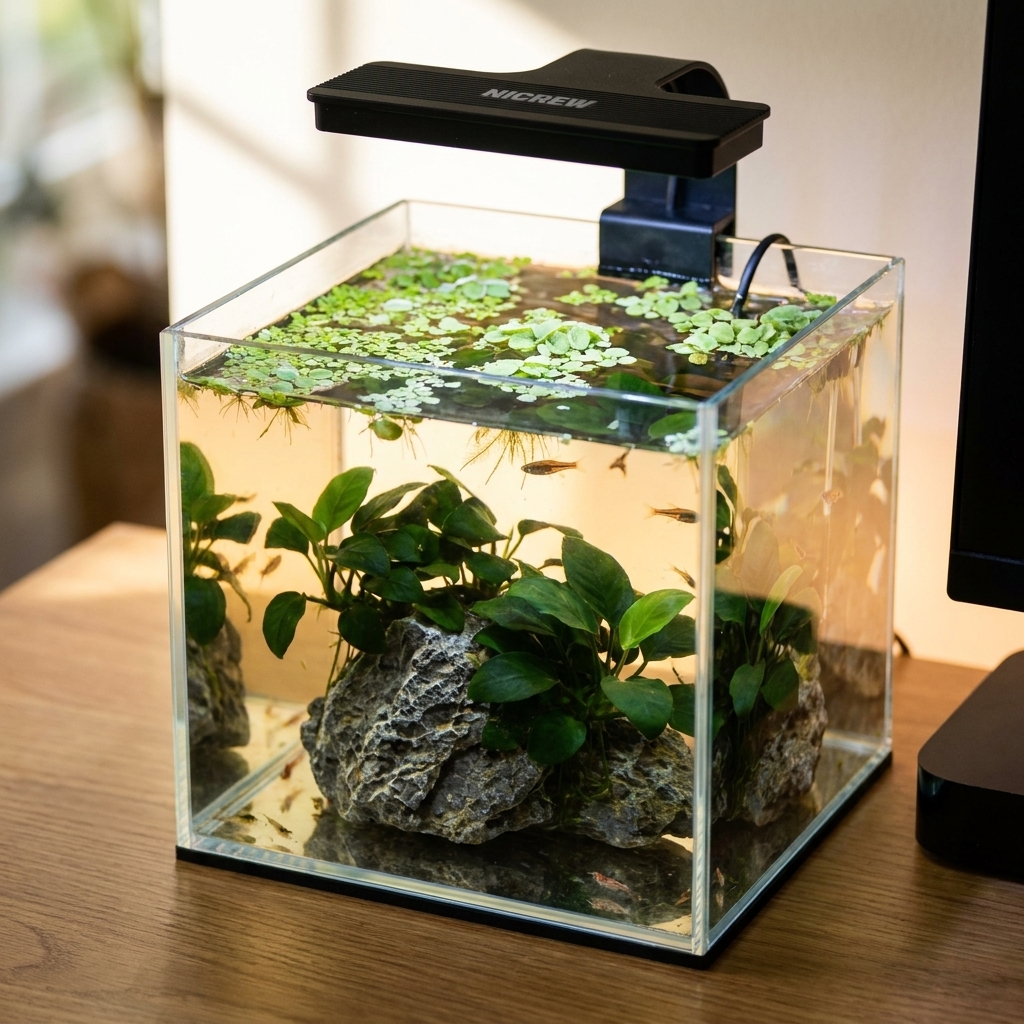
Small tanks are tricky. Light spread matters more, and it is easy to overpower a nano with a long bar designed for larger aquariums. A decent clip-on lets you position the beam, raise it slightly, and dial in a calmer level of light for easy plants.
Note: NICREW clip-ons come in multiple versions with different wattage, optics, and controls. Treat the name as a “model family” and look closely at output and mounting details.
- Why I like it: Flexible mounting, good for nanos, easy to aim.
- Best for: 2 to 10 gallon planted tanks, shrimp tanks, betta tanks with live plants.
- Algae risk level: Moderate, nanos swing quickly.
- Tip: Add floating plants (frogbit, salvinia) to buffer excess light and stabilize nutrient uptake.
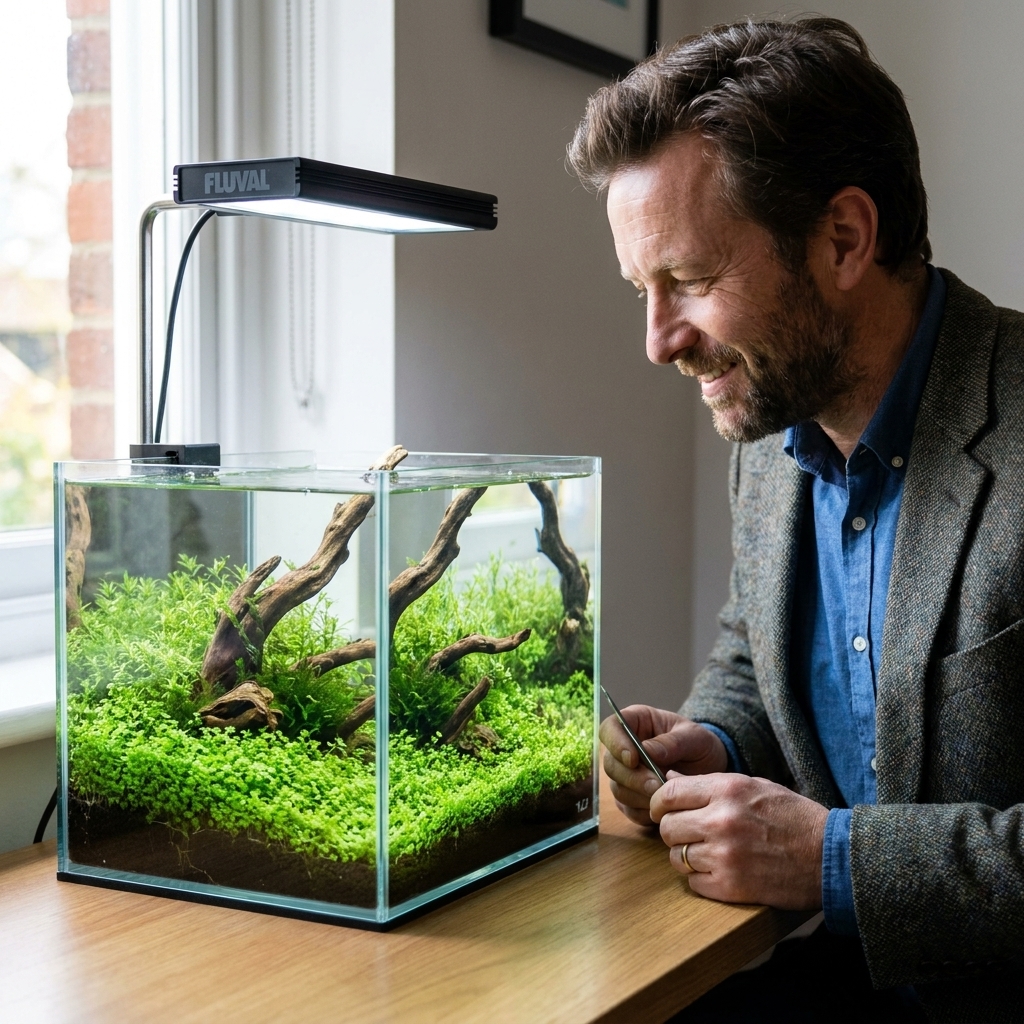
5) Fluval Plant Nano (best set-and-forget for small tanks)
Fluval’s Plant Nano costs more than many budget options, but the control and consistency are excellent for smaller tanks where tiny changes can cause big algae issues. If you want a clean app-controlled schedule and smooth dimming, this is one of the easiest ways to get there.
- Why I like it: Strong control features and smooth dimming, great build quality.
- Best for: Nano planted tanks where stability matters most.
- Algae risk level: Low if you use the dimming to your advantage.
- Tip: Set a peak brightness window of 4 to 5 hours, with ramp-up and ramp-down on either side.
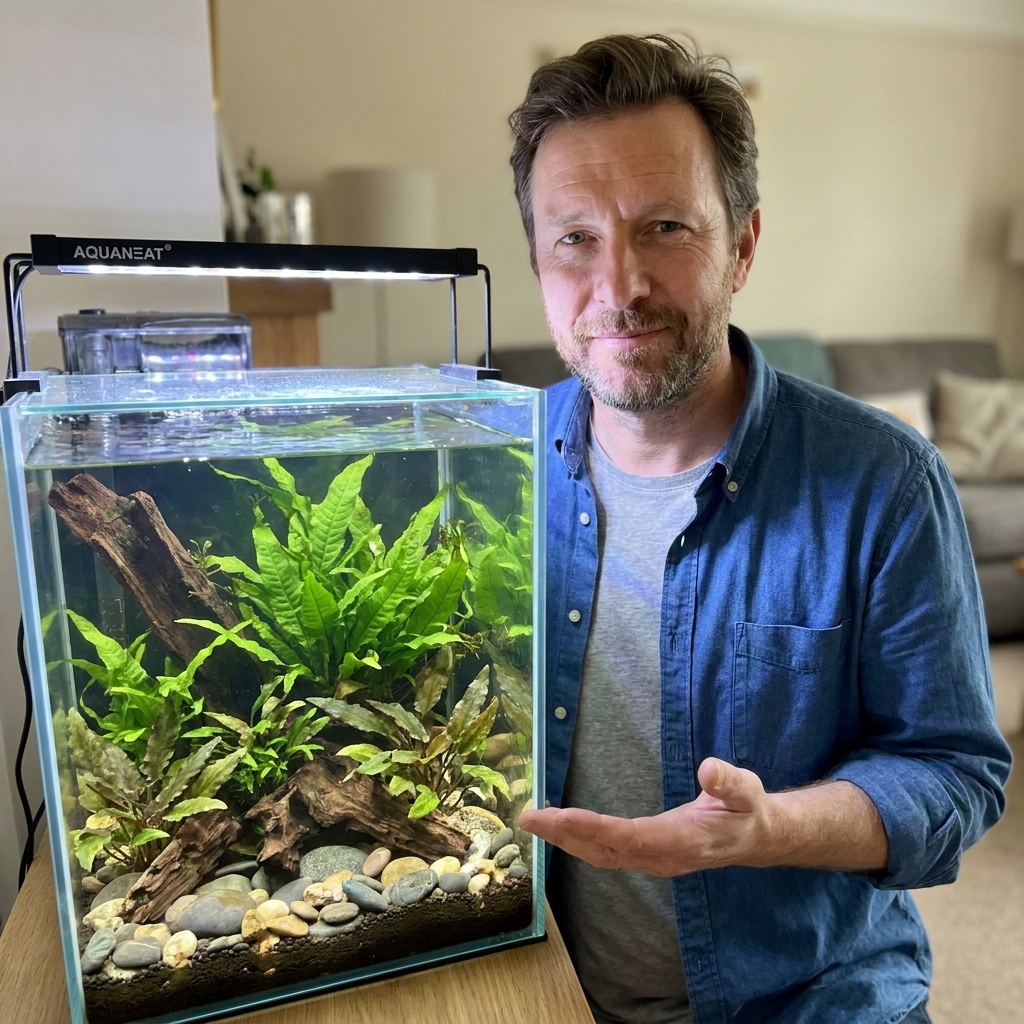
6) AQUANEAT Full Spectrum LED (best ultra-budget option)
AQUANEAT lights are often the cheapest way into planted tanks, and they can absolutely grow easy plants. The trade-off is usually less refined control and sometimes less even spread, depending on the model and tank length.
- Why I like it: Very affordable entry point that can still grow beginner plants.
- Best for: Tight budgets, quarantine tanks with plants, first planted setups.
- Algae risk level: Moderate, mostly because people run budget lights too long.
- Tip: If your plants are growing but algae is creeping in, reduce light before you change fertilizers. Light is the gas pedal.
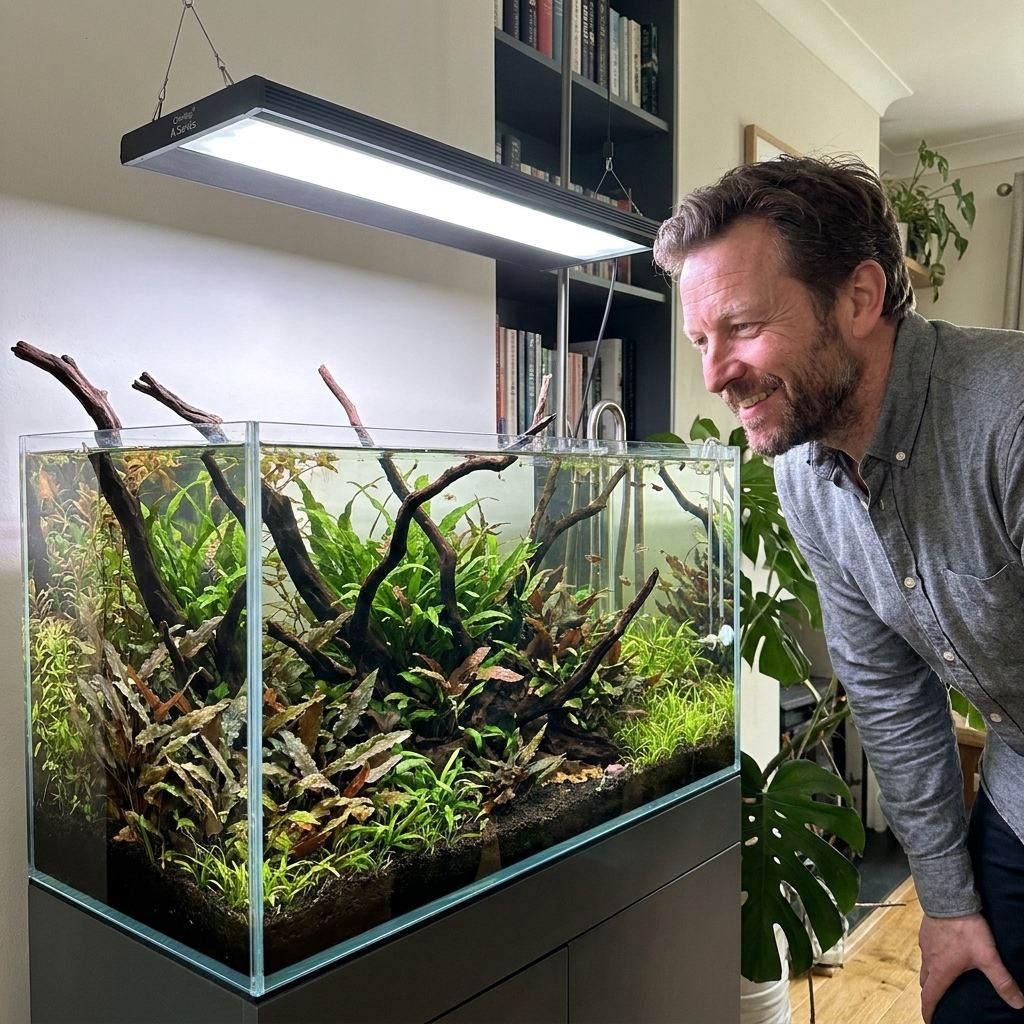
7) Chihiros A Series (best premium pick, run dimmer)
This is the one premium recommendation on the list. Chihiros fixtures are powerful, efficient, and popular in aquascaping. That power can absolutely push a low-tech tank into algae if you run it wide open, but if you choose a dimmable model and treat it with respect, it is a fantastic long-term light with excellent spread.
- Why I like it: Beautiful light quality, strong spread, great longevity.
- Best for: Planted display tanks where you want the option to go higher-tech later.
- Algae risk level: High if overdriven, low if dimmed appropriately.
- Tip: Start at 30 to 50% intensity and increase slowly over weeks only if plants demand it.
How to choose a low-tech planted aquarium light
If none of the picks above fit your tank dimensions or budget, here is how I choose lights for low-tech setups from first principles.
Here is the honest truth most beginners never hear at the store: for low-tech planted tanks, too much light is a more common problem than not enough. Plants can only use as much light as your tank’s CO2 and nutrients allow. Extra light often ends up feeding algae.
1) Aim for moderate light
In non-CO2 tanks, moderate light is your friend. It encourages steady growth and reduces the pressure on your fertilization routine.
- If you mostly keep anubias, java fern, moss, crypts: choose a gentler fixture or run a stronger one dimmed.
- If you want faster growers like hygrophila, rotala, vallisneria: a midrange light with good spread helps.
2) Prioritize spread
Even coverage matters. Hot spots can contribute to algae on hardscape right under the diodes, while shaded corners often collect detritus and grow poorly. Longer strip lights with evenly spaced LEDs usually behave better than short fixtures with very intense clusters.
Rule of thumb: Choose a fixture that spans most of your tank length, not just the middle. If you can raise the light a bit, you usually gain spread at the cost of some intensity, which is often a fair trade for low-tech.
3) Consider lids and mounting height
Glass lids and cover glass reduce usable light and can shift results more than people expect. If you run a lid, you may need a slightly longer photoperiod or a slightly higher intensity compared with the same tank run open-top. Keep the glass clean, too, since film and mineral spots block light fast.
4) Do not overthink color
Most modern “full spectrum” aquarium LEDs work fine for easy plants. A neutral white look tends to show fish and greens nicely. What matters more is consistency and not running the light 10 to 12 hours.
One caution: aggressive red/blue heavy “plant modes” can look cool, but they are easy to overdo in a low-tech tank. If you are fighting algae, stick to a balanced spectrum at moderate intensity.
5) Control options matter
If you can dim the light or program a schedule, you can solve most early algae problems without buying a new fixture. If the light has no dimming, an inexpensive outlet timer at least locks in a consistent photoperiod.
Ramping is nice for viewing comfort and for avoiding instant full-blast lighting. It is not magic algae prevention, but it can make your day-to-day routine gentler.
6) Match the light to tank depth
Deeper tanks need more usable light at the substrate, while shallow tanks are easy to overpower. If you have a shallow 5 to 10 gallon tank, treat “plant” lights with caution and lean on dimming, floaters, or shorter photoperiods.
7) Check mounting compatibility
Before you buy, confirm the mounting style matches your tank. Rimmed and rimless tanks use different brackets, and some clip-on mounts will not grip thick glass or tanks with plastic trim. If you use glass lids, make sure the fixture legs clear the lid handle and sit stable.
My low-tech lighting settings
If you want one simple starting point that works for most low-tech planted community tanks, use this:
- Photoperiod: 6 hours per day for the first 2 weeks, then 7 hours if algae is under control
- Intensity: If dimmable, start at 50 to 70%
- Ramping: Nice for viewing comfort and gentler on fish, not required
- Maintenance: A 30 to 50% weekly water change often helps in new tanks or if you are battling algae and instability
If algae shows up, do not add more chemicals first. Reduce light by 1 to 2 hours and clean what you can manually. Then check the basics: overfeeding, dirty filter media, and whether your fast growers are actually growing.
Low-tech plants these lights can grow
With reasonable settings, every light above can handle most beginner-friendly plants, including:
- Anubias (all varieties)
- Java fern
- Bolbitis (slower but doable in stable tanks)
- Cryptocoryne species
- Vallisneria
- Dwarf sagittaria
- Water wisteria and water sprite
- Hornwort and guppy grass
- Most mosses
If you are trying to carpet demanding plants without CO2, keep expectations realistic. Lighting is only one piece of the triangle. The other two are CO2 availability and nutrients, and low-tech tanks intentionally keep those gentle.
FAQ
Do LED lights cause algae?
LEDs do not “cause” algae by themselves. Too much light for your tank’s available CO2 and nutrients is what drives algae. Strong LEDs just make it easier to overdo it, especially if you run them 10 to 12 hours a day.
How long should I leave my planted tank light on?
For low-tech tanks, 6 to 8 hours is the sweet spot for most setups. I start new or unstable tanks at 6 hours and only increase if plants are healthy and algae is minimal.
Should I buy a plant light if I do not use CO2?
You can, but you do not need an ultra-high output fixture. Many “plant” lights are designed with higher intensity in mind. If you buy a stronger light, prioritize dimming and run it lower.
What is the biggest mistake with low-tech lighting?
Running the light too long, especially early on. A new tank does not have stable biological processes yet. Long photoperiods in a young tank very often invite algae.
My final pick
If you want a simple recommendation with the fewest regrets, start with the NICREW ClassicLED Plus and a reliable timer, then run a conservative photoperiod. If you want more control without jumping to premium pricing, the Hygger 24/7 is a nice quality-of-life upgrade, as long as you keep intensity and bright time in check and confirm your specific model supports the adjustments you want.
Whatever you choose, remember the low-tech mindset: slow, steady, and consistent. Your plants will reward you, and your fish will thank you for the stability.