Tap water is convenient and usually works with conditioner. RO water delivers consistency and precision, but requires remineralizing and added gear. Learn th...
Freshwater aquarium guidance
How to Remove Copper and Heavy Metals from Aquarium Water
Protect shrimp, snails, and scaleless fish by detecting and removing copper and heavy metals from tap water. Learn what to test, what conditioners really do, and how to fix contamination fast.

Written by
Oliver Bennett
Oliver Bennett is a lifelong aquarist with over 15 years of experience in freshwater tank setup, aquascaping, and fish health. Through TankRoot, he shares his passion for creating balanced underwater ecosystems, helping hobbyists of all levels build thriving, beautiful homes for their fish.
Published: October 17, 2026
•
Updated: October 17, 2026
I still remember the first time I lost invertebrates “mysteriously” after a routine water change. The tank looked perfect. Parameters looked fine. But the shrimp started losing balance and coordination, then disappeared one by one. The culprit was not ammonia, nitrite, or temperature. It was copper, quietly hitchhiking in from my tap water and plumbing.
Heavy metals are one of those problems that big-box advice tends to gloss over because the solutions are not exciting. They are preventative, methodical, and sometimes annoyingly specific to your home’s water supply. The good news is that once you understand where metals come from and how to remove them, they are very manageable, even for sensitive species like Caridina shrimp, nerite snails, loaches, and many catfish.
Why copper and heavy metals matter
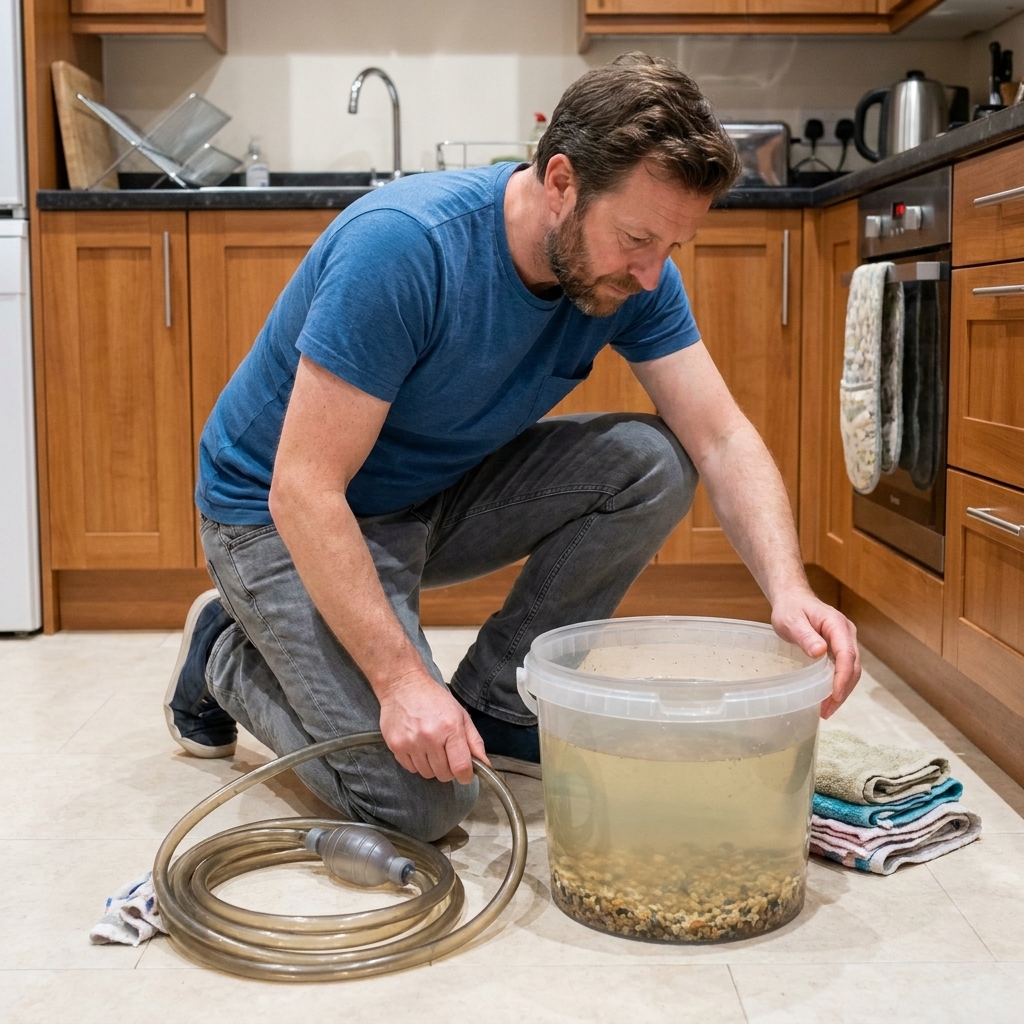
In tiny amounts, metals like copper can be tolerated by many hardy fish. In slightly higher amounts, they become a gill and nervous system irritant. For invertebrates, the safety margin is much smaller because metals interfere with essential biological processes.
One quick reality check: if livestock crash right after a water change, metals are only one possibility. Chloramine-related issues and fast swings in pH, GH, KH, or TDS can look very similar, especially in shrimp tanks. If you are troubleshooting, keep those in the back of your mind as you work through the steps below.
Common metals that show up in aquariums
- Copper: the most common “silent killer” for shrimp and snails, and a frequent ingredient in fish medications.
- Lead: can leach from older plumbing or solder and is sometimes present in trace amounts in municipal systems.
- Zinc: can leach from galvanized metal, some plumbing components, and occasionally from certain aquarium hardware.
- Iron and manganese: at typical tap-water levels these are more of a staining and algae issue than an acute toxin, but high concentrations can still be harmful and are worth controlling in sensitive setups.
Who is most vulnerable
- Shrimp and crayfish (especially Caridina and delicate Neocaridina lines)
- Snails (mystery, nerite, ramshorn, rabbit snails)
- Scaleless fish (loaches, many catfish, eels) and fish with compromised slime coat
- Fry and newly shipped fish under stress
Where heavy metals come from
Most metal problems trace back to one of five sources. Pinpointing the source matters because “more conditioner” is not always the best long-term plan.
1) Tap water and municipal additives
Some water supplies carry trace copper from distribution lines. Others vary seasonally based on treatment chemistry. Even if the utility meets drinking-water rules, that does not automatically mean “shrimp-safe.”
2) Plumbing, fittings, and water heaters
Copper pipes, brass fittings, and older solder can contribute metals, especially if water sits in the pipes for hours. Hot water tends to dissolve metals more readily, which is why you should not fill aquariums from the hot tap.
3) Fish medications and algaecides
Many parasite treatments contain copper, and some “quick fix” algae products do too. Copper-based meds can be useful in fish-only quarantine, but they are a landmine for any tank with inverts.
4) Decorations, rocks, and hardware
Uncoated metal parts, unknown ornaments, or rocks with metal inclusions can leach over time. Occasionally, a pump or heater with damaged coating can expose metal to water.
5) Contaminated buckets and cleaning residue
A bucket that once held household cleaners, lawn chemicals, or even some copper-containing soaps can contaminate a tank. This is one of the most common causes of “sudden disaster after maintenance.”

How to tell if metals are the problem
Metals rarely announce themselves with one perfect symptom, but there are patterns. Think “everything looks normal, but sensitive livestock crash after a water change.”
Common signs in shrimp and snails
- Shrimp become lethargic, lose coordination, or tumble shortly after a water change
- Sudden deaths with otherwise stable ammonia and nitrite
- Snails stop moving, detach from glass, or fail to right themselves
- Molting problems in shrimp, especially when the issue appears suddenly
Common signs in fish
- Rapid breathing, gill irritation, hanging near filter outflow
- Unexplained flashing that does not match a clear parasite pattern
- Fish look “fine” but become weaker after each water change
Testing options (and their limits)
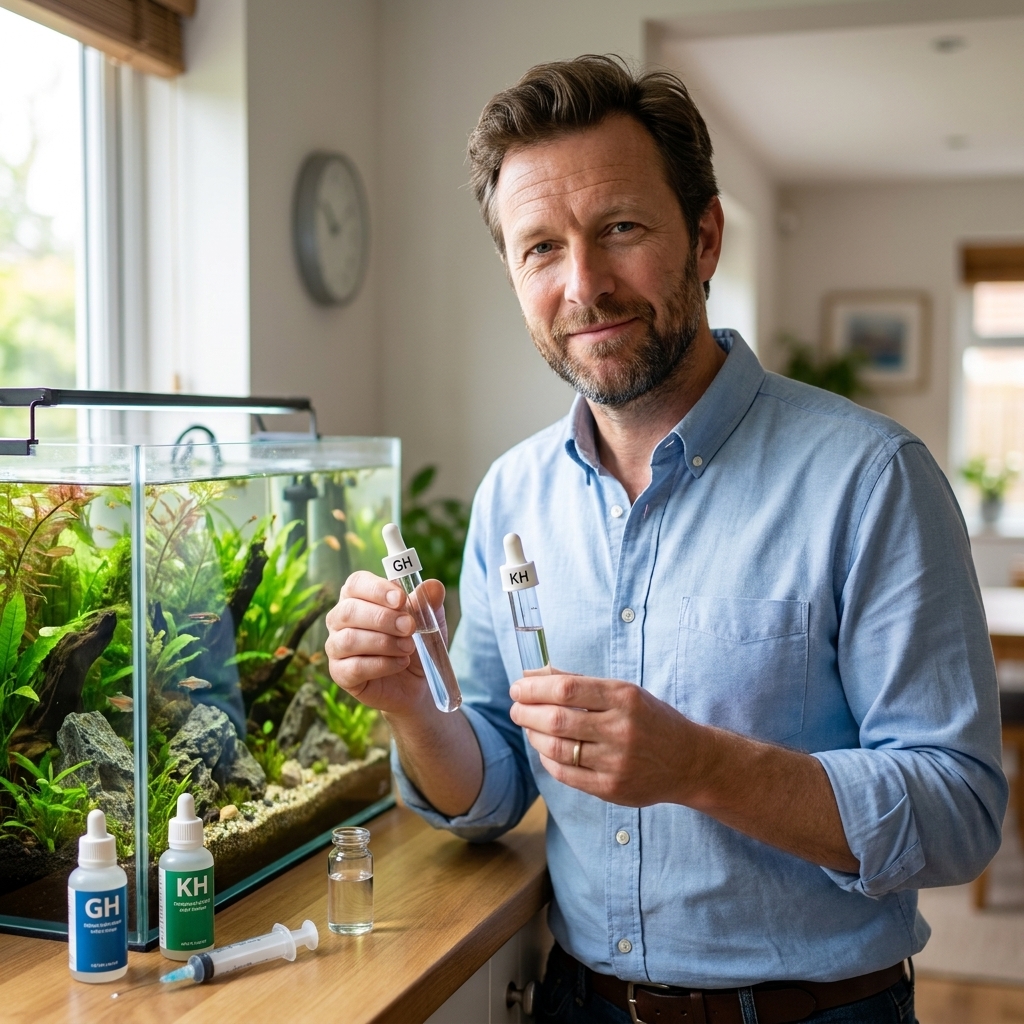
- Liquid copper test kit: useful, but many hobby kits struggle at very low ranges that still affect invertebrates. Also, some kits read mostly “free” copper, while conditioners and chelators can shift copper into bound forms that may test differently. If you add a binder and your kit suddenly reads lower, that does not automatically mean the copper is gone.
- Tap water comparison: test both first-draw water (after sitting in pipes overnight) and flushed water (after running the tap 2 to 5 minutes). A big difference points to plumbing leaching.
- Lab or utility report: a consumer lab test gives the clearest picture. Utility reports are helpful but may not reflect what your home plumbing contributes.
Practical target for invert tanks: copper should be effectively “undetectable” on typical hobby kits. If you are getting a clear positive reading in the tank or at the tap, treat that as a problem to solve rather than a number to negotiate.
If you suspect a metal issue and you keep shrimp or snails, I treat it like a fire drill: act first to reduce exposure, then confirm with testing.
Emergency steps
If livestock are actively distressed, your goal is to bind what is in the water, remove what you can, and stop adding more.
1) Stop the source
- Stop dosing any medication or algae product that could contain copper.
- Pause tap-water top-offs until you have a plan to treat the source water reliably.
2) Use a conditioner that binds heavy metals
Many mainstream water conditioners include a heavy-metal binding component, but not all do. Basic dechlorinators that are essentially sodium thiosulfate may remove chlorine and do little else. Read the label and choose a product that explicitly claims to detoxify or bind heavy metals.
During a suspected contamination event, some products allow dosing for the full aquarium volume to bind what is already in the tank. Only do whole-tank dosing if the manufacturer’s instructions specifically allow it. If the label only tells you to treat new water, stick to that and focus on removal media and safe water changes.
Important: binding is not the same as removal. It buys time and reduces toxicity, but the metal is still in the system until you export it.
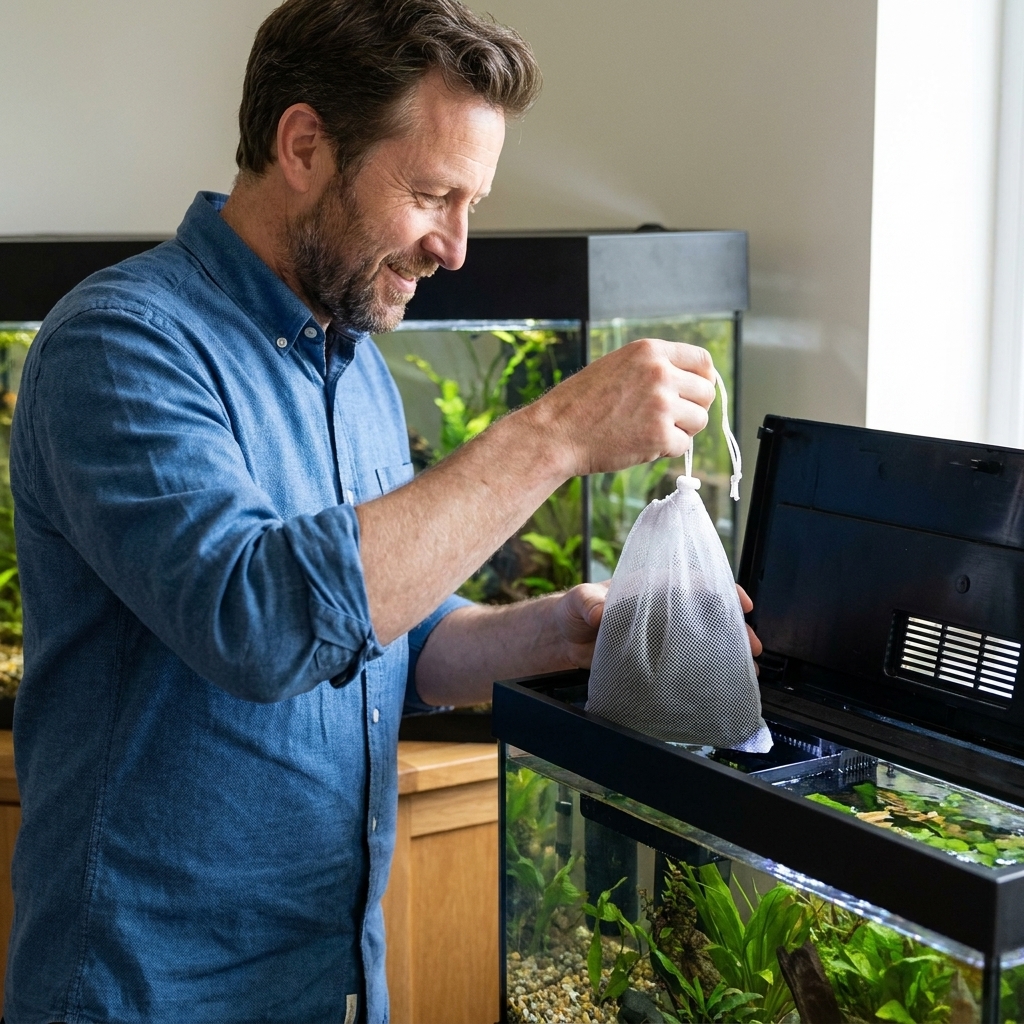
3) Run fresh media designed for metals
- Metal-adsorbing resins (products marketed specifically for copper and heavy metals): often the fastest way to actually pull dissolved metals out of the water.
- High-quality activated carbon: helpful as a supporting player, especially for organics and some complexed contaminants. It is not a reliable primary tool for removing free ionic copper.
Place media in high flow, like a canister filter basket or hang-on-back media chamber. Replace it on schedule because exhausted media can stop working without obvious warning.
4) Do controlled water changes using treated water
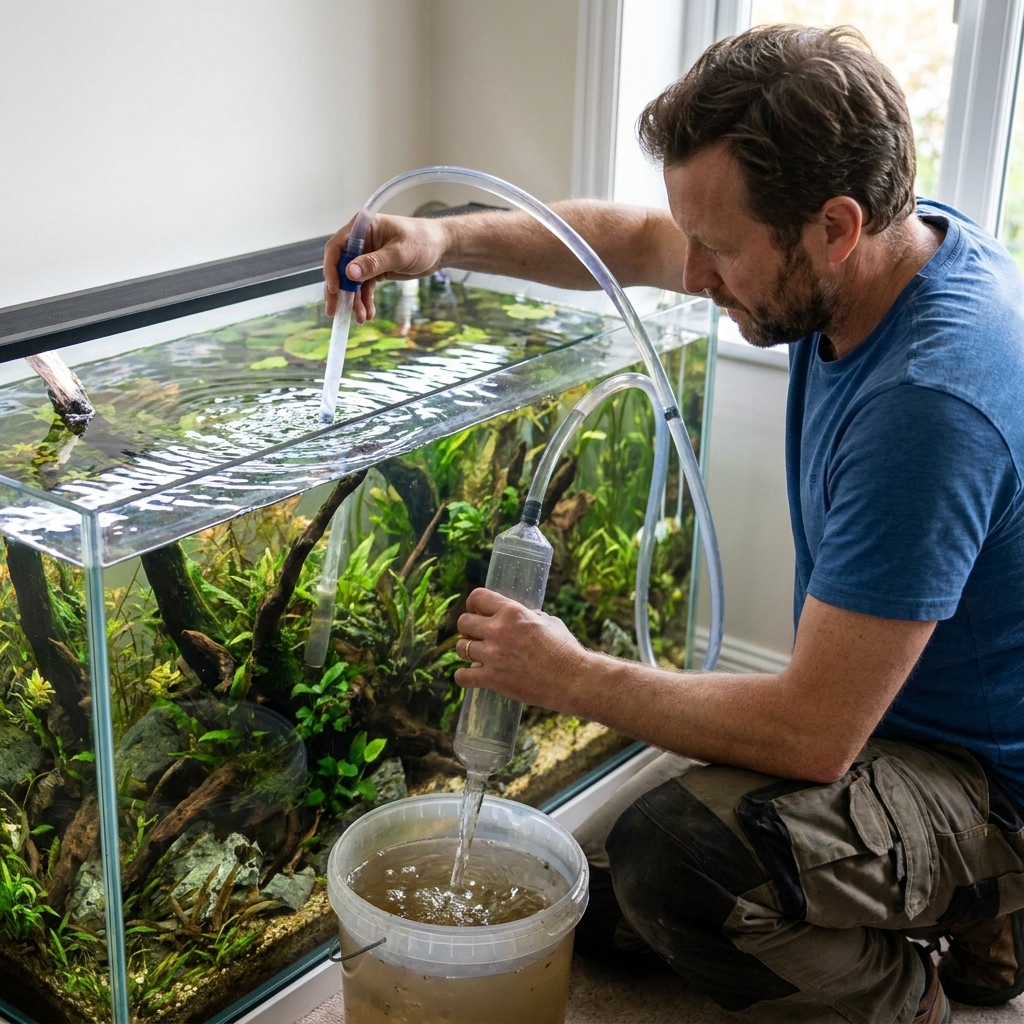
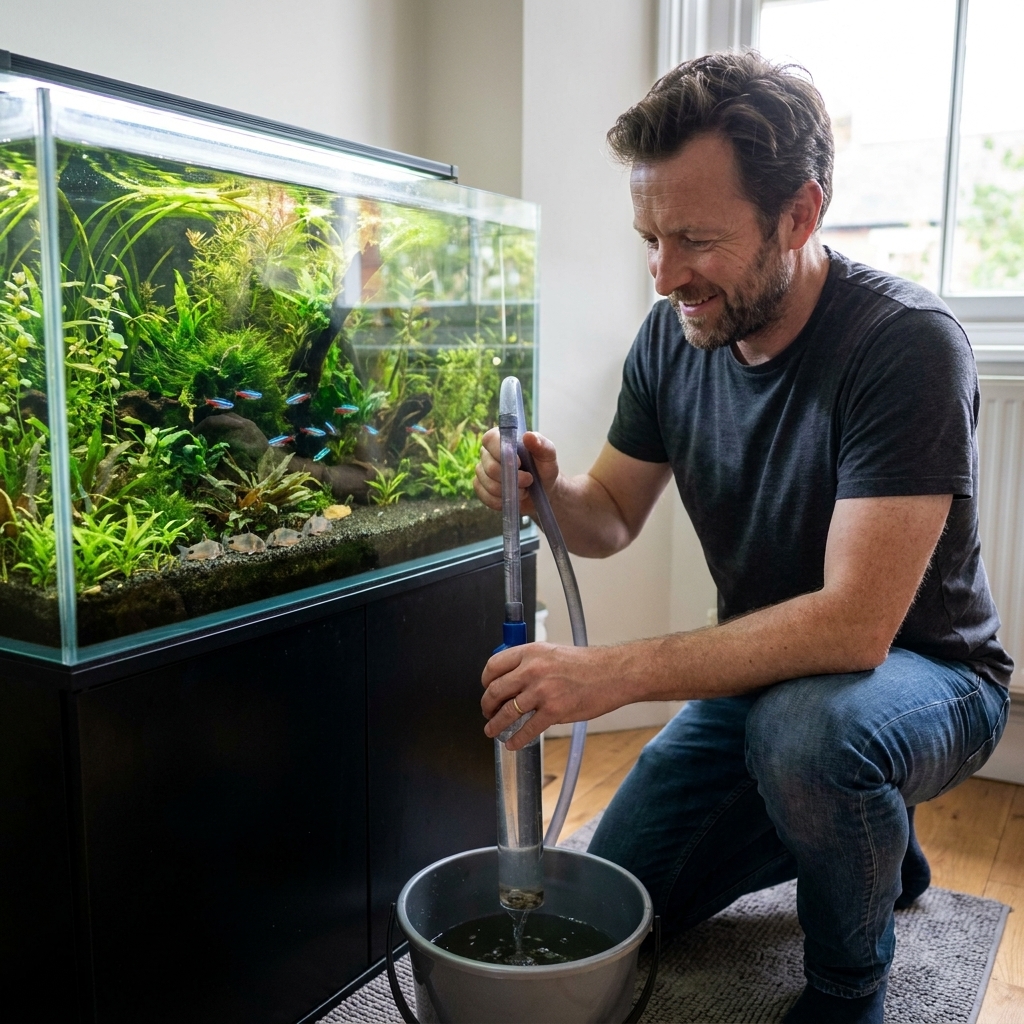
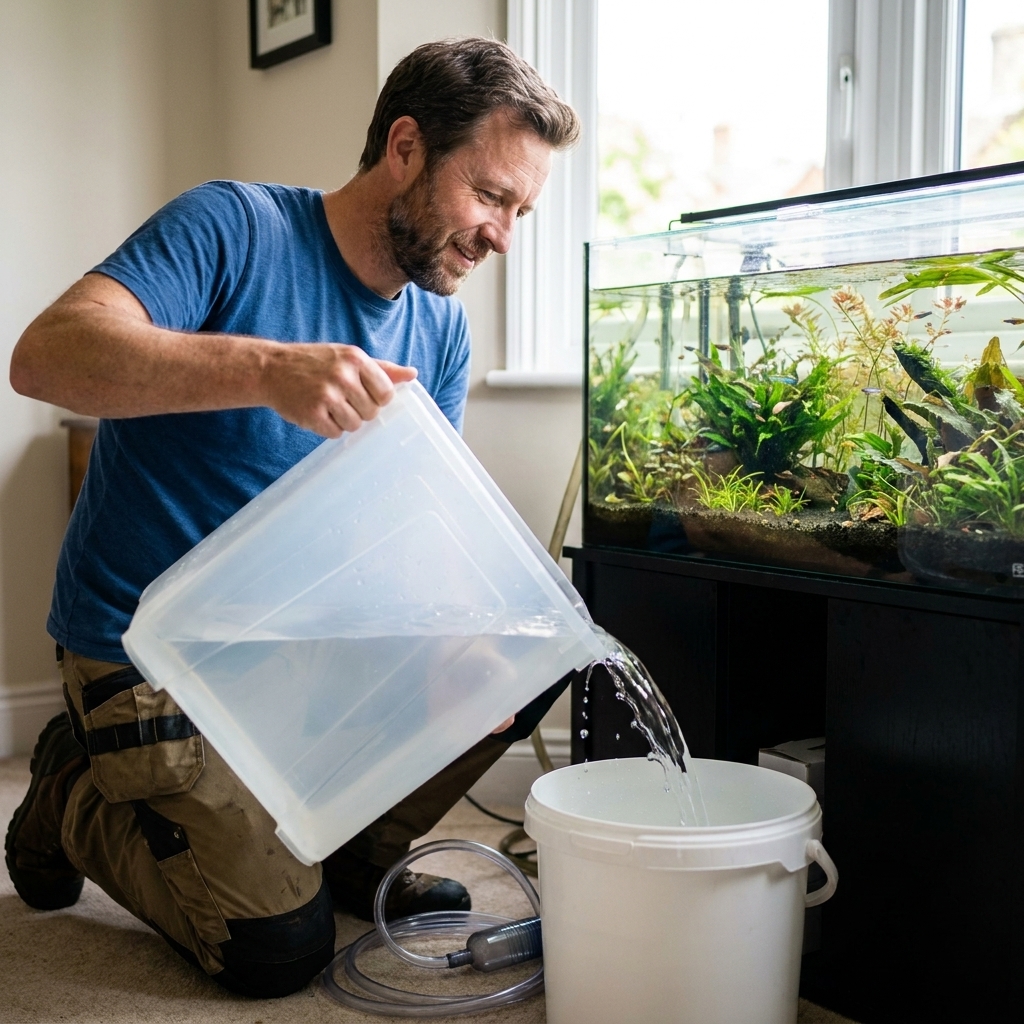
If your tap water may be the source, do not “panic change” with untreated tap. Instead, prepare replacement water that is dechlorinated and treated with a metal-binding conditioner, or use RO/DI remineralized water for the change.
Long-term fixes
Long-term success comes down to selecting a strategy that prevents metals from entering the tank in the first place, or reliably removes them before livestock are exposed.
Option A: Treat tap water correctly
If your water has low but consistent trace metals, a quality conditioner that explicitly binds heavy metals can be enough for many community tanks. For shrimp and snails, I still prefer additional protection if copper is detectable at the tap.
- Always dose for the entire volume of new water you are adding.
- Match temperature with cold tap plus a heater in the bucket, not hot tap water.
- Let the conditioned water circulate 5 to 10 minutes before adding.
Option B: Run metal-removal media in the filter
In shrimp tanks or mixed tanks with snails, a dedicated heavy-metal resin in the filter is one of my favorite safety nets. It is also useful if your tap varies through the year.
Option C: RO/DI and remineralize
RO/DI filtration physically removes dissolved solids, including many metals. For sensitive invertebrates, RO/DI plus proper remineralization is often the cleanest and most stable approach.
- Use a shrimp-safe remineralizer to set GH and KH appropriate for your species.
- Do not run pure RO/DI in a livestock tank without remineralizing. It can cause osmotic stress and unstable pH.
Option D: Use a tap water filter (with realistic expectations)
Some under-sink filters reduce metals, but performance depends heavily on the cartridge type and flow rate. If you go this route, choose a unit explicitly rated for lead and heavy metals and replace cartridges on schedule.
Option E: Reduce plumbing-related leaching
If tests show first-draw water has higher copper than flushed water, your plumbing is contributing.
- Run the cold tap 2 to 5 minutes before collecting aquarium water, especially first thing in the morning.
- Avoid taking water from a rarely used faucet where water sits longer.
- Do not use hot water from the water heater for aquarium use.
Shrimp-safe water prep
If you want a simple routine that dramatically reduces metal risk, here is what I use when helping new keepers stabilize shrimp and snail tanks.
- Use a dedicated food-safe bucket used only for aquarium work.
- Flush the cold tap for a few minutes, then collect water.
- Add a conditioner that binds heavy metals (verify the label) and mix thoroughly.
- Heat and aerate the bucket with a small heater and air stone until it matches tank temperature.
- If your tap is known for copper: use RO/DI and remineralize, or run a metal-removal resin in a small utility filter for the prep bucket.
- Add water slowly, especially in shrimp tanks, to avoid sudden parameter shifts.
Slow addition matters because many “metal scares” are actually a double-hit: trace contaminants plus a rapid GH, KH, pH, or TDS change during a big water change.
Situations that trip people up
Copper meds in a display tank
If copper was used in the main tank and you want to keep invertebrates again, assume copper may be lingering in the system. Copper can stay in the water, bind to organics, and adsorb onto substrate, silicone residue, and filter media. How “sticky” it is depends on dose, duration, and materials, so outcomes vary. The safest path is to run metal-removal media and carbon for an extended period, then confirm with careful testing and a cautious trial before adding prized inverts. When in doubt, keep copper treatments confined to a bare quarantine tank.
Planted tanks and micronutrient fertilizers
Many plant fertilizers contain trace copper as a micronutrient. In a planted fish-only community, that can be fine at labeled dosing. In shrimp tanks, use shrimp-specific plant nutrition products or dose very conservatively, and stop if you can measure copper in the water column.
Chloramine and ammonia confusion
Some municipalities use chloramine (chlorine plus ammonia). If you treat chloramine, you can see a temporary ammonia reading after a water change. That can send people chasing “mystery toxins” when the real issue is insufficient biofiltration, a test kit reading total ammonia, or a conditioner interacting with your test method. If your water company uses chloramine, test for ammonia trends over 24 to 48 hours and make sure your conditioner is rated for chloramine, not just chlorine.
Accidental household contamination
Airborne sprays, cleaning solutions on hands, and “multi-use” buckets cause more losses than most people realize. If something in your process is shared with household cleaning, treat it as contaminated and replace it.
FAQ
Do water conditioners remove copper, or just make it safe?
Most conditioners primarily bind metals into a less toxic form. That reduces immediate harm, but it does not guarantee the metal is physically removed from the aquarium. True removal is best handled by export methods like metal-adsorbing resins and water changes using metal-free source water.
Do all dechlorinators bind heavy metals?
No. Many do, especially products that advertise detoxifying heavy metals. Others are simple chlorine neutralizers and may not meaningfully chelate metals. If binding metals is part of your plan, confirm it on the label.
Is activated carbon enough to remove heavy metals?
Carbon can help with a broad range of contaminants and some complexed forms of copper, but it is not the most targeted solution for dissolved copper. If you are protecting shrimp and snails, a dedicated heavy-metal resin is usually more reliable.
Can I boil tap water to remove metals?
No. Boiling may concentrate dissolved solids as water evaporates. It does not reliably remove heavy metals and can make the problem worse.
How long does copper stay in an aquarium?
It depends on the source and what the copper binds to. Copper can remain in the water, bind to organics, and adsorb onto surfaces. With continuous metal-removal media and consistent, safe water changes, you can drive levels down. Confirm progress with testing because timeframes vary tank to tank.
Why does my copper test look weird after I use conditioner?
Some test kits measure mostly free copper, while conditioners can bind copper into forms the kit reads differently. That can make copper appear to “vanish” on a test without being physically removed. Use removal media and export methods, and interpret post-conditioner test results cautiously.
What is the safest approach for a shrimp-only tank?
RO/DI water remineralized to the needs of your shrimp species, plus a conservative, stable maintenance routine. If you must use tap, use a conditioner that explicitly binds heavy metals and keep a metal-removal resin in the filter as a backstop.
Takeaways
- If invertebrates crash after water changes and ammonia and nitrite are zero, suspect copper or other metals, but also consider chloramine and parameter swings.
- Conditioners can bind metals, but removal usually requires metal-adsorbing media, better source water, or both.
- Test first-draw versus flushed tap water to identify plumbing-related leaching.
- For shrimp and snails, RO/DI plus remineralization is the most consistent long-term solution.
If you want, tell me what you keep (shrimp species, snails, scaleless fish), your tank size, and whether you are on city water or a well. I can help you choose the simplest metal-proof routine that fits your setup.