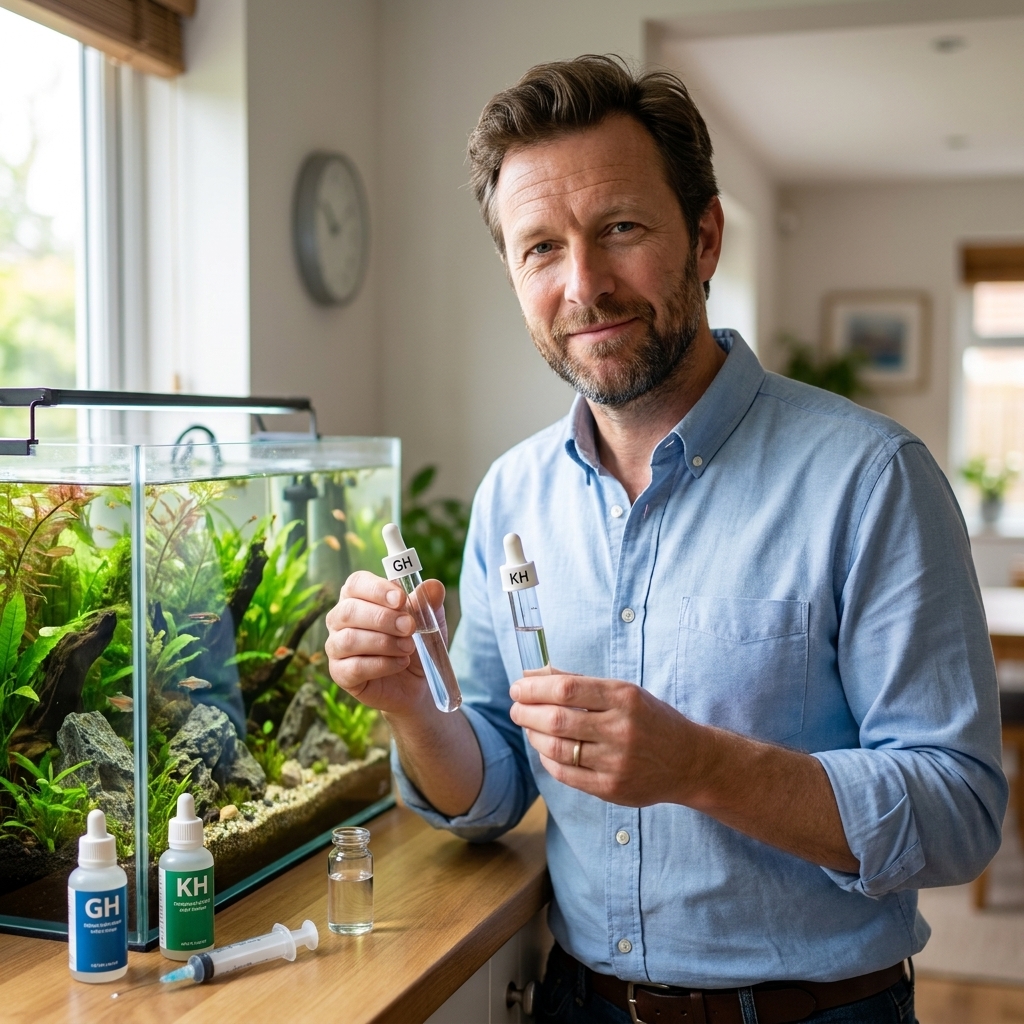
A practical breakdown of aquarium water test kits and the parameters that keep freshwater fish safe: ammonia, nitrite, nitrate, pH, KH, GH, plus when to test...
Freshwater aquarium guidance
Liquid Test Kits vs. Test Strips for Aquariums
Liquid kits and strips can both keep fish safe, but they are not equal. Compare accuracy, cost, and ease so you can pick the right aquarium water tester for your tank.

Written by
Oliver Bennett
Oliver Bennett is a lifelong aquarist with over 15 years of experience in freshwater tank setup, aquascaping, and fish health. Through TankRoot, he shares his passion for creating balanced underwater ecosystems, helping hobbyists of all levels build thriving, beautiful homes for their fish.
Published: October 17, 2026
•
Updated: October 17, 2026
When something looks “off” in a tank, like fish breathing harder, shrimp acting jumpy, plants melting, or algae suddenly exploding, we all reach for a water test. The tricky part is that the tool you use can change the story your water is telling you. Test strips are fast and convenient. Liquid test kits are slower but, in many hobby brands and for the parameters that matter most, often more consistent. And depending on what you are troubleshooting, that difference can matter a lot.
Below is the honest comparison I wish someone had handed me back when I was trusting whatever the big-box shelf said was “accurate enough.”

Quick takeaway: which is best?
- For most freshwater fishkeepers: choose a liquid drop kit as your main tester, especially for ammonia, nitrite, and nitrate.
- For fast routine checks: strips are fine as a convenience tool, particularly for pH and hardness trends, as long as you confirm any “bad news” with a liquid kit.
- For cycling, sickness, deaths, or mystery problems: reach for liquid tests first. Strips can be misleading right when you most need precision.
How strips and liquid kits work
Test strips
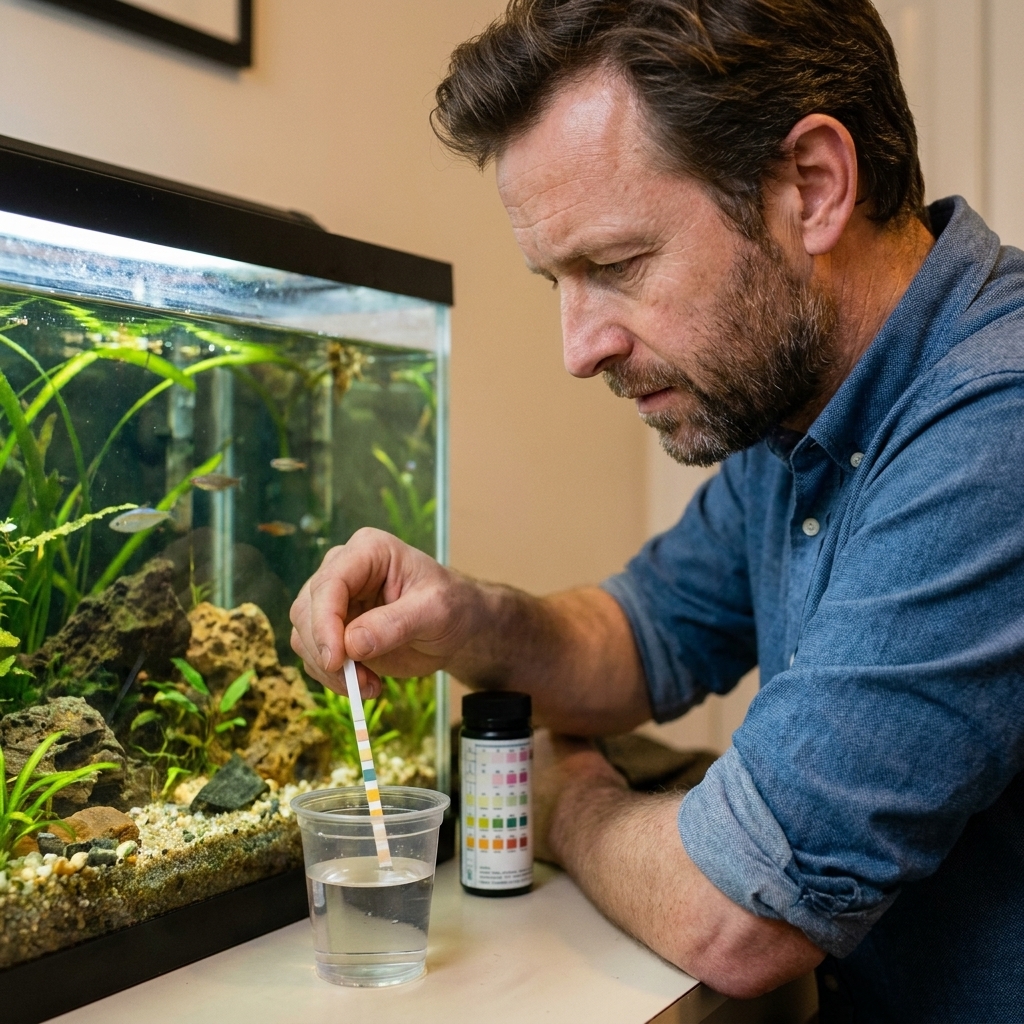
Strips use tiny pads impregnated with reagents. You dip, wait, and compare colors to a printed chart. They are quick, but you are relying on:
- very small reagent quantities
- pads that can absorb moisture from air over time
- color matching under your room lighting
- timing that is easy to miss by 10 to 20 seconds
Liquid drop kits
Liquid kits add a measured number of drops into a fixed volume of water (usually 5 ml). Many include a shaking step to fully develop color. They are slower, but you get:
- more controlled reagent dosing
- better repeatability when technique is consistent
- more trustworthy results at low concentrations where fish health problems begin
Accuracy and reliability
If you only read one section, read this one. The biggest practical difference is not “strips are useless.” It is that strips are easiest to misread exactly in the ranges that matter most.
Ammonia (NH3/NH4+)
During cycling, after a filter crash, after overfeeding, or after medication, ammonia is the emergency parameter. Liquid ammonia tests are generally the safer choice for troubleshooting. Many multi-parameter strip products do not test ammonia at all, and while ammonia strips do exist, they can still be touchy about timing, storage, and lighting.
Rule of thumb: if you suspect ammonia, do not “strip first.” Use a liquid test.
Nitrite (NO2-)
Nitrite toxicity can hit fast. Strips can detect nitrite, but subtle pink shades are easy to interpret as “basically zero” when they are not. Liquid kits tend to make small increments (often around 0.25 ppm steps, depending on brand) easier to see, and those small steps matter during a fish-in cycle or a disrupted biofilter.
Nitrate (NO3-)
Nitrate is where strips most commonly get hobbyists into trouble. Two reasons:
- Resolution: many strip charts jump in big increments (for example: 0, 20, 40, 80). Planted and community tanks often live in the “in between” where you are trying to decide if you should change 20 percent or 50 percent.
- False confidence: it is easy to see “safe-ish” nitrate on strips while a good liquid test shows it drifting higher week by week.
Also, several liquid nitrate tests require vigorous shaking. If you skip that step, your liquid result can read artificially low. In other words, liquid is better, but only if you do it correctly.
pH
For most community tanks, you do not need to chase a “perfect” pH. You need a stable pH and an awareness of big swings. Strips are often fine for spotting trends, but liquid kits usually give a clearer read when you are near thresholds that matter for your stock.
One important nuance: rapid swings are usually the bigger stressor than a slightly “off” number. And in very soft, low-KH water, pH can swing more easily, especially if CO2 is involved.
KH and GH (hardness)
Hardness is a place where strips can actually be pretty useful for everyday fishkeeping. If you keep livebearers, African cichlids, or shrimp, tracking KH and GH helps you understand stability and molting issues. Liquid titration kits (counting drops until a color change) are typically more precise, but strips can still flag when your water has shifted after a source water change or a new remineralizer routine.
Chlorine and chloramine
If your city uses chloramine, a simple “chlorine present” result is not always the full story. Some hobby tests focus on free chlorine, while chloramine is often measured as total chlorine or “combined chlorine” depending on the kit. That difference matters if you are troubleshooting fish gasping right after a water change.
Most hobbyists should focus on using a trusted water conditioner correctly. But if you suspect a dechlorination problem, use a test that matches what you are trying to detect (free vs total chlorine), or confirm with a second method.
Ease of use
Test strips are faster
- dip for a second or two
- hold level
- read at the correct time
That speed matters. If strips mean you actually test weekly instead of never testing, that is a real win.
Liquid kits take more steps
- fill tube to the line
- add drops
- cap and shake (sometimes aggressively)
- wait for color development
- read against the chart
It is slower, but it is also less “fussy” in the sense that you can repeat a test and expect a similar result if your technique is consistent. With strips, tiny timing and storage differences can create noise.
One thing both methods share: they still rely on color matching. Use consistent lighting when you can, and hold the vial or strip against a white background to reduce “room tint” errors.

Long-term cost
Sticker price is where strips feel like the obvious choice, but long-term cost is usually kinder to liquid kits.
Strips
- Lower upfront cost
- Higher cost per test over time
- Faster “silent waste” from humidity exposure if the bottle is opened often
Liquid kits
- Higher upfront cost
- Lower cost per test across dozens to hundreds of tests
- Reagents often last a long time if stored cool, dry, and capped tightly
A rough real-life example: if you are cycling and testing ammonia and nitrite daily, strips can disappear fast. A master liquid kit is more money at checkout, but it often carries you through a full cycle and then months of weekly testing.
Common failure points
Test strip mistakes
- Old or moisture-damaged strips: keep the lid tightly closed, store in a dry cabinet, and never handle strips with wet fingers.
- Wrong read time: set a timer. Many strips must be read at different times for different pads, which is easy to mess up.
- Color matching under warm lighting: read near a window in daylight when possible, or use the same bright white light each time.
- Interpreting “close enough” as safe: if fish are stressed, confirm with liquid tests.
Liquid kit mistakes
- Incorrect tube fill level: use the line and keep the tube on a level surface.
- Not shaking nitrate reagents enough: follow directions exactly. Under-shaking is a classic “my nitrate is always 0” problem.
- Dirty tubes: rinse immediately after use. Residue can tint your next reading.
- Expired reagents: old chemicals drift. Replace when they are out of date or results stop making sense.
Best choice by situation
Cycling a new aquarium
Use liquid kits. You are watching for small but important changes in ammonia and nitrite, and you want repeatable numbers.
Established tank, stable routine
Strips can work for quick weekly trend checks, especially if you also own a liquid kit to verify surprises. Many experienced keepers do exactly this.
Heavily planted tanks
Planted tanks benefit from knowing nitrate (and sometimes phosphate, depending on your approach). I still prefer liquid nitrate testing for planted tanks because you are often making small adjustments and want a believable baseline.
Shrimp tanks
For shrimp, stability is everything. A combo approach is ideal:
- Liquid: ammonia, nitrite, nitrate (and a liquid GH/KH titration kit if you are serious about breeding or keeping Caridina)
- Strips: quick hardness trend checks between deeper tests
Fish are sick or dying
Skip the strip. Pull out the liquid kit, test ammonia and nitrite first, then nitrate and pH. When fish are in trouble, you want the most trustworthy answer you can get quickly.
Extra tests worth having
Phosphate
If you are troubleshooting stubborn algae or dialing in a planted tank, phosphate testing can help. Many master kits and strip sets either do not include it, or the strip version is too broad to guide small adjustments. A dedicated liquid phosphate test is usually the most useful option when you actually need this number.
Copper
If you keep shrimp or snails, copper is worth thinking about. Copper can show up from certain medications, old plumbing, or contaminated water sources. A copper test kit is not something everyone needs all the time, but it is a smart troubleshooting tool for unexplained invert losses or when you are planning to treat a tank.
How to confirm results
If a reading does not match what you are seeing in the tank, do not argue with it. Confirm it.
- Retest immediately using the same method, carefully.
- Test your source water (tap, well, or RO mix) so you know what you are adding.
- Cross-check with a second method (strip vs liquid), or take a sample to a good local fish store for another set of eyes.
My recommended setup
If you want a simple setup that covers almost every freshwater scenario without wasting money, this is what I suggest:
- One liquid master kit (ammonia, nitrite, nitrate, pH) as your backbone
- A GH/KH kit if you keep shrimp, livebearers, African cichlids, or you use RO water and remineralize
- Optional strip bottle for fast weekly check-ins, travel, or tank-sitting, with the understanding that it is a screening tool
FAQ
Are aquarium test strips accurate enough?
They can be accurate enough for trend spotting in stable tanks, especially for pH and hardness. They are less dependable when you need precision at low levels, like detecting early ammonia or nitrite trouble during cycling or after a filter disruption.
Why do my strips and liquid kit disagree?
Most disagreements come from strip storage humidity, timing, lighting, or the strip using broader ranges. Liquid disagreements are often from user error, especially under-shaking nitrate reagents or using dirty tubes. When in doubt, repeat the liquid test carefully and, if possible, test a second water sample.
Do I need to test pH all the time?
Not usually. In most freshwater community tanks, stability beats perfection. Test pH when setting up a tank, after changing substrate or rocks, when using CO2, or if you suspect a swing (for example after a large water change with different source water).
How often should I test my aquarium water?
Common, practical schedules:
- New tank cycling: daily to every other day for ammonia and nitrite, plus nitrate weekly
- Established tank: weekly or every two weeks for nitrate, and occasional pH or hardness checks
- After a problem: test daily until results are stable and fish behavior normalizes
The bottom line
If you care about fish health and want to avoid the classic “everything tested fine” mystery, a liquid drop kit is the best all-around aquarium water tester. It is not as convenient, but it is more consistent when used correctly, more informative during real problems, and usually cheaper in the long run.
Test strips still have a place. I just like them as a quick dashboard, not as the final word when a living animal is depending on the answer.