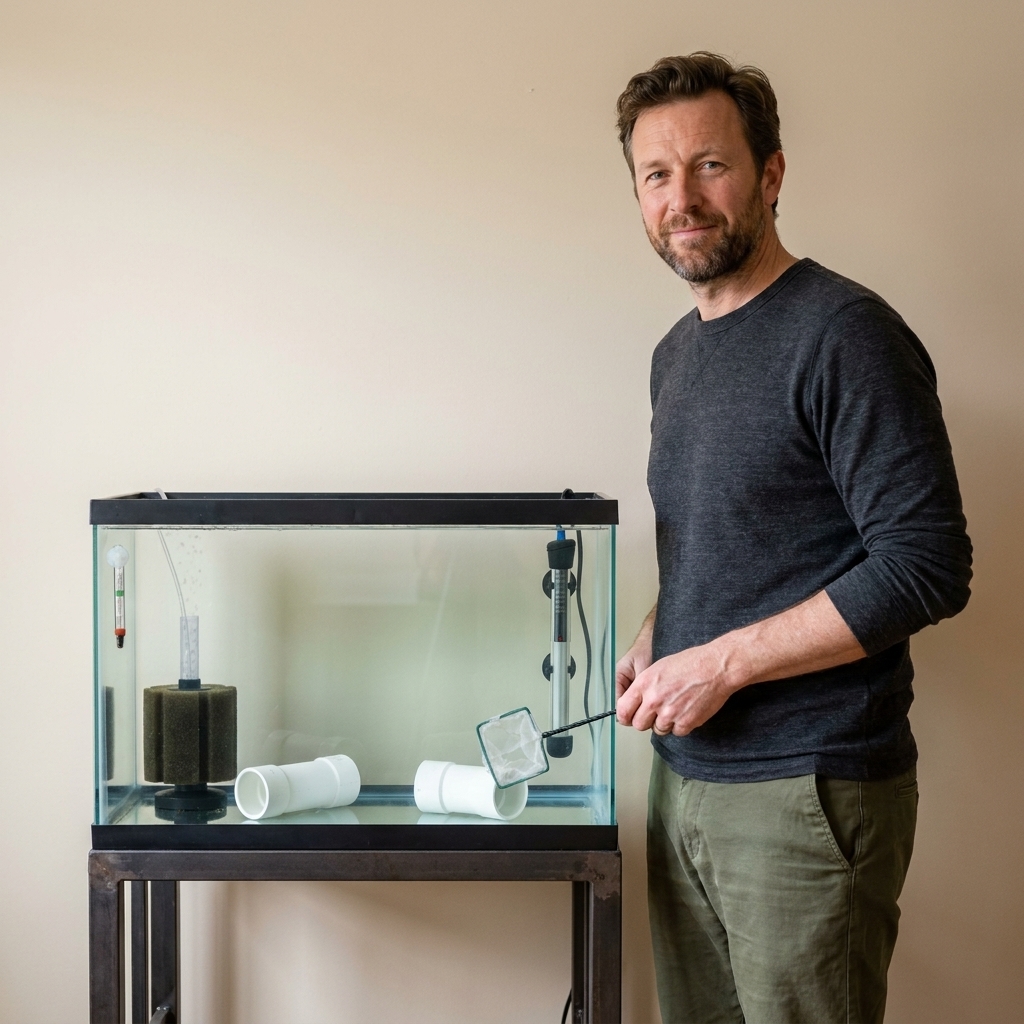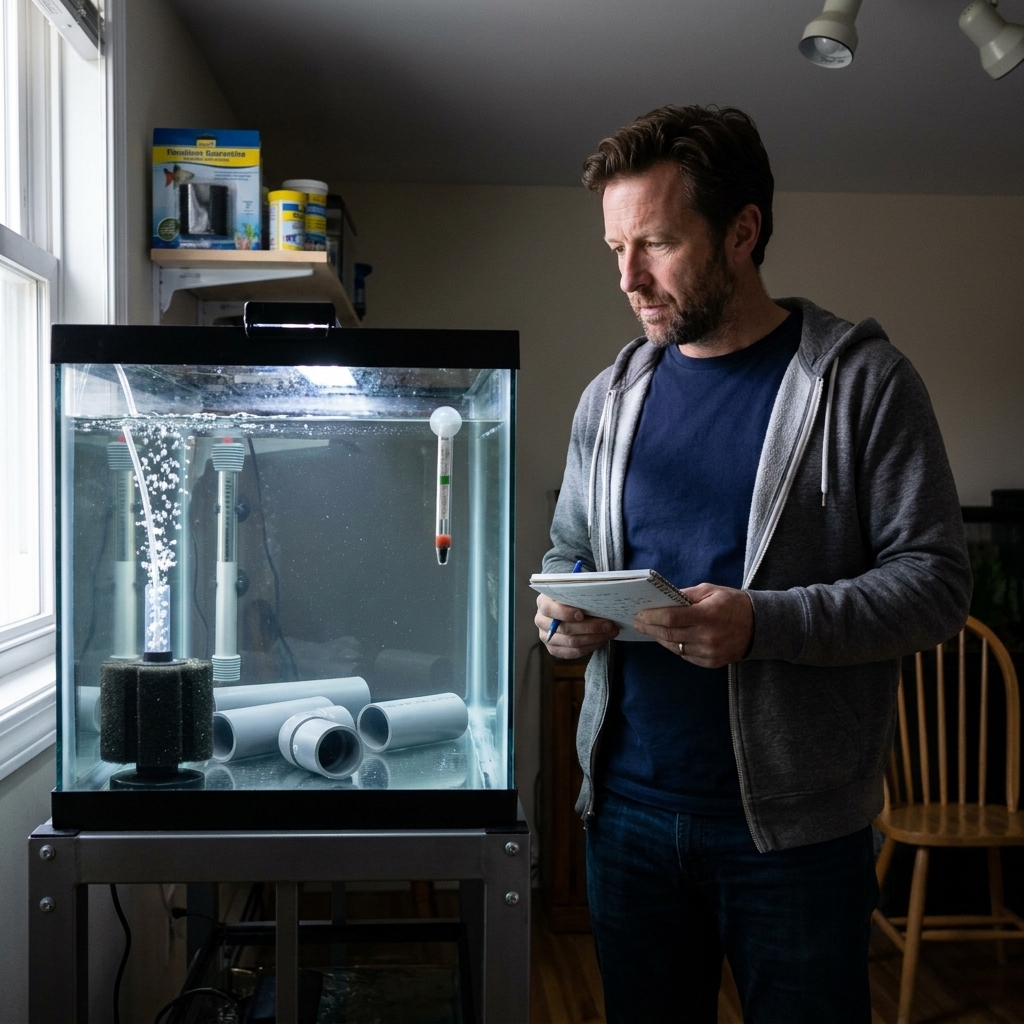
A step-by-step quarantine tank guide from Tank Root: simple equipment, how to seed biofiltration, acclimate fish, observe symptoms, and treat in QT without l...
Freshwater aquarium guidance
Ich (White Spot Disease) in Freshwater Fish
Learn how to spot Ich early and treat it safely in freshwater aquariums using proven meds or a careful heat method, plus quarantine and prevention tips.

Written by
Oliver Bennett
Oliver Bennett is a lifelong aquarist with over 15 years of experience in freshwater tank setup, aquascaping, and fish health. Through TankRoot, he shares his passion for creating balanced underwater ecosystems, helping hobbyists of all levels build thriving, beautiful homes for their fish.
Published: October 17, 2026
•
Updated: October 17, 2026
Ich (white spot disease) can take a calm, healthy community tank and turn it into a panic spiral in a matter of days. I still remember my first real outbreak as a kid. I thought the little white dots were “cute” at first, like freckles. They were not. Ich is a fast-moving parasite, and the earlier you catch it, the easier it is on your fish and your sanity.
This guide will help you identify Ich, confirm it is not something else, and treat it safely using either a medication plan or a controlled heat method. I will also show you the steps that greatly reduce repeat outbreaks.
What Ich is
Ich is caused by a protozoan parasite called Ichthyophthirius multifiliis. It attaches to a fish, feeds under the slime coat and outer skin, then drops off and reproduces in the tank. That life cycle matters because most treatments only kill Ich during its free-swimming stage, not when it is protected under the fish’s skin.
Why it “suddenly explodes”
Many aquarists only notice Ich once the parasite has already multiplied in the tank. A few spots become dozens because each parasite that drops off can produce many new infective swimmers. That is also why treating “until the spots are gone” is often not long enough. You have to treat long enough to catch the next wave.
Early symptoms
The classic sign is white dots, but behavioral changes usually show up first. If you can train yourself to notice those early tells, you will save fish.
Early behavioral clues
- Flashing: fish darting and rubbing their sides on plants, rocks, wood, or the substrate
- Clamped fins: fins held tight to the body instead of open and relaxed
- Hiding and hovering: fish hanging near the filter outflow or heater, or isolating themselves
- Reduced appetite: picking at food, spitting it out, or ignoring feeding entirely
- Faster breathing: especially if spots appear on the gills, fish may “pant” at the surface
What the spots look like
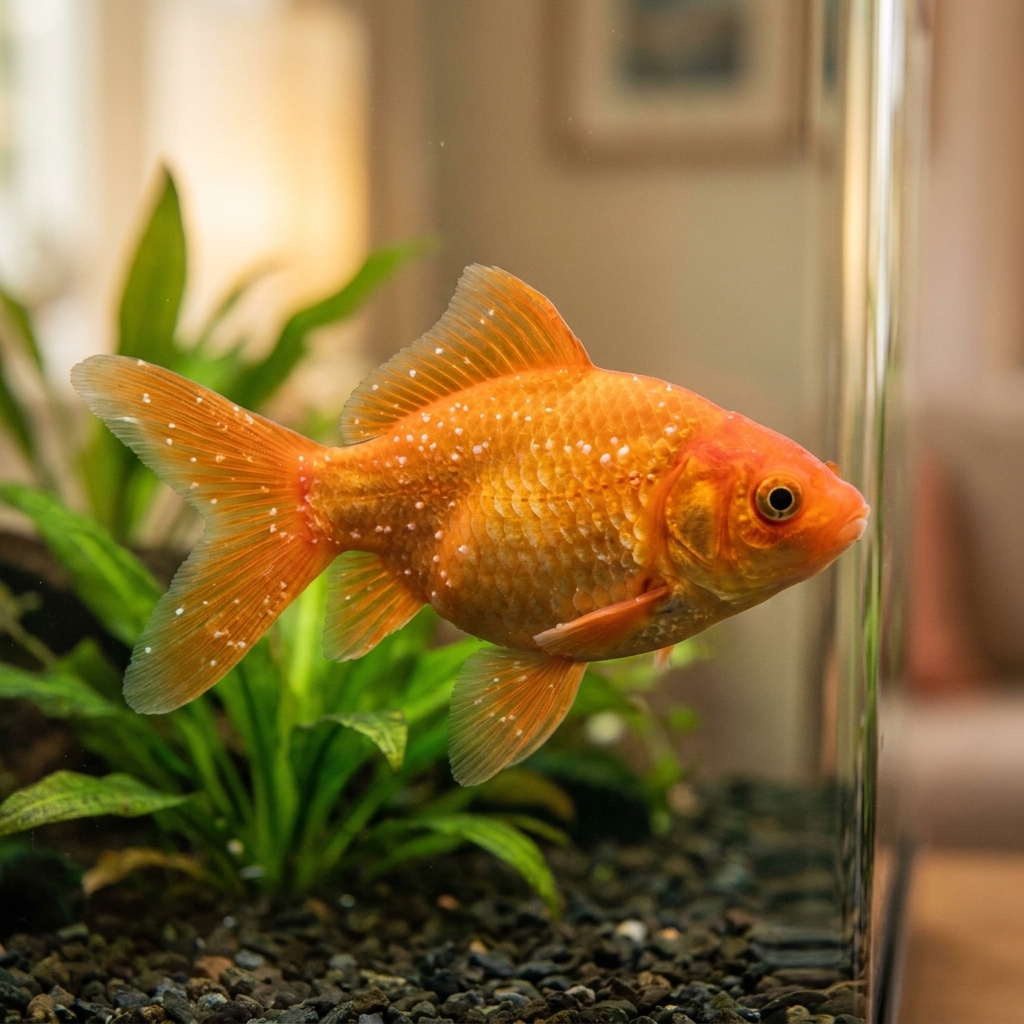
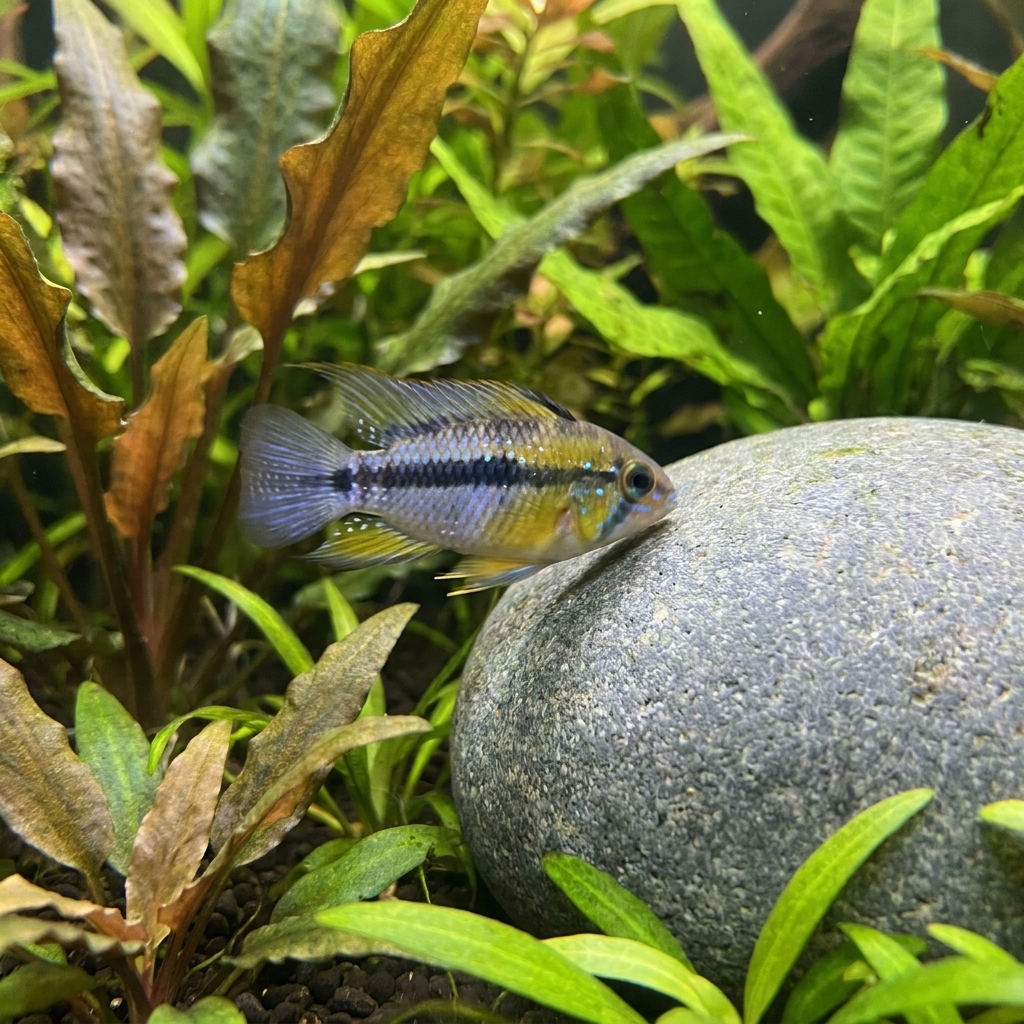
Ich spots usually look like someone sprinkled fine grains of salt on the fish. They are often most obvious on fins and along the body, but gill infection can happen with few visible body spots. Under good light, you may see a slightly raised, round dot rather than a fuzzy patch.
Ich vs. look-alikes
“White spots” is not always Ich. Misidentifying the issue is one of the biggest reasons treatments fail.
Common look-alikes
- Epistylis: can look similar at a glance, but spots often appear more raised, clustered, and irregular. Epistylis is a ciliate that commonly colonizes irritated skin and can be associated with high bacterial load and poor conditions. It often requires improving water quality and addressing bacterial issues, not just parasite meds. Heat can be a bad idea if you are actually dealing with Epistylis because warmer water may speed up the underlying problem.
- Fungal growth: typically looks cottony or fuzzy rather than clean salt grains.
- Breeding tubercles: small white pimples on male goldfish and some minnows, usually on gill plates and pectoral fins, and the fish otherwise acts normal.
- Sand or debris: grains stuck to slime coat can happen after digging or spawning. They usually fall off and do not multiply day to day.
A quick home check
Ask yourself: Are the “spots” increasing daily? Is there flashing or clamped fins? If yes, treat it as a parasitic issue immediately while you confirm details.
First hour steps
When you suspect Ich, speed helps, but so does doing the right steps in the right order.
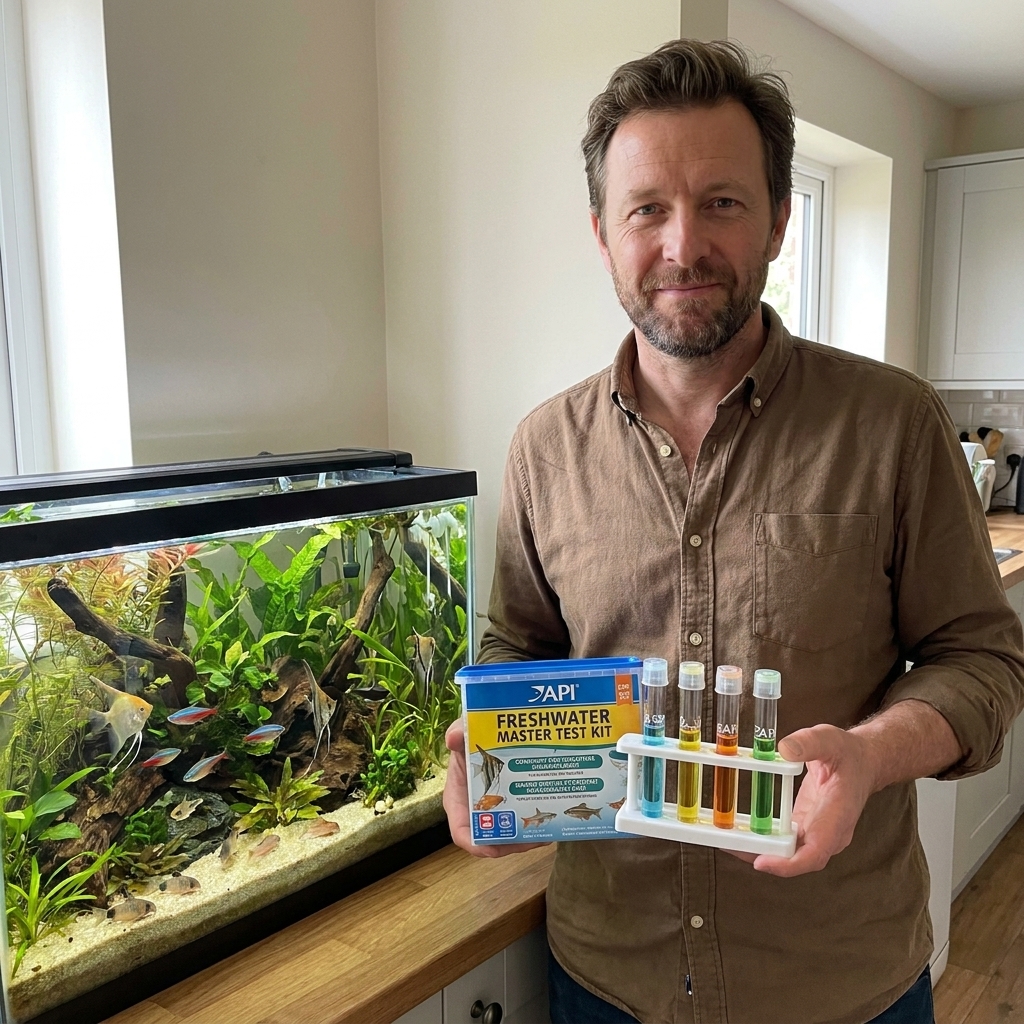
- Test your water: ammonia and nitrite should be 0 ppm. For nitrate, lower is better. Many aquarists aim to keep it under about 20 to 40 ppm in typical community tanks. What matters most right now is avoiding sudden spikes and keeping things stable.
- Increase oxygenation: add an air stone or raise surface agitation. Both heat and many medications reduce dissolved oxygen.
- Remove chemical filtration: take out activated carbon, Purigen, and similar media that can absorb medication. Keep mechanical and biological filtration running.
- Decide on treatment location: if the tank is a community aquarium and multiple fish show symptoms, treat the whole tank. If it is one new fish and you have a proper quarantine or hospital tank, treating in quarantine can protect the display tank.
Treatment 1: Medication
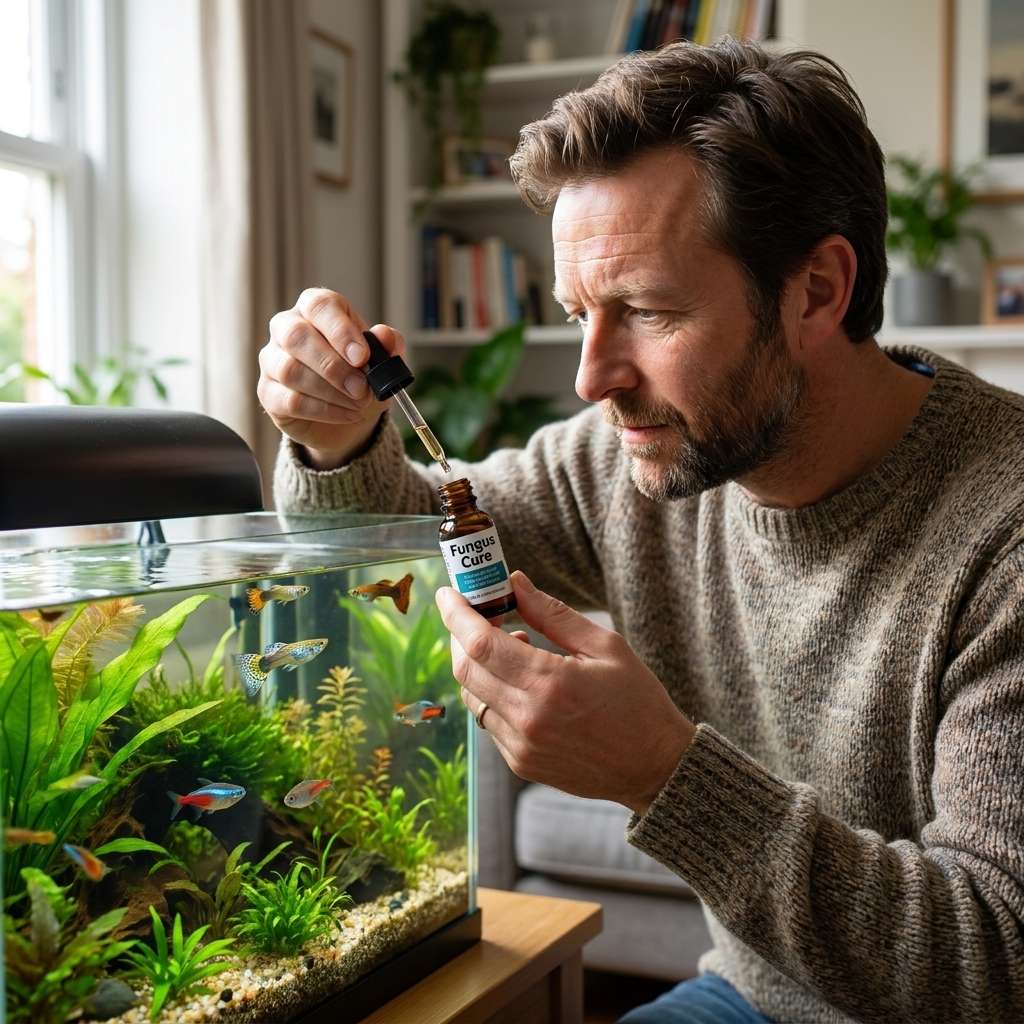
If you want the most consistent results across a wide range of temperatures and fish species, medication is usually the best choice. The key is to follow the label and keep treatment going long enough to catch the parasite when it is vulnerable.
What meds usually work
The most common Ich medications use one or more of these active ingredients:
- Malachite green (often paired with other ingredients)
- Formalin (effective, but can be harsh and requires strong aeration)
- Copper (effective but risky if not measured precisely, and not safe for many invertebrates)
- Acriflavine (may be included in some formulations, often as part of a broader mix rather than a standalone Ich solution)
Important: use a reputable product intended for freshwater Ich and follow the dosing instructions exactly, including the schedule for redosing after water changes. Many malachite green products also recommend reduced lighting during treatment. Check the label and follow it.
If you run a UV sterilizer, you can keep it as a supportive tool in some setups, but do not treat UV as a cure. Also check your medication directions, since some manufacturers recommend turning UV off during dosing.
How long to medicate
Do not stop treatment the moment the spots disappear. Continue for at least 3 to 5 additional days after the last visible spot, or follow the product’s full course instructions if they specify a longer timeframe. The goal is to cover multiple parasite cycles.
Fish that need extra caution
- Scaleless fish (loaches, many catfish): often require reduced dosing or a gentler medication. Check the label for scaleless warnings.
- Tetras, rasboras, fry: can be sensitive. Start with the manufacturer’s guidance and consider lower initial dosing only if the product explicitly allows it.
- Invertebrates: many Ich medications, especially copper and malachite green, can harm shrimp and snails. Treat in a separate tank if inverts are present.
- Plants: some medications can melt sensitive plants or stress mosses. If your display is heavily planted, read the label and consider a hospital tank when practical.
Treatment 2: Heat method
Raising temperature can speed up Ich’s life cycle so it reaches the treatable free-swimming stage faster. Heat is helpful, and in some cases it can work as a standalone approach, but it is not universally reliable. Many aquarists use heat to support treatment while still relying on medication for the most consistent results. Heat also lowers oxygen, so aeration is non-negotiable.
When heat makes sense
- You have fish species that tolerate warmer water
- You are dealing with a mild to moderate outbreak and can monitor closely
- You can add strong aeration and keep temperature stable
When not to use heat
- Coldwater species or fish already near their upper temperature limit
- Heavily stocked tanks with limited oxygen margin
- Situations where you suspect Epistylis or another look-alike that may worsen with warmer water
How to do it safely
- Increase aeration first: add an air stone or increase surface agitation.
- Raise temperature gradually: aim for about 1 to 2°F (0.5 to 1°C) per hour to reduce stress.
- Target temperature: many aquarists use 82 to 86°F (28 to 30°C) depending on species tolerance. Do not push temperatures that your fish cannot safely handle.
- Hold temperature long enough: maintain the elevated temperature for 10 to 14 days, watching fish behavior closely.
- Lower temperature slowly: once you are confident the outbreak is resolved, reduce back to normal over a day or two.
If your fish show signs of oxygen stress (gasping at the surface, rapid gill movement), stop increasing temperature and focus on aeration. Heat is not worth suffocating fish.
Supportive care
Think of Ich treatment like running a marathon while sick. The medication fights the parasite, but your job is to keep the fish stable enough to recover.
Water quality and water changes
- Keep ammonia and nitrite at 0: test daily during an outbreak.
- Do partial water changes as needed: especially if you see any ammonia or nitrite. Redose medication according to label directions after changing water.
- Vacuum the substrate: gently siphon detritus. Some parasite stages are in the environment, and reducing organics helps overall stress.
Lighting and feeding
- Dim the lights: stressed fish often calm down in lower light, and some medications recommend reduced light exposure.
- Feed lightly: small, high-quality meals. Remove uneaten food to avoid water quality crashes.
Hospital tank vs. display
If you can move fish into a properly cycled hospital tank, it can protect plants and invertebrates from medication. But it is not always the best move.
Treat the display if
- Multiple fish show symptoms
- You have a community tank where exposure likely already happened
- Catching fish will cause severe stress or injury
Use a hospital tank if
- The sick fish are new arrivals and the display tank has no symptoms yet
- Your display contains shrimp or snails that cannot be exposed to the medication
- You need to use a stronger medication or a dosing schedule that is easier in a bare-bottom tank
Common mistakes
- Stopping too early: spots gone does not mean Ich is gone. Finish the full course.
- Leaving carbon in the filter: carbon can remove meds and make it look like the treatment “does nothing.”
- Mixing medications blindly: combining treatments can stress fish or create dangerous interactions. Only combine products if the manufacturer states it is safe.
- Not adding oxygen: between higher temps and chemical treatments, oxygen can become the limiting factor.
- Ignoring the root cause: Ich often follows stress: new fish, temperature swings, aggression, poor water quality, or a skipped quarantine.
Prevention
Most Ich outbreaks I see in home tanks are preventable. The parasite usually arrives on a fish, occasionally on wet gear, and it explodes when fish are stressed.
Quarantine new fish
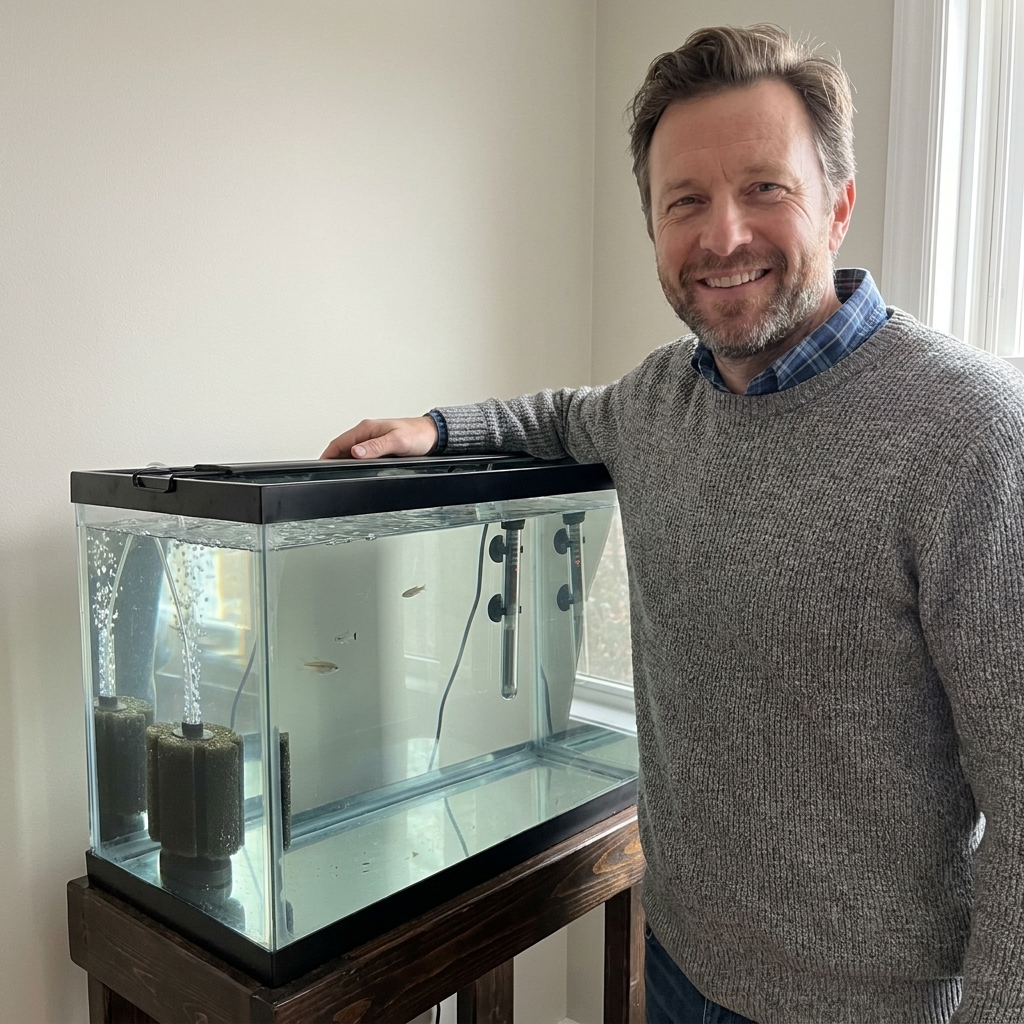
A simple quarantine tank prevents a ton of heartbreak. A 2 to 4 week quarantine with observation is ideal. It does not need to be fancy, just stable, heated, and filtered. Most importantly, use separate nets and siphons if possible.
Keep temperature stable
Ich loves instability. Sudden temperature drops during water changes, a failing heater, or a drafty tank location can stress fish enough to tip the balance.
Reduce chronic stress
- Do not overstock
- Match species to water parameters and tank size
- Provide cover and line-of-sight breaks in community tanks
- Keep up with maintenance so nitrate and organics do not creep upward
FAQ
Can Ich go away on its own?
Sometimes symptoms seem to fade, but the parasite often remains in the system and returns when conditions worsen. In most home aquariums, active treatment is the safest path.
Is Ich contagious to all fish in the tank?
It is highly contagious, and in a community tank it is safest to assume the whole tank has been exposed. Not every fish will show spots at the same time, and some fish may resist it better than others, but the parasite does not respect tank “zones.”
How fast does Ich kill fish?
It depends on species, temperature, oxygen levels, and how heavy the infection is. Severe gill involvement can become critical quickly. That is why early action, aeration, and stable water quality matter so much.
Should I add aquarium salt?
Salt can help in some freshwater setups, but it is not universally safe for all fish or plants, and dosing needs to be intentional. If you are considering salt, make sure the species you keep can tolerate it and treat salt like a medication with measured concentration, not a casual sprinkle.
A calm action plan
If you are staring at white spots right now, do this:
- Test water and correct any ammonia or nitrite immediately.
- Boost aeration.
- Remove carbon and chemical media.
- Choose either a reputable Ich medication or a careful heat approach that your fish can tolerate. If you want the most reliable results, consider medication, with heat only as support if your species can handle it.
- Treat long enough to cover the full parasite cycle, not just until the dots disappear.
- After recovery, tighten up quarantine and stress reduction so it does not return.
Ich is scary, but it is one of the most beatable aquarium diseases when you respond early and stay consistent. Your fish do not need perfection from you. They just need steady, informed care.