A practical, beginner-friendly guide to cycling a freshwater aquarium. Learn the nitrogen cycle, the safest fishless cycling method, testing milestones, and ...
Freshwater aquarium guidance
Ammonia, Nitrite, and Nitrate in Aquariums
Learn what ammonia, nitrite, and nitrate test results really mean, how the nitrogen cycle works, and what to do when your numbers are unsafe for fish.

Written by
Oliver Bennett
Oliver Bennett is a lifelong aquarist with over 15 years of experience in freshwater tank setup, aquascaping, and fish health. Through TankRoot, he shares his passion for creating balanced underwater ecosystems, helping hobbyists of all levels build thriving, beautiful homes for their fish.
Published: October 17, 2026
•
Updated: October 17, 2026
If you have ever tested your aquarium water and felt your stomach drop at the sight of purple, red, or neon orange, you are not alone. Ammonia, nitrite, and nitrate are the three numbers that decide whether your tank feels like a stable little ecosystem or a stressful guessing game.
The good news is that these parameters are not random. They follow a predictable process called the nitrogen cycle. Once you understand what each one means and what to do about it, you can troubleshoot most “mystery” fish problems with a lot more confidence.
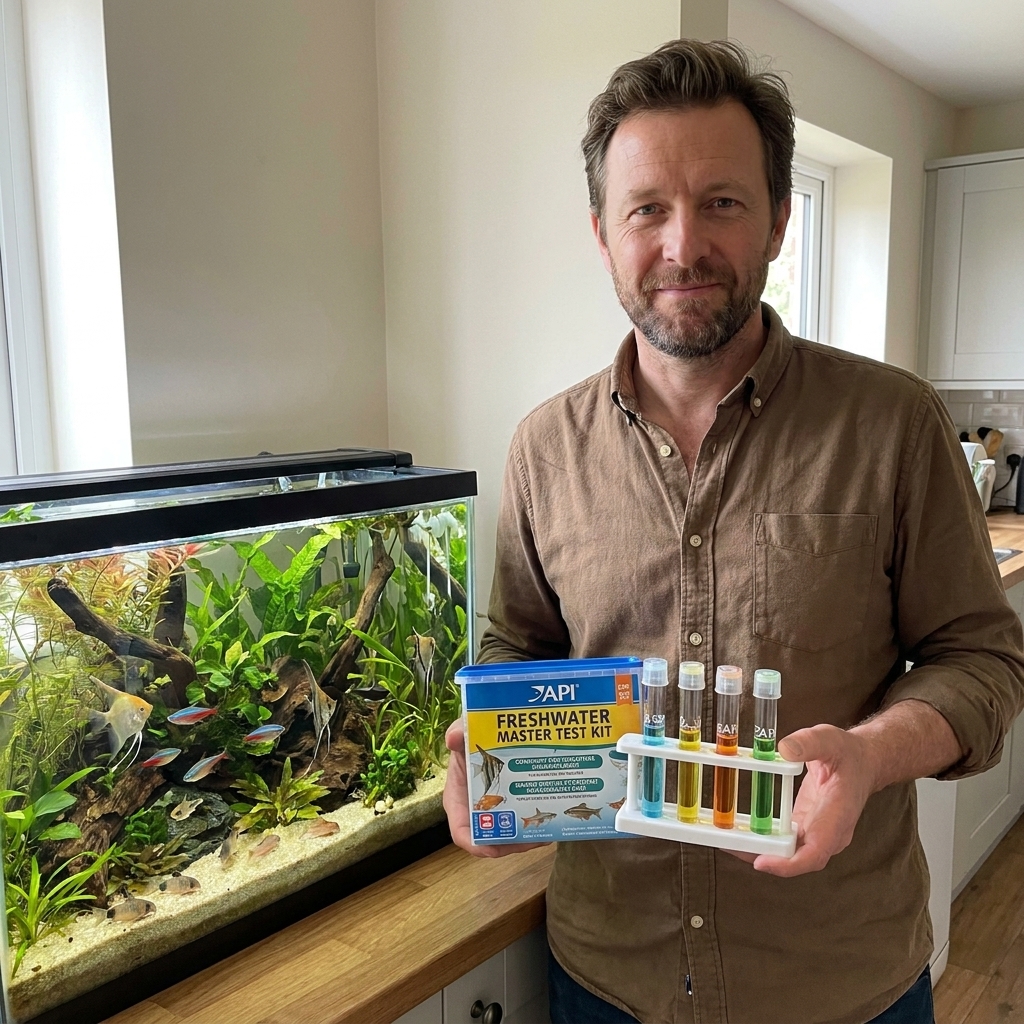
The nitrogen cycle in plain English
Fish constantly produce waste. Uneaten food breaks down. Plant leaves melt. As that organic matter decomposes, microbes convert it into ammonia, which is highly toxic.
In a cycled aquarium, beneficial bacteria turn that ammonia into nitrite, which is also toxic. Then a second group of bacteria turns nitrite into nitrate, which is much less toxic and can be managed with water changes and plant growth.
So the “story” looks like this:
- Waste and rot → ammonia
- Bacteria group #1 → nitrite
- Bacteria group #2 → nitrate
When people say a tank is “cycled,” they mean those bacteria colonies are established enough to process your tank’s daily ammonia production without letting ammonia or nitrite build up.
If you are setting up a new tank, fishless cycling is the gentler, best-practice route because you can build those bacteria colonies without exposing fish to toxins. Fish-in cycling can be done, but it demands close testing and frequent water changes.
Ammonia: the emergency number
What it is: Ammonia is the first toxic byproduct of fish waste and decomposition. In water tests it is usually reported as total ammonia (NH3 + NH4+).
Why it matters: The NH3 form (unionized ammonia) is especially dangerous and becomes more of a problem as pH and temperature rise. This is one reason fish can be “fine yesterday” and gasping today after a pH swing or a heater malfunction.
One nuance that helps prevent unnecessary panic: at lower pH, more total ammonia is in the less-toxic NH4+ form. A non-zero total ammonia reading is still actionable, but it is generally more urgent at higher pH and higher temperature.
Safe target
- Ammonia: 0 ppm in a stocked aquarium
Common causes of ammonia in established tanks
- Overfeeding or a dead fish/snail you missed
- Filter media rinsed in tap water (chlorine or chloramine can damage bacteria)
- Big substrate disturbance releasing trapped mulm
- Sudden heavy stocking increase
- Medication or chemicals that impact biofiltration
What to do if ammonia is not zero
If you see any detectable ammonia in a tank with fish, treat it as urgent.
- Do an immediate water change (start with 30 to 50 percent and repeat if needed). Use a dechlorinator that treats chloramine if your city uses it.
- Stop feeding for 24 to 48 hours (healthy fish can easily handle this and it reduces waste fast).
- Check for a source (dead livestock, rotting plant mass, filter not running, clogged media).
- Increase aeration (toxic exposure stresses gills; extra oxygen helps fish cope).
- Retest daily until you are back to 0 ppm.
Optional emergency tool: some water conditioners claim to “detoxify” or “bind” ammonia temporarily. They can be useful as a short-term buffer, but they do not replace water changes or a functioning biofilter, and they can complicate test readings depending on the kit.
If you are cycling with fish in the tank, your goal is to keep ammonia and nitrite as close to 0 as you can with water changes while the bacteria catch up. It is more work, but it is doable with vigilance.
Nitrite: the silent oxygen thief
What it is: Nitrite (NO2-) is produced when beneficial bacteria begin consuming ammonia.
Why it matters: Nitrite interferes with oxygen transport in the blood. Fish may act like they are suffocating even when the tank is well aerated.
Safe target
- Nitrite: 0 ppm in a stocked aquarium
What nitrite usually means
Nitrite commonly appears in:
- New tanks partway through cycling
- Tanks with disrupted filtration after a deep clean or power outage
- Overstocked tanks where bacteria cannot keep up
What to do if nitrite is not zero
- Water change now (start with 30 to 50 percent and repeat as needed).
- Pause feeding for a day or two.
- Add aeration and reduce stress (dim lights, avoid big rescapes).
- Consider chloride support (situational): in many freshwater tanks, adding a small amount of aquarium salt can reduce nitrite uptake at the gills. A conservative approach many hobbyists use is about 1 teaspoon per 5 gallons as a temporary measure while you fix the underlying issue. This is not appropriate for every tank (especially salt-sensitive fish, some invertebrates, and certain planted setups). Treat it as a short-term tool, not a cure, and do not use it as a substitute for water changes and restoring biofiltration.
- Retest daily until nitrite reads 0.
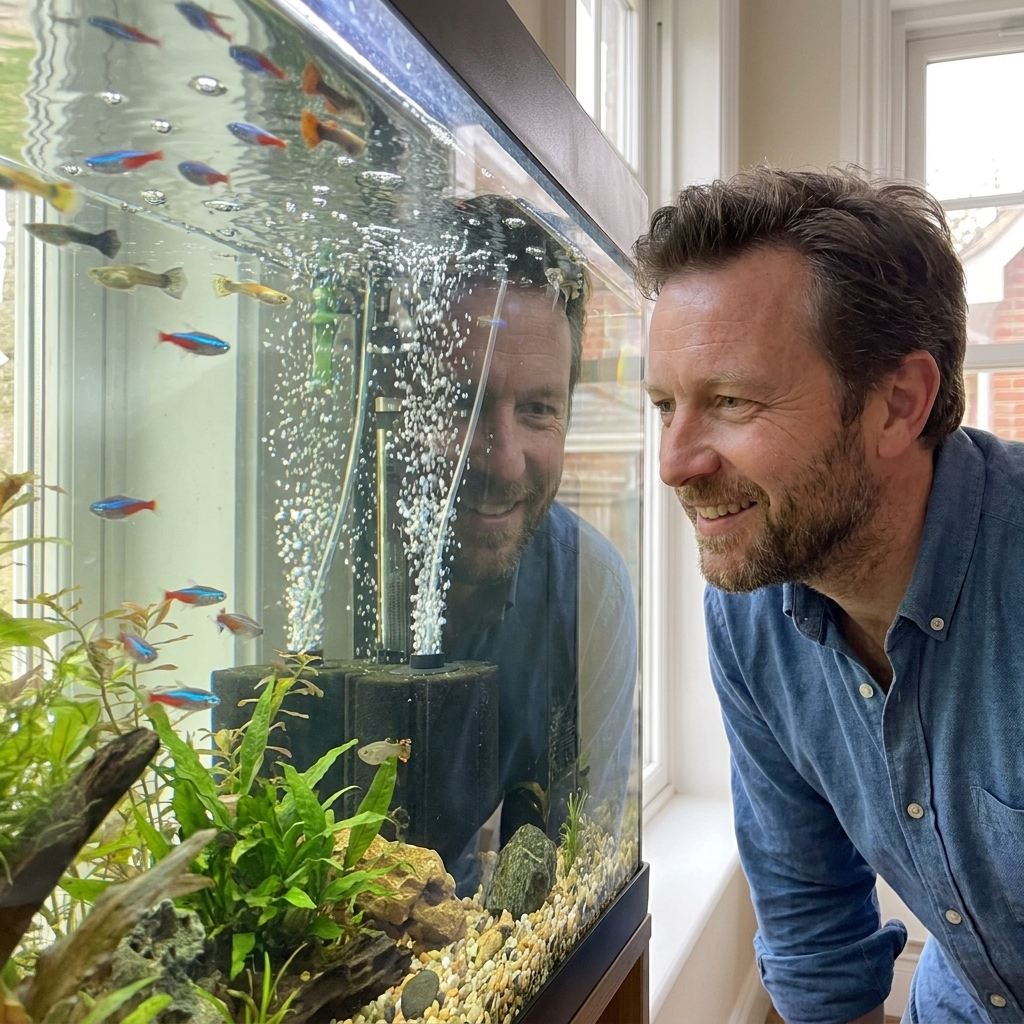
Nitrate: manageable, not harmless
What it is: Nitrate (NO3-) is the end product of the classic nitrogen cycle. It is far less toxic than ammonia or nitrite, but it is still a stressor in high concentrations and over long exposure.
Why it matters: Chronic high nitrate is linked with poor growth, weaker immune response, and breeding problems in many species. In planted tanks, nitrate also becomes part of the algae balancing act. Too much nitrate can contribute to nuisance algae in some setups, but algae is multifactorial and light, CO2, flow, and overall nutrient balance matter just as much.
One quick clarity point: most hobby test kits report nitrate as NO3- (nitrate), not nitrate-nitrogen. If you compare sources online, make sure they are using the same units.
Reasonable targets for most freshwater community tanks
- Ammonia: 0 ppm
- Nitrite: 0 ppm
- Nitrate: often under 20 to 40 ppm for many community fish
There is no single perfect number. Some hardy fish tolerate higher nitrate, while sensitive species, shrimp, fry, and breeding projects often do better with much lower levels. Your “right” target depends on your livestock, your tap water, and how stable your maintenance routine is.
How to lower nitrate
- Water changes are the simplest, most reliable tool.
- Live plants consume nitrate. Fast growers (floaters, stem plants) are especially effective.
- Reduce waste input by feeding lighter and removing uneaten food.
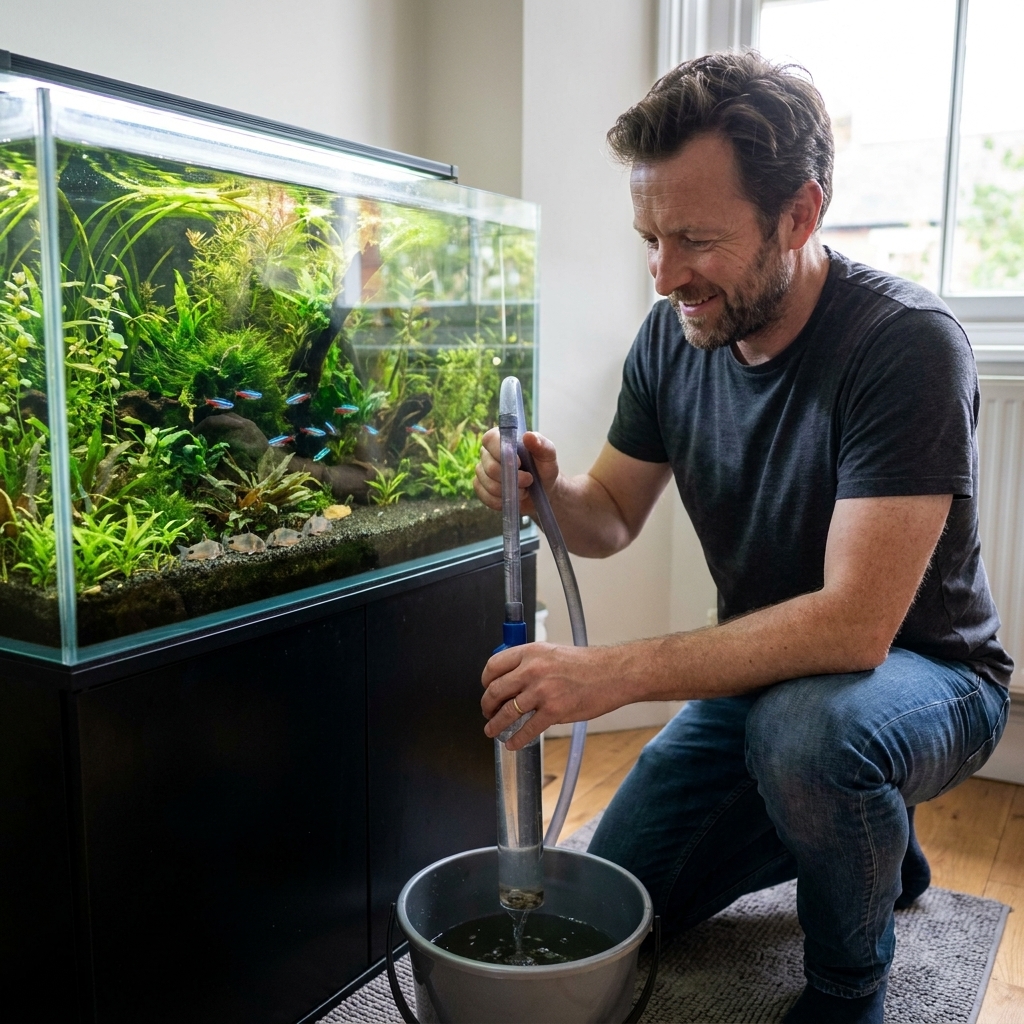
- Vacuum detritus in dead zones where mulm accumulates.
If your tap water already has nitrate
This surprises a lot of hobbyists. If your source water contains nitrate, your tank will never test “perfectly low” without help. In that case, focus on consistency and consider options like increased plant mass, more frequent smaller water changes, or blending with reverse osmosis water if you keep nitrate-sensitive livestock.
How to test accurately
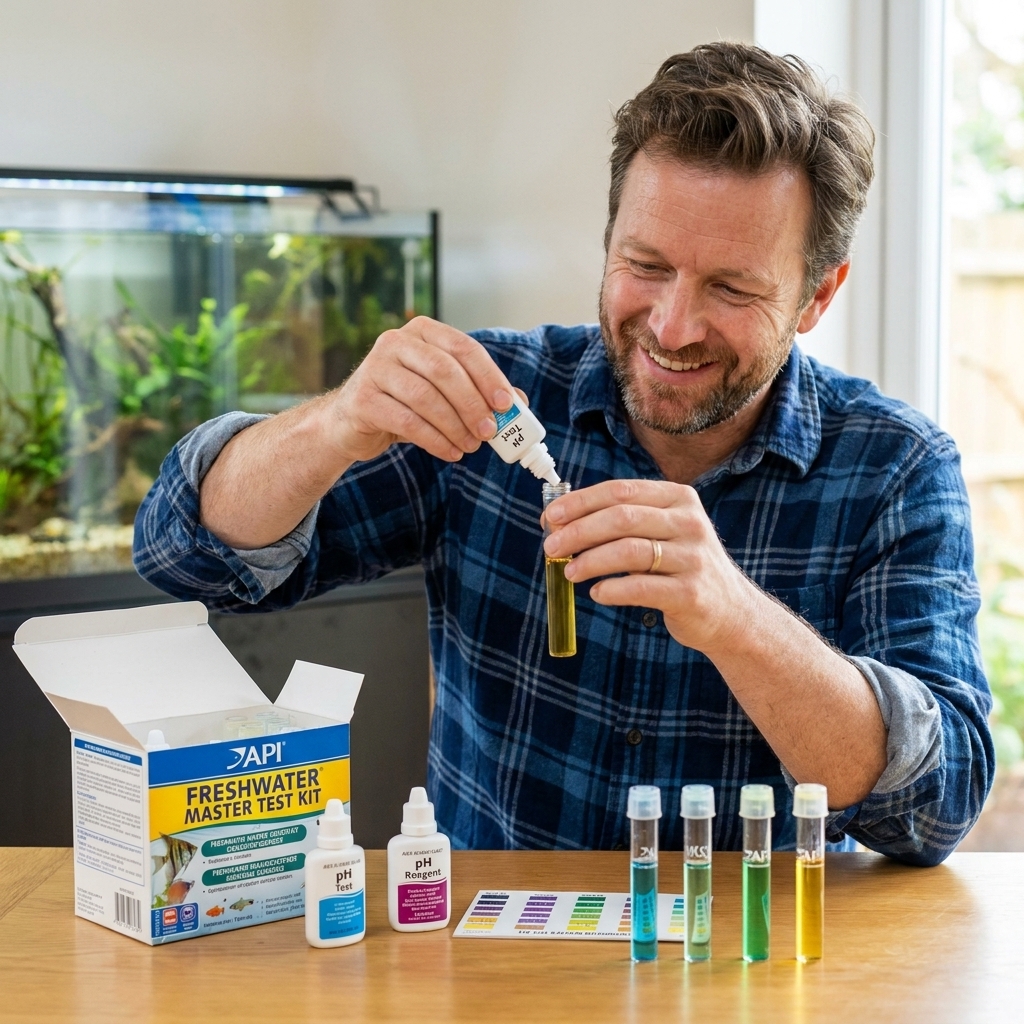
Most parameter panic comes from two things: rushed testing and misread colors. Here is how to get results you can actually trust.
Strips vs liquid kits
- Test strips are fast and convenient, but they can be less precise and more prone to humidity damage once the container is opened.
- Liquid reagent kits take a few minutes longer, but they are usually more reliable for ammonia, nitrite, and nitrate.
Small habits that improve accuracy
- Use a clean glass vial and rinse it with tank water before testing.
- Follow the timing exactly. Set a timer.
- Read colors in natural light when possible.
- For nitrate liquid tests, shake the bottles aggressively if the instructions say so. Nitrate tests are famous for reading low when reagents are not mixed well.
- Write results down. Patterns matter more than one random snapshot.
Reading the combos
Single numbers are helpful, but the combination tells you where you are in the cycle.
1) Ammonia present, nitrite zero, nitrate low
This often means an early cycle, a sudden ammonia source, or a biofilter that was damaged. Treat ammonia as urgent for fish and investigate the cause.
2) Ammonia dropping, nitrite rising, nitrate low to moderate
This is classic mid-cycle behavior. If fish are in the tank, protect them with water changes and light feeding while bacteria populations build.
3) Ammonia zero, nitrite zero, nitrate rising
This is what you want in a cycled aquarium. Now your job is nitrate management with water changes and plants.
4) All three high
This usually signals a serious maintenance lapse, a major die-off, or a crash in filtration. Act fast with water changes, reduced feeding, strong aeration, and a careful inspection for the root cause.
Cycle crashes
A mature tank is more forgiving than a new one, but it is not indestructible. Most cycle issues are actually human-caused, and that is good news because it means they are preventable.
Common crash triggers
- Replacing all filter media at once instead of preserving seeded media
- Rinsing media under untreated tap water (chlorine and chloramine are biofilter killers)
- Long power outages where the filter sits stagnant and oxygen-depleted
- Overcleaning substrate and filter on the same day
- Large stocking additions that overwhelm existing bacteria capacity
Simple prevention rules I follow
- Never replace all biological media at once. Stagger changes.
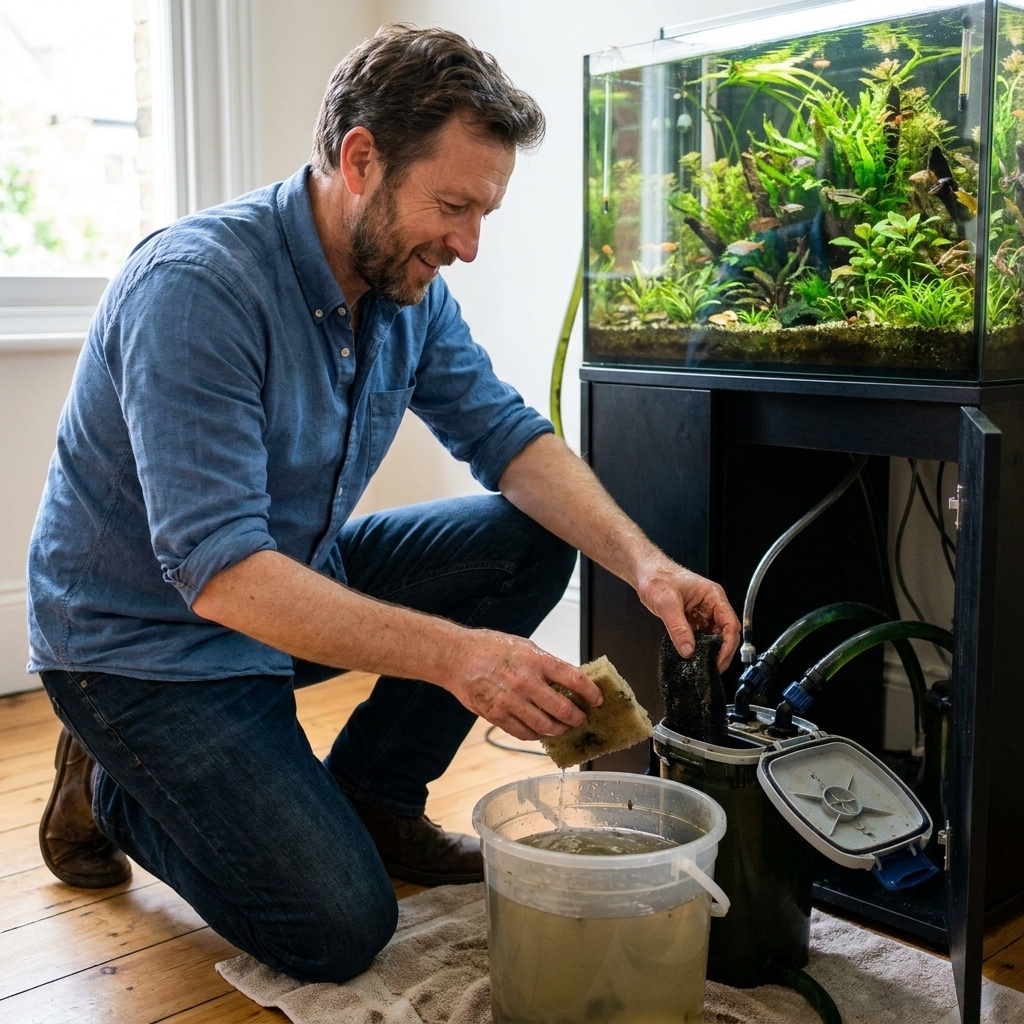
- Rinse filter sponges or media in removed tank water, not under the faucet.
- Keep a spare sponge filter or extra biomedia running in the tank if you can. It is cheap insurance.
- Add fish slowly. The bacteria grow in response to waste, not in anticipation of it.
Quick action plan
If you are reading this in a hurry because your test just came back scary, use this as your calm checklist.
If ammonia or nitrite is above 0 ppm
- Do a water change with dechlorinated water (start with 30 to 50 percent and repeat as needed).
- Add aeration and make sure the filter is running with good flow.
- Stop feeding for 24 to 48 hours.
- Look for the source: dead livestock, rotting plants, uneaten food, clogged filter.
- Test daily and repeat water changes as needed.
If nitrate is high
- Do a water change, then retest.
- Increase plant mass if possible.
- Reduce feeding and clean trapped detritus in low-flow areas.
- Adjust your routine so nitrate rises more slowly between changes.
FAQ
What nitrate level is dangerous?
It depends on the species and how long they are exposed. Many community fish do well when nitrate is kept under 20 to 40 ppm, with lower targets often preferred for sensitive fish, shrimp, and breeding setups. Some tougher fish tolerate higher levels, but if your nitrate is consistently very high, focus on improving your maintenance rhythm and reducing waste input.
Can plants replace water changes?
Plants help a lot, sometimes dramatically, but I still recommend regular water changes for most tanks. Water changes do more than remove nitrate. They dilute a wide range of dissolved waste and help reset mineral balance.
Why do I have nitrate if my tank is “uncycled”?
Your tap water may contain nitrate, or you may have some bacterial activity already even if ammonia and nitrite are still present. Testing your source water once is a surprisingly useful baseline.
Why do my fish look stressed when ammonia and nitrite are zero?
Ammonia, nitrite, and nitrate are only part of the picture. Temperature swings, low oxygen, improper pH for the species, aggression, parasites, or poor acclimation can all cause stress. Still, getting ammonia and nitrite to zero is always step one because it removes a major, immediate threat.
Final perspective
My first fish, a carnival goldfish, lived in water that was basically a slow chemical burn. I did not know what I was looking at and the pet store advice sounded confident, so I assumed it must be fine.
If you remember one thing from this guide, make it this: ammonia and nitrite should be zero. Nitrate is the number you manage. Once you build your routine around that reality, fishkeeping gets quieter, steadier, and honestly more enjoyable.