A clear, science-backed guide to aquarium water changes for freshwater tanks: how often, how much, and exactly how to do them without stressing fish or crash...
Freshwater aquarium guidance
Aquarium Vacation Prep: Keep Fish Safe While You’re Away
Heading out of town? Learn the safest way to feed, light, and maintain your freshwater aquarium while you’re on vacation, plus a simple pre-trip checklist.

Written by
Oliver Bennett
Oliver Bennett is a lifelong aquarist with over 15 years of experience in freshwater tank setup, aquascaping, and fish health. Through TankRoot, he shares his passion for creating balanced underwater ecosystems, helping hobbyists of all levels build thriving, beautiful homes for their fish.
Published: October 17, 2026
•
Updated: October 17, 2026
The first fish I ever “owned” was a carnival goldfish that spent far too long in far too little water. I didn’t know what cycling was, I overfed, and I learned the hard way that good intentions do not equal good care.
That memory is exactly why vacations can make even experienced aquarists nervous. Fish do not need daily fussing, but aquariums do punish sudden changes: a missed top-off, an overeager feeder, a heater that fails, or a light left blazing for twelve hours a day.
The goal is not to automate everything perfectly. The goal is to remove the biggest risks so your tank stays stable and boring while you’re gone. Stability is the real “pet sitter.”
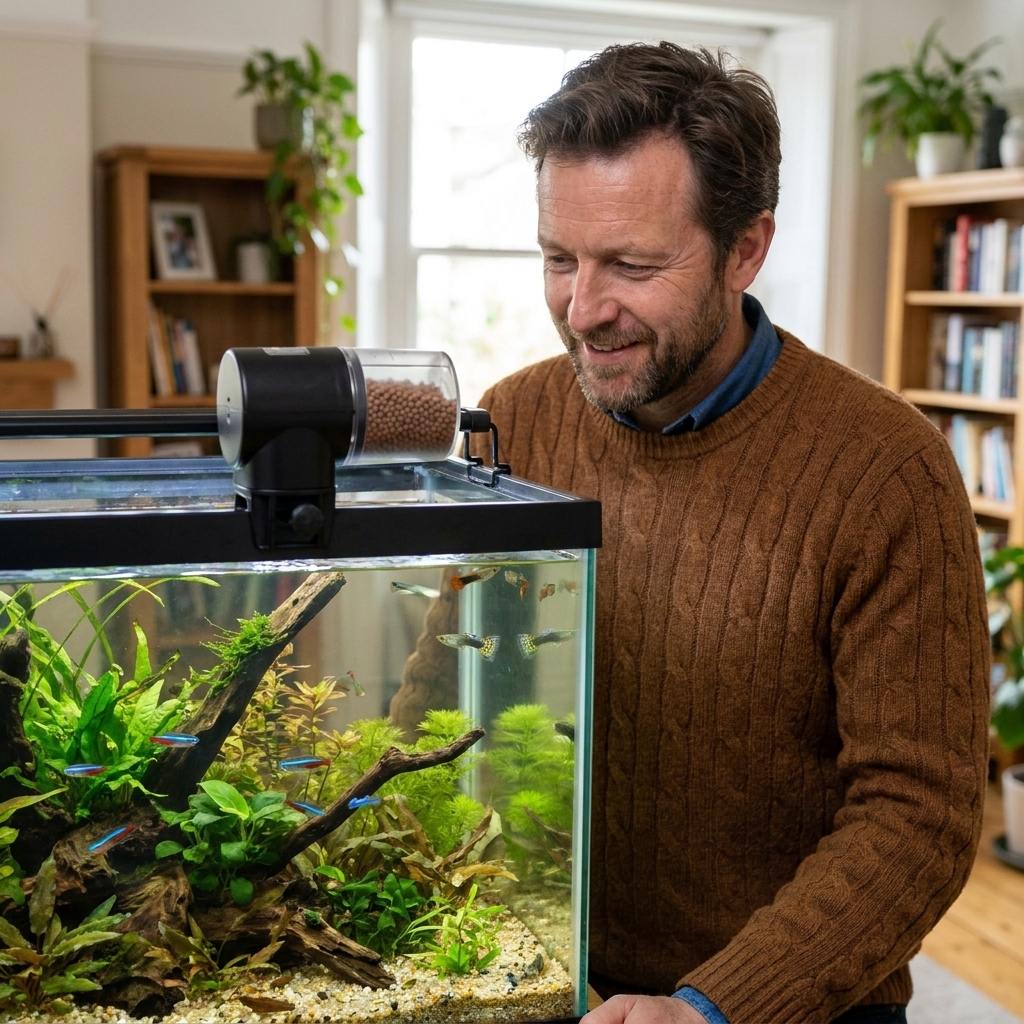
Before you plan gear, know your real risks
When something goes wrong during a trip, it is usually one of these:
- Overfeeding (most common): ammonia spikes, cloudy water, oxygen drop, stressed fish.
- Evaporation and temperature swings: lowered water level can stress fish and reduce filter efficiency, and small tanks cool or warm quickly.
- Lighting mistakes: algae bloom from too much light, or stressed plants from erratic schedules.
- Equipment failure: heater stuck on, filter unplugged, air pump stopped, power outage.
- Human “help”: well-meaning friend adds food, additives, or tops off with untreated tap water.
Notice what’s missing: “Fish starved for a week.” Healthy adult fish can handle a short fast far better than they can handle dirty water from extra food. If you only remember one principle, make it this: underfeed rather than overfeed while you travel.
7 to 10 days before: make the tank boring
Do not change anything major
Vacation is not the time for a new filter, a new substrate, a new school of tetras, or a big rescape. Keep the system predictable. If you want to improve the tank, do it after you’re home.
Confirm your tank is stable
If you have test kits, this is the week to use them. You’re looking for:
- Ammonia: 0
- Nitrite: 0
- Nitrate: a practical target is often under 20 to 40 ppm, depending on your stocking, plants, and species
Nitrates are one of those hobby topics where “perfect” depends on the tank. Treat the numbers as guidance, not a moral judgment. The bigger point is to leave with a system that is already calm and consistent.
If anything is off, postpone travel automation plans and focus on stabilizing first. A tank that is already struggling is more likely to crash when you’re not there.
Service equipment lightly, not aggressively
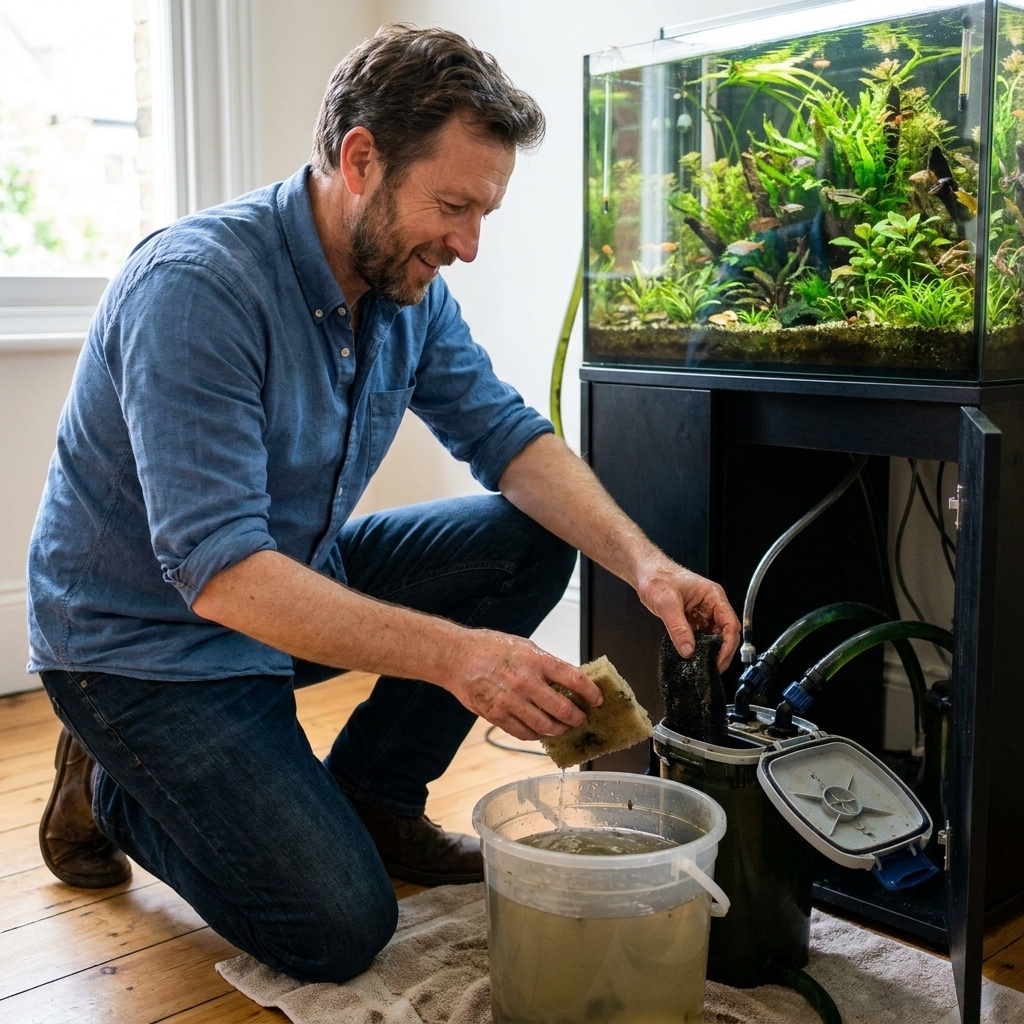
- Filter: Make sure flow is normal. If you rinse media, use removed tank water, not tap water, and do a gentle swish, not a deep clean.
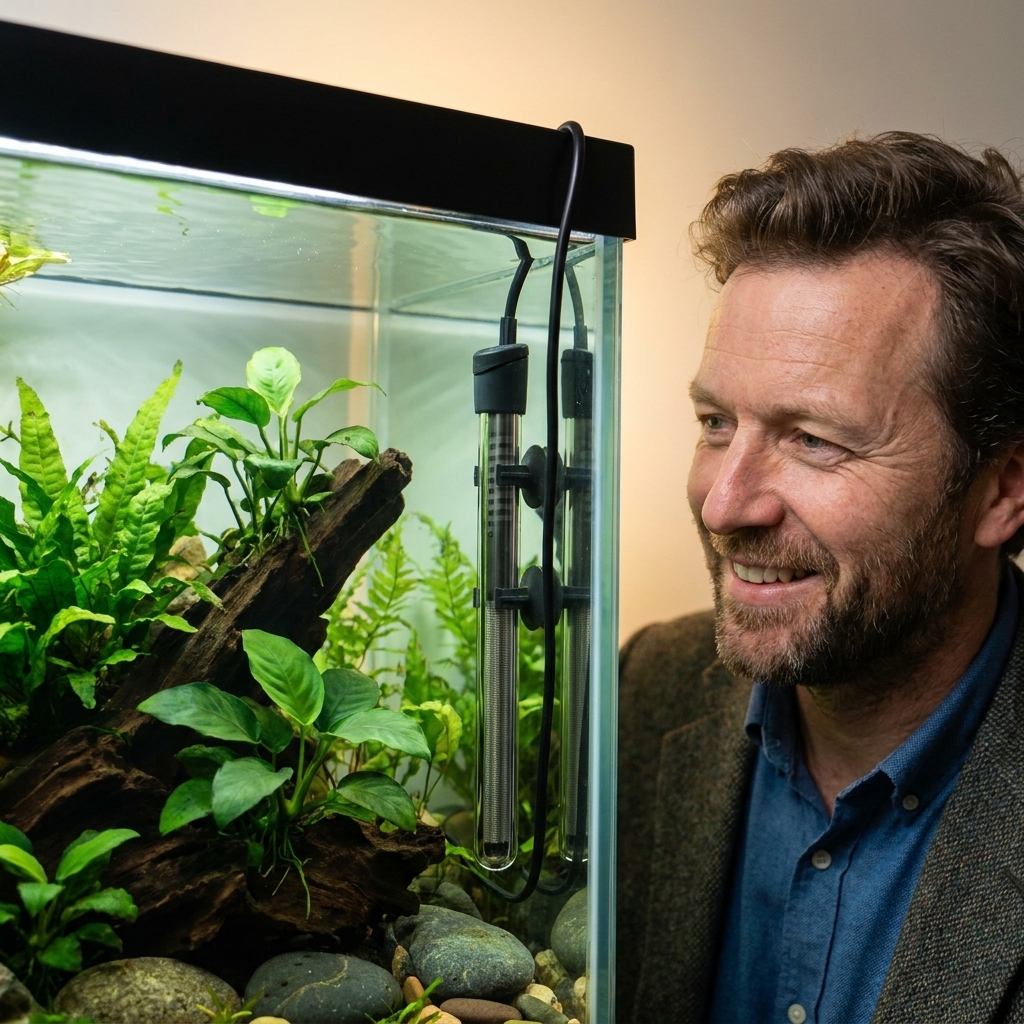
- Heater: Confirm it holds temperature for a few days. If you have a spare heater, keep it available for your sitter.
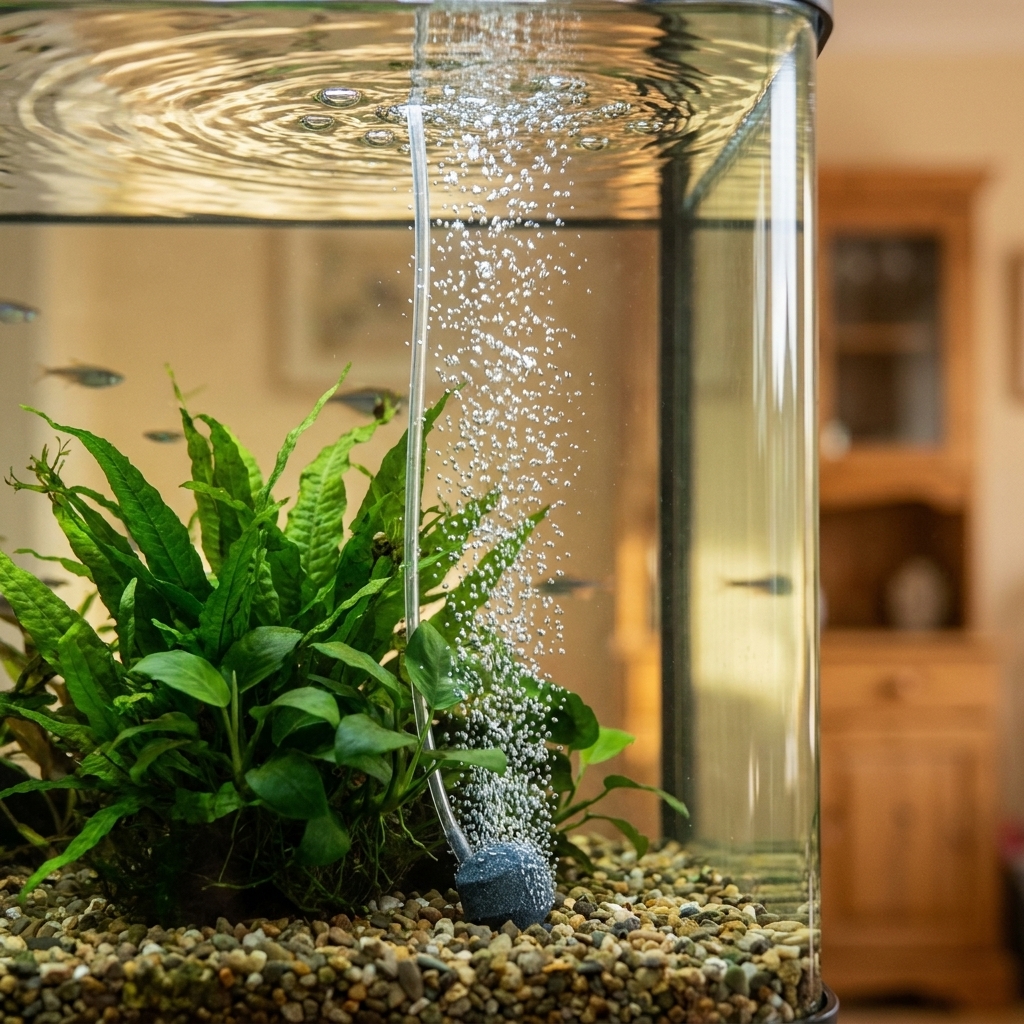
- Air and surface agitation: Good oxygenation buys you safety. If your tank runs “quiet,” consider adding an airstone while you’re away.
- Check for drip loops and confirm power strips are protected from splashes.
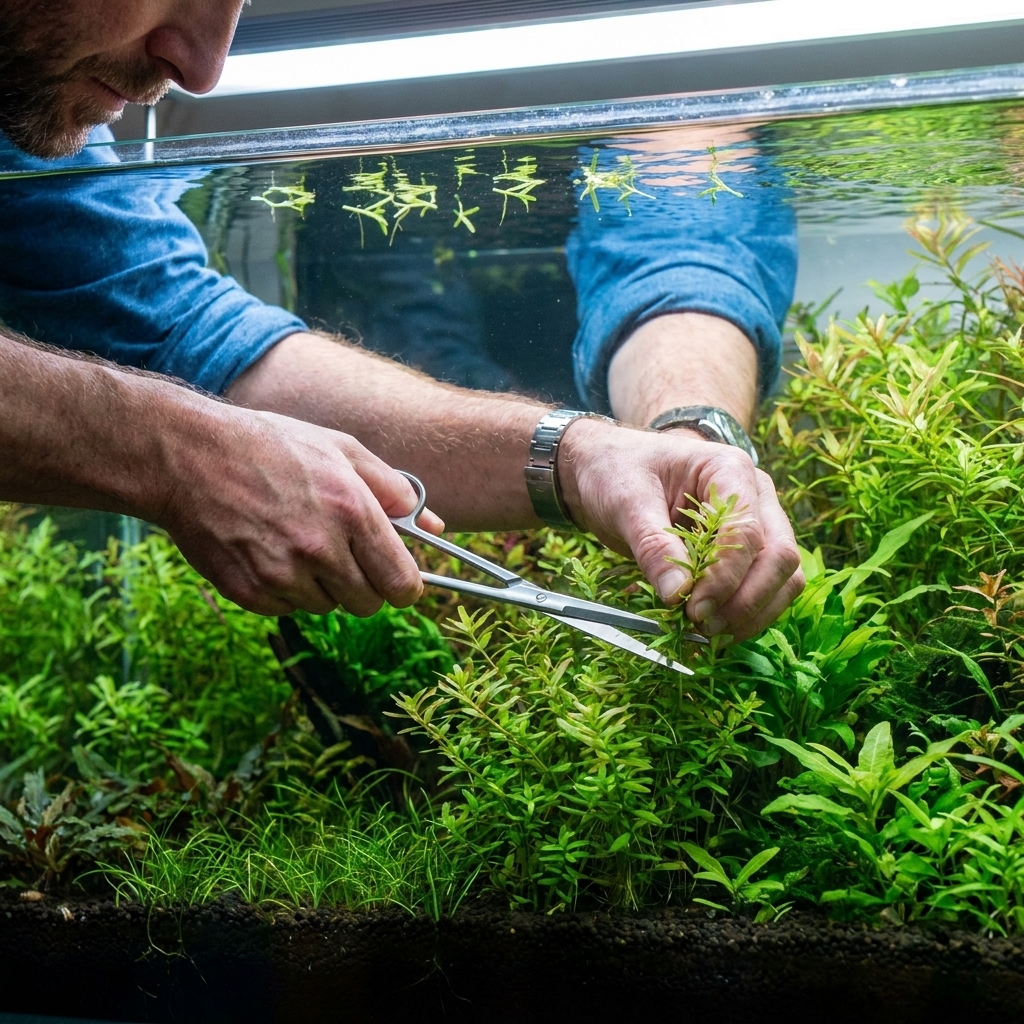
Trim and tidy planted tanks
A quick trim reduces melting leaves and rot while you’re away. Remove any decaying plant material now, since it becomes extra ammonia later.
2 to 3 days before: the smart water change and final checks
Do a normal water change, not a massive one
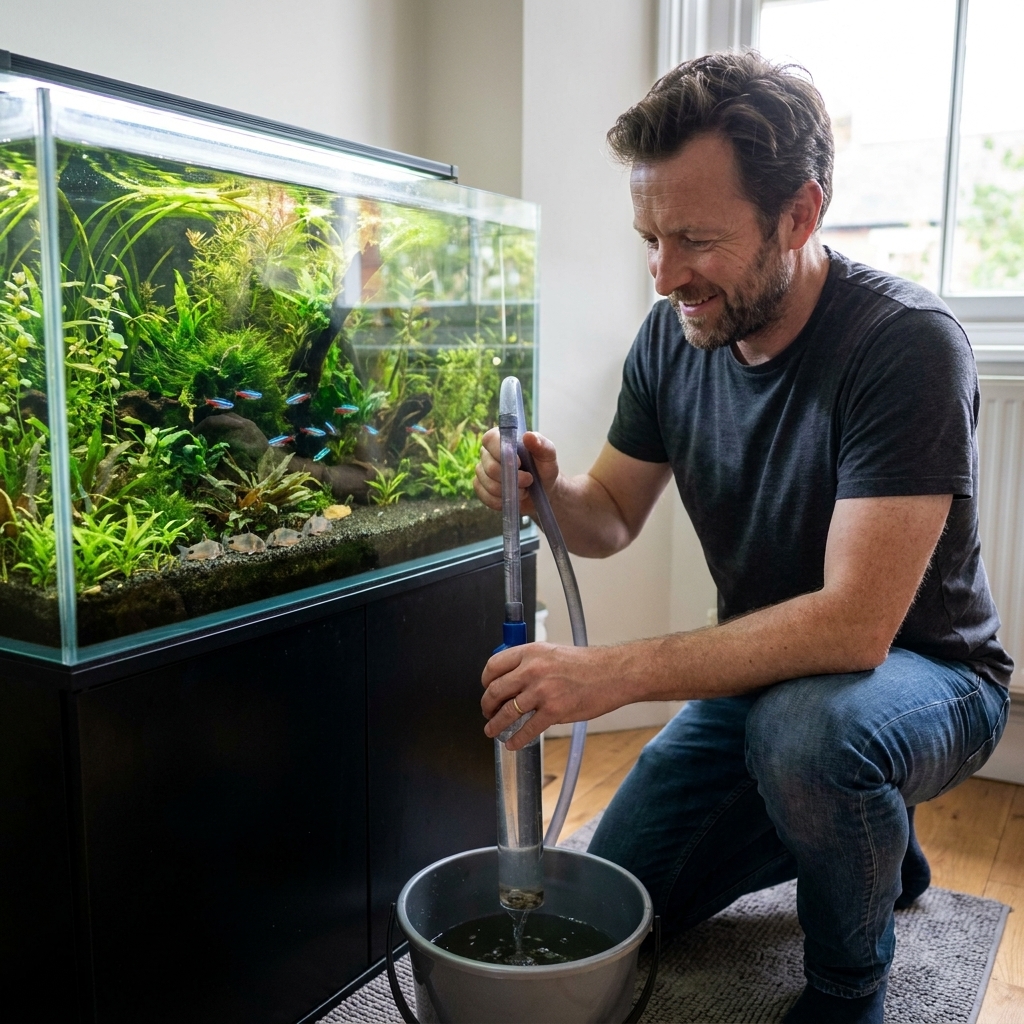
I like a 25 to 40 percent water change a day or two before leaving. That gives you clean water without shocking the tank. Extremely large changes right before travel can backfire if your tap parameters fluctuate (temperature, pH, KH) or you accidentally stir up detritus.
Clean the viewing panes, not the ecosystem
Wipe algae from the glass, siphon obvious debris, and gently vacuum accessible areas. You are aiming for “good enough,” not sterile.
Top off and mark the waterline
Evaporation is sneaky. Top off to your usual level and put a small, subtle mark on the outside of the tank or on the stand so a sitter can see what “normal” looks like.
Secure lids and reduce splash risk
Make sure the lid is properly seated. Jumping fish and vacation days are an awful combination. If you run an open-top tank, consider adding a mesh lid while you travel.
Automatic feeders: what to buy, how to set, and what to avoid
Automatic feeders are great, but only if you treat them like a tool you test and tune, not a gadget you install the morning you leave.
Choose the simplest feeder that fits your food
- Rotating drum feeders (most common): Great for pellets and small granules. Reliable when kept dry.
- Portion-cup feeders: Useful for flakes or mixed foods, but flakes can clump with humidity.
- Wi‑Fi “smart” feeders: Convenient, but more complexity means more failure points. I only recommend these if you already use smart gear successfully.
Pellets beat flakes for vacations
If your fish accept pellets, use them. Flakes absorb humidity and can jam or dump unpredictably. Pellets portion more consistently and foul water less when slightly underfed.
Set the feeder to less than you think
For most community tanks, a vacation setting should be one small feeding per day, or even one feeding every other day for low-demand fish.
A helpful rule: if the fish normally eat twice daily, set the feeder to half that amount for travel. A little hunger is safer than an ammonia spike.
If your tank is heavily stocked, runs warm, or houses constant grazers that are used to frequent meals, be more cautious with fasting and more disciplined with portions. This is where pre-portioned feedings or a mid-trip sitter check can be worth it.
Test for a full week
Run your feeder for at least 7 days before the trip and watch for:
- Food clumping from condensation
- Portion size drifting larger over time
- Food landing in the lid or on a brace instead of the water
- Fish behavior changes (aggression, frantic grazing, or lethargy)
Keep the feeder dry
Mount it away from air bubbles and splash zones. If you use a glass canopy, avoid trapping humid air under the feeder. Some aquarists place a small piece of plastic wrap between the lid gap and feeder opening to reduce moisture migration, but never block ventilation completely.
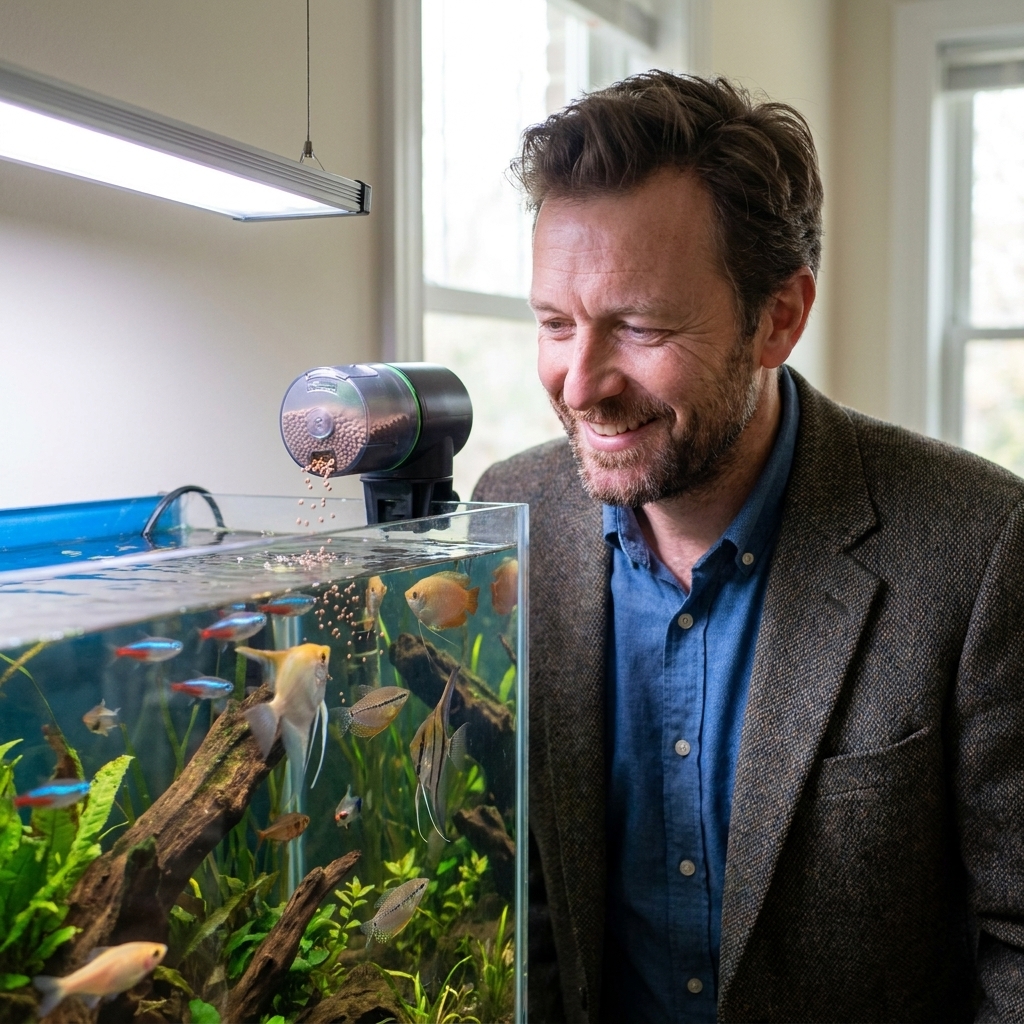
Lighting timers: the underrated vacation lifesaver
In freshwater tanks, light is basically a fuel source. Too much fuel with no gardener (you) to prune and adjust invites algae.
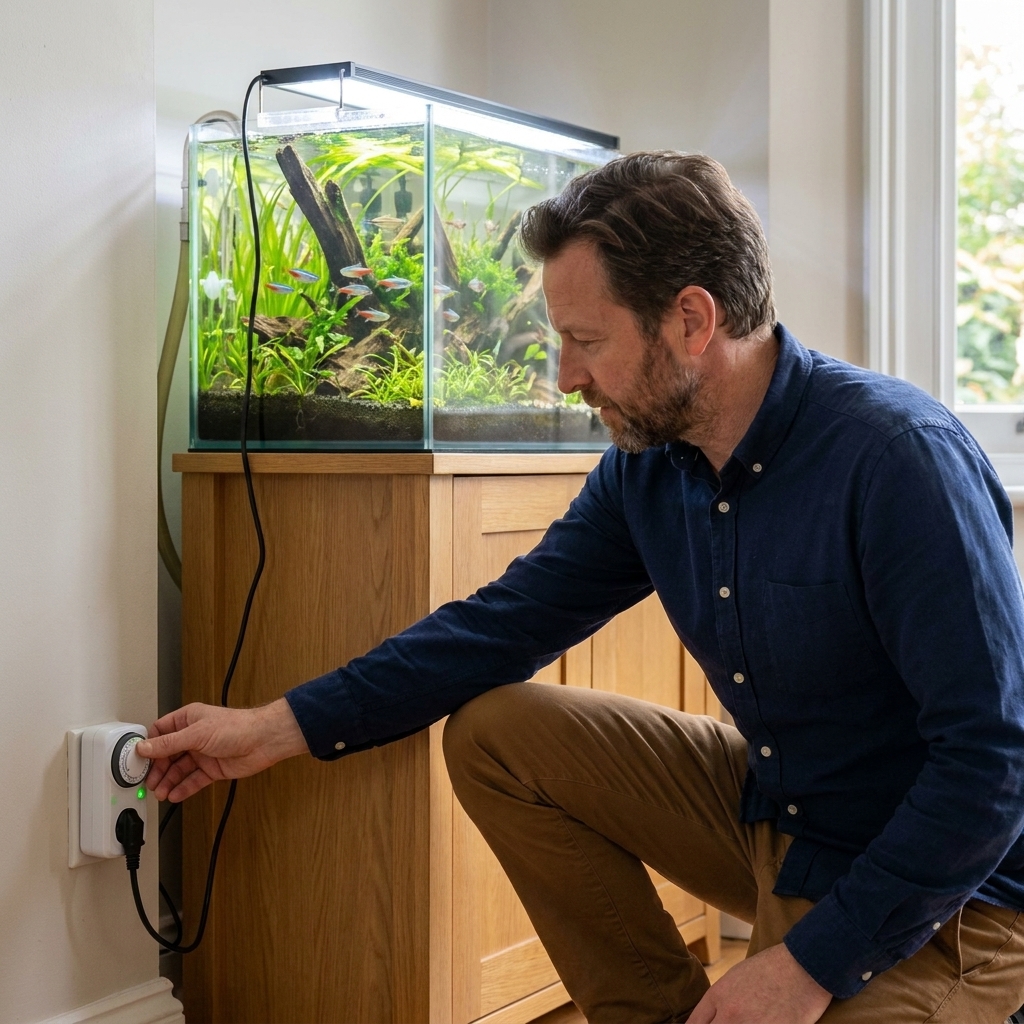
Use a timer even if you normally do not
A basic outlet timer is often more reliable than remembering to switch lights on and off. If you already run an aquarium light with an app schedule, great. Still, confirm the schedule persists after a power outage.
Set a conservative photoperiod
- Low to medium planted tanks: 6 to 8 hours per day
- High light or CO2 tanks: keep your usual schedule only if the system is very stable, otherwise reduce intensity or photoperiod temporarily
If you battle algae when you’re home, cut the photoperiod down while you’re away. Your plants can handle a slightly shorter day for a week or two. Your algae will happily exploit a longer one.
Do not “leave the lights on so they can see”
Fish do not need constant light, and it can stress them. A steady day-night cycle is calmer and healthier.
Temperature and water level: stability beats perfection
Heater safety: consider a temperature controller
If you have ever had a heater stick on, you know how fast a tank can overheat. A dedicated temperature controller (an external thermostat that cuts power to the heater) is one of the best pieces of safety gear for travelers, especially for smaller tanks.
Top-off options
- Short trips (1 to 4 days): A good top-off before leaving is often enough for larger tanks with lids.
- Medium trips (5 to 10 days): Ask a sitter to top off once, or consider a simple gravity top-off reservoir if you are experienced and can test it.
- Longer trips: An auto top-off system can work well, but only if you have tested it for weeks. Flood risk is real.
If someone is topping off for you, pre-measure and label the water and conditioner amount. Better yet, use a container of pre-treated water if you have the space.
Power outages: plan for the boring failure
You cannot prevent every outage, but you can make one less catastrophic.
- Oxygen first: A small battery air pump (and extra batteries) is cheap insurance, especially for stocked tanks and warm weather.
- Know your weak point: If your tank relies on a canister filter with minimal surface agitation, consider adding an airstone while you travel.
- Optional backup: A UPS can keep a low-watt air pump running for a while, but do not assume it will power a heater for long. Test it if you use it.
- Sitter script: If the power is out, the instruction is simple: do not feed, keep the lid closed to reduce heat loss, and text you.
If you have a tank-sitter: set them up to succeed
The best sitter instructions are short, specific, and designed to prevent “bonus help.” I like a single page with only what matters.
What to ask them to do
- Check that the filter is running and water is moving.
- Confirm the heater light (or controller display) looks normal.
- Top off to the mark if needed, using only the water you provided.
- Feed only pre-portioned meals, or do not feed at all if you are using an auto feeder.
What to ask them not to do
- No extra food, even if fish “look hungry.”
- No additives, “quick fixes,” or bacterial bottles.
- No filter cleaning, no plant replanting, no scrubbing decor.
- No changing the timer schedule.
Pre-portion food like you mean it
If a sitter is feeding, pre-portion each feeding into a pill organizer or small cups. One compartment equals one feeding. That simple step prevents the classic “I sprinkled a little more because they were excited” disaster.
Do a quick dry run
A few days before you leave, do a practice check: confirm the timer schedule, confirm the feeder drops the right amount, and if you have a sitter, have them do one “trial visit” while you are home. It is amazing what this catches.
Special situations (and how to travel safely anyway)
Fry, delicate species, and high-metabolism fish
Small fry and some delicate fish need more frequent, smaller meals. If you are raising fry or keeping species that truly cannot miss feedings, I recommend a trusted, fish-savvy sitter over automation alone. Alternatively, postpone the trip if the timing is critical. That is not dramatic, it is humane.
CO2 injected planted tanks
CO2 systems can be very stable, but they also add failure points. Before leaving:
- Confirm your bubble rate has been stable for at least a week.
- Check your diffuser and tubing for leaks.
- Keep surface agitation reasonable to avoid oxygen dips at night.
If you are on the edge with CO2, reduce injection slightly for the trip. Slower growth for a week beats an oxygen or pH swing.
New tanks (under 2 to 3 months old)
Young tanks are more likely to swing. If your aquarium is newly cycled, travel plans should be extra conservative: lighter feeding, stable lights, and ideally someone who can check the tank mid-trip.
Vacation checklist (quick scan)
- Feeder tested for 7 days and set to underfeed
- Light on a timer, 6 to 8 hours for most setups
- Normal water change 1 to 2 days before leaving
- Filter flow confirmed, no deep clean
- Heater confirmed stable, consider a temp controller
- Top-off completed and waterline marked
- Lid secured, cords organized with drip loops
- Power plan: battery air pump or sitter instructions for outages
- Sitter instructions simple, food pre-portioned if needed
- Spare supplies accessible: net, conditioner, towels, spare air pump if you have one
Troubleshooting: what to do when you get home
When you return, resist the urge to overhaul everything immediately. Your tank has been running on “vacation mode” and needs a gentle re-entry.
- Look first: fish behavior, water clarity, heater temperature, filter flow.
- Test if anything seems off: ammonia and nitrite especially.
- Do a moderate water change (25 to 40 percent) if nitrates are elevated or the tank looks dull.
- Resume feeding gradually over a day or two.
- Address algae calmly: shorten photoperiod, clean glass, trim plants, and avoid chemical quick fixes unless you know exactly what you are treating.
FAQ
Can I leave my fish unfed for a week?
Many healthy adult community fish can handle 5 to 7 days without food, and it is often safer than risking overfeeding. But it is not universal. Species, temperature, and body condition matter. Very small fish with fast metabolisms, fish that are already thin or stressed, and some grazers that are used to frequent meals may need a more conservative plan.
Are vacation feeder blocks safe?
In most freshwater community tanks, I do not love them. They can dissolve unpredictably and foul water. Some calcium or plaster-based blocks can also raise hardness. A tested automatic feeder or pre-portioned sitter feedings are usually safer.
Should I do a huge water change right before I leave?
Usually no. A normal change is safer. Big swings in parameters right before you leave can create problems you will not be home to catch.
What is the single best upgrade for traveling aquarists?
A reliable timer for your lights and a tested automatic feeder reduce most vacation risks. If heater failure worries you, a temperature controller is a close runner-up.
If you want the calm truth: fishkeeping is less about constant intervention and more about building systems that quietly take care of themselves. Do that, and vacations stop being scary. Your tank just becomes what it was always meant to be, a stable little ecosystem that keeps humming along while you’re gone.