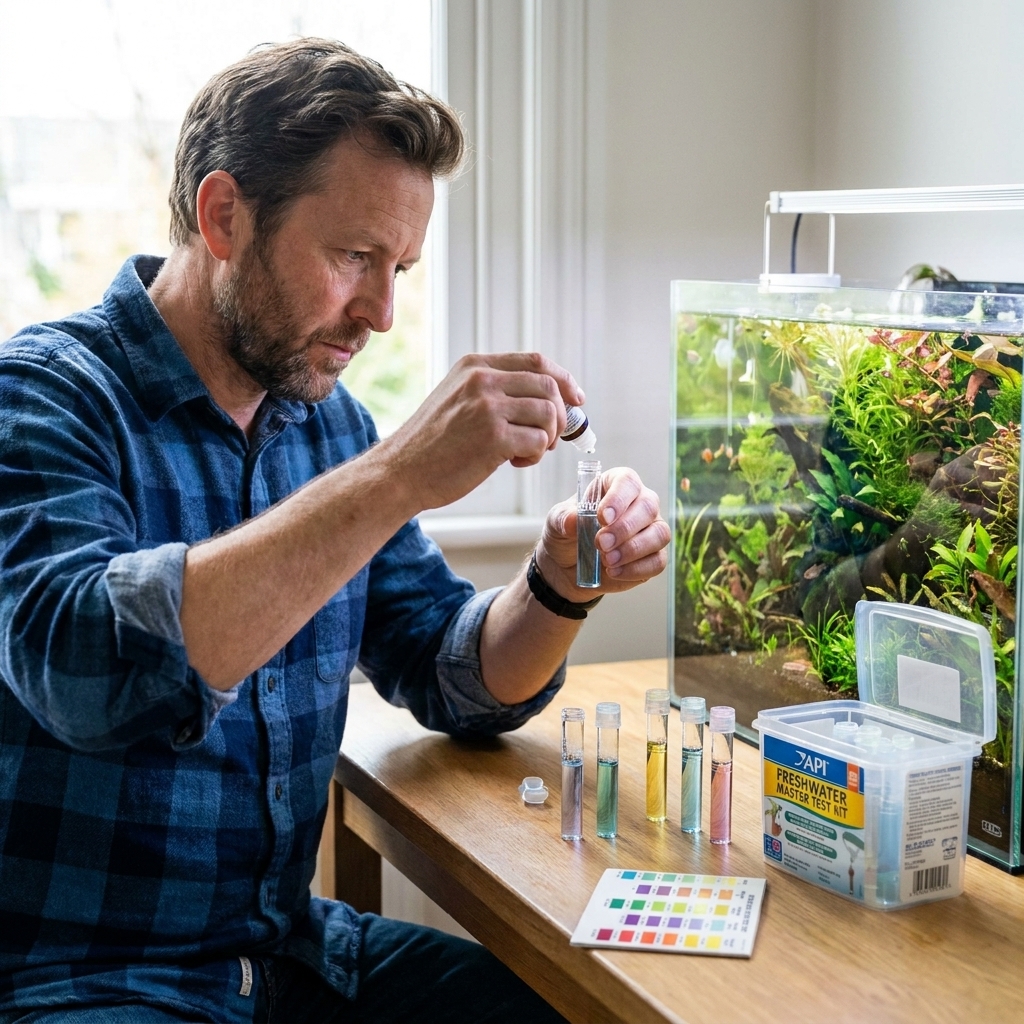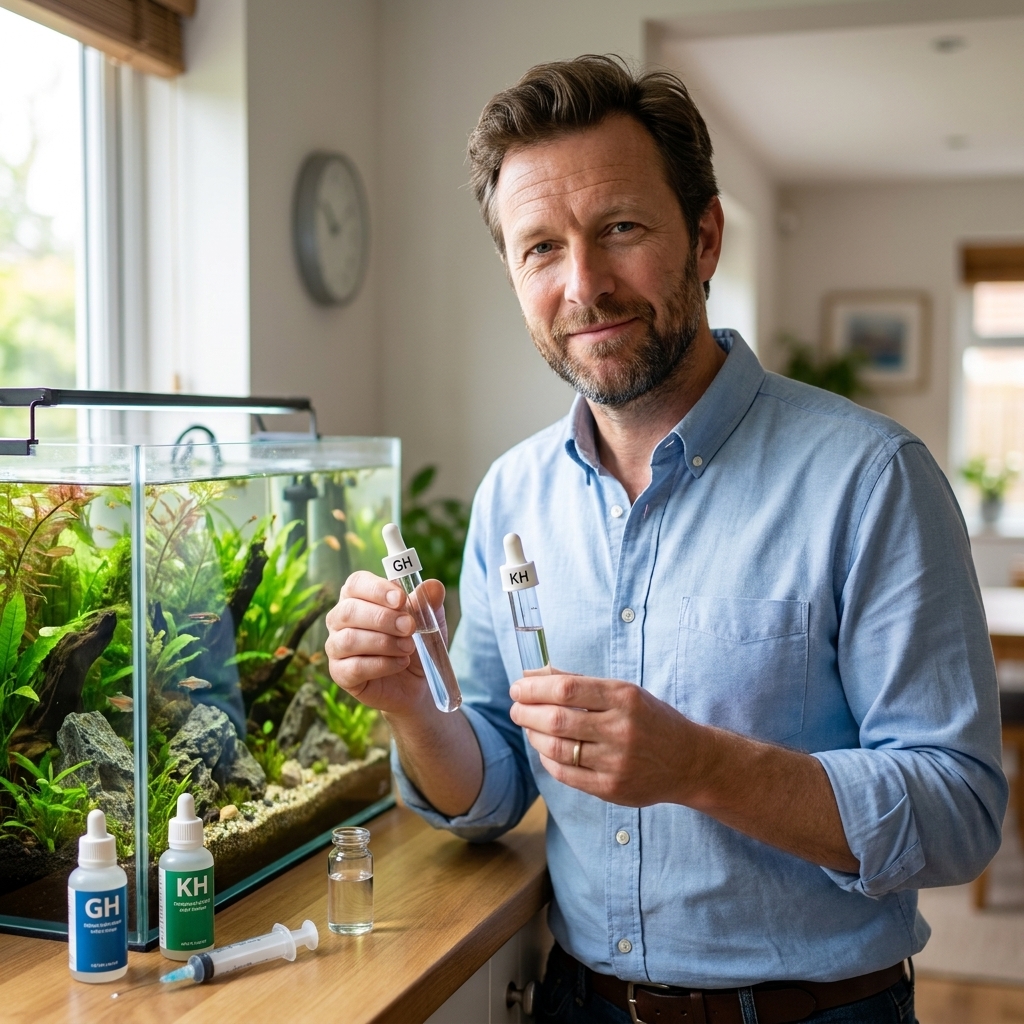
General hardness (GH) and carbonate hardness (KH) are two of the most misunderstood water parameters. Here is what they do, why they matter for fish health a...
Freshwater aquarium guidance
Tap Water vs. RO Water for Freshwater Aquariums
Conditioned tap water is simple and affordable, while RO water offers control but needs remineralizing. Here’s how to choose based on fish, plants, and your local water.

Written by
Oliver Bennett
Oliver Bennett is a lifelong aquarist with over 15 years of experience in freshwater tank setup, aquascaping, and fish health. Through TankRoot, he shares his passion for creating balanced underwater ecosystems, helping hobbyists of all levels build thriving, beautiful homes for their fish.
Published: October 17, 2026
•
Updated: October 17, 2026
If you have ever stood in front of your tank with a bucket in one hand and a water test kit in the other, wondering if you are doing things “the right way,” you are not alone. Most freshwater aquariums can thrive on conditioned tap water. At the same time, reverse osmosis (RO) water is a powerful tool when your tap water is unusually hard, inconsistent, or loaded with compounds that make certain fish and plants difficult.
The goal is not to chase perfection. The goal is stable, safe water that matches the animals you keep. Let’s break down what each option actually does, what it costs, and when I recommend switching.
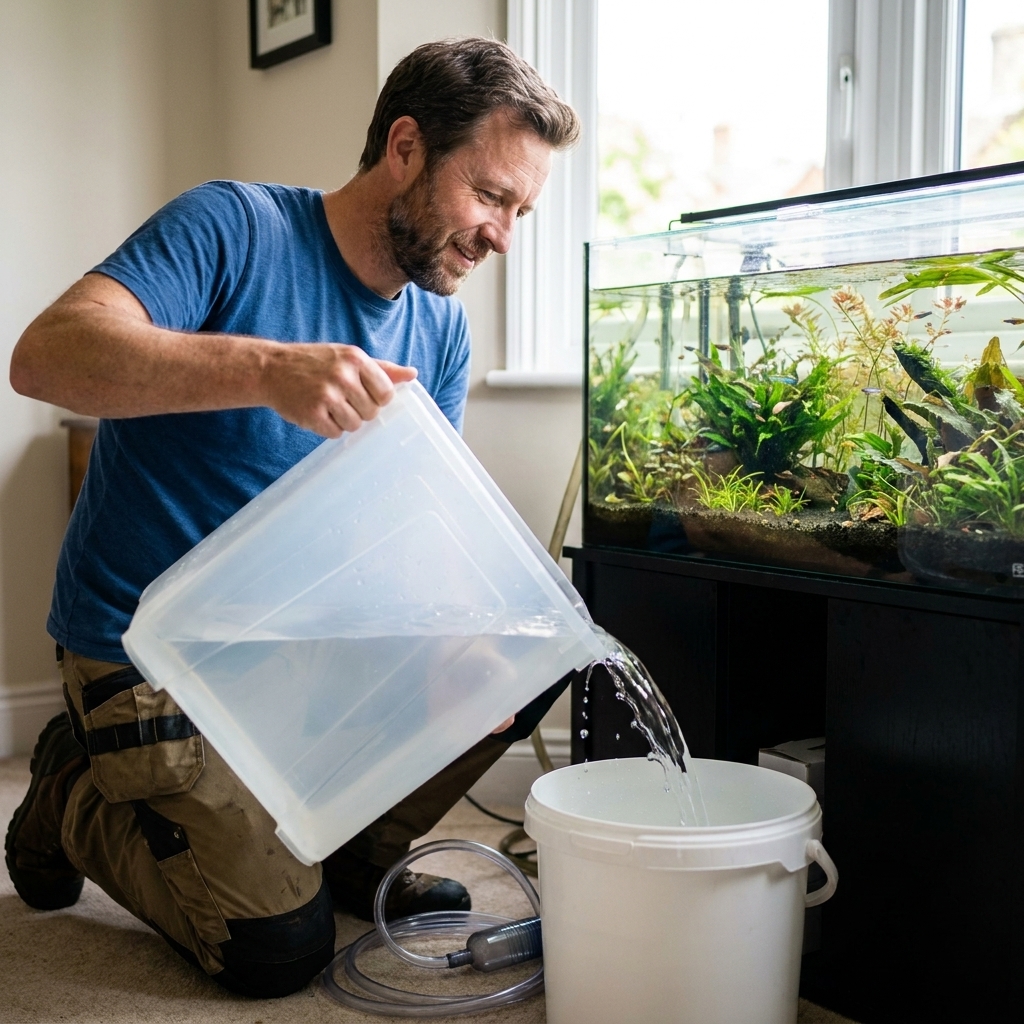
Quick answer: which should you use?
- Use conditioned tap water if your water is reasonably consistent, you keep hardy community fish, and your GH and KH are not extreme. It is the simplest path to stability.
- Use RO water (remineralized) if your tap water is very hard, very alkaline, comes out inconsistent seasonally, or you keep species that truly need softer water like wild-type tetras, many dwarf cichlids, some rasboras, and especially Caridina shrimp.
- Use a mix (tap plus RO) if you want to lower hardness a bit without going full RO. This is a common, practical middle ground.
What tap water brings to the tank
Tap water is not “bad” by default. In many cities it is an incredibly reliable, regulated source of water that already contains the minerals fish and plants use for basic osmoregulation and growth.
Pros of conditioned tap water
- Low cost and low complexity: dechlorinator plus a bucket or hose system is enough.
- Natural minerals included: calcium and magnesium (GH) and buffering capacity (KH) are often present at usable levels.
- Consistency for most community tanks: when a water supply is stable, your tank becomes stable.
- Faster routine: easier water changes usually means you do them more consistently, and consistency is half of fishkeeping.
Cons and risks of tap water
- Chlorine or chloramine: both must be neutralized every time. Chloramine is a disinfectant formed by combining chlorine and ammonia, and when you neutralize it you can temporarily end up with free ammonia in the water. A good conditioner handles this, but it is one more reason you do not want to skip it.
- Variable parameters: some municipalities change water sources seasonally. That can swing pH, GH, and KH enough to stress sensitive livestock.
- Hardness may be too high: very hard water can make it tough to keep soft-water fish long-term, and can complicate shrimp breeding goals.
- Possible problem contaminants: copper from old plumbing can be a concern for invertebrates, and some areas have elevated nitrate, silicate, or other dissolved solids that fuel algae or affect plants.
Bottom line: if your tap water is not extreme, and you match your stocking to it, conditioned tap water is usually the best balance of simplicity and success.
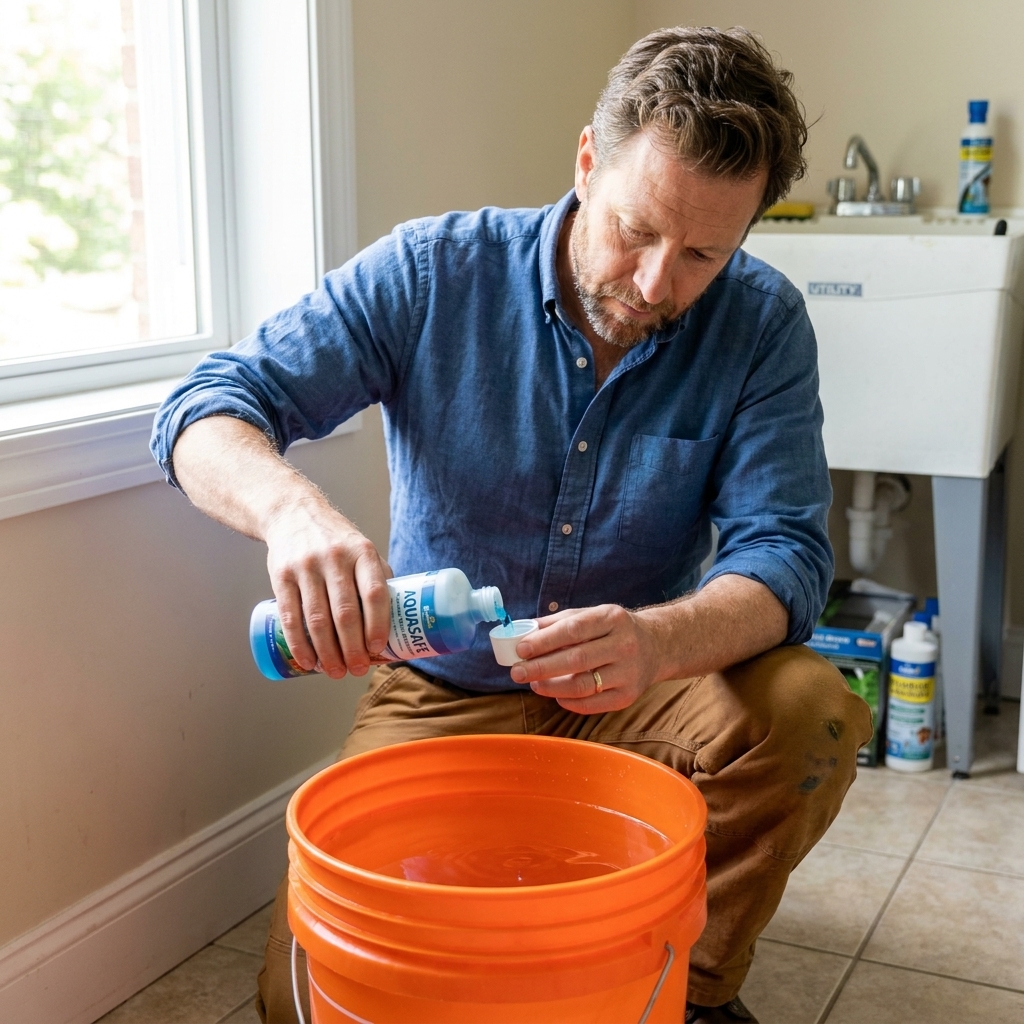
What RO water is, and what it is not
Reverse osmosis water is water pushed through a membrane that removes the vast majority of dissolved solids. In a properly functioning setup, RO typically produces water with very low TDS and very low GH and KH, but not always true zero. Output depends on membrane quality, incoming TDS, water pressure, and temperature. RO/DI can take it even lower, but it adds cost.
That is powerful, but it comes with a critical rule:
RO water is not complete aquarium water until you remineralize it. Fish and invertebrates need minerals. Your biofilter and plants also behave differently when KH is near zero.
Pros of RO water
- Control: you decide the GH and KH instead of inheriting them from your city.
- Consistency: you can make the same water every time, even if your tap changes seasonally.
- Solves “too hard” situations: RO makes soft-water setups possible in hard-water regions.
- Useful for sensitive livestock: certain fish and especially shrimp respond dramatically to stable, appropriate mineral content.
Cons of RO water
- Upfront cost: you need an RO unit and storage containers, and you will likely want a TDS meter.
- Ongoing waste water: RO produces reject water. Efficiency varies by unit, water pressure, and temperature.
- Added steps: you must mix minerals back in, and you must do it consistently.
- Risk of instability if mishandled: if KH is left too low for your setup, pH can swing more easily, particularly in tanks with little buffering and heavy biological activity.
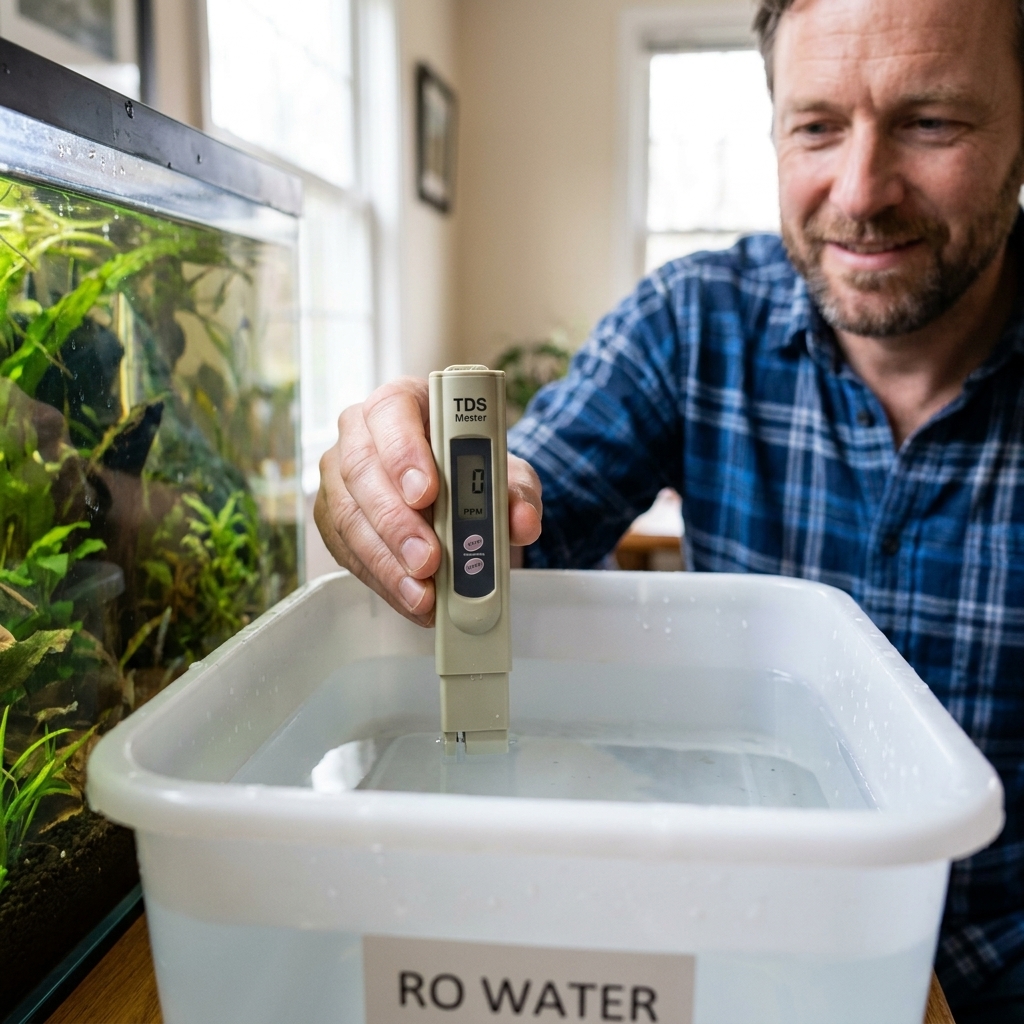
Setup costs: tap vs. RO (realistic ranges)
Costs vary wildly by location, tank size, and how polished you want your workflow to be. Here are the ranges most hobbyists actually experience.
Conditioned tap water typical costs
- Water conditioner: usually inexpensive per gallon treated, especially with concentrated brands.
- Test kit: a liquid kit for ammonia, nitrite, nitrate, plus GH and KH tests if you want to make informed choices.
- Optional: siphon, Python-style water changer, or a dedicated mixing bin for larger tanks.
RO water typical costs
- RO system: cost depends on whether it is a basic 3 to 4 stage unit or an RO/DI system with additional resin.
- Replacement filters and membrane: prefilters are replaced more often than membranes. Local water quality matters a lot here.
- Storage: food-safe brute cans or jerry cans, plus a pump or heater if you want pre-warmed water for big water changes.
- Remineralizer: a GH-only or GH/KH product depending on your target.
- TDS meter: not strictly required, but extremely helpful for repeatability.
If you only keep one medium community tank, RO often feels like overkill. If you keep multiple tanks, breed shrimp, or fight stubborn parameter issues, RO starts to look like a sanity purchase.
The chemistry that actually matters
A lot of confusion comes from mixing up what these numbers mean.
- GH (general hardness): mostly calcium and magnesium. Important for fish osmoregulation, plant health, and critical for shrimp.
- KH (carbonate hardness): buffering capacity that helps resist pH swings. Low KH is not automatically bad, but it demands consistency and awareness.
- pH: a snapshot influenced by KH, dissolved CO2, tannins, and other factors. Chasing a specific pH number is less useful than keeping it stable and appropriate.
- TDS: total dissolved solids. A broad measure of “stuff dissolved in water.” Useful for consistency, not a replacement for GH and KH.
Tap water tends to come with built-in GH and KH. RO water starts low and you build your own recipe.
When tap water is the best choice
In my experience, tap water is the best default when you can answer “yes” to most of these:
- Your tap water tests show stable GH and KH from month to month.
- You keep hardy species that tolerate a range, like livebearers, many barbs, most danios, many rainbowfish, and lots of common community fish lines that are tank-bred.
- You want a planted tank that grows reliably without complicated water prep.
- You are new to the hobby and benefit from fewer moving parts.
Important: always use a dechlorinator that neutralizes chloramine unless you have confirmed your water supply uses only free chlorine. Many utilities use chloramine specifically because it is more stable in distribution lines, but it is not universal.
When RO water is worth the effort
RO is not a badge of seriousness. It is a tool. I recommend it when you are solving a real problem.
You have very hard or alkaline tap water
If your GH and KH are high enough that soft-water fish never quite thrive, RO lets you create a gentler mineral profile without gambling on chemical pH reducers. As a real-world example, if your tap GH is up in the high teens or 20s dGH and you are trying to keep or breed Caridina shrimp, RO starts to make a lot of sense.
Your tap water changes seasonally
If your water provider switches sources, you might notice sudden algae phases, fish acting stressed after water changes, or inconsistent test results. RO helps you make water that does not change when the city does.
You keep Caridina shrimp or sensitive breeders
Caridina shrimp in particular often do best with remineralized RO because it allows precise, repeatable GH and TDS targets. That repeatability is often the whole game.
You are battling algae fueled by source water
Some tap water contains elevated nitrate, phosphate, or silicate. RO can reduce the incoming nutrient load, often significantly, although results vary by system and what exactly your source water contains. It gives you a cleaner baseline to manage with feeding, lighting, and plant mass.
How to use RO water safely
1) Remineralize every batch
Choose a remineralizer based on your goal:
- GH-only remineralizers are common for shrimp-focused or very soft-water fish setups where you intentionally keep KH low. Many “bee shrimp” style minerals are in this category.
- GH/KH remineralizers are often easier for community tanks because they add both minerals and buffering.
A practical reminder: do not rely on TDS alone. Use TDS for consistency, then confirm with GH and KH tests so you know what you actually made.
2) Mix to a repeatable target
Pick targets you can hit every time, and measure. A simple workflow is to mix RO water in a container, add remineralizer, circulate it, then re-test GH, KH, and TDS before it ever touches the tank.
3) Avoid abrupt swings
The danger with RO is not the RO itself. It is changing water chemistry too fast. If you are switching from hard tap to remineralized RO, transition gradually over multiple water changes.
4) Match temperature and treat any tap water used
Try to match temperature so water changes do not become a stress event. And if you are blending in any tap water at all, dechlorinate that portion the same way you normally would. RO water does not “need” conditioner, but any chlorine or chloramine you introduce through mixing still does.
5) Keep an eye on KH and pH stability
Very low KH setups can be stable, but they rely on consistency and usually benefit from careful CO2 management (if injected), steady feeding, and a mature biological filter. If you are new, do not start at “zero KH” just because you saw someone do it online.
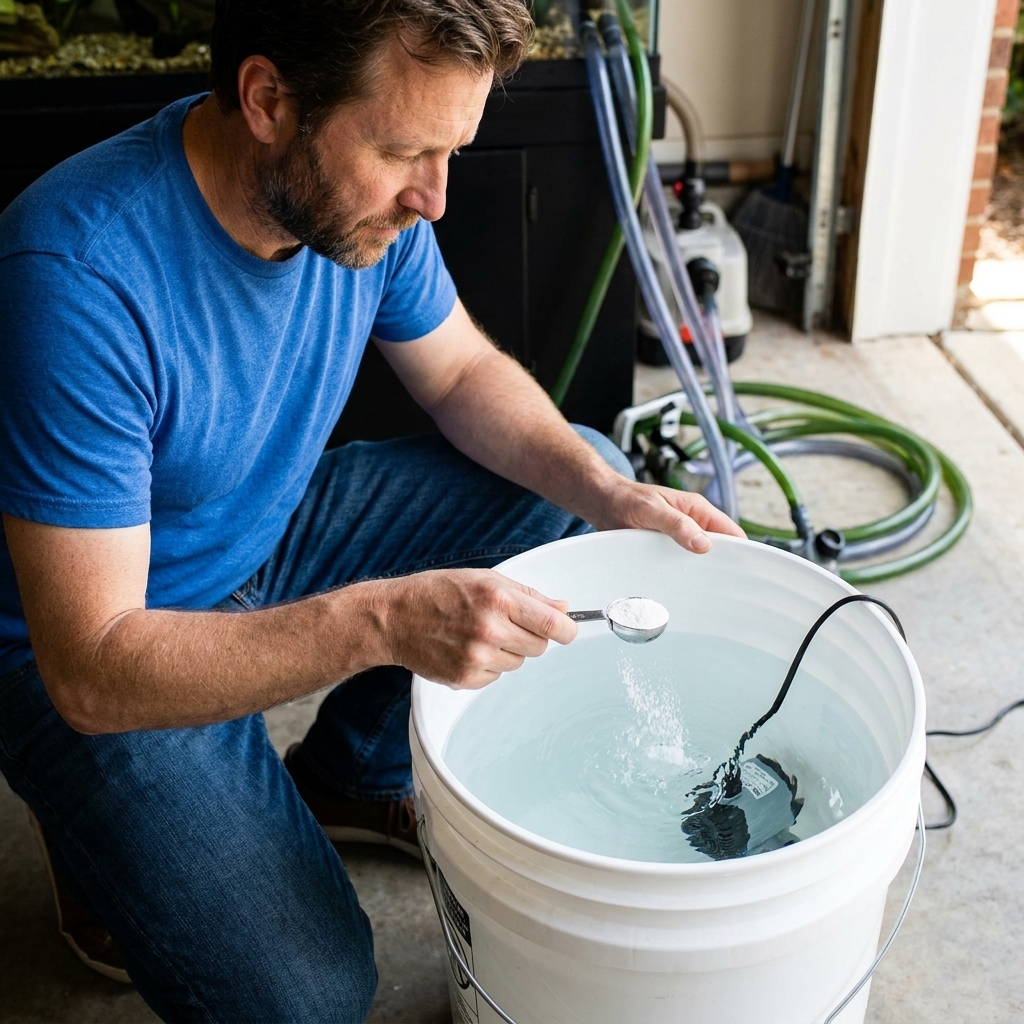
Mixing tap and RO
If your tap water is only “a bit too hard,” mixing is often the easiest win.
- 50% tap / 50% RO can bring GH, KH, and TDS down by about half if your RO water is close to zero for those values.
- 25% tap / 75% RO pushes softer while still keeping some natural buffering and minerals.
Real life is messier than the math. RO is not always zero, and tap water can drift. So treat these ratios as a starting point and confirm the result by testing.
Fish and plant examples
Great candidates for conditioned tap water
- Livebearers like guppies, platies, and mollies (they often appreciate moderate hardness and buffering).
- Many community staples like zebra danios and many tank-bred tetras.
- Most beginner planted tanks where consistency matters more than chasing soft-water numbers.
Situations where RO often shines
- Wild-type soft-water fish that struggle in hard water long-term.
- Dwarf cichlids in biotope-style setups where you want soft, gently acidic water with tannins.
- Caridina shrimp where consistent mineral content can be the difference between thriving and constant losses.
One gentle truth: if your local water is hard and you love livebearers, do not force RO because you read that “soft water is better.” Match the water to the animals, not the other way around.
Common mistakes to avoid
- Using RO with no remineralization: this can stress fish and is especially risky for invertebrates.
- Chasing pH with chemicals: stability beats a perfect number. Use RO to adjust hardness if needed, not bottles that swing pH up and down.
- Ignoring KH entirely: low KH is not evil, but it requires a deliberate plan.
- Not testing the source water: whether tap or RO, you need a baseline. Test your tap a few times over several weeks to see if it drifts.
- Big parameter changes in one water change: transition slowly when changing methods.
FAQ
Is RO water always better than tap water?
No. RO is “better” only when you need control or your tap water creates real problems. For many freshwater tanks, conditioned tap water is more than sufficient and often more stable in day-to-day practice.
Do I need RO for a planted tank?
Usually not. Many planted tanks thrive on tap water. RO can help if your tap is extremely hard, if you want specific plant species that prefer softer conditions, or if you are trying to standardize water for CO2-driven growth and algae control.
Can I let tap water sit overnight instead of using conditioner?
Sometimes, free chlorine can dissipate over time, especially with strong aeration and circulation. Chloramine does not reliably dissipate by sitting. Because many water supplies use chloramine (and some switch disinfectants at times), a proper dechlorinator is the safer habit.
Should I use RO/DI or just RO?
For most freshwater aquariums, a standard RO unit is enough. DI resin can polish the water to extremely low TDS, but it adds ongoing cost. RO/DI is most useful when your tap water is extremely high TDS or you need an ultra-consistent starting point for a specific shrimp or breeding project.
How do I know if my tap water is “too hard”?
Test GH and KH. “Too hard” depends on the species you keep. If your fish are healthy and breeding, your plants are growing, and your parameters are steady, your water is not too hard for your tank. If you are struggling with soft-water species, seeing stress after water changes, or hitting issues you can trace back to source water, that is when RO becomes worth considering.
My recommendation
If you are building your first few freshwater tanks, start with conditioned tap water, test it, and choose fish that match it. You will learn faster and enjoy the hobby more.
If your tap water is extreme or unpredictable, or you are keeping livestock that truly benefits from tailored minerals, RO plus proper remineralization is one of the most reliable upgrades you can make.
Either way, the winning formula is the same: consistency, testing, and water changes you can realistically keep up with.