A beginner-friendly, step-by-step guide to setting up a 20-gallon freshwater aquarium, from choosing a safe spot and installing gear to cycling the tank and ...
Freshwater aquarium guidance
Top 5 Centerpiece Fish for a 20-Gallon Community Tank
Pick one striking "main character" fish for your 20-gallon freshwater community. Top centerpiece picks, plus tankmate and setup tips to keep the peace.

Written by
Oliver Bennett
Oliver Bennett is a lifelong aquarist with over 15 years of experience in freshwater tank setup, aquascaping, and fish health. Through TankRoot, he shares his passion for creating balanced underwater ecosystems, helping hobbyists of all levels build thriving, beautiful homes for their fish.
Published: October 17, 2026
•
Updated: October 17, 2026
A 20-gallon tank is one of my favorite sizes because it gives you enough water volume for stability, enough swimming space to keep behavior natural, and enough room to build a community around one truly eye-catching fish. The trick is choosing a centerpiece that stays the right size, can handle community life, and will not turn your peaceful aquascape into a territory dispute.
I’m focusing on solitary focal fish for a 20-gallon community. In other words: one “wow” fish, then a supporting cast of smaller, calmer species.
Baseline assumption: This is for a heated, filtered, fully cycled freshwater community tank. Planted is optional, but a little cover helps almost everything feel safer.
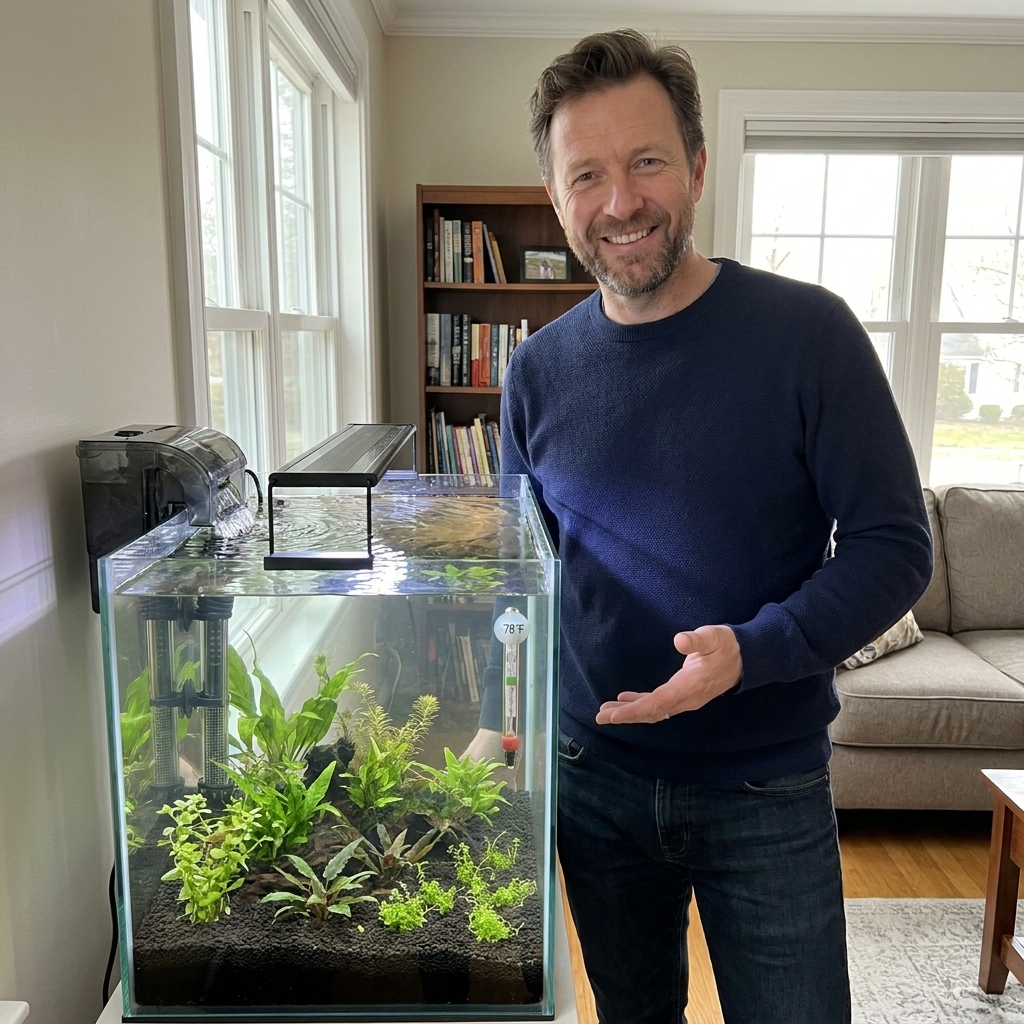
Quick tank size reality check: “20-gallon” can mean two common footprints. A 20-gallon long is usually about 30 inches long, while a 20-gallon high is usually about 24 inches long. The long version is generally easier for communities because the extra horizontal space reduces territorial collisions and improves schooling behavior.
Before you choose: simple rules
- Stick to one centerpiece fish. Most showy species get territorial with their own kind in a 20-gallon, even if the store tank looked calm.
- Build cover and sight breaks. Driftwood, tall stems, and broad-leaf plants help the centerpiece feel secure and reduce chasing.
- Match water needs first, colors second. If your tap water is hard and alkaline, you will have an easier time with some fish than others.
- Choose tankmates that occupy different lanes. Top-dwellers plus midwater schoolers plus bottom fish works better than everyone competing for the same zone.
- Plan for a lid. Many centerpiece fish can and will jump when startled. A snug cover solves a lot of heartbreak.
- Quarantine if you can. Some centerpiece fish, especially gouramis and rams, are commonly sold with hidden issues that show up after the stress of transport.
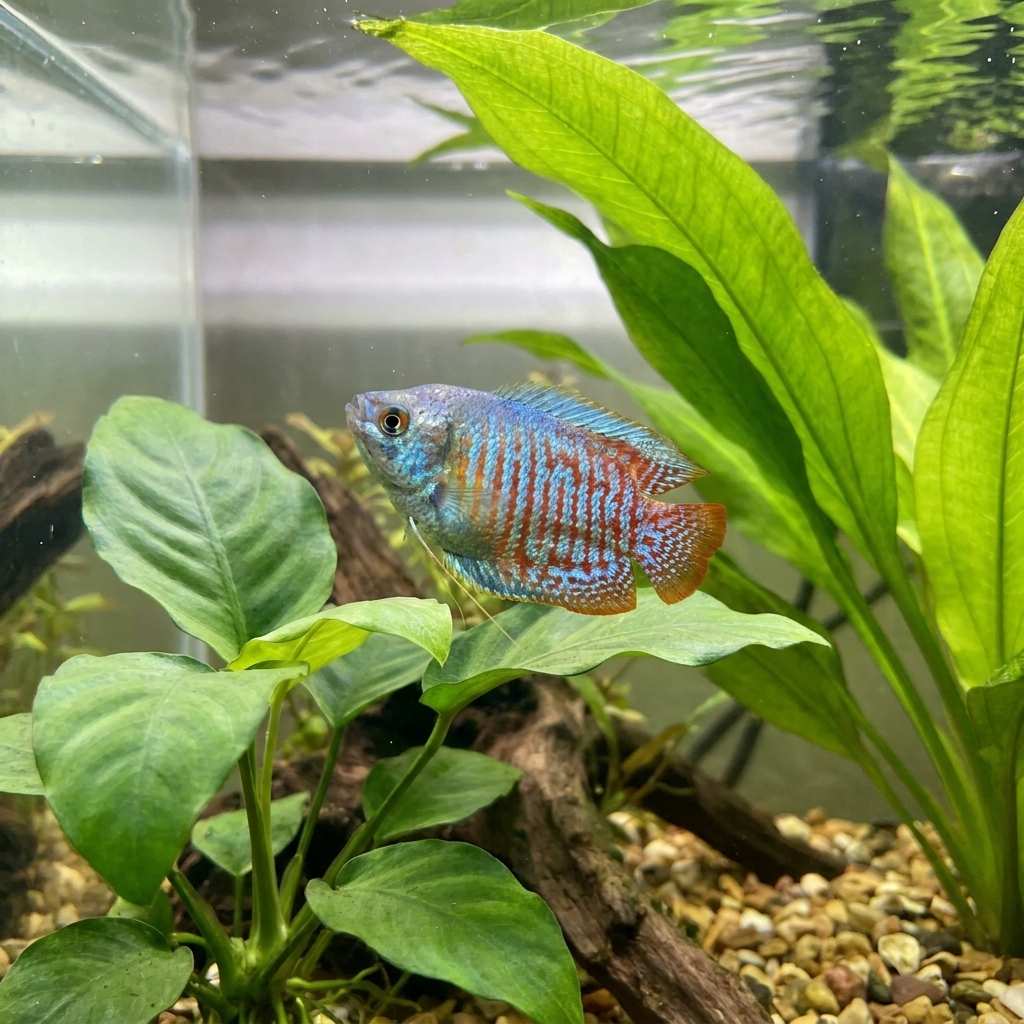
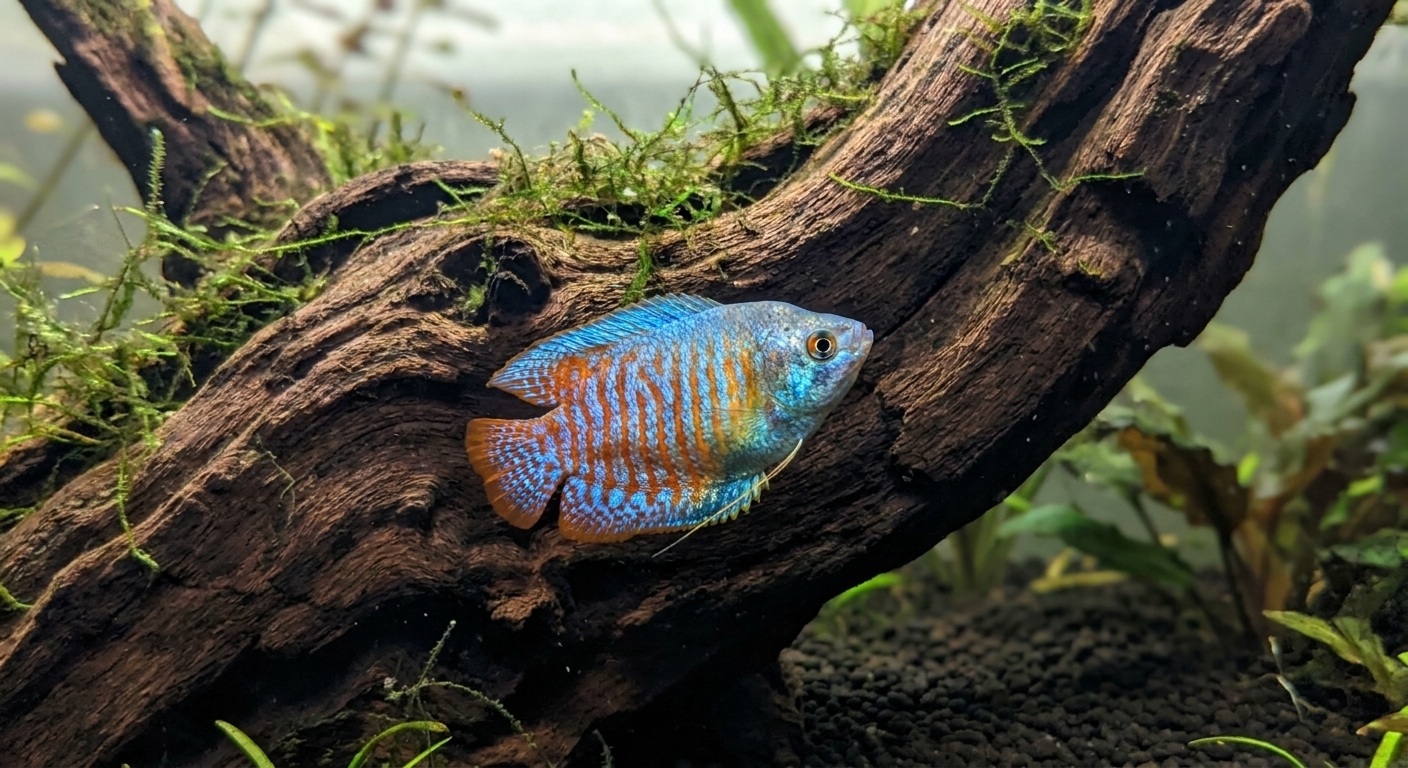
1) Dwarf gourami (Trichogaster lalius)
If you want a classic centerpiece that constantly patrols the mid to upper water and looks like it was painted by hand, the dwarf gourami is hard to beat. A healthy male is bold, interactive, and tends to “pose” in the open once he claims the tank.
Name note: You may also see dwarf gourami listed as Colisa lalia. Many modern references place it in Trichogaster, but both names show up in the hobby.
Why it works
- Perfect scale: Big enough to be a focal point, small enough for a community.
- Top-half presence: Great if your schoolers live midwater and your bottom crew does their own thing.
- Plant-friendly: Loves floating plants and broad leaves to rest under.
Care snapshot
- Adult size: about 3 to 3.5 inches
- Temperament: generally peaceful, can be pushy with similar-shaped fish
- Water: about 74 to 82°F; pH roughly 6.5 to 7.5 (stable matters more than perfect)
- Flow: gentle to moderate, they appreciate calm areas near the surface
Best tankmate ideas
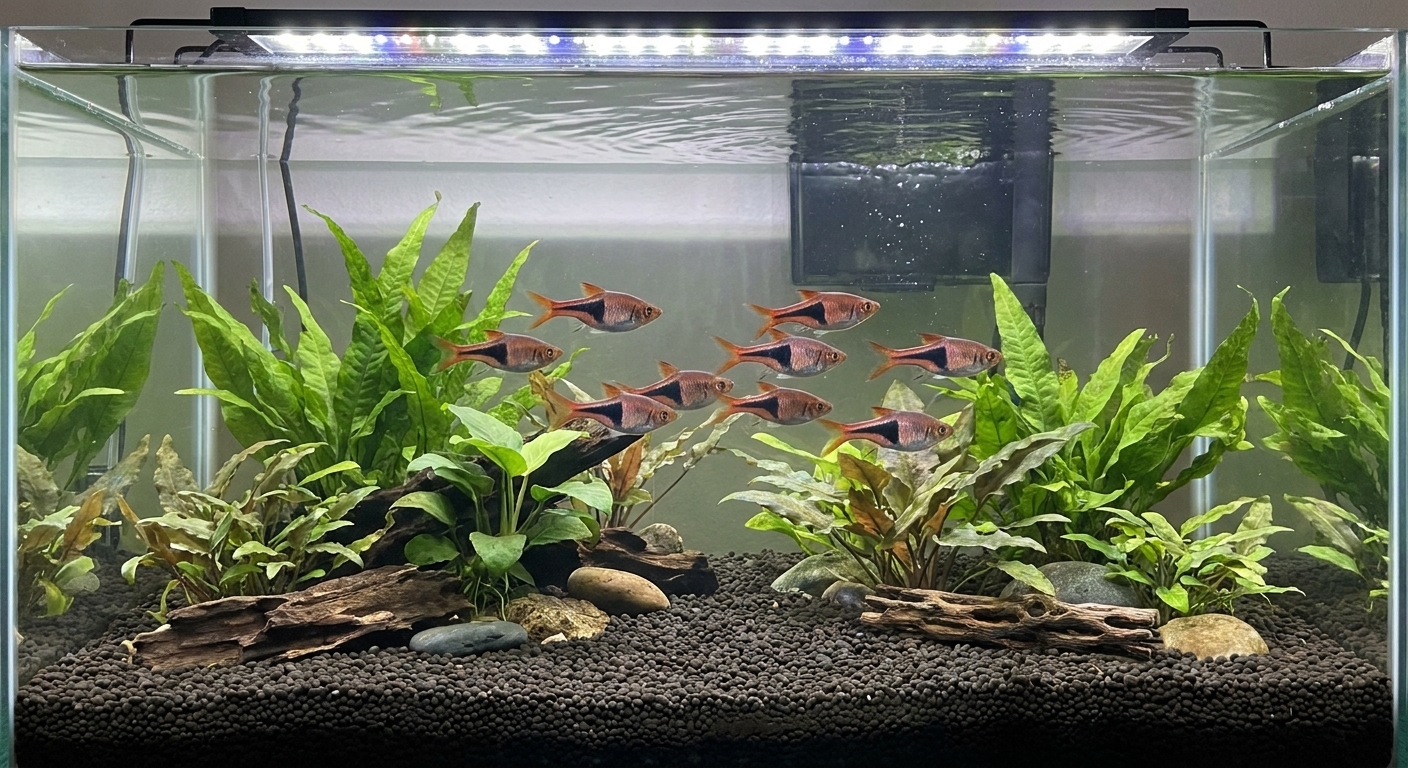
- Small, calm schooling fish: ember tetras, harlequin rasboras, glowlight tetras
- Bottom crew: corydoras (choose one species and keep a proper group), snails, or a small group of otocinclus in a mature tank
Shrimp and snail notes
Snails are usually fine. Shrimp depend on the individual fish and how planted the tank is. Adults often do okay in dense cover, but baby shrimp are always at risk.
Watch-outs
Dwarf gouramis are one of those fish where sourcing matters a lot. Some lines show up runty or seem to struggle with recurring infections and general weakness after the stress of shipping. Buy from a reputable shop and avoid fish that look thin, clamp fins, or breathe hard. Also, in a 20-gallon, avoid mixing in other gourami species or other male labyrinth fish unless you really know what you are doing with temperament and layout.
2) German blue ram (Mikrogeophagus ramirezi)
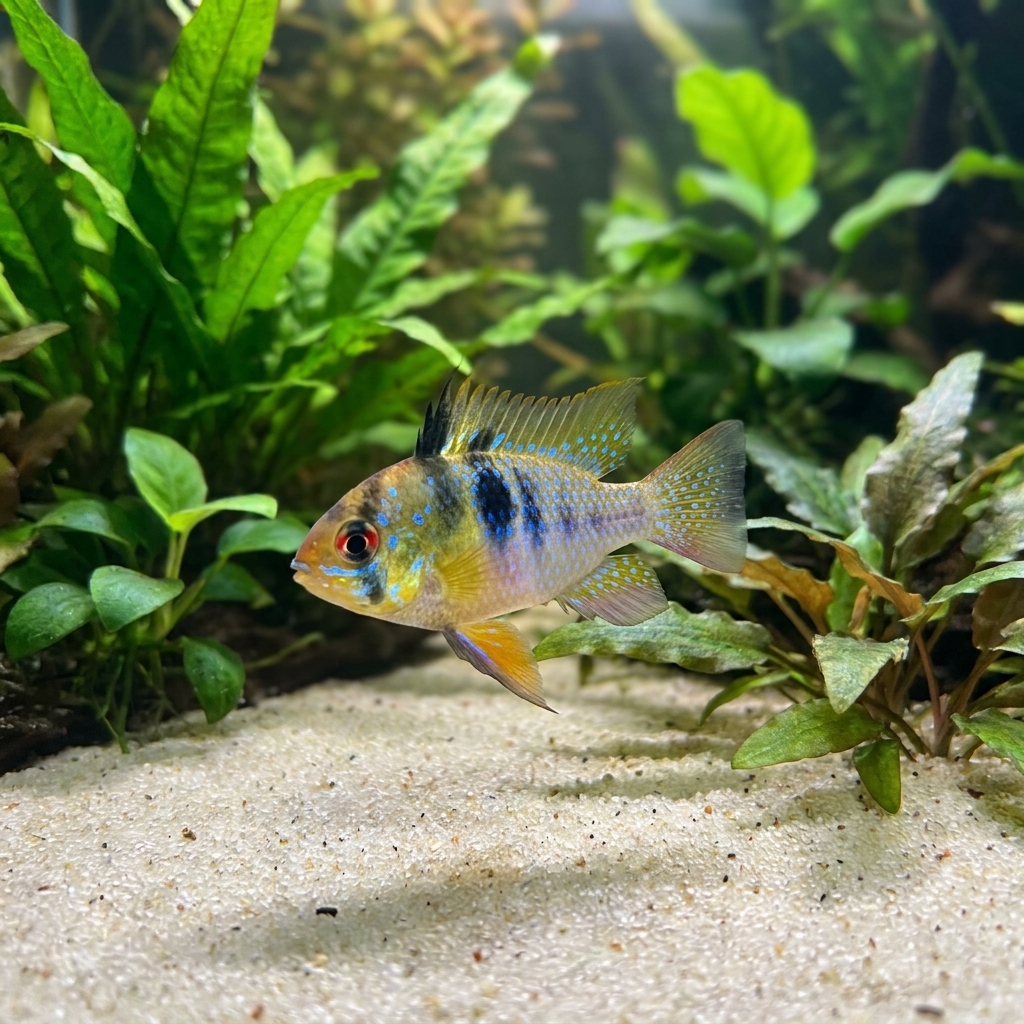
Nothing says “centerpiece” like a healthy German blue ram in a planted tank. The shimmering blues, the confident posture, and that curious cichlid intelligence make rams feel like a pet, not just a fish.
Why it works
- Small cichlid, big personality.
- Does well as a solo star. A single ram often settles in and becomes very visible.
- Planted-aquascape friendly. They may sift sand, but they are not plant destroyers.
Care snapshot
- Adult size: about 2.5 to 3 inches
- Temperament: peaceful for a cichlid, but territorial around a chosen spot
- Water: warm and clean is non-negotiable, typically about 80 to 84°F; low ammonia and nitrite always, low nitrate strongly preferred
Best tankmate ideas
- Warm-water schoolers: cardinal tetras, rummy-nose tetras (only if your tank is stable and well-filtered)
- Bottom fish: choose warm-tolerant corydoras like Corydoras sterbai, or a small group of otocinclus in a mature tank
Shrimp and snail notes
Most snails are safe. Shrimp are a mixed bag. A ram may ignore adult shrimp, but it can absolutely hunt babies.
Watch-outs
Rams are less forgiving of new tank swings than most community fish. If your tank is under a couple of months old, or you struggle to keep nitrates down, pick a hardier centerpiece first. Also note that sustained higher temps narrow your tankmate list. Many common cory species, like C. aeneus and C. paleatus, prefer cooler water long-term.
3) Bolivian ram (Mikrogeophagus altispinosus)
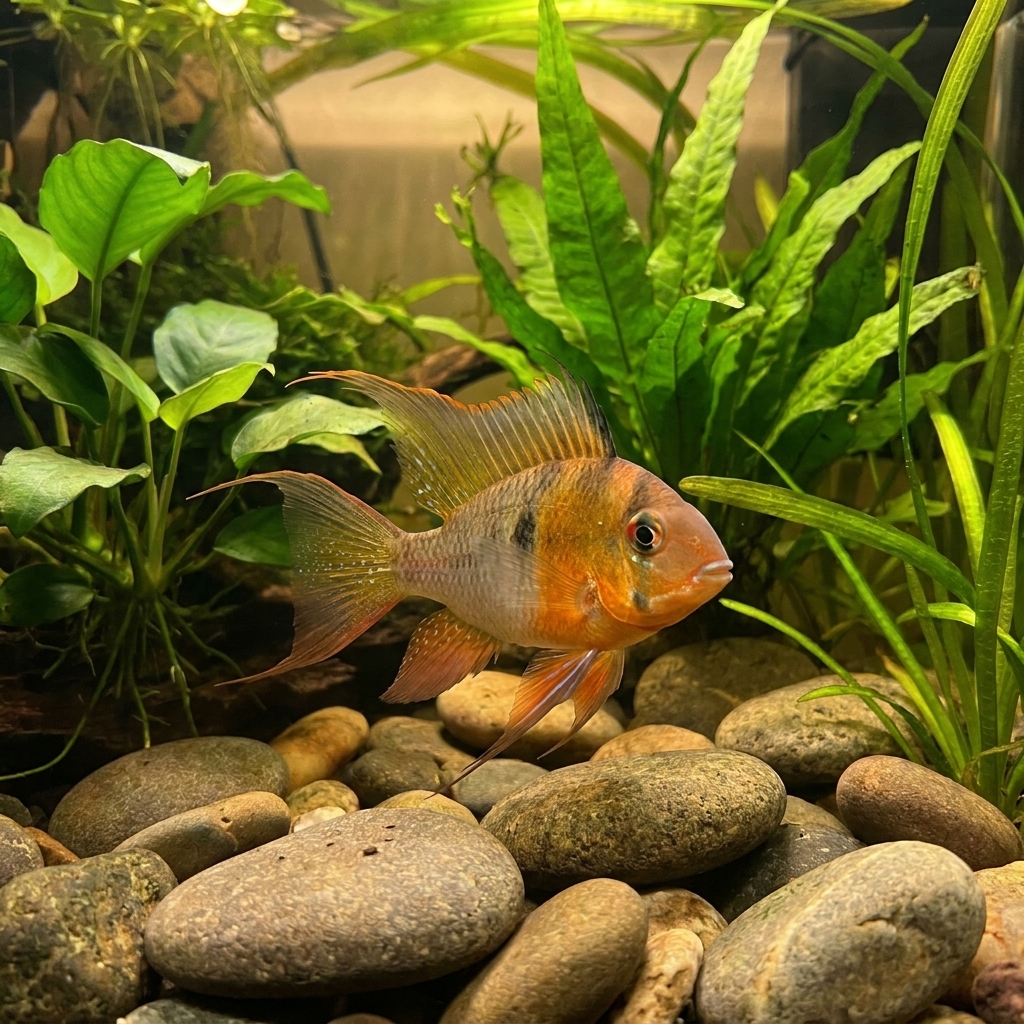
If you love the idea of a ram but want a fish that usually tolerates a wider range of real-world community conditions, the Bolivian ram is my go-to recommendation. It is still striking, just in a subtler, earthy way with elegant fins and a calm presence.
Why it works
- Hardier than many blue rams.
- More temperature-flexible. Often does fine in the mid to upper 70s, which opens up more tankmate options.
- Excellent behavior in communities. Less high-strung in my experience.
Care snapshot
- Adult size: about 3 to 3.5 inches
- Temperament: peaceful, can defend a small territory
- Water: about 74 to 80°F; prefers clean, oxygen-rich water
Best tankmate ideas
- Rasboras and tetras that like similar temps: harlequins, black neons, lemons
- Bottom: corydoras (sand is ideal), kuhli loaches if you provide hiding places
Shrimp and snail notes
Snails are typically fine. Shrimp can work in heavily planted tanks, but assume baby shrimp are on the menu.
Watch-outs
They like to sift. If your substrate is sharp gravel, you are asking for mouth wear and stress. Fine sand or smooth, small-grain substrate is the safer choice.
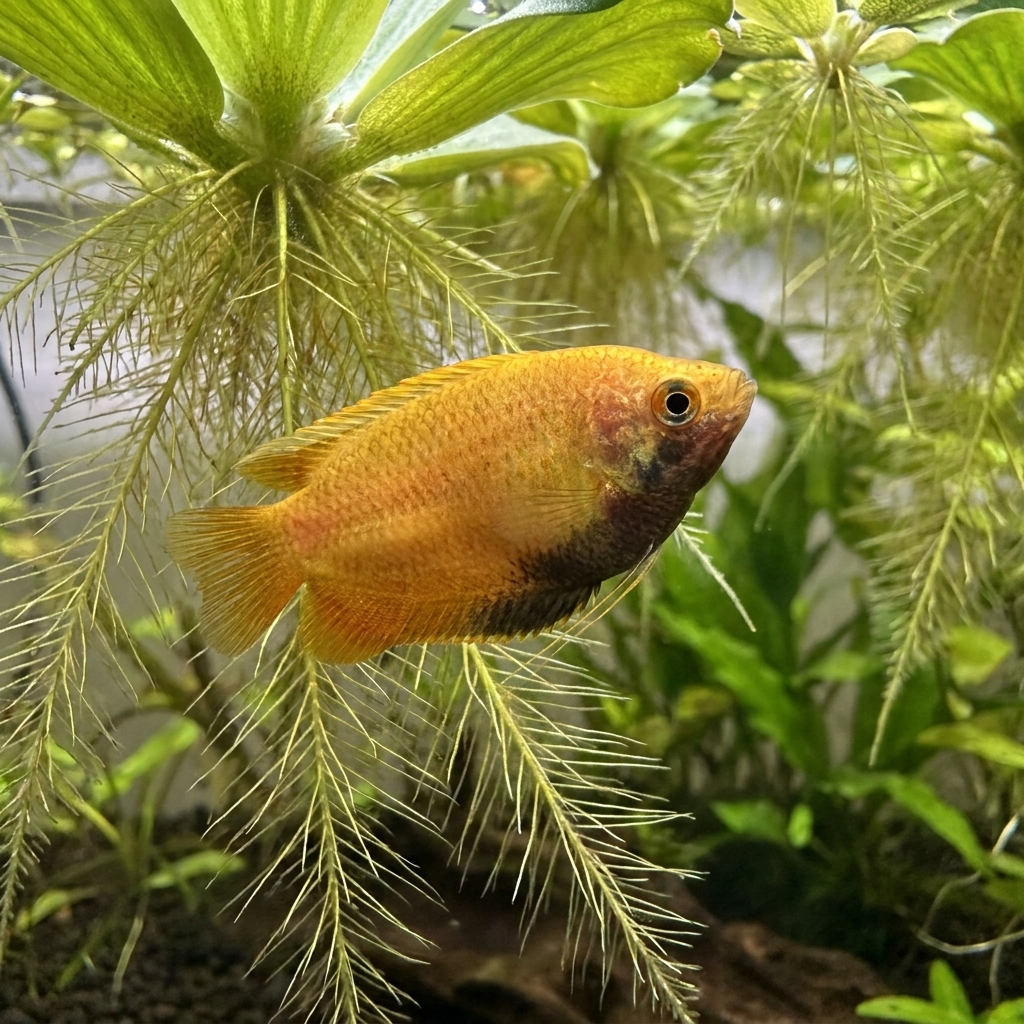
4) Honey gourami (Trichogaster chuna)
Honey gouramis do not always get called “striking” until you see a settled male glowing gold with a deep, inky-black throat. Their real superpower, though, is temperament. In a community tank, a honey gourami often gives you that centerpiece presence without the drama.
Why it works
- Gentle centerpiece choice. Great for shy tankmates.
- Ideal for planted tanks. Likes calm flow and cover.
- Smaller footprint. Leaves more bioload budget for schooling fish.
Care snapshot
- Adult size: about 2 inches
- Temperament: very peaceful
- Water: about 74 to 82°F; does best with stable parameters and low stress
- Flow: gentle is best, especially if they build bubble nests
Best tankmate ideas
- Small, non-nippy schoolers: chili rasboras, ember tetras, celestial pearl danios (if temps align)
- Bottom: corydoras, small snails, shrimp in well-planted tanks (still not a guarantee, but honeys are among the safer gouramis)
Shrimp and snail notes
Snails are fine. Shrimp often do well with honeys in a heavily planted tank, but baby shrimp are always a risk with any fish that can fit them in its mouth.
Watch-outs
Do not confuse honey gouramis with thick-bodied “gold” gouramis sold under vague labels. True honey gouramis stay small and have a more streamlined shape. Also avoid fin-nippers like some tiger barbs or overly boisterous tankmates that will keep them hiding.
5) Apistogramma (one male)
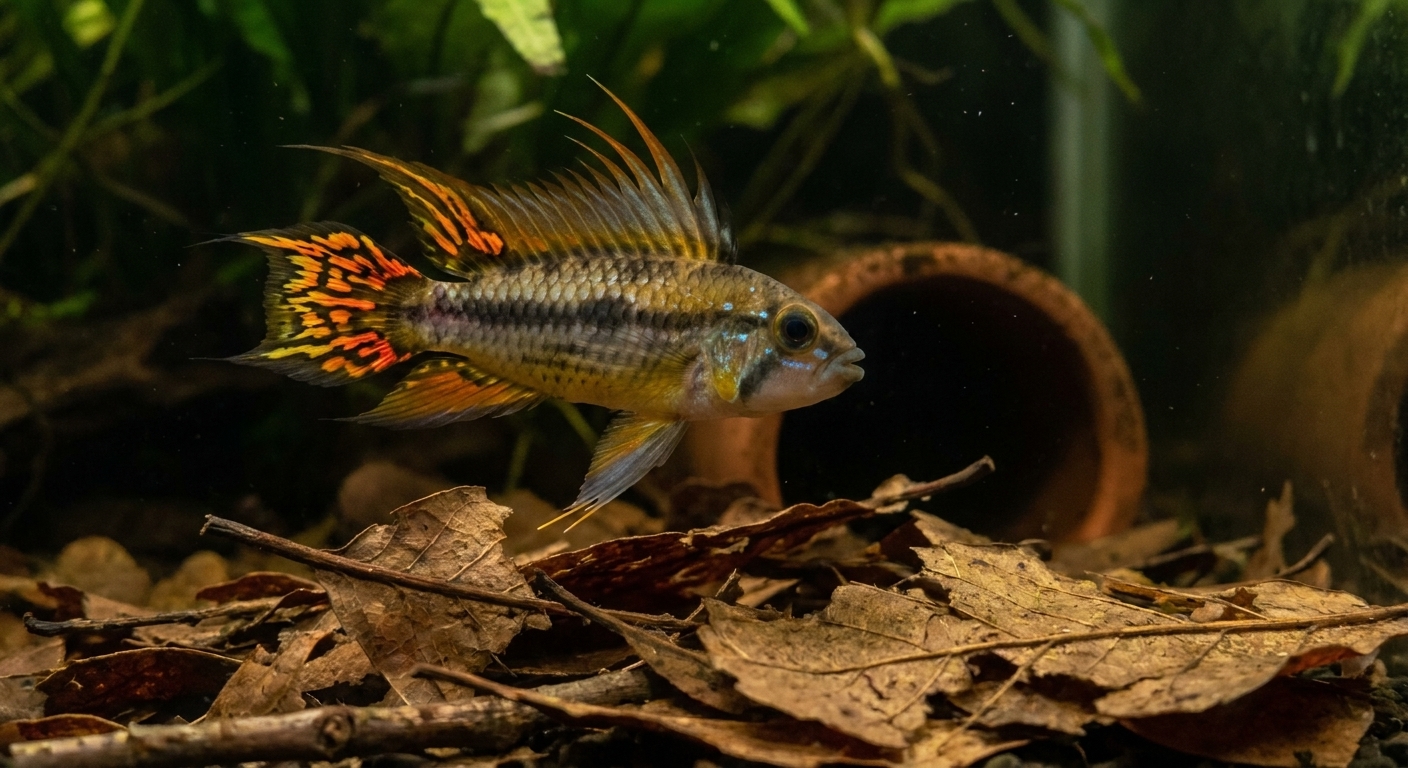
If you want a centerpiece fish that feels like a tiny, intelligent predator without the chaos of bigger cichlids, a single male Apistogramma can be breathtaking. They weave through hardscape, claim caves, and flash color when they feel secure.
Because there are many species and trade names, I recommend buying based on adult size, temperament, and seller transparency. A common community-friendly choice is Apistogramma cacatuoides (Cockatoo apisto) and similar-sized relatives.
Why it works
- Big personality, modest size.
- Looks incredible in natural scapes. Leaf litter, caves, and wood make them shine.
- Great bottom-half centerpiece. Perfect if you want the focal fish to live among the hardscape.
Care snapshot
- Adult size: commonly 2.5 to 3.5 inches (varies by species)
- Temperament: semi-territorial, especially around caves
- Water: typically about 75 to 82°F; many prefer softer, slightly acidic water, but captive-bred fish can adapt if conditions are stable
Best tankmate ideas
- Midwater schoolers: pencilfish, smaller tetras, rasboras
- Bottom companions: choose carefully. Corydoras can work, but too many bottom fish can stress an Apisto that wants its own territory.
Shrimp and snail notes
Snails are usually safe. Shrimp are risky, especially babies. If shrimp are a priority, I would not choose an Apisto as the star.
Watch-outs
Avoid pairing a male Apistogramma with other bottom-territory fish in cramped layouts. Give at least two caves and strong sight breaks.
Bonus: hardwater-friendly centerpiece
If your tap water is hard and alkaline and you do not want to fight it, here is a centerpiece concept that plays nicer with those conditions.
6) Male livebearer as the star (platy or molly)
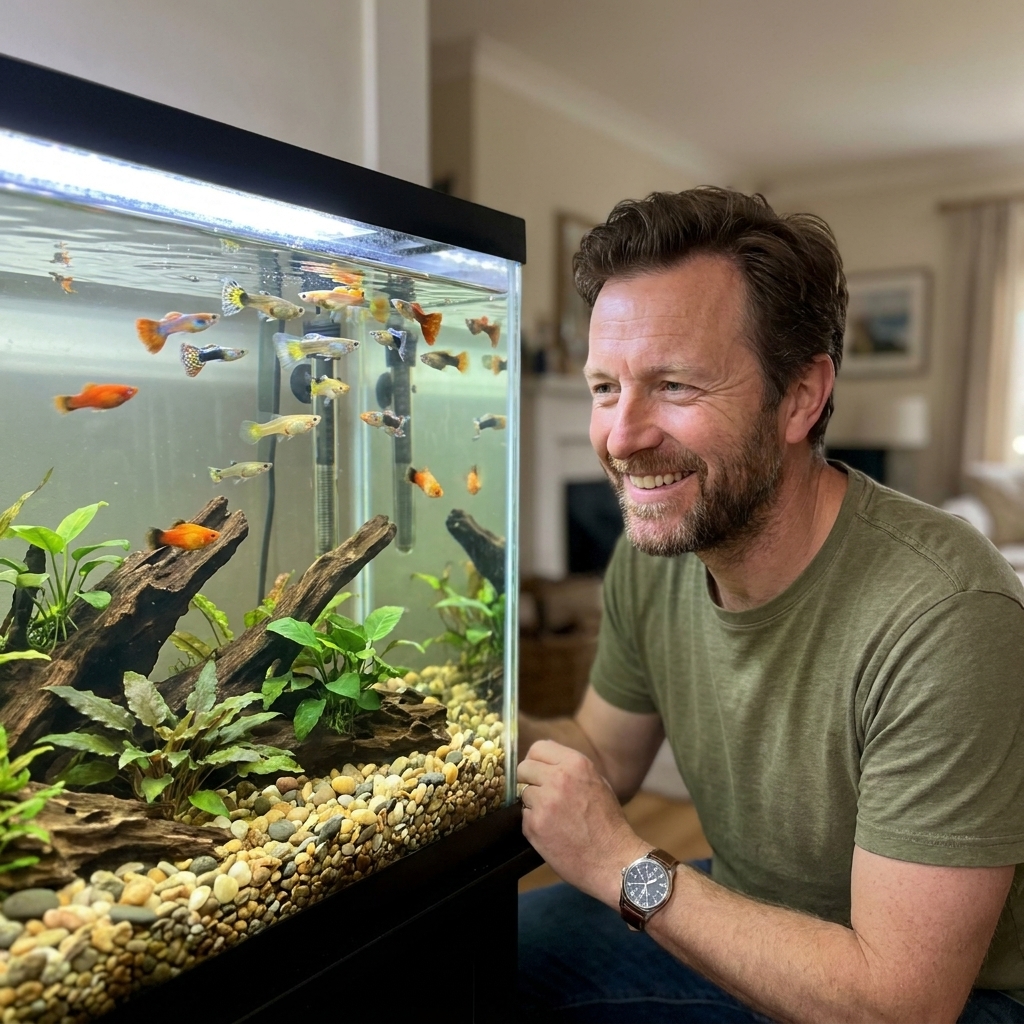
This is not the “rare fish” answer, but it is one of the most practical. A single, high-quality male platy or molly can be a bold, constantly moving centerpiece in hard water, and you avoid the constant breeding you get when you add females.
Care snapshot
- Adult size: platies about 2.5 to 3 inches; mollies commonly 3 to 4.5 inches depending on type
- Temperament: peaceful, active
- Water: generally does well in harder, more alkaline water; stable and clean still matter
Best tankmate ideas
- Schoolers that often handle harder water well: zebra danios, white cloud mountain minnows (if your temperature is not too warm), or a larger group of platies instead of mixing water types
- Bottom: snails, and corydoras only if your temperature plan matches the species you choose
Shrimp and snail notes
Snails are fine. Shrimp can work, but babies may get picked off in open tanks.
Watch-outs
Some mollies, especially larger sailfin types, are a better fit for 29 gallons and up. If you are working with a 20-gallon high, stick to smaller, standard mollies or choose a platy instead. For tankmates, do not assume most tetras and rasboras will love hard, alkaline water. Match your choices to your actual GH and KH, not just the label on the fish at the store.
Centerpiece fish I would skip
These fish are gorgeous, but they usually create compatibility problems in a typical 20-gallon community setup:
- Angelfish: outgrows a 20 and may eat small tankmates.
- Bettas (sometimes): can work, but fin-nipping and betta aggression make it a gamble unless you build the stocking plan around the individual fish.
- Bala sharks: grow far too large and need a much bigger group and tank.
- Iridescent shark and other pangasiid catfish: also outgrow a 20 by a mile and are easily stressed in small tanks.
- African cichlids: water chemistry and aggression are a mismatch for most community fish.
How to build the supporting cast
Once you pick your centerpiece, the easiest way to make the tank feel full without feeling crowded is to add:
- One schooling species (6 to 10, depending on fish size and filtration)
- One bottom group (like 6 corydoras of the same species) or a small algae crew
- Optional micro-cleanup (snails, shrimp where compatible)
If you want a few concrete combos to copy, here are three solid starting points for a typical 20-gallon long:
- Dwarf gourami + 8 ember tetras + 6 corydoras
- Bolivian ram + 8 harlequin rasboras + 6 kuhli loaches
- Honey gourami + 10 chili rasboras + 6 corydoras (or snails and shrimp if you are keeping it very gentle)
And please, do it in the right order. Let the tank cycle fully, add your schoolers or bottom group first, and introduce the centerpiece after the tank has settled. That sequence usually reduces territorial behavior because the “star” fish arrives to an already-established, calm community.
One more practical note: otocinclus can be fantastic, but they are often sensitive shippers and do best when your tank is mature enough to provide steady grazing (biofilm and algae). Do not treat them like a generic cleanup add-on for a brand-new setup.
A bristlenose pleco can be possible in a lightly stocked 20-gallon long, but adults are serious waste producers. If you go that route, plan on excellent filtration, real maintenance, and a backup plan if it gets too big or too messy. A lot of people prefer 29 gallons or larger for long-term comfort.
Quick FAQ
Can I keep two centerpiece fish in a 20-gallon?
Usually no, at least not if they fill the same role. Two gouramis, two rams, or two statement fish often turns into constant low-level chasing. If you want multiple focal points, go for one centerpiece fish and let a school of colorful nano fish provide the extra sparkle.
Should I choose a 20-gallon long or high?
If you have the option, a 20-gallon long is often easier for communities. More horizontal space means fewer territorial collisions and better schooling behavior.
What is the most common mistake with centerpiece fish?
Buying the centerpiece first and building the tank around it before the aquarium is mature. In a new tank, stress plus fluctuating parameters is the fastest way to turn a beautiful fish into a medical project.