A practical, beginner-friendly guide to cycling a freshwater aquarium. Learn the nitrogen cycle, the safest fishless cycling method, testing milestones, and ...
Freshwater aquarium guidance
Emergency Ammonia Spike: Lower Aquarium Ammonia Fast
A step-by-step emergency plan to lower aquarium ammonia quickly, protect fish, and stabilize your tank after a dangerous spike.

Written by
Oliver Bennett
Oliver Bennett is a lifelong aquarist with over 15 years of experience in freshwater tank setup, aquascaping, and fish health. Through TankRoot, he shares his passion for creating balanced underwater ecosystems, helping hobbyists of all levels build thriving, beautiful homes for their fish.
Published: October 17, 2026
•
Updated: October 17, 2026
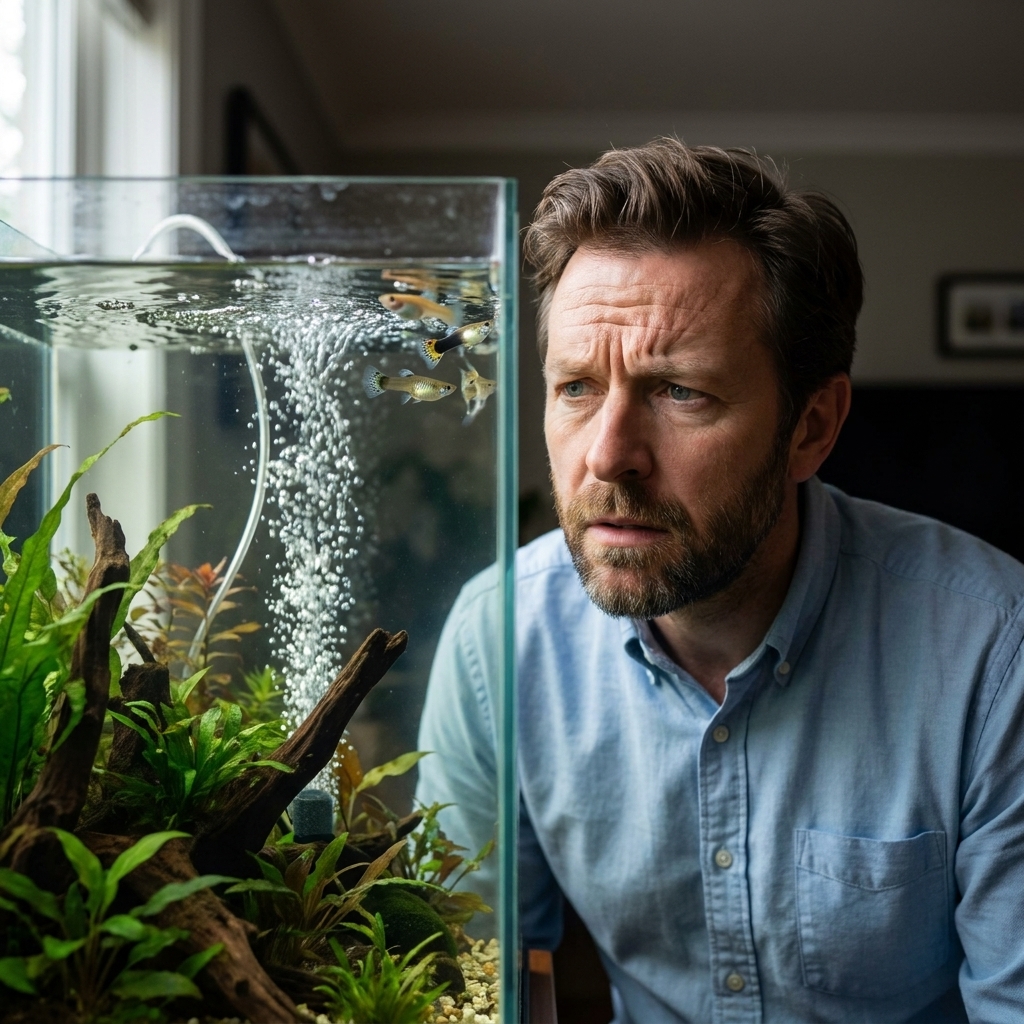
If your test just showed ammonia, or your fish are gasping at the surface, clamping fins, or acting “drunk,” treat it like a true emergency. In freshwater aquariums, ammonia can burn gills and skin quickly, and once fish are struggling to breathe you do not have time for perfect. You need fast detox, fresh water, and oxygen, then you can circle back and fix what caused the spike.
This is the same crisis plan I wish someone had handed me when I was ten, staring at a goldfish bowl that smelled “off” and thinking cloudy water was the main problem. It is not. Ammonia is.
First, confirm what you are dealing with
Ammonia vs nitrite vs “bad water”
If you have a liquid test kit, test ammonia (NH3/NH4+), nitrite (NO2-), and nitrate (NO3-) right now. If you only have strips, use them, but plan to verify with a liquid kit later.
- Ammonia in an established tank should be 0 ppm. In real life, many hobby kits show faint “trace” colors or measure total ammonia (NH3 + NH4+), so do not panic over a barely-there tint. But if you are getting a clearly measurable reading (often 0.25 ppm or higher on common kits), or fish look stressed, act immediately.
- Nitrite often rises right after ammonia starts dropping. It is also an emergency for fish.
- High nitrate is usually a slower problem, but it can stress fish and often comes with neglected maintenance.
Why pH and temperature matter right now
Ammonia exists in two forms: NH3 (toxic) and NH4+ (much less toxic). Higher pH and higher temperature push more ammonia into the toxic NH3 form. That means an ammonia reading is more dangerous at pH 8.0 than at pH 6.8, even if the number looks the same.
You do not need to do complicated math in a crisis. Just know this rule: if pH is high and your tank is warm, act even faster and be more aggressive with water changes and detoxifier.
If you have access to a free-ammonia (NH3) test or an ammonia alert badge, this is when it shines. It can help you tell the difference between “total ammonia is showing on the kit” and “free ammonia is still actively burning gills.”
The emergency plan (do these in order)
1) Add oxygen immediately
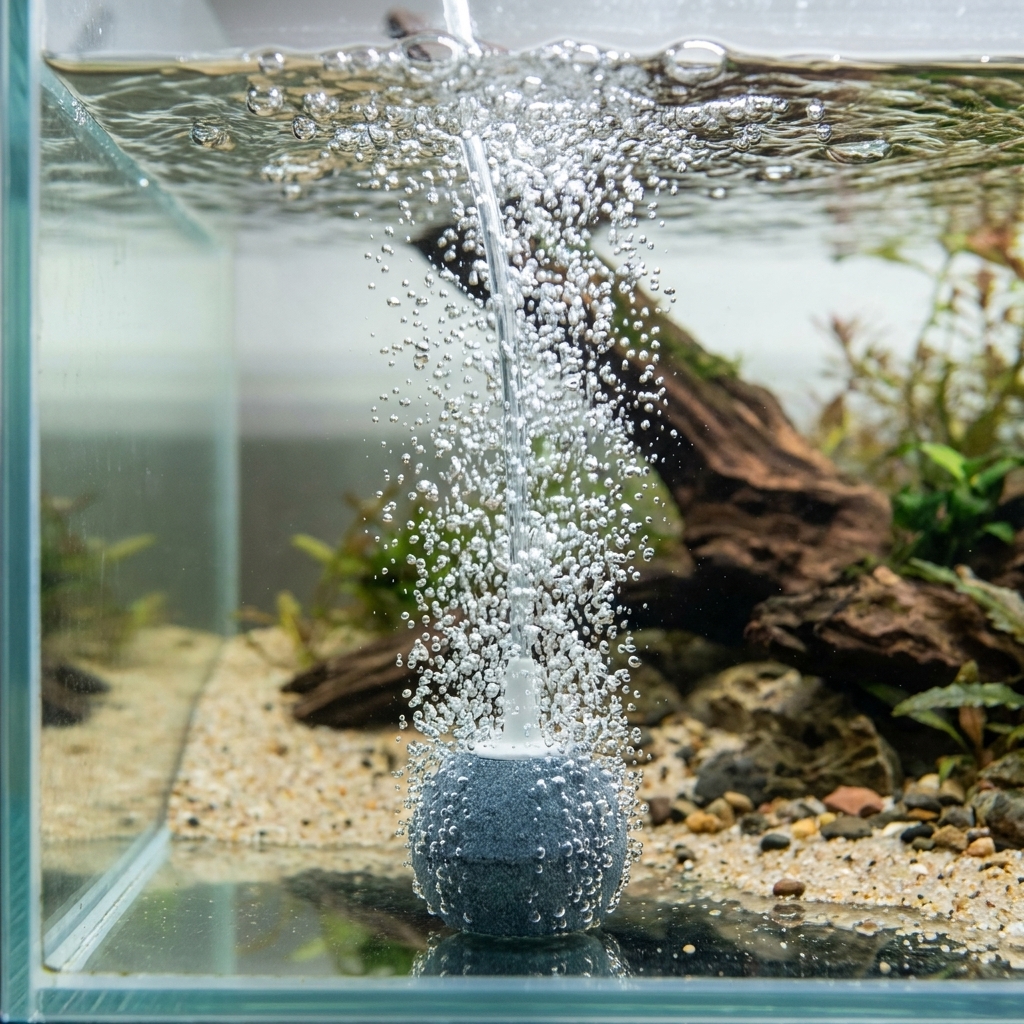
When ammonia burns gills, fish cannot exchange oxygen efficiently. The quickest “first aid” is to crank oxygen and surface agitation.
- Turn your filter output up so it ripples the surface.
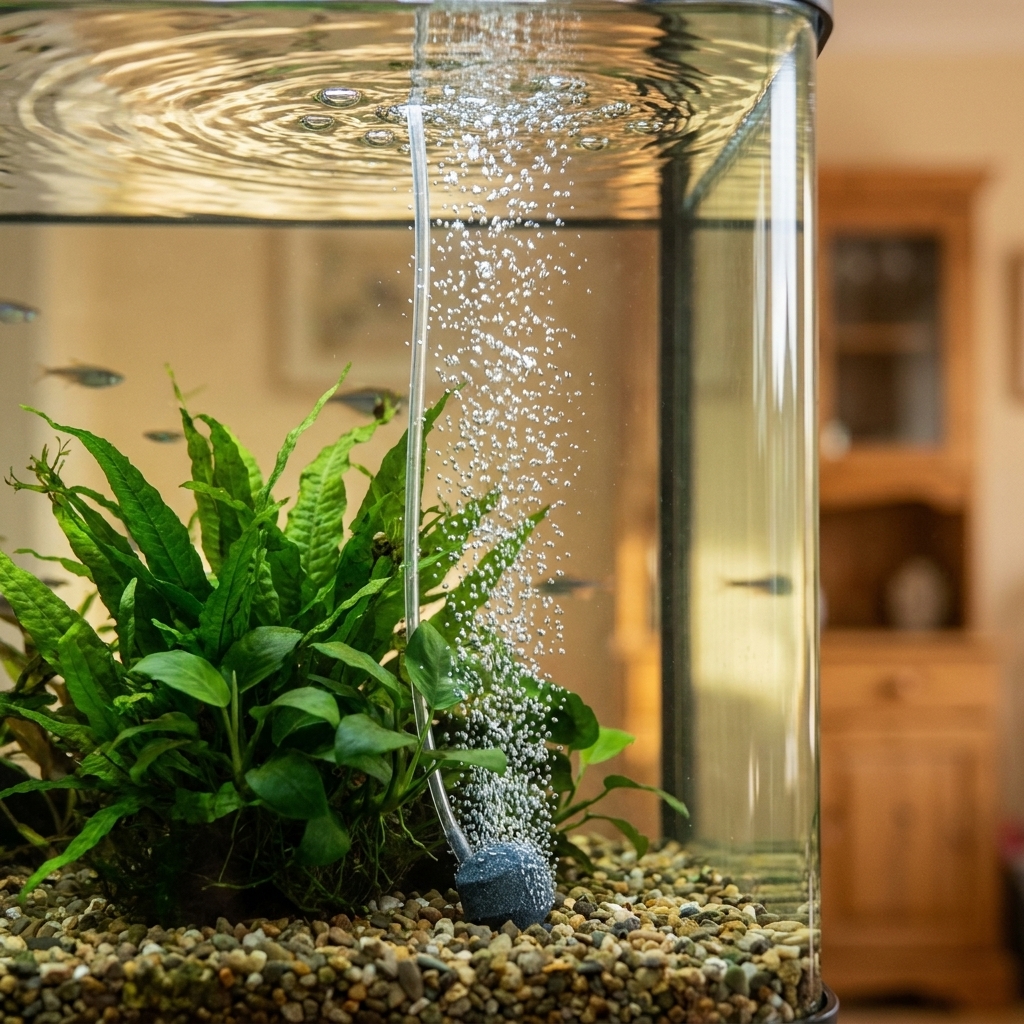
- Add an air stone or sponge filter if you have one.
- If you run CO2 for plants, turn CO2 off until fish are stable.
Oxygen does not remove ammonia, but it keeps fish alive while you remove it.
2) Stop feeding for 24 to 48 hours
This feels harsh, but it is kind. Food becomes waste, and waste becomes ammonia. Healthy fish can handle a short fast easily. Stressed fish are safer without new ammonia being added.
3) Do a large water change (now)
Water changes are the fastest way to physically remove ammonia from the system. If you are seeing fish in distress, go big.
- Do 50% right away for mild spikes.
- Do 60% to 75% if ammonia is clearly elevated (for many hobby kits, think 0.5 ppm or higher) or fish are gasping.
- If ammonia is not coming down, repeat another large change after you retest.
Always dechlorinate the new water. Never add untreated tap water. Use a conditioner that treats chlorine and chloramine. Most municipal water contains one or the other.
Chloramine note: Chloramine is chlorine bonded to ammonia. Conditioners neutralize the chlorine portion and leave the ammonia mostly in the less toxic ammonium (NH4+) form. This can make total ammonia test results look higher right after a change, even though the more dangerous free ammonia may be controlled. Keep aeration strong, keep testing, and keep doing water changes as needed.
Match temperature as closely as you can. In emergencies, stability beats perfection, but avoid shocking fish with a big temperature swing.
4) Dose an ammonia detoxifier (temporary protection)
An ammonia detoxifier can temporarily detoxify free ammonia (NH3) by converting it into a less toxic form, buying your fish breathing room while the tank catches up biologically. Different brands describe this differently, so follow the label exactly.
- Dose for the full tank volume, not just the new water, unless the product label says otherwise.
- Repeat dosing only on the schedule the label allows if ammonia persists.
Important: Detoxifiers are not a permanent fix. They are emergency medicine. You still need water changes and you still need your biological filter functioning.
Testing tip: Some ammonia tests still read “ammonia” after detoxification because they measure total ammonia (NH3 + NH4+). Some kits can also give odd or stubborn readings after certain conditioners. If you can, use a free-ammonia test or alert badge for clarity. Otherwise, judge by fish behavior, pH and temperature, and repeat testing over time while you keep doing partial water changes.
Medication note: If you are treating with meds, read labels and use caution when stacking products. When in doubt, prioritize oxygenation and water changes and avoid mixing “all-in-one” chemicals unless you know they are compatible.
5) Remove the source of ammonia
Most spikes are caused by something adding ammonia faster than the bacteria can process it.
- Find and remove dead fish or invertebrates. Check behind hardscape and inside caves.
- Remove decaying plant matter and any uneaten food.
- Vacuum obvious waste pockets from the substrate during your water change.
- If you recently added a lot of fish, assume the tank is over capacity for the current biofilter.
If the tank smells rotten or “sewer-like,” take that seriously. That odor usually means heavy organic decay.
6) Protect your beneficial bacteria
During an ammonia emergency, it is very common for hobbyists to accidentally destroy the biofilter while trying to “clean everything.” That turns a spike into a full crash.
- Do not replace filter media right now.
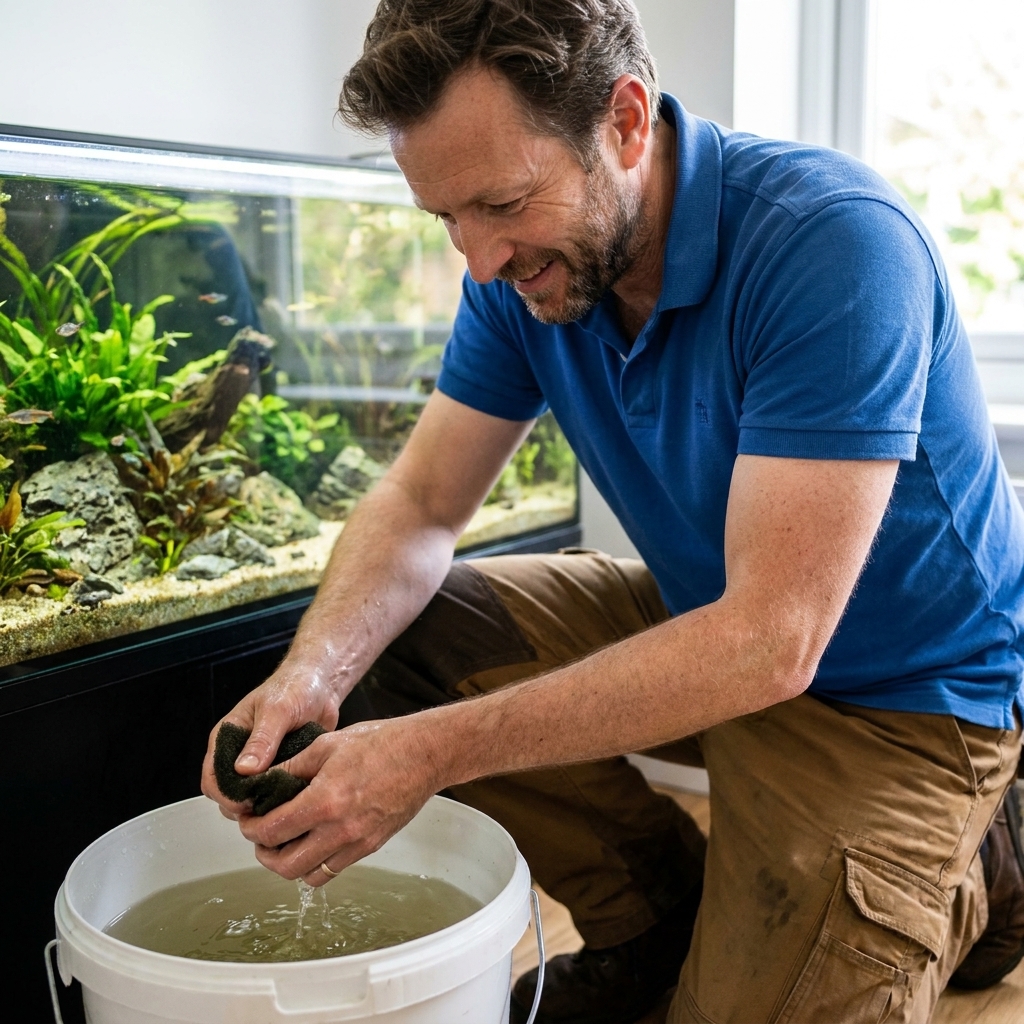
- Do not rinse media under tap water. If it is clogged, swish it gently in a bucket of removed tank water.
- Keep the filter running 24/7. Beneficial bacteria need oxygenated flow.
7) Retest and repeat until stable
Retest ammonia and nitrite after your water change and detoxifier dose. In a true emergency, I like this rhythm:
- Retest in 1 to 2 hours if fish were in distress.
- Then retest morning and night until both ammonia and nitrite are consistently at zero.
If ammonia or nitrite is still present, do another large water change and redose detoxifier as directed. If you are using a detoxifier and your total-ammonia test looks “stuck,” focus on fish behavior and consider a free-ammonia test if you can get one.
How low does ammonia need to be?
In a cycled freshwater aquarium, the goal is simple: 0 ppm ammonia and 0 ppm nitrite at all times.
During a crisis in a tank that is still cycling or has crashed, your short-term goal is: keep fish safe today by lowering toxic exposure. That means reducing ammonia with large water changes, temporarily detoxifying free ammonia, and maximizing oxygen.
Common causes of sudden ammonia spikes
New tank that never fully cycled
This is the most common scenario I see from big-box advice: “Set it up today, add fish tomorrow.” If your tank is new, ammonia is often simply the nitrogen cycle playing out without enough bacteria yet.
Fix: Continue doing water changes to protect fish, use detoxifier as needed, and keep the filter seeded and running. Consider adding established biomedia from a trusted, disease-free tank, or use a reputable bottled bacteria product to help seed the filter.
Overfeeding or missed maintenance
Extra food plus trapped waste becomes ammonia fast, especially in gravel that has not been vacuumed in a while.
Fix: Feed smaller portions, remove uneaten food, and get on a steady maintenance schedule with partial water changes and gentle substrate vacuuming.
Dead livestock or rotting plants
One dead snail hidden behind a rock can push a small tank into an ammonia emergency overnight.
Fix: Remove the source immediately, then water change and detoxify.
Filter crash or lost bacteria
Replacing cartridges, washing media under the tap, letting the filter sit off for hours, or a long power outage can wipe out nitrifying bacteria.
Fix: Stop replacing media, run the filter continuously, and re-seed if needed. Treat it like a fish-in cycle for a while.
Medication and “anti-bacterial” products
Some treatments can harm biofilter bacteria, especially when overdosed.
Fix: Watch ammonia and nitrite closely during treatment. Increase aeration and be ready for extra water changes.
What not to do
- Do not add more fish. Not even “hardy” fish.
- Do not deep-clean everything at once. You will strip bacteria and make the spike worse.
- Do not chase pH with chemicals. Rapid pH swings can be as dangerous as the ammonia. Focus on dilution, detox, and oxygen.
- Do not rely on “clear water” products. Clear water can still be toxic.
Special situations
If your tap water uses chloramine
Use a conditioner that explicitly treats chloramine. After dechlorination, your tests may show higher total ammonia because the ammonia portion is left behind mostly as ammonium (NH4+). That can be confusing in a tank already struggling.
What helps: Detoxifier dosed for the full tank volume (as directed), strong aeration, and repeat testing. If you can, check free ammonia (NH3) rather than total ammonia.
If fish still gasp after water changes
Consider other oxygen-killers that can show up alongside ammonia problems:
- High water temperature
- Overnight CO2 buildup in heavily planted tanks
- Clogged filter reducing flow
- Bacterial bloom consuming oxygen
Increase surface agitation aggressively. If the room is hot, aim a fan across the surface to help cooling through evaporation.
If you have a planted tank
Healthy plants do consume some ammonia, but they cannot outpace a major spike caused by decay, overstocking, or a biofilter crash. Treat the emergency the same way. Once fish are safe, you can tune lighting and fertilization again.
A simple 48-hour rescue schedule
Right now (first hour)
- Increase aeration and surface agitation
- Stop feeding
- Remove obvious decay or dead livestock
- Do a 50% to 75% water change with dechlorinated, temperature-matched water
- Dose ammonia detoxifier for full tank volume (as directed)
Later today
- Retest ammonia and nitrite
- If either is still above zero, do another large water change
Tomorrow
- Retest morning and evening
- Water change as needed to keep ammonia and nitrite controlled
- Feed nothing, or a very small amount only if fish are stable
Day 2
- Continue testing
- Resume very light feeding only when ammonia and nitrite are controlled
- Start addressing root cause: stocking, feeding, filter media practices, maintenance routine
- Consider adding extra biofiltration, like an established sponge filter or seeded media, to help the system catch up
FAQ
Is any amount of ammonia safe?
In a stable, cycled freshwater aquarium, you want zero. In practice, test kits have noise and many measure total ammonia. If you detect a clearly measurable reading (often 0.25 ppm or higher on common kits), or your fish show stress, treat it seriously and act. It is far easier to prevent gill damage than to heal it.
Can I do a 100% water change?
For most beginners and most stocked home aquariums, a 100% change is risky because of temperature and parameter shock, and because you can stir up debris. It is usually safer to do two back-to-back large changes (for example 70% now, then 50% later) while keeping temperature stable and using a proper dechlorinator. In some controlled setups, like a bare-bottom hospital tank with carefully matched water, a near-100% change can be appropriate.
Will ammonia detoxifier mess up my cycle?
Used correctly, it does not “kill” your cycle. It gives your biofilter time to catch up. Still, you need to keep testing because the underlying production of waste has not stopped unless you fix the cause.
Why is ammonia high right after I cleaned my filter?
If you replaced media or rinsed it under tap water, you likely removed or killed a large portion of nitrifying bacteria. The fix is to stop swapping media, keep the filter running, and treat the tank as if it is cycling again for a bit, with water changes and detoxifier as needed.
When to move fish
If ammonia will not come down despite repeated large water changes, or if you had a full biofilter crash, a temporary, cycled holding setup can save lives. A spare sponge filter that has been running in an established tank is pure gold in moments like this.
If you do move fish, prioritize:
- Heated, dechlorinated water matched to temperature
- Strong aeration
- Established filtration if possible
- Very light feeding until stable
Even if you cannot move everyone, reducing bioload in any way helps. Pause new additions, consider separating the most sensitive fish first, and think about rehoming if the tank is simply overstocked for the long term.
The calm takeaway
An ammonia spike feels like a disaster because it often hits fast. But you can absolutely turn it around with three fundamentals: fresh water, temporary detoxification, and oxygen. Once your fish are breathing normally again, you can slow down, identify why ammonia appeared, and rebuild the kind of stable, quietly balanced aquarium that makes this hobby so meditative in the first place.