A practical, beginner-friendly guide to cycling a freshwater aquarium. Learn the nitrogen cycle, the safest fishless cycling method, testing milestones, and ...
Freshwater aquarium guidance
Top 7 Nano Fish for 5-Gallon Planted Tanks
A realistic, fish-first list of the best nano species for 5-gallon freshwater planted tanks, including care notes, stocking guidance, and common mistakes to avoid.

Written by
Oliver Bennett
Oliver Bennett is a lifelong aquarist with over 15 years of experience in freshwater tank setup, aquascaping, and fish health. Through TankRoot, he shares his passion for creating balanced underwater ecosystems, helping hobbyists of all levels build thriving, beautiful homes for their fish.
Published: October 17, 2026
•
Updated: October 17, 2026
A five-gallon planted tank is one of the most peaceful little corners you can build in this hobby. It is also one of the easiest setups to overload by accident. In a small volume of water, temperature changes faster, waste concentrates faster, and a single mistake (overfeeding, an uncycled filter, missed water changes, or nitrates already present in your tap water) can set you up for rising nitrates over time. In other words, “sky-high nitrates” is usually not a one-day surprise. It is what happens when input stays high and export stays low.
So let’s do this the fish-first way. The species below are the ones I reach for when someone asks, “What can I keep in a 5-gallon planted tank that will actually thrive?” Some are true schooling fish that do best in bigger groups (and therefore bigger tanks). In those cases, I will be blunt about what a 5-gallon can realistically support.
Before you choose fish
- Cycle first. A fully cycled biofilter is non-negotiable. A mature planted tank helps, but plants do not replace biological filtration. Nano fish are tiny, not indestructible.
- Test the basics. In a nano tank, a simple liquid test kit for ammonia, nitrite, and nitrate saves fish.
- Remember true water volume. “5 gallons” is the tank size on the box. After substrate, rocks, wood, and leaving space at the top, your actual water volume is usually less. Stock and feed like it is less.
- Pick one plan. In 5 gallons, you generally choose either one small group of micro fish or one standout fish (like a betta) plus inverts. Mixing plans usually ends in chronic stress.
- Assume stability beats gadgets. A small heater, gentle filtration, and consistent water changes outperform fancy additives.
- Heavily planted helps, but does not replace maintenance. Plants buffer waste. They do not erase it.
Minimum gear
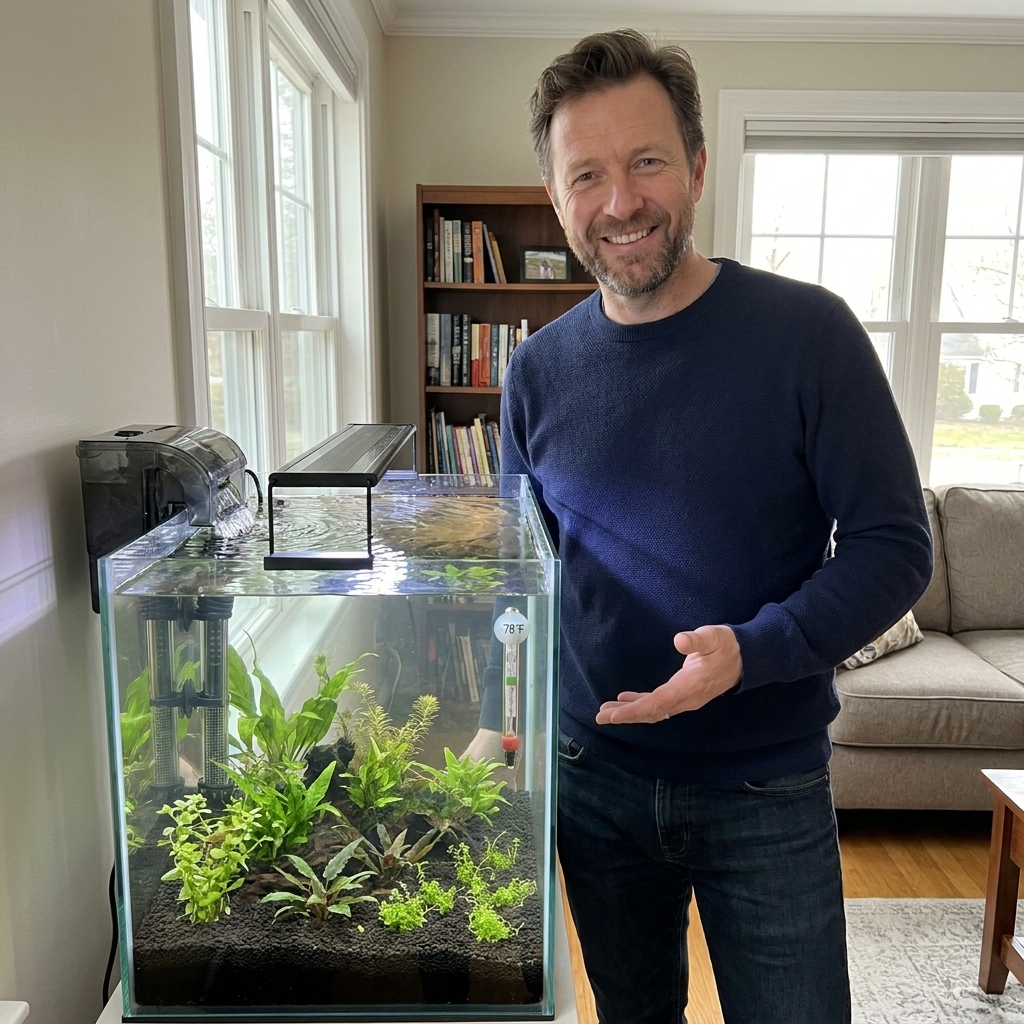
- Heater: Most homes benefit from a small, reliable heater for tropical fish. For a 5-gallon, many hobbyists use roughly 25–50 watts, but always match to your room temperature and verify with a thermometer. In tiny volumes, heater quality matters. A failing thermostat can overheat a nano tank fast, so buy the reliable one.
- Filter: Gentle is the goal. A small sponge filter or a baffled hang-on-back works well.
- Lid: Strongly recommended for every nano tank, and absolutely required for known jumpers.
- Water changes: A good baseline is 30–50% weekly, then adjust based on feeding, stocking, and rising nitrates over time.
Top 7 nano fish
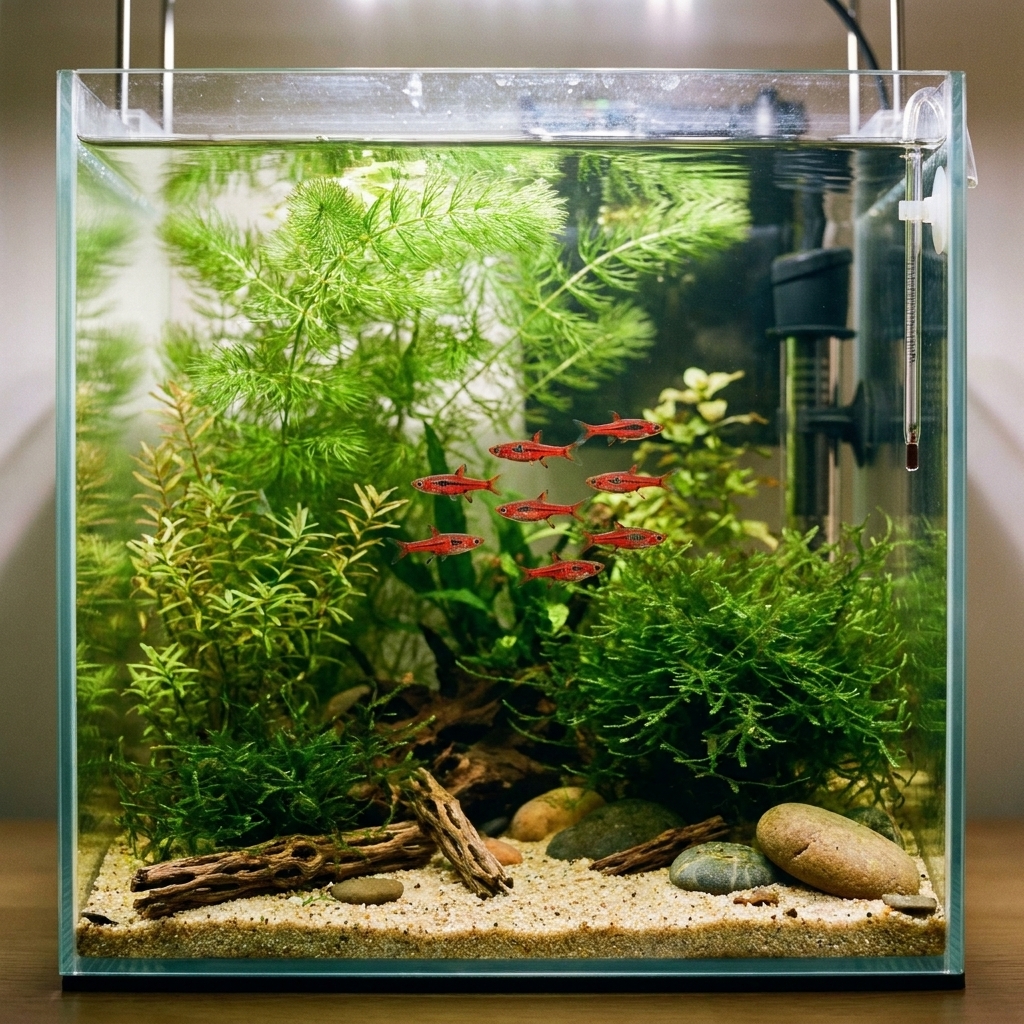
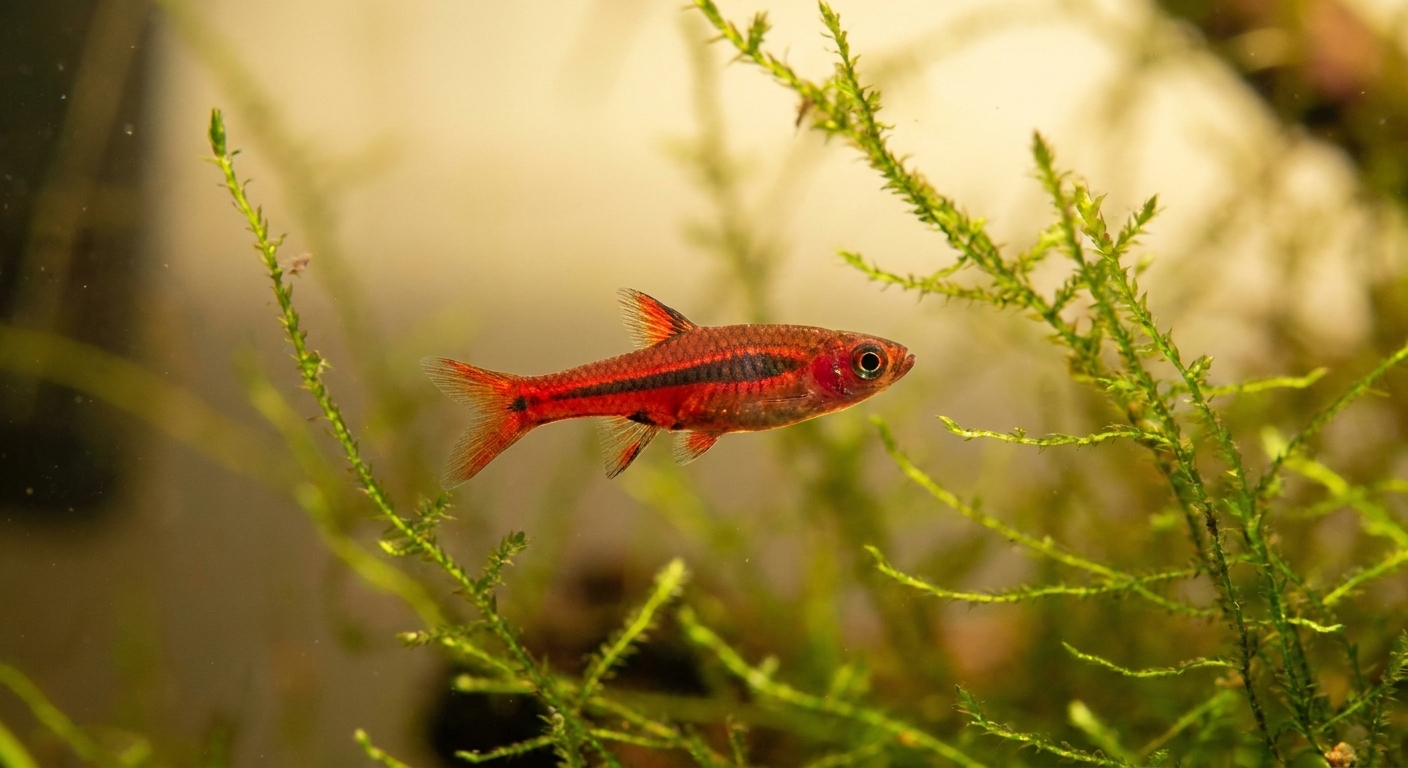
1) Chili Rasbora (Boraras brigittae)
If your vision is a tiny red “spark” school weaving through stems, chili rasboras are the classic pick. They are peaceful, plant-friendly, and they look unreal against bright green moss and fine-leaf plants.
- Best kept: In a group. More is better for confidence and natural behavior.
- 5-gallon reality check: A 5-gallon is the bare minimum. In a mature, heavily planted tank with gentle filtration, I would keep this to roughly 5–8. If you want the more natural-looking 10+ group, a 10-gallon is the kinder default.
- Water preferences: Soft to moderately soft, stable temperature, low to moderate flow.
- Feeding tip: Offer small foods (baby brine shrimp, micro pellets, crushed flakes). They have tiny mouths.
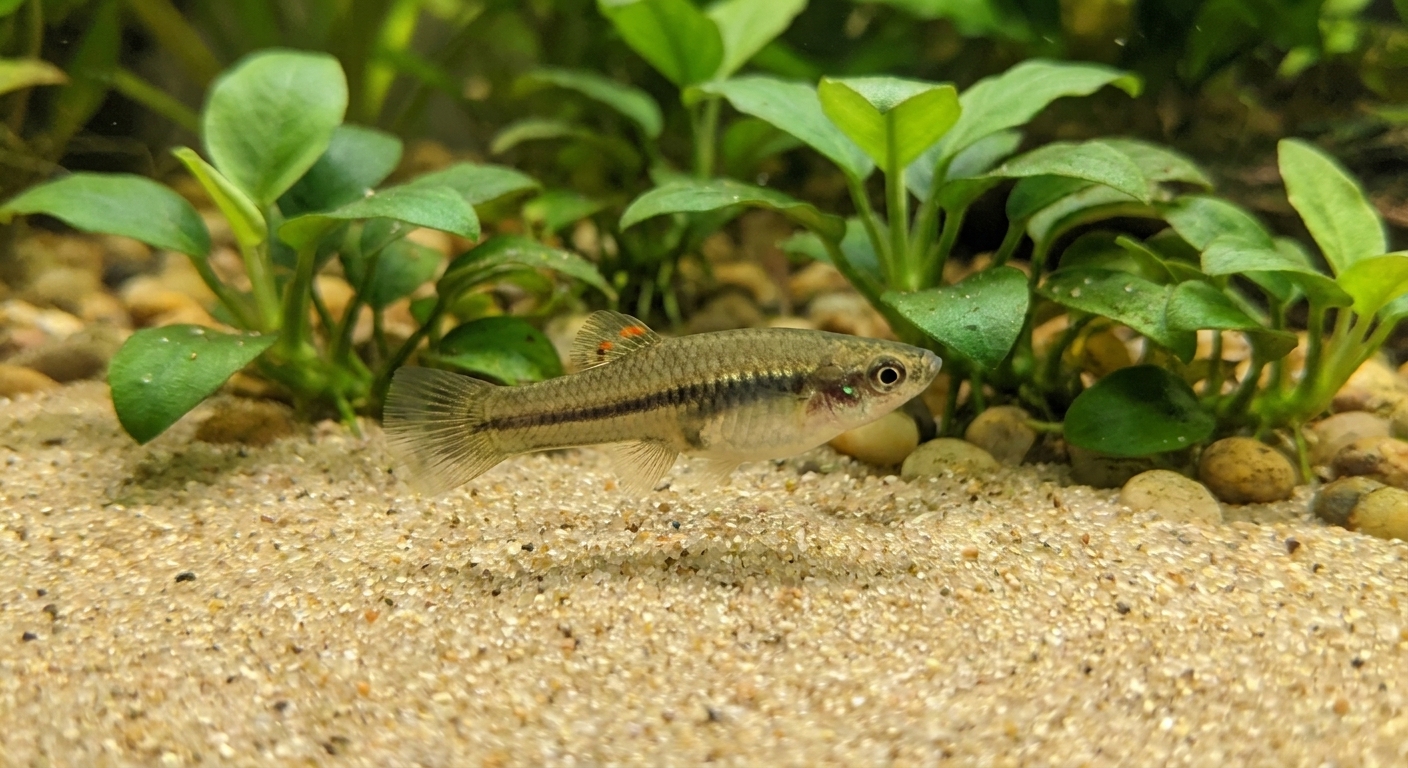
2) Least Killifish (Heterandria formosa)
Least killifish are one of my favorite “tiny tank” fish because they stay small, act naturally in planted setups, and do not require tropical-hot temperatures. They are livebearers, but unlike guppies or mollies they are genuinely nano sized.
- Best kept: Small group with a higher female-to-male ratio to reduce chasing.
- Why they fit 5 gallons: Low bioload for a fish, curious behavior, and they use the whole tank without needing long open swimming lanes.
- Temperature note: They often do well in the low to mid 70s°F. Do not assume they need betta-level heat.
- Behavior note: Some lines can be a little pushy in tight quarters. Dense planting and line-of-sight breaks keep everyone calmer.
- Water note: They often do well in moderate to harder water and are generally flexible if parameters are stable.
- Watch out for: Surprise fry. Dense plants (guppy grass, moss) increase survival rates.
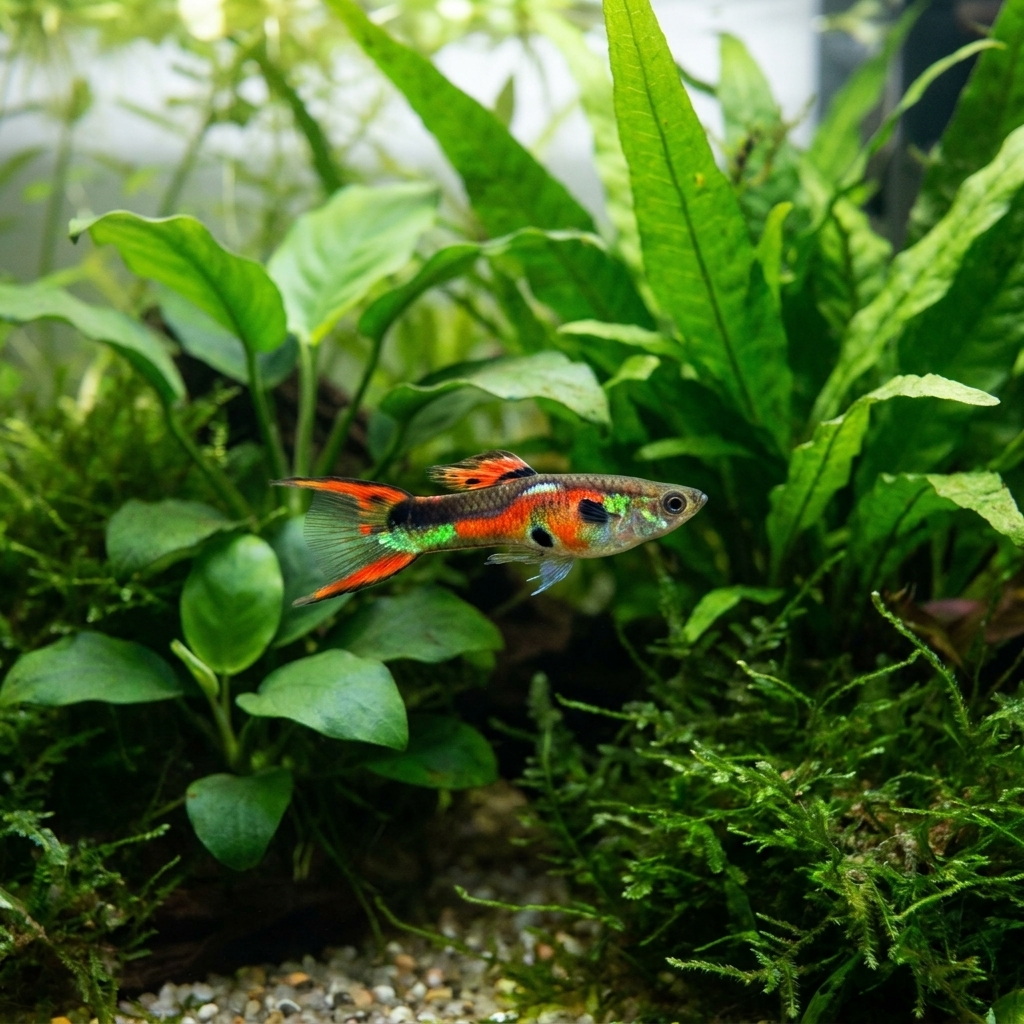
3) Endler’s Livebearer (Poecilia wingei)
Endlers are energetic, colorful, and constantly doing something. In a 5-gallon planted tank, they can work well if you stock thoughtfully. The biggest mistake is buying a mixed group and ending up with a population boom.
- Best kept: Male-only in nano tanks to avoid constant breeding and overstocking.
- 5-gallon reality check: Because they are so active, keep the group modest. For most 5-gallon setups, think roughly 3–5 males, heavily planted, and be ready to scale back if chasing ramps up. If you want this fish with less micromanaging, a 10-gallon is often easier.
- Temperament: Peaceful, but males can spar. Give them lots of cover and sight breaks.
- Plant compatibility: Excellent. They look great in stem-plant jungles.
- Filtration note: They appreciate clean water and steady oxygenation, but avoid blasting flow.
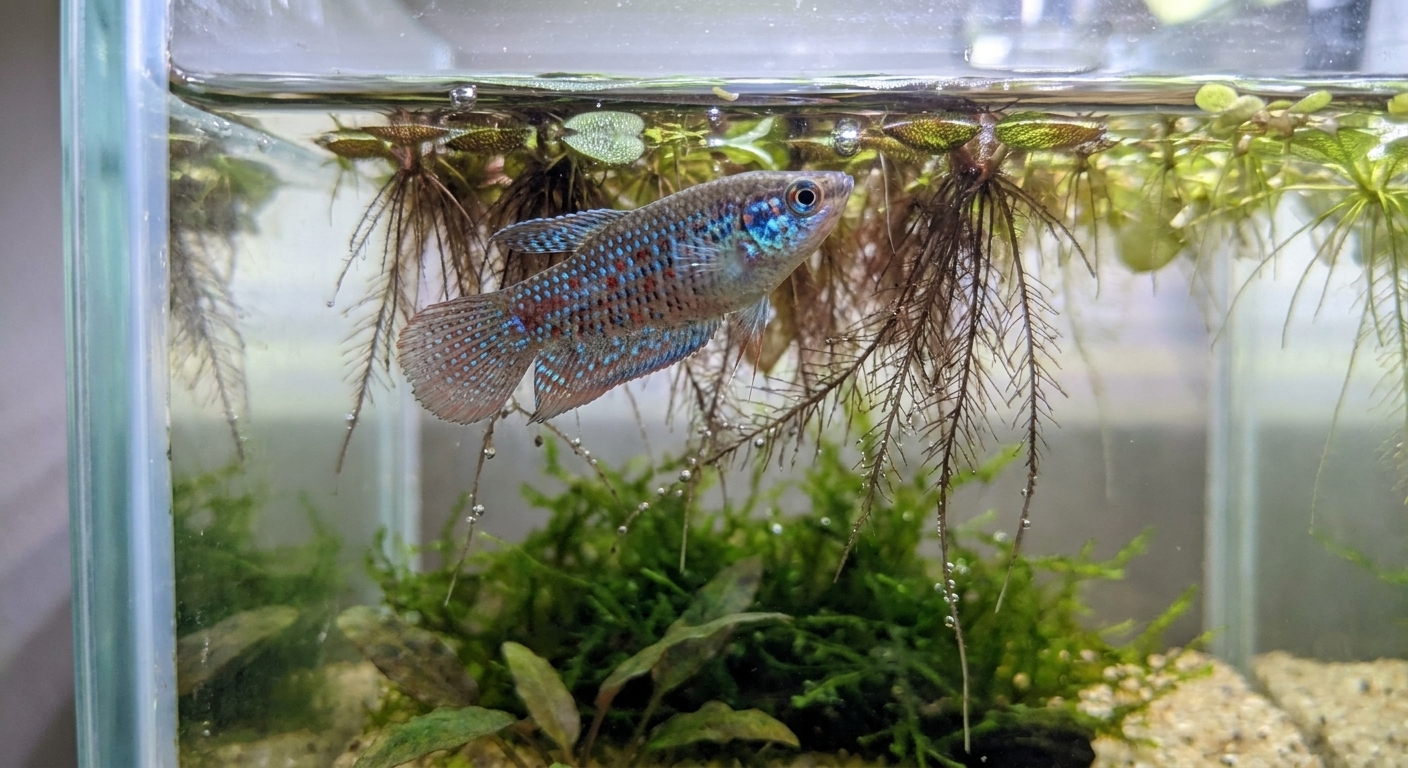
4) Sparkling Gourami (Trichopsis pumila)
If you want a fish with real personality in a small planted tank, sparkling gouramis are a fascinating option. They stay small, prefer cover, and can make soft croaking sounds during social displays.
- Best kept: In 5 gallons, I consider this a single-specimen fish.
- 5-gallon reality check: Treat 5 gallons as the minimum, and only for a calm, heavily planted setup. Many keepers will prefer 10 gallons and up. For pairs or groups, a larger tank is the better plan.
- Tank setup: Heavily planted with floating plants and calm areas.
- Feeding: They do best with a mix of small frozen or live foods plus quality micro pellets.
- Compatibility: Avoid hyperactive tankmates in small tanks. They can become shy and stressed.
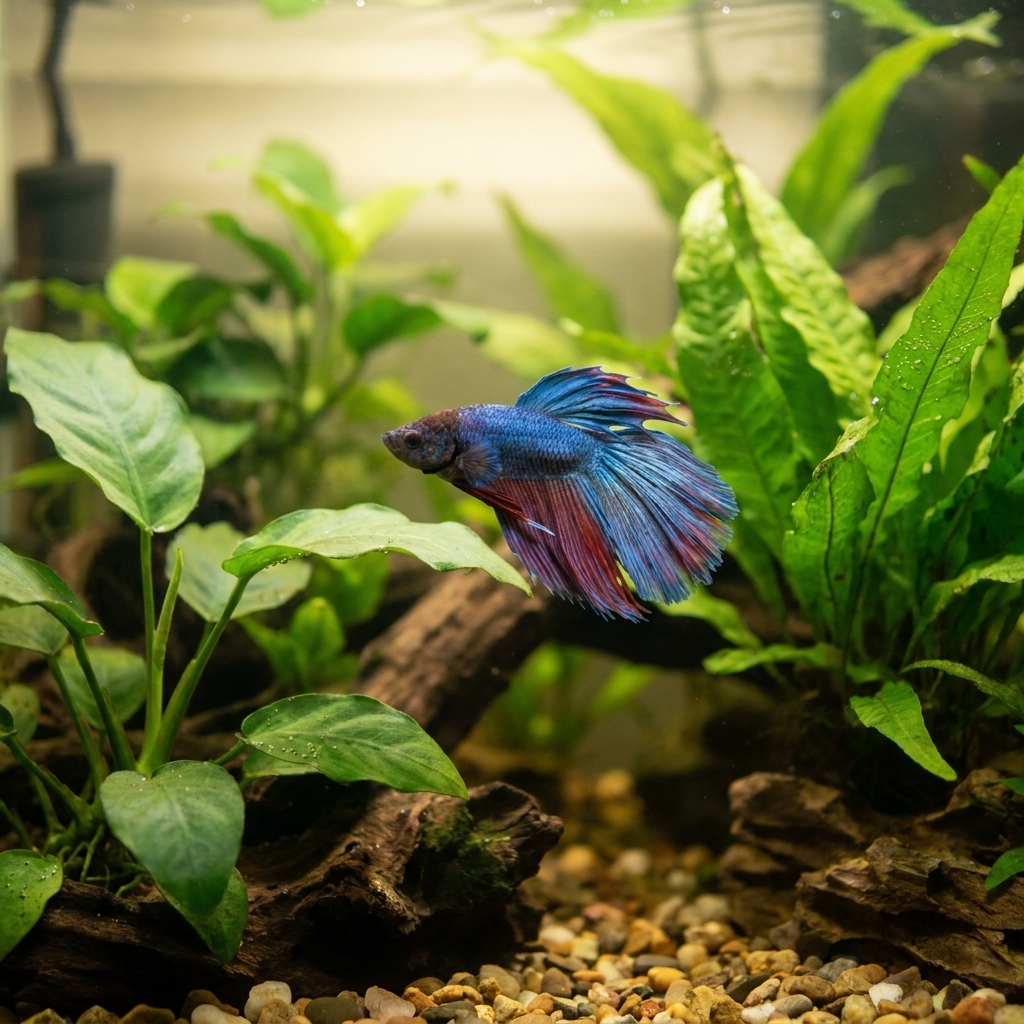
5) Betta (Betta splendens)
I am including bettas because a properly heated, filtered, planted 5-gallon is genuinely one of the best “starter” homes for a single betta. The key word is single. In a tank this size, your betta is the centerpiece.
- Best kept: One betta, optionally with a few snails or shrimp if the betta allows it.
- Compatibility warning: Shrimp with bettas is temperament-dependent. Even “peaceful” bettas sometimes decide shrimp are expensive snacks, especially in sparse tanks. Heavy planting improves your odds.
- Tank setup: Gentle flow (especially for long-finned males), lots of resting leaves (anubias, java fern), and surface cover from floaters.
- Heater note: Bettas are tropical. Stable heat matters more in 5 gallons than in big tanks.
- Common mistake: Adding “just a few” extra fish. Most 5-gallon betta tanks are overstocked within a month.
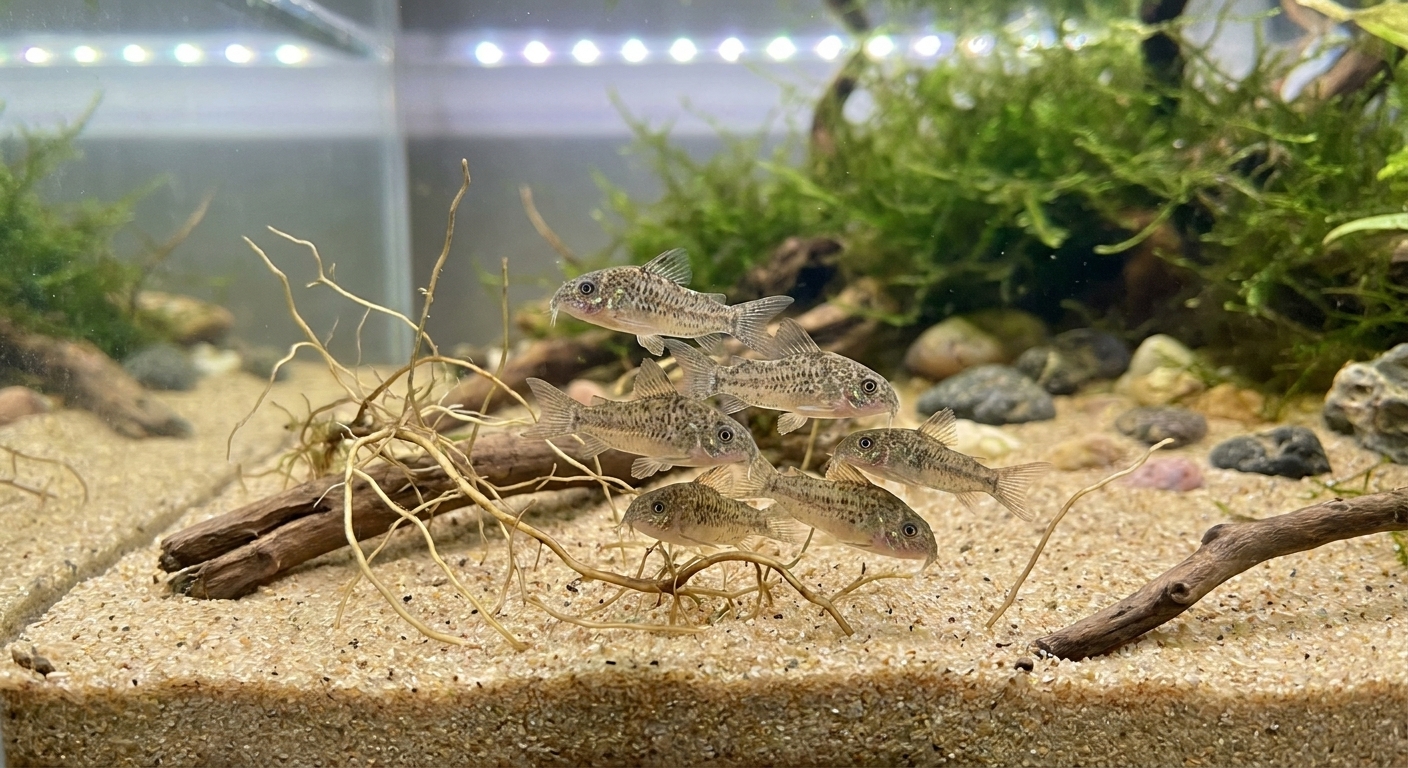
6) Pygmy Corydoras (Corydoras pygmaeus)
Pygmy cories are adorable and far more midwater-active than most people expect. Here is the honest catch: they are a schooling fish that looks and behaves best in a proper group, and proper groups usually fit better in tanks larger than 5 gallons.
- Best kept: In a group, with real horizontal swimming space.
- Group size: Think 6 minimum for natural behavior. That group size is exactly why a 10-gallon is usually the better plan.
- 5-gallon reality check: This is the most borderline fish on this list. Most standard 5-gallon footprints are too short. If your tank is not at least roughly 16 inches long, I would not do it. Even then, consider 5 gallons an absolute minimum and only if your maintenance is consistent.
- Substrate: Fine sand is ideal for barbels and natural foraging.
- Feeding: Do not assume they live on leftovers. Provide sinking micro foods.
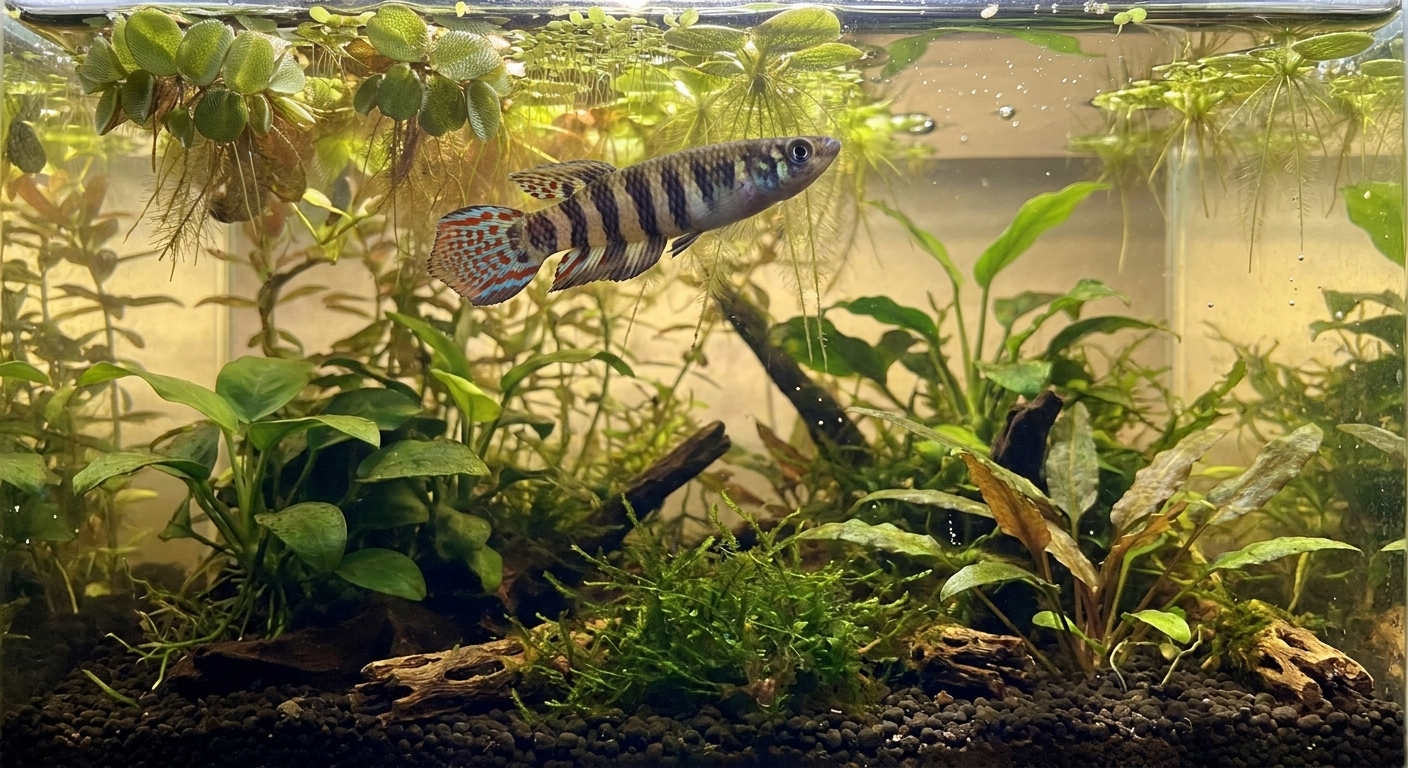
7) Clown Killifish (Epiplatys annulatus)
Clown killifish are surface-oriented nano fish with a playful, hovering style that makes small planted tanks feel alive. They also look fantastic under floating plants, where the males show off their fin patterns.
- Best kept: Small group in a secure-lidded tank.
- Must-know: They can jump. A tight lid is not optional.
- Tank setup: Floating plants, gentle filtration, calm surface area.
- Feeding: Small live and frozen foods really bring out natural hunting behavior.
Stocking ideas
If you want my quick, practical “what would I actually do?” suggestions for a planted 5-gallon:
- Option A: 1 betta + a snail (and maybe shrimp if the betta is shrimp-safe and the tank is heavily planted).
- Option B: 3–5 male Endlers, planted heavily, with strict weekly water changes and lots of cover to reduce sparring (a 10-gallon is easier if you want the same vibe with more breathing room).
- Option C: 5–8 chili rasboras in a mature, densely planted tank with gentle filtration (or size up to a 10-gallon for a bigger, more natural group).
- Option D: Least killifish group, with a plan for fry (or accept that you may need to rehome).
In a 5-gallon, success is usually about choosing one concept and executing it cleanly, not cramming in variety.
Planting tips
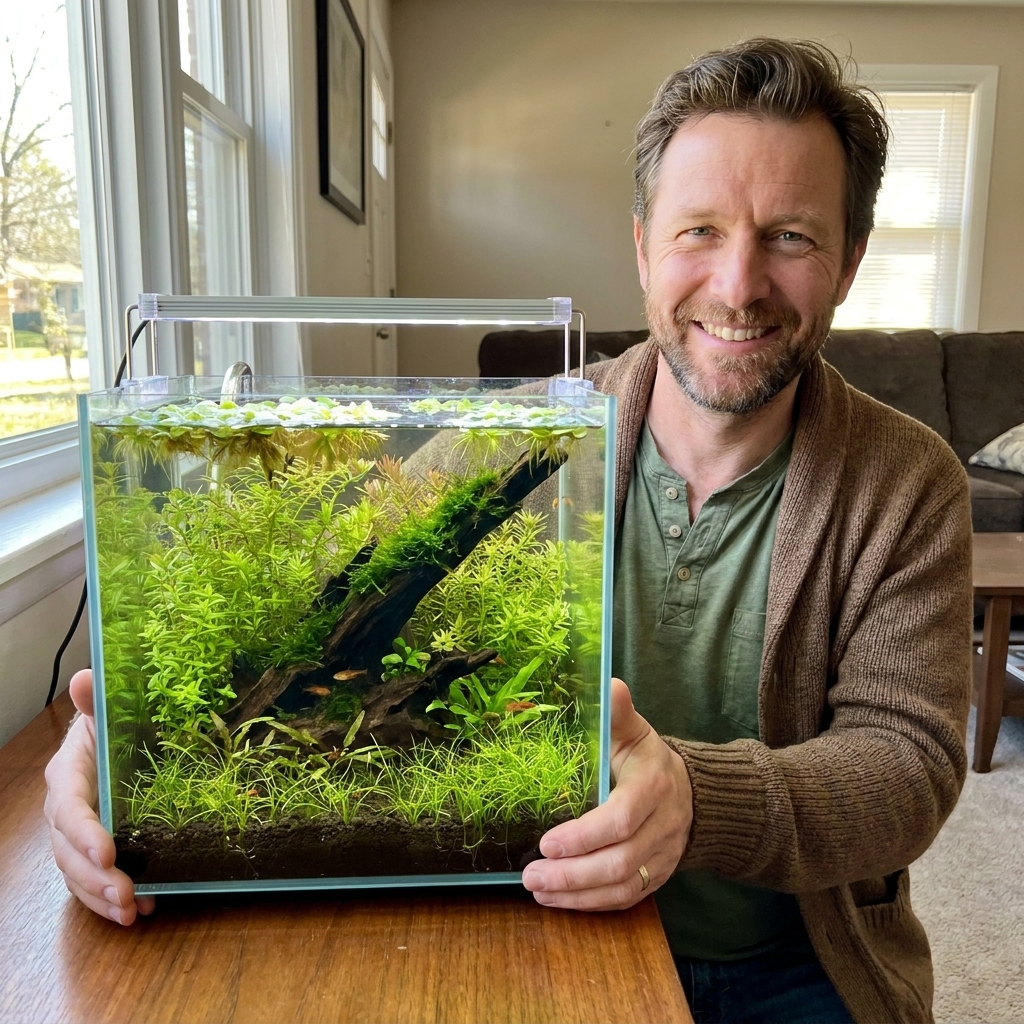
Planted nano tanks shine when you design for fish behavior, not just looks.
- Use fine cover: Moss, guppy grass, and thin stems make shy nano fish feel secure.
- Add floaters: Salvinia, frogbit, or red root floaters soften light and calm surface dwellers.
- Keep a small open lane: Even in a jungle layout, leave one clear runway for feeding and swimming.
- Go gentle on flow: Many nano fish come from slow waters. Baffle the filter output if needed.
Common mistakes
- Buying “schooling fish” and keeping 2 or 3. Many species become stressed, pale, or nippy when under-grouped.
- Skipping quarantine because the tank is small. Disease does not care about tank size.
- Overfeeding. In 5 gallons, extra food becomes ammonia fast. Feed less than you think, then adjust.
- Assuming plants fix everything. Even heavily planted nanos need water changes and testing.
- Chasing perfect numbers. Stable, reasonable parameters beat constant pH tinkering every time.
FAQ
Can I keep neon tetras in a 5-gallon?
No. Neons need a larger footprint and a proper group to behave normally. A 5-gallon is too small for their activity level and social needs.
How many fish can I put in a 5-gallon planted tank?
There is no universal number that stays true across species. A better rule is: pick a species that fits the tank, then stock to match its social needs without pushing filtration and maintenance past what you can consistently do. For many setups, that is either one centerpiece fish or one small group of micro fish.
Do I need a heater for nano fish?
Often, yes. Bettas and many tropical nano fish do best with stable warmth. In 5 gallons, room temperature swings can be enough to cause stress even if your house feels comfortable.
Are shrimp better than fish for a 5-gallon planted tank?
Sometimes. If you want maximum activity with minimal bioload and maximum plant focus, a shrimp-first tank (neocaridina or caridina, depending on your water) can be more stable than a fish tank at the same size.
Closing thought
When I was ten, I thought “small tank” meant “easy.” It usually means the opposite. But if you pick truly nano-appropriate fish, plant heavily, and keep your maintenance consistent, a 5-gallon planted tank becomes one of the most rewarding setups in the hobby.