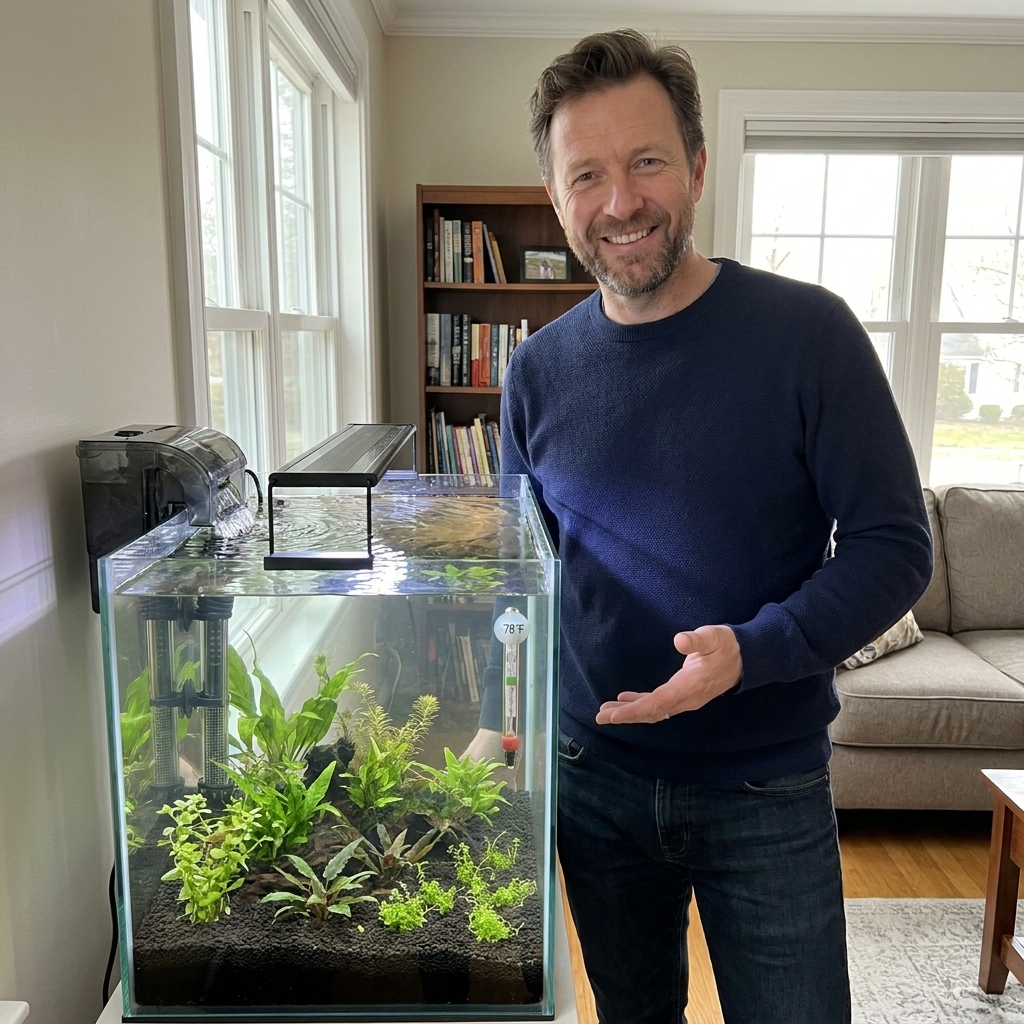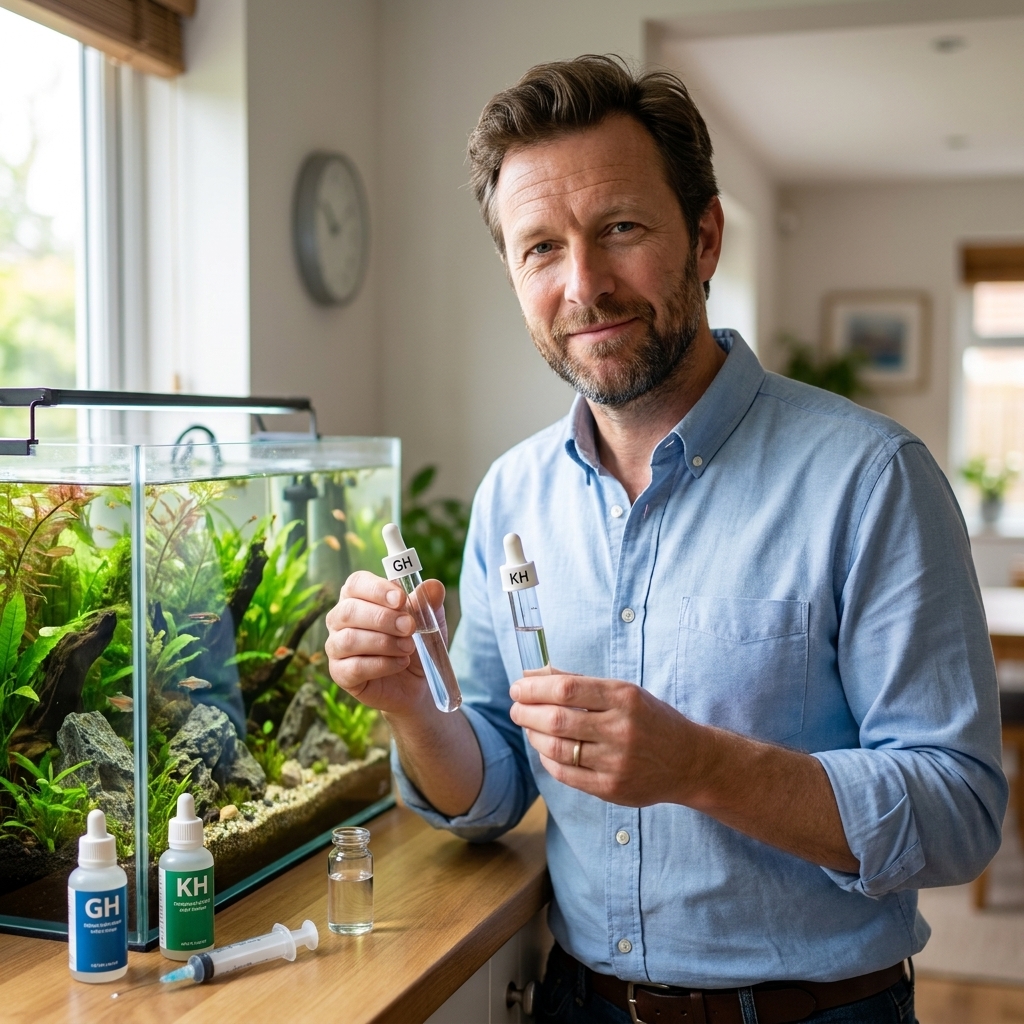
General hardness (GH) and carbonate hardness (KH) are two of the most misunderstood water parameters. Here is what they do, why they matter for fish health a...
Freshwater aquarium guidance
How to Safely Lower and Raise pH in a Freshwater Aquarium
Learn how to raise or lower aquarium pH without dangerous swings. Includes what to test first (KH, GH/TDS), safe methods, and step-by-step plans for planted and community tanks.

Written by
Oliver Bennett
Oliver Bennett is a lifelong aquarist with over 15 years of experience in freshwater tank setup, aquascaping, and fish health. Through TankRoot, he shares his passion for creating balanced underwater ecosystems, helping hobbyists of all levels build thriving, beautiful homes for their fish.
Published: October 17, 2026
•
Updated: October 17, 2026
I got my first taste of pH panic as a kid, staring at a test strip that said my little goldfish’s water was “bad” and feeling like I had to fix it immediately. That instinct to chase a number is one of the most common ways new aquarists accidentally stress fish.
Here’s the truth: most freshwater fish handle a stable “not perfect” pH far better than a “perfect” pH that bounces around. So this guide is built around two goals:
- Change pH slowly, with control and repeatability.
- Change the right thing first, usually KH (carbonate hardness), not pH directly.
What pH really means
pH measures how acidic or basic the water is. In aquariums, pH is not a standalone value. It is linked to:
- KH (carbonate hardness): your tank’s buffering. Higher KH resists pH change.
- CO2: more dissolved CO2 forms carbonic acid and can lower pH, especially in planted tanks.
- Tannins and organic acids: from wood, leaves, and some substrates, which can gently lower pH.
- Your source water: tap water can carry KH, GH, and dissolved gases that shift after the water sits and degasses.
If you only test pH, you are missing a big part of the steering wheel. KH is one of the main controls for stability.
Diagnose before you adjust
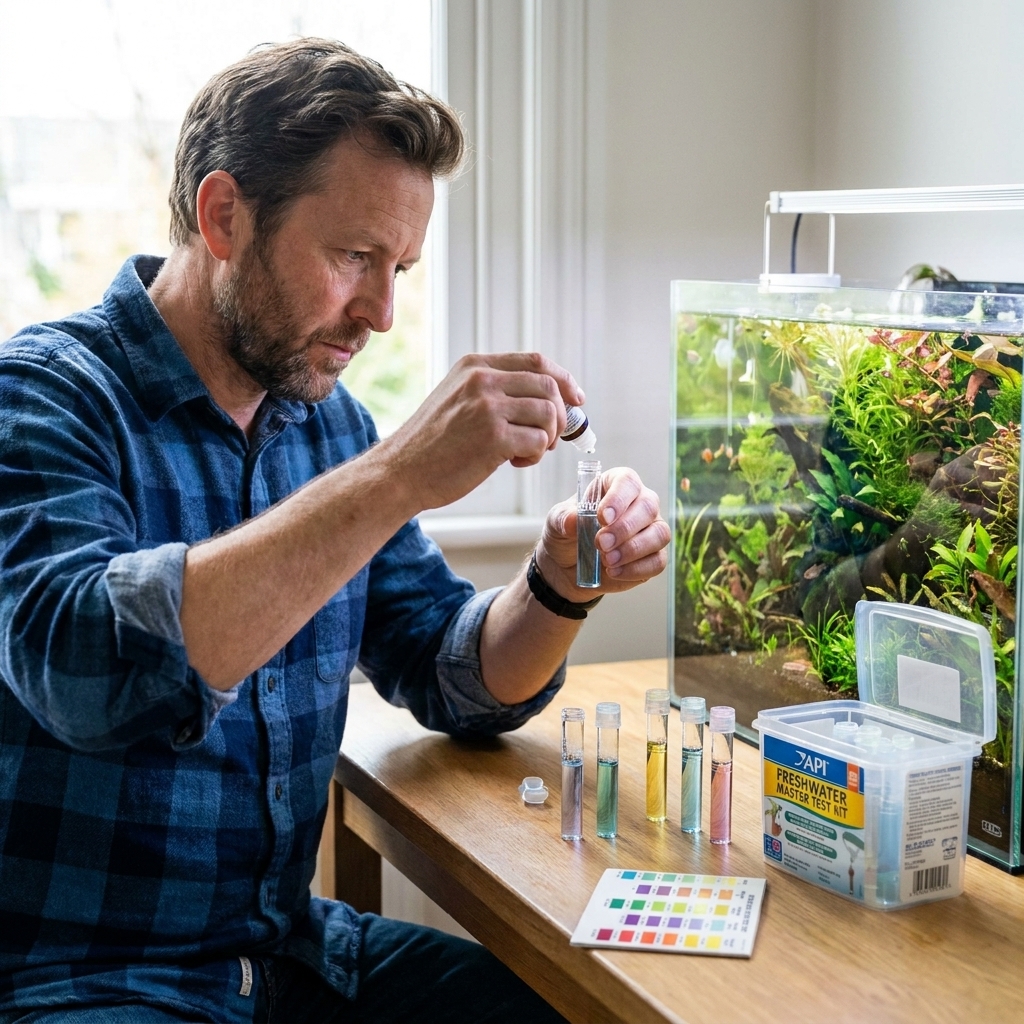
Step 1: Confirm your readings
Bad readings cause bad decisions. For pH specifically:
- Use a liquid test (drop kits) or a calibrated digital meter. Strips are fine for quick checks but are easy to misread.
- Test at the same time of day for consistency.
- Know your CO2 pattern: in a typical injected-CO2 planted tank (CO2 on during the light period), pH is often lowest near the end of the photoperiod and rises overnight after CO2 shuts off and degasses. In a non-injected tank, pH is often lowest in the early morning because plants and fish respire overnight.
- Aerate a cup of tank water and retest: vigorously aerate a cup for 30 to 60 minutes, then retest pH. If it rises, dissolved CO2 was likely depressing pH. This is a helpful clue, not a courtroom verdict. Temperature, aeration strength, and even room CO2 can affect the result.
Step 2: Measure KH (and GH or TDS)
If your pH is unstable, low KH is often the culprit. Helpful rules of thumb:
- KH 0 to 2 dKH: pH can swing easily. Great for some softwater species, but it requires careful management.
- KH 3 to 6 dKH: generally stable and forgiving for many community tanks.
- KH 7+ dKH: very stable, but lowering pH becomes difficult without RO water or sustained acid input.
Also, do not ignore GH and TDS. Fish can react more strongly to rapid changes in hardness and dissolved solids than they do to a small pH change. If you are mixing RO and tap, track GH and TDS so you do not accidentally create osmotic shock.
Step 3: Look for common causes of swings
- New tank cycling: nitrification produces acid and can pull pH down over time, especially with low KH.
- Heavy driftwood or botanicals: tannins can lower pH, usually gently.
- CO2 injection: can lower pH by 0.5 to 1.5 points depending on KH and CO2 level. That sounds dramatic, but in planted tanks it can be normal if it is consistent and livestock shows no distress.
- Crushed coral or aragonite: raises KH and tends to raise pH.
- “pH Down” products: can cause a quick drop, then a rebound when buffers push back.
How fast is safe?
Fish stress is usually caused by rapid change, not the final number.
- Conservative guideline: 0.2 pH per day or less for many community fish.
- For sensitive fish (especially wild-caught softwater species), I prefer 0.1 pH per day with KH monitoring.
- When you are moving pH on purpose, match temperature, GH/TDS, and KH as carefully as pH. A “perfect pH” means nothing if the hardness swing is huge.
Remember: a pH of 7.8 that is stable can be healthier than a pH of 7.0 that swings between 6.8 and 7.6.
Safety note on extremes: If your pH suddenly reads very low (around 6 or below) or very high (around 8.5 or above), pause the “dialing it in” mindset. Recheck the test, and immediately test ammonia, nitrite, and temperature. Sudden extremes can point to contamination, a testing error, a pH crash from depleted KH, or a cycling issue. Prioritize oxygen and stability over targets.
How to lower pH safely
Method 1: RO water (most reliable)
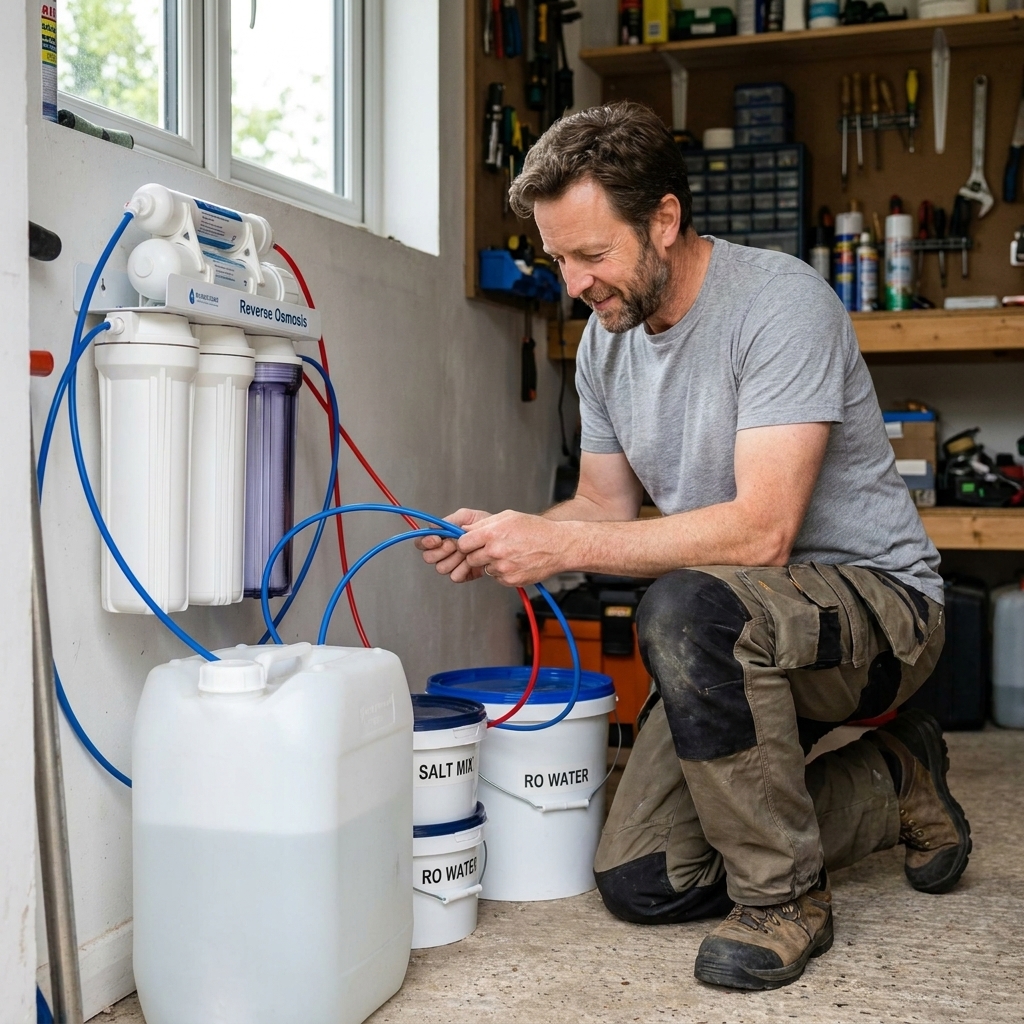
If your tap water has high KH, lowering pH directly becomes a constant fight. The clean, predictable approach is to reduce KH by dilution using reverse osmosis (RO) water, then remineralize as needed.
Important: Do not use pure RO or distilled water long-term without remineralizing. Fish and plants need minerals, and you need some buffering for stability. Distilled water can work in small, controlled mixes, but it is often impractical in large volumes compared to RO.
How it works: less KH means less buffering, which allows pH to settle lower based on CO2 and natural acids in the tank.
- Start mixing RO water with tap water for water changes.
- Re-test KH, GH (or TDS), and pH after each change until you reach your target stability zone.
- If you go very low KH (0 to 2 dKH), plan for tighter monitoring to avoid sudden pH drops during cycling or heavy biological load.
Best for: softwater community tanks, Amazon-style aquascapes, blackwater setups, and anyone dealing with very alkaline tap water.
Method 2: Driftwood and botanicals (gentle, slow)
Natural tannins and humic substances can lower pH a bit, but the effect depends heavily on KH.
- In high KH water, driftwood may tint the water but barely move pH.
- In low KH water, botanicals can noticeably lower pH over time.
How to do it safely:
- Add one piece of wood or a small handful of leaves at a time.
- Test pH and KH every 1 to 2 days at first.
- Expect the biggest pH movement in the first few weeks, then it tapers off.
Bonus: Many fish relax under tannin-stained water, and some fin-nippers calm down in softer lighting.
Method 3: Peat filtration (effective, test-heavy)
Peat can reduce pH by releasing organic acids and can also reduce hardness through ion exchange and binding. How much it softens water depends on peat type, contact time, and flow rate, so treat it as adjustable, not automatic.
Safe approach:
- Use aquarium-safe peat with no fertilizers or additives.
- Start with a small amount in a media bag in the filter.
- Test daily for the first week.
- Replace peat gradually, never all at once, to avoid sudden shifts.
Method 4: CO2 in planted tanks (pH change is a side effect)
In injected CO2 systems, pH drops when CO2 is on and rises when it is off. That daily swing can be normal. What you want is predictable CO2, not surprise spikes.
- Use a consistent CO2 schedule with a solenoid.
- Make sure surface agitation and oxygenation are adequate, especially at night.
- Focus on stable CO2 levels rather than chasing a specific pH number.
Important: A big pH swing from a stable CO2 routine is not automatically harmful if KH is stable and fish show no stress. What is harmful is unstable CO2 that surges, causing gasping, rapid breathing, or erratic behavior.

Method 5: Commercial pH-lowering products (use sparingly)
Most “pH Down” products are acids. They lower pH quickly, but if KH remains high, pH often rebounds. That bounce is stressful.
If you use them:
- Use them to adjust new water in a bucket, not the display tank.
- Match the bucket pH, KH, and temperature to the aquarium before adding.
- Test KH before and after using acids so you understand how much buffer you still have. If KH is high, expect rebound unless you address KH.
- Never combine multiple adjusting products unless you fully understand the chemistry.
When they make sense: short-term correction of water-change water, or controlled setups where you are already monitoring KH closely.
How to raise pH safely
Do you actually need to raise it?
Many aquarists try to raise pH when the real issue is low KH causing instability. If your pH is low but stable and your livestock is thriving, you may not need to change anything.
You should consider raising pH if:
- Your pH is dropping over time (especially in a new or heavily stocked tank).
- You measure very low KH and you want a more forgiving buffer.
- You keep species that truly prefer harder, more alkaline water (many livebearers, African cichlids, some Central American cichlids).
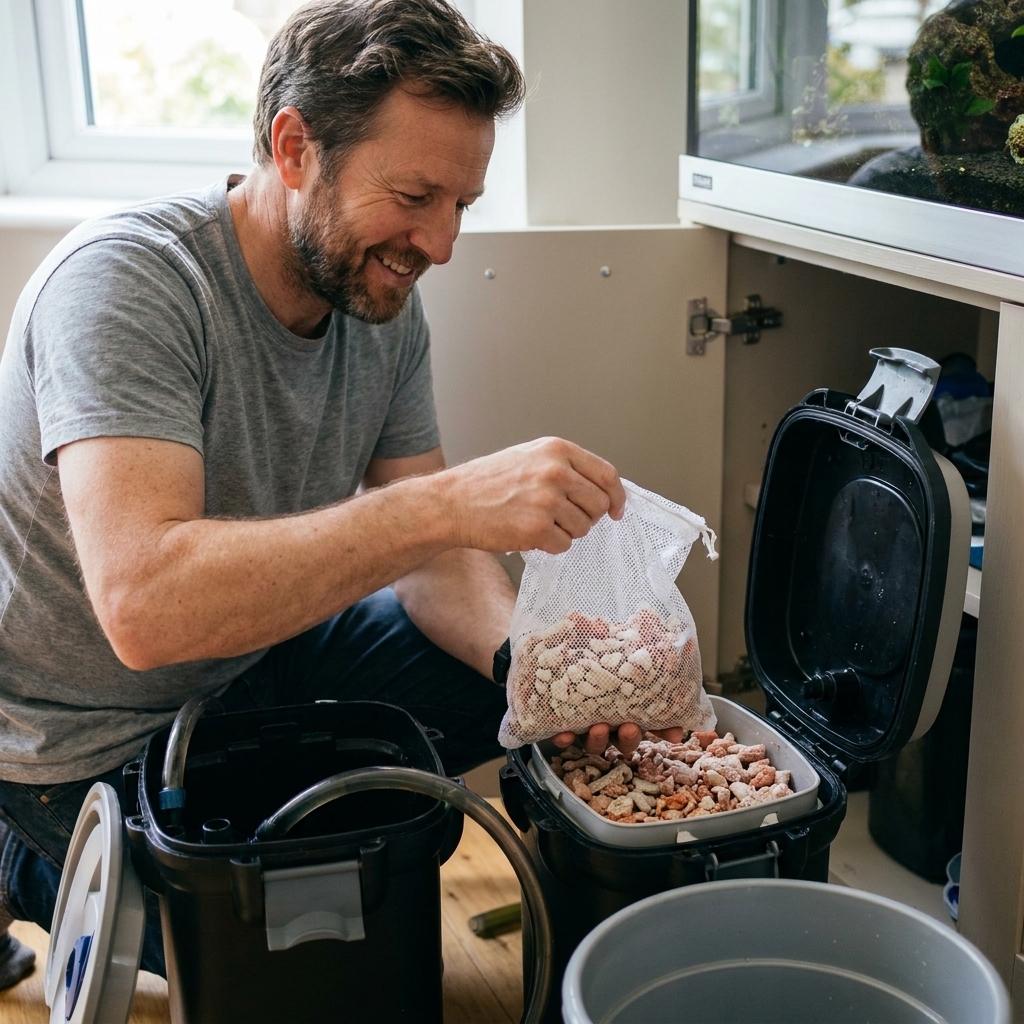
Method 1: Crushed coral or aragonite (steady)
Crushed coral and aragonite dissolve slowly, increasing KH and often GH, which typically raises and stabilizes pH.
Where to use it:
- In a filter media bag (easy to adjust).
- Mixed into substrate (less adjustable).
How to do it safely:
- Start small, especially in tanks under 20 gallons.
- Test KH, GH (or TDS), and pH every 2 to 3 days for the first two weeks.
- Increase the amount gradually until you reach your stability target.
Method 2: Baking soda (controlled KH boosts)
Baking soda raises KH directly, which often raises pH as a result. It’s inexpensive and predictable, but you must dose carefully.
- Dissolve it fully in a cup of tank water before adding.
- Add in small increments and wait 30 to 60 minutes before retesting.
- Use it more as a water-change water tool than a “dump it in the tank” fix.
One caution: baking soda adds sodium. Occasional use to prevent a crash is fine in many setups, but chronic heavy dosing is a sign you should switch to a long-term buffering plan (like crushed coral, a purpose-made buffer, or adjusting your RO mix).
Good use case: preventing pH crashes in low-KH tanks, especially during cycling or after a big bio-load increase.
Method 3: Buffers and remineralizers (great for RO users)
If you use RO water, you often need to add minerals back for fish health and pH stability. A proper remineralizer can set GH and KH to a consistent baseline, which keeps pH stable.
Tip: pick a product designed for your goal:
- GH/KH+ style remineralizers for many community tanks.
- Specialized salts for Rift Lake cichlids if you are building that kind of water intentionally.
A step-by-step plan
1) Pick a realistic target
Most popular captive-bred community fish do well in a wide range if it’s stable. Instead of asking “How do I get to 7.0?”, ask:
- Is my current pH stable week to week?
- Are fish eating, active, and showing good color?
- Is my KH appropriate for the stability I want?
- Are GH and TDS stable from water change to water change?
2) Adjust new water, not the whole tank
The safest way to move pH is by preparing your water-change water so the tank shifts gradually with each change.
- Mix your tap and RO ratio, or add buffer, in a bucket.
- Match temperature.
- Test pH, KH, and GH (or TDS) in the bucket.
- Do a normal water change.
3) Keep changes small
- Use 10 to 20% changes while you are steering pH.
- Test after each change and again 24 hours later.
- Stop adjusting once you hit stability. Most tanks do best when you leave them alone.
4) Watch fish, not just numbers
Signs you moved too fast include:
- Gasping at the surface
- Clamped fins
- Hiding more than usual
- Rapid breathing
- Erratic swimming
If that happens, stop dosing, increase aeration, and revert to your last known safe routine. Stability first.
Common pH problems
“My pH keeps dropping”
This is often buffer depletion.
- Test KH. If it’s low, raise KH gently with crushed coral, baking soda, or a remineralizer.
- Check if the tank is newly cycling or heavily stocked. Both increase acid production.
- Increase water change frequency temporarily while the tank stabilizes.
“My pH is high and won’t come down”
High KH tap water plus calcareous decor is a common culprit.
- Test KH and inspect substrate and rocks (some stones slowly dissolve and raise KH).
- Switch to RO mixed water for changes and keep GH and TDS consistent while you do it.
- Avoid relying on acids alone unless KH is addressed.
“My pH swings day and night”
Often CO2 related in planted tanks.
- Confirm with morning vs evening testing, based on whether you inject CO2.
- Increase surface agitation slightly and ensure good flow.
- Stabilize CO2 injection rate and timing rather than trying to “fix” pH.
“I had a sudden pH crash”
Immediate priorities are oxygen and stability.
- Add aeration right away.
- Test KH, ammonia, nitrite, and temperature.
- Perform a moderate water change with well-matched water (do not overcorrect).
- Restore KH slowly and monitor closely for 48 hours.
pH ranges by fish type
These are broad ranges, not commandments. Always verify your species, and prioritize stability.
- Many community fish: roughly pH 6.5 to 7.8, depending on species and hardness
- Livebearers (guppies, platies, mollies): often happiest around pH 7.2 to 8.2 with moderate to higher hardness
- Amazon-style fish (many tetras, corydoras, some dwarf cichlids): often do well around pH 6.0 to 7.2, especially with softer water
- African Rift Lake cichlids: typically need hard, alkaline water and strong buffering
If your fish are thriving but your pH is “off” according to a chart, trust the fish, verify your test accuracy, and focus on consistency.
FAQ
Is it safe to change pH with chemicals?
It can be, but the safest approach is adjusting new water before it goes into the tank, and testing KH so pH does not rebound.
Should I chase 7.0?
Almost never. A stable pH outside 7.0 is usually better than a forced 7.0 that swings.
Can I lower pH by adding more driftwood?
Sometimes, but the effect depends on KH. In high KH water, driftwood often stains the water more than it changes pH. If you want reliable pH movement, address KH and consider RO water.
Does lowering pH reduce ammonia toxicity?
Lower pH shifts more ammonia into the less toxic ammonium form, but you should never use pH manipulation as an ammonia fix. The real fix is a properly cycled filter, appropriate stocking, and water changes.
Rule of thumb: stabilize first
If you take nothing else from this, take this: KH heavily influences stability, and stability is what keeps fish calm and healthy. Adjust pH slowly by controlling your water-change water, test KH alongside pH, and keep an eye on GH or TDS so hardness stays consistent.
That’s how you get a tank that feels effortless. Not because you found the perfect number, but because you built a system that stops swinging.