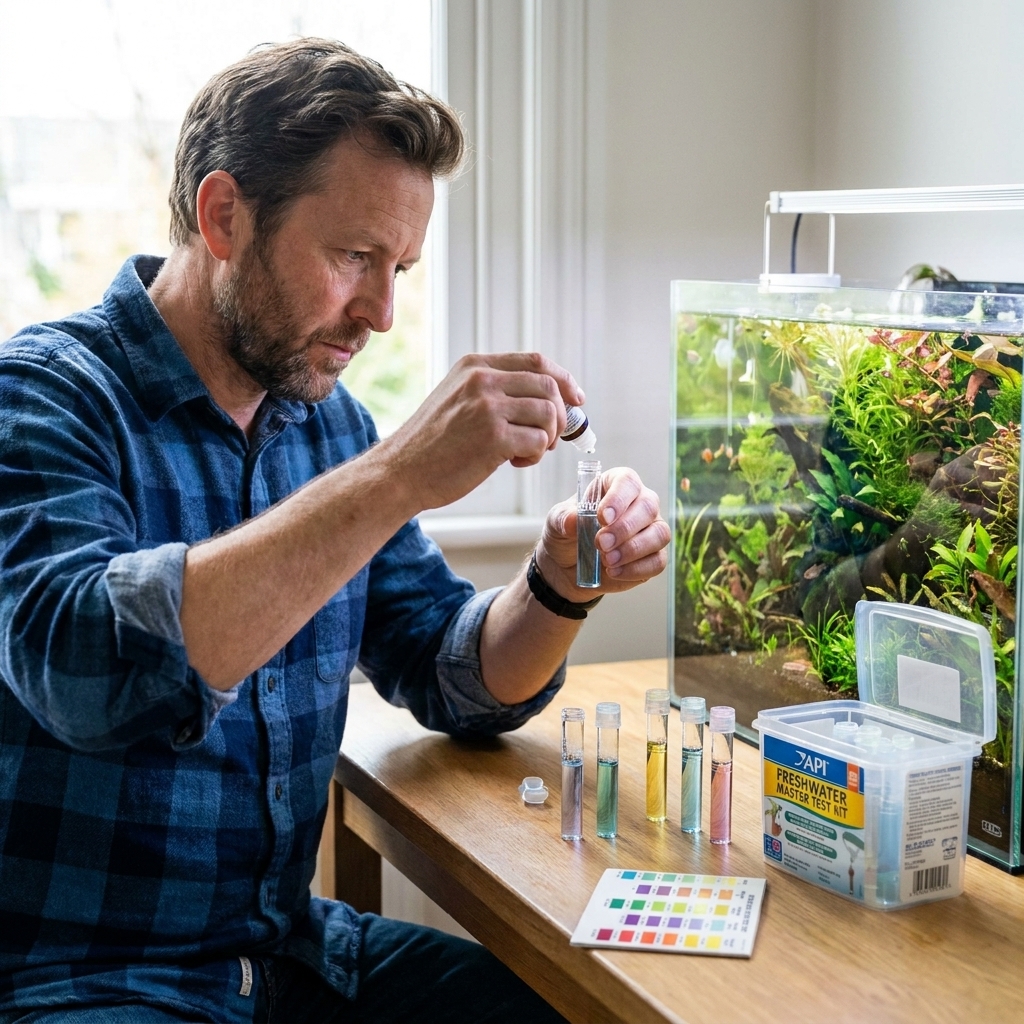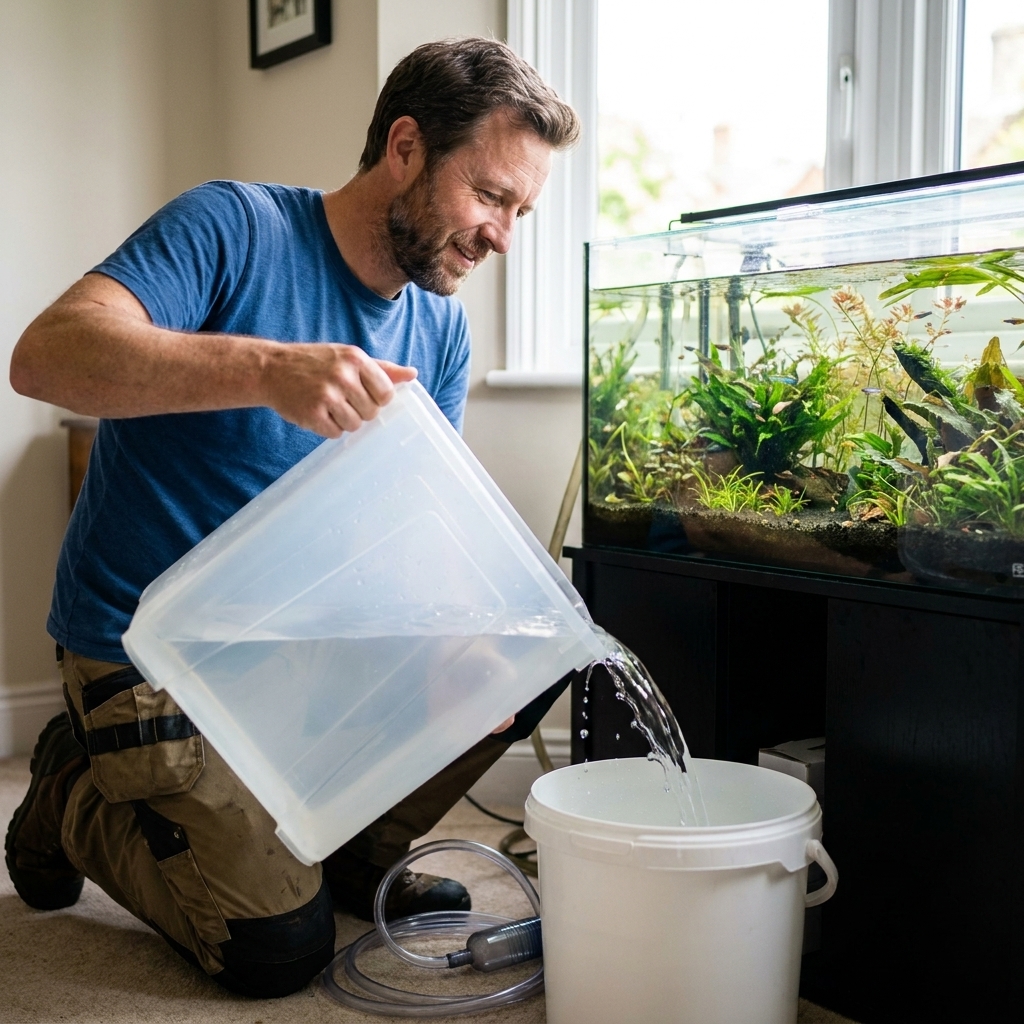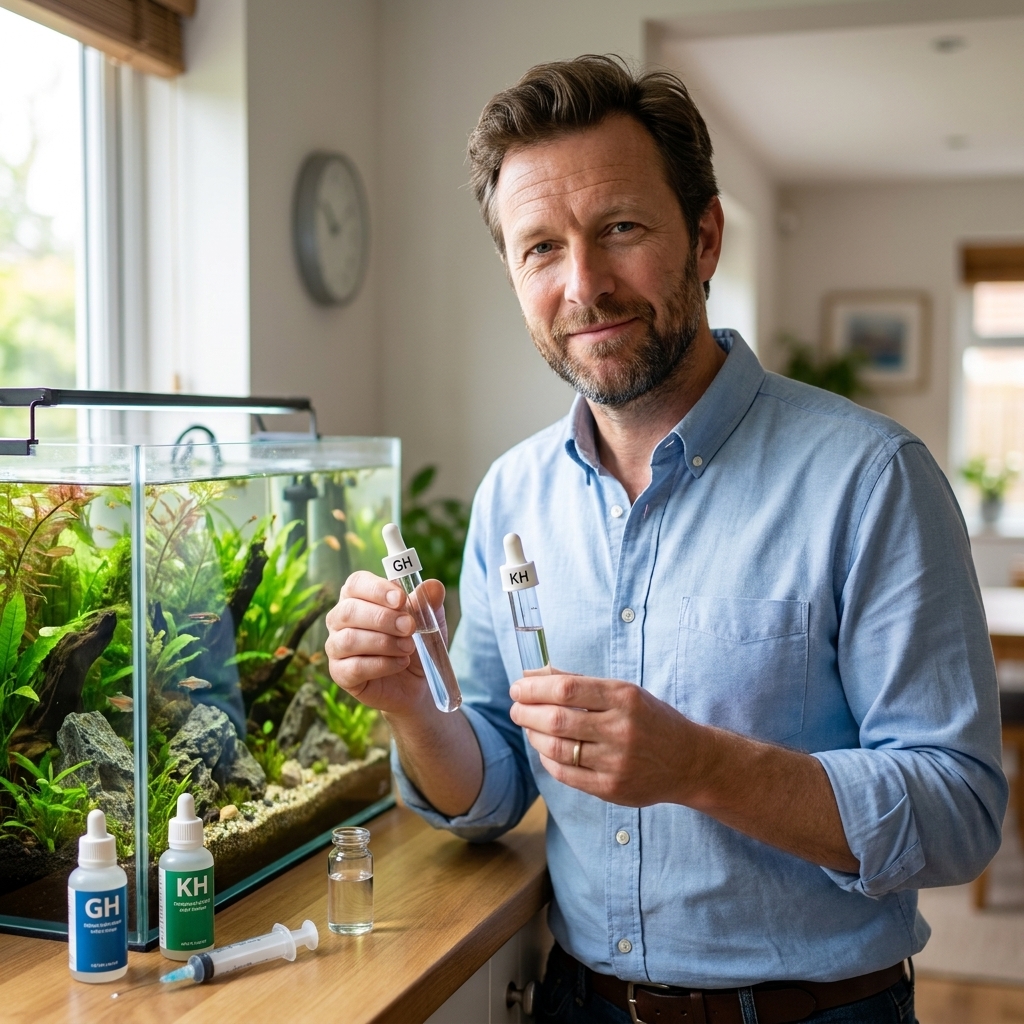
General hardness (GH) and carbonate hardness (KH) are two of the most misunderstood water parameters. Here is what they do, why they matter for fish health a...
Freshwater aquarium guidance
Blackwater Aquarium: Tannins, Botanicals, and Low pH
Learn how to build a safe blackwater aquarium using botanicals like Indian almond leaves, while keeping pH stable and fish stress low.

Written by
Oliver Bennett
Oliver Bennett is a lifelong aquarist with over 15 years of experience in freshwater tank setup, aquascaping, and fish health. Through TankRoot, he shares his passion for creating balanced underwater ecosystems, helping hobbyists of all levels build thriving, beautiful homes for their fish.
Published: October 17, 2026
•
Updated: October 17, 2026
My fishkeeping obsession started with a doomed carnival goldfish and a bowl. Once I finally learned the science, one lesson stuck with me for good: fish do best when we stop forcing them into our water and start shaping the aquarium to match their habitat.
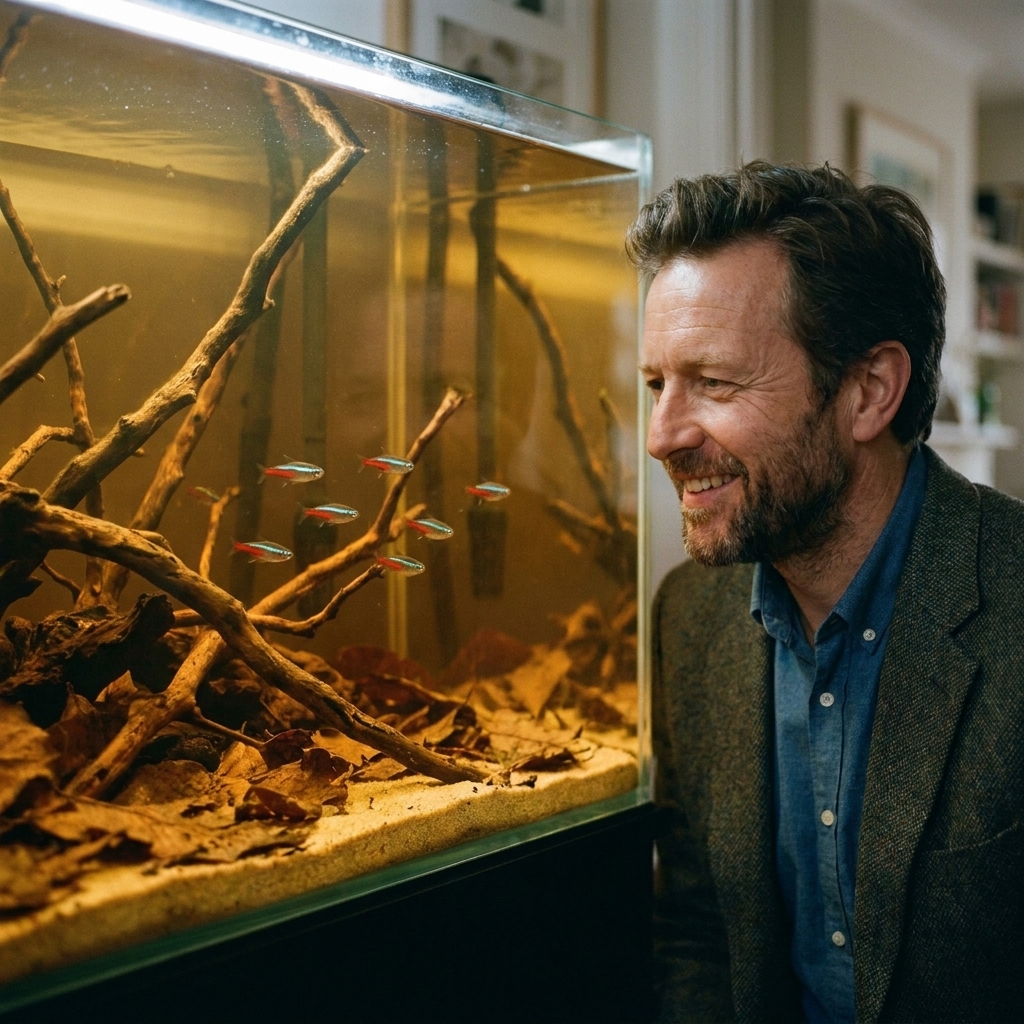
A blackwater aquarium is exactly that mindset. Instead of crystal-clear, mineral-heavy water, you recreate the tea-stained streams and flooded forest edges many Amazon and Southeast Asian fish evolved in. The water is tinted with tannins, gently acidified by humic substances from decomposing leaves and wood, and in nature it is usually very low in minerals.
Done right, blackwater is calming, natural, and surprisingly forgiving once it stabilizes. Done wrong, it is a fast route to pH swings and stressed fish. Let’s build it the safe way.
What blackwater is (and is not)
In nature, “blackwater” forms when rainwater moves through leaf litter and decaying wood. That water picks up:
- Tannins that stain the water amber to dark tea.
- Humic and fulvic substances that can gently lower pH.
- Low minerals because the surrounding geology contributes little hardness.
Blackwater is not just “brown water.” A tank can be tinted and still be hard and alkaline if your tap water has high KH and GH. Color is a clue, not the full story.
Also important: blackwater does not mean “dirty water.” These habitats can be extremely low in dissolved solids and have stable chemistry. Your aquarium still needs filtration, oxygenation, and regular maintenance.
One practical heads-up: tannins can stain silicone, porous rock, and some décor over time. It is normal, and it is mostly an aesthetic issue.
Who blackwater is for
Great candidates
- Amazon community fish: cardinal and neon tetras, rummy-nose tetras, pencilfish, hatchetfish, many Apistogramma, angelfish (in appropriate tanks), and many Corydoras.
- Labyrinth fish setups: bettas and many gourami species often appreciate cover, calm flow, and tannin-stained water. Domestic bettas are usually tolerant, but “true blackwater” (very low KH, very low pH) is not automatically safer for them.
- Some shrimp and nano fish can do well when the tank is mature and parameters are stable.
Quick nuance that saves livestock: not all “shrimp” want blackwater. Most Neocaridina (like cherry shrimp) usually prefer harder, more alkaline water. Many Caridina (like crystal shrimp) prefer softer, more acidic conditions. Know which you have before you chase soft water.
Think twice
- African Rift Lake cichlids and other hard-water fish that prefer high mineral content and higher pH.
- Livebearers like guppies and mollies that generally do better with higher hardness and alkaline pH.
- Any tank where you cannot test KH reliably. In low-KH systems, monitoring is the safety net.
Corydoras, tetras, and “Amazon fish” are not a single chemistry setting. Species-level research matters, especially for wild-caught fish.
pH, KH, and why tanks crash
When hobbyists get into trouble with blackwater, it is usually not “tannins” hurting fish. It is the combination of low KH and accumulating acids over time (from normal biology like nitrification and decomposing organics), plus water changes that do not match the tank.
- pH is how acidic or alkaline the water is.
- KH (carbonate hardness) is your pH buffer. It resists pH change.
- GH (general hardness) is the calcium and magnesium level, important for many fish and especially many invertebrates and snails.
Botanicals and driftwood can contribute acids. If your KH is high, pH barely moves. If your KH is low, pH can drop quickly, especially in newer tanks, heavy dosing, or when biological activity ramps up.
Safety rule: Do not chase a specific pH number with botanicals. Build a stable system and let pH settle where it settles, then choose fish that match that stability.
Gear that makes it easier
- Reliable liquid tests: pH (low-range if you expect under 7.0), KH, GH, and ammonia, nitrite, nitrate.
- A digital TDS meter (optional but helpful) to track overall dissolved solids, especially if using RO water. It is a trend tool, not a substitute for KH and GH tests.
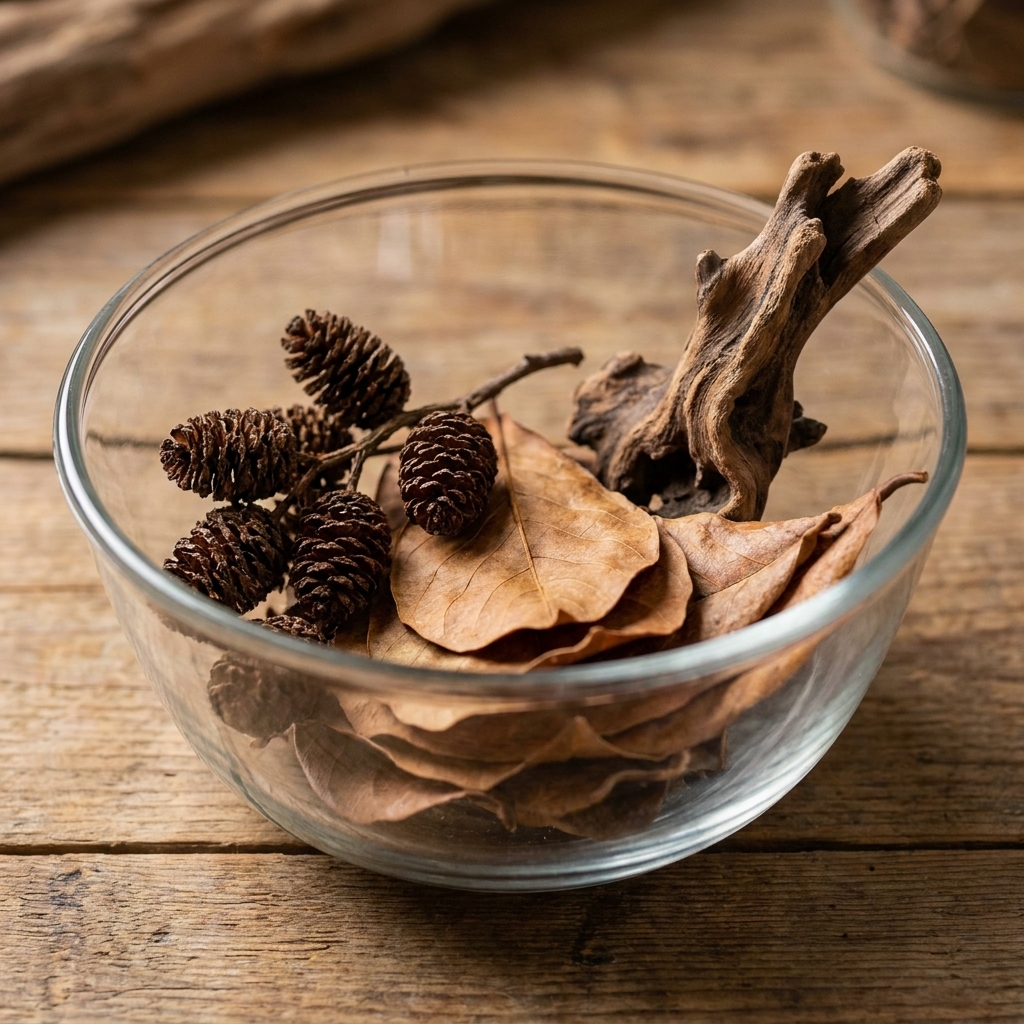
- Botanicals: Indian almond leaves (catappa), alder cones, botanicals like seed pods (cholla, casuarina cones), and leaf litter like oak or beech (pesticide-free).
- Driftwood (mopani, spider wood, manzanita) for long-term tannins and structure.
- Fine sponge prefilter if you use botanicals that shed tiny particles.
- RO/DI unit or RO water source if your tap water is hard and you want true soft-water conditions.
- Peat filtration (optional, advanced) to help lower pH and reduce alkalinity over time. It may reduce hardness somewhat depending on your starting water, contact time, and how you run it.
Setup steps
Step 1: Pick a stable range
Instead of chasing an exact pH, pick a range you can keep stable:
- Beginner-friendly blackwater: pH 6.6 to 7.2 with some tint and dependable buffering, often achievable with tap water plus botanicals.
- True soft blackwater: pH 5.0 to 6.5 with very low KH and low TDS, usually requires RO water and careful monitoring.
If your tap KH is above roughly 4 to 5 dKH, you can still do blackwater aesthetics, but pH may not drop much. That is completely fine for many fish.
Step 2: Decide your build order
Timing matters more than most people think.
- Cycle first, then darken: If you are new to blackwater, this is my favorite route. Cycle the tank fully with your normal filtration, then add botanicals slowly once ammonia and nitrite are consistently zero. It reduces surprises while your biofilter is still settling in.
- Botanicals during cycling: Also workable, especially for experienced keepers. Just know heavy botanicals can add organics and slightly increase oxygen demand. Keep surface agitation strong and test more often.
Either way, go slow. Blackwater rewards patience.
Step 3: Build for calm behavior
Blackwater fish often feel safest under cover. Prioritize:
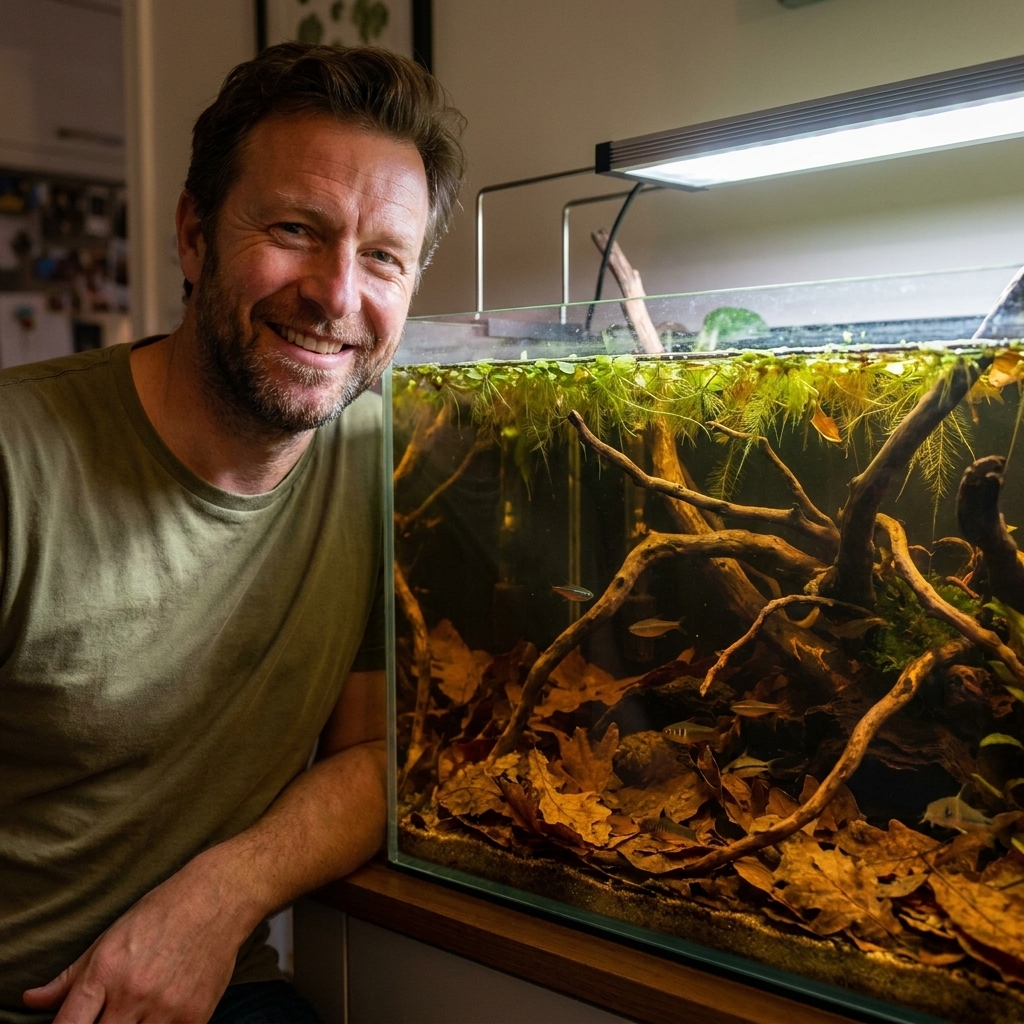
- Branchy driftwood to break lines of sight.
- Floating plants (salvinia, frogbit) to dim the light.
- Leaf litter zones for foraging and natural microfauna.
- Gentle flow, not a blasting current, unless the species prefers it.
Step 4: Prep botanicals
Most botanicals are safe when sourced well, but you want to avoid contaminants and wild swings.
- Rinse leaves and pods under tap water.
- Optional soak in a bucket of dechlorinated water for 24 to 72 hours to reduce the initial burst of tannins.
- Boiling is optional. It makes things sink faster and releases tannins quickly, but it can also shorten the botanical’s useful life. I usually prefer soaking for a gentler ramp.
Only use leaves you can identify and trust. Avoid anything collected roadside or sprayed with pesticides.
Step 5: Add tannins slowly, then wait
If you remember one thing, make it this: blackwater is not an instant add-on. It is a gradual shift.
A conservative starting point for a typical community tank:
- Indian almond leaves: 1 medium leaf per 10 gallons as a starting dose.
- Alder cones: 1 cone per 5 gallons as a starting dose.
These are starter heuristics, not rules. Leaf size, cone size, water hardness, and the look you want all matter. Add half your intended amount, then test pH and KH at 24 to 48 hours and again at one week. Some changes show up slowly.
Step 6: Filtration notes
- Activated carbon will remove tannins. If you want stained water, do not run carbon continuously.
- Fine filter floss traps small botanical debris without stripping tannins.
- Biological filtration still matters. Blackwater does not replace the nitrogen cycle.
If the water looks cloudy, do not panic and do massive water changes right away. Mild bacterial blooms can happen in new tanks. Check ammonia and nitrite first, then correct the cause.
Low pH, done safely
Use KH as your guardrail
In blackwater systems, KH is often low by design. That is fine, but it means you need to be intentional.
- If your KH is 3 to 6 dKH, your pH is usually buffered enough for a beginner-friendly blackwater tank.
- If your KH is 0 to 2 dKH, you are in true soft-water territory. The tank can be stable, but small mistakes hit harder.
In very low-KH tanks, your biggest risks are:
- Overloading botanicals or peat too quickly.
- Large water changes with different chemistry than the tank.
- CO2 injection without tight control. CO2 does not consume KH, but it can create bigger pH swings when buffering is low.
Minerals still matter
“Soft water” does not mean “no minerals.” Many fish handle low GH well, but many invertebrates and snails do not.
- If you keep snails or shrimp, make sure GH is appropriate for that species so they can build and maintain shells or exoskeletons.
- If you use RO water, plan to remineralize so your livestock has what it needs. As a broad starting point, many community soft-water fish do well with a modest GH and a small but measurable KH. Then fine-tune based on the species you keep.
Do water changes that match
Stability is everything. If your tank is running soft and acidic, do not refill with hard, alkaline tap water and expect fish to shrug it off.
Options:
- Blend RO and tap water to a consistent GH and KH, then use that same recipe every change.
- Remineralize RO water with a shrimp or soft-water remineralizer if you need precise control.
- Pre-condition change water with a small amount of botanicals so it is not wildly different in tint and acidity.
My personal rule: In low-KH blackwater tanks, I prefer smaller, more frequent water changes. It is easier to match parameters and avoid swings.
Control the tint
The “right” blackwater color is whatever helps your fish feel secure and makes you enjoy the tank. You can dial it up or down with a few levers:
- More botanicals and wood equals darker water.
- More frequent water changes equals lighter water.
- Remove carbon if you want tannins to remain.
- Add carbon temporarily if you overshoot and want to clear the water faster.
If you love the benefits of botanicals but want clearer water, you can still use them in moderation. Clarity is mostly an aesthetic choice. Fish can benefit from habitat complexity and mild humic substances even with only a light tint.
Botanicals basics
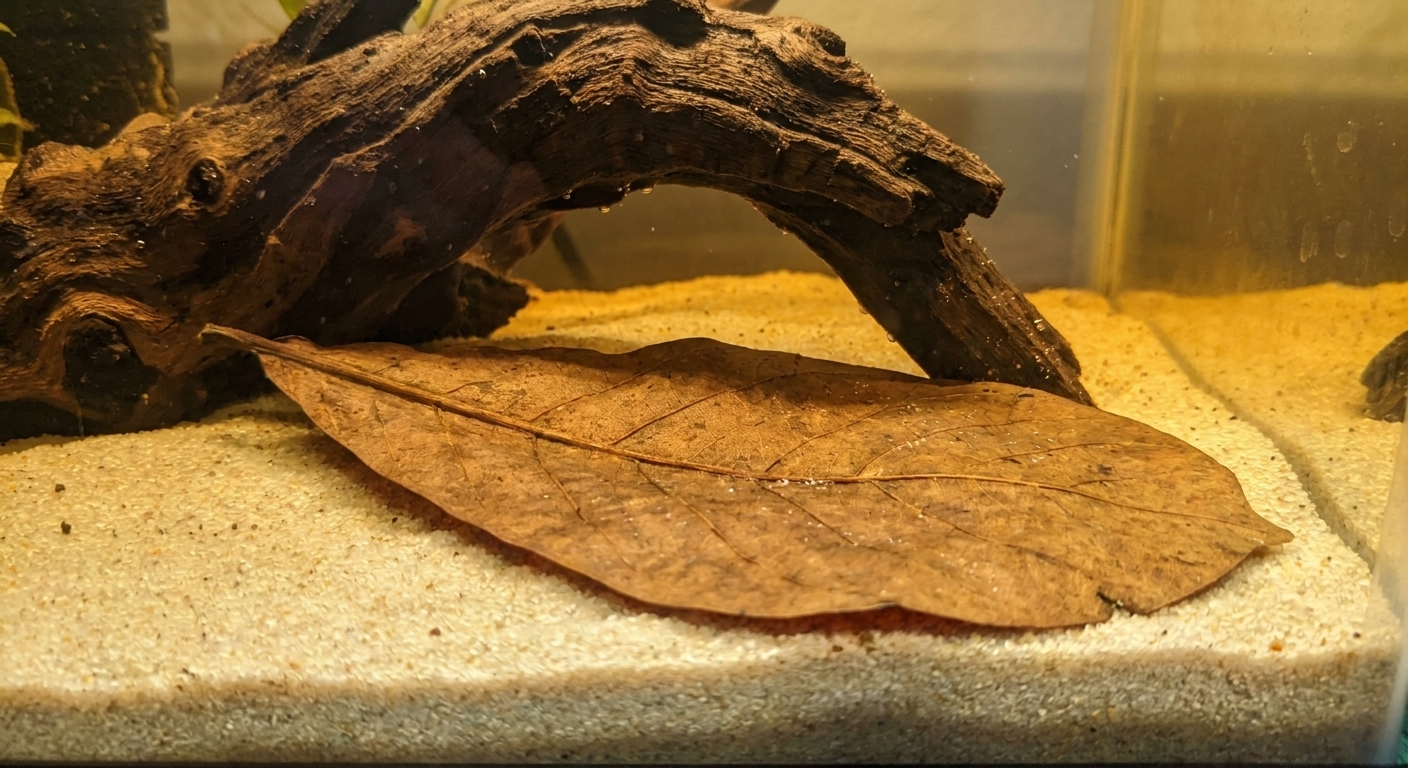
Indian almond leaves
- Reliable, easy to source, consistent results.
- Great for mild tint, grazing surfaces, and shy fish.
- Replace when the leaf skeletonizes and breaks down.
Alder cones
- Strong tint for their size.
- Handy for nano tanks because dosing is easy to control.
Leaf litter
- Excellent for naturalism and microfauna.
- Often less “instant dark” than cones, but contributes long-term.
Driftwood
- Slow and steady tannin release.
- Also provides shelter and grazing surfaces.
Peat
- Can help lower pH and reduce alkalinity, especially when used gradually in a filter bag.
- Any hardness reduction depends on your starting water and how you run it. Test and move slowly.
Stocking and acclimation
Many blackwater fish are naturally cautious. They color up, feed better, and display more natural behavior when they feel hidden and secure.
To set yourself up for success:
- Stock lightly at first and let the tank mature. Botanicals can increase dissolved organics, and you want your biofilter ready.
- Acclimate slowly if your pH and TDS are far from the bag water. Sudden shifts are harder on fish than a stable “imperfect” pH.
- Prioritize schooling size for tetras and rasboras. A proper group often reduces stress more than any chemistry tweak.
Maintenance
Testing routine
- Weekly: ammonia, nitrite (especially in newer tanks), nitrate, pH.
- Every 1 to 2 weeks: KH and GH, or anytime you change your water source or dosing.
- Anytime fish act off: test immediately before doing big changes.
Leaf litter management
Leaf litter is meant to decompose, but you do not want it smothering the entire substrate if you are not running a tank designed for that.
- Vacuum lightly around open areas.
- Leave some litter tucked under wood for fish to forage.
- Replace a portion at a time instead of removing everything at once.
Algae and lighting
Tannins can reduce light penetration, which sometimes helps with algae. But algae is still mostly about light intensity, duration, nutrients, and stability.
- Start with 6 to 8 hours of light.
- Add floaters for shade.
- Avoid overfeeding, especially while the tank matures.
Common mistakes
Brown water, pH still high
This is normal if your KH is high. You created the look, not the chemistry. If your goal is truly soft, acidic water, you will likely need RO water or a different approach to lowering KH, not more leaves.
pH drops lower every week
Check KH. If KH is near zero, the system has very little buffering, and acids produced by normal tank biology and decomposing organics can push pH down over time. Solutions include:
- Do smaller water changes with matched water.
- Reduce botanical loading.
- Increase KH slightly using a controlled blend of tap water or a carbonate source, but do it gradually.
Swampy smell
A healthy blackwater tank smells earthy, not rotten. Swampy odor often points to low oxygen, trapped debris, or overfeeding.
- Increase surface agitation.
- Thin leaf litter or stir compacted areas carefully.
- Clean prefilters and mechanical media.
- Test for ammonia and nitrite.
Fish gasping at the surface
This is an emergency. Do not assume it is tannins.
- Immediately increase aeration and surface movement.
- Test ammonia and nitrite.
- If readings are unsafe, do a water change with temperature-matched, dechlorinated water that is as close to the tank chemistry as you can manage.
FAQ
Do tannins lower pH?
They can, but the effect depends heavily on KH. In high-KH water, tannins may stain the water without changing pH much. In low-KH water, they can contribute to a meaningful pH drop.
Are tannins good for fish?
For many soft-water species, tannin-rich environments can reduce stress and encourage natural behavior. They also create more “cover” by tinting the water. They are not a substitute for clean, cycled water and good husbandry.
Can I use activated carbon in a blackwater aquarium?
You can, but it will remove much of the tint. I typically reserve carbon for short-term use, like clearing medication or correcting an accidental overdosing of tannins.
How long do Indian almond leaves last?
Usually a few weeks to a couple months depending on leaf size, flow, and how active your cleanup crew is. They soften, break down, and eventually turn into a skeleton. That is normal.
Is blackwater safe for plants?
Many plants do fine, but heavy tint reduces light. Choose low-light species (crypts, anubias, java fern, mosses) and keep lighting and nutrients consistent. Root feeders may appreciate a nutrient-rich substrate since blackwater setups are often lightly fertilized.
A first blackwater plan
If you want a low-stress starting point, here is a conservative approach that works for many community tanks:
- Set up the tank, cycle it fully, and plant it (or add floaters) before going heavy on botanicals.
- Add driftwood and start with 1 Indian almond leaf per 10 gallons.
- Wait a full week, test pH and KH, and observe fish behavior.
- If you want darker water, add one more leaf or a small number of alder cones, then wait again.
- Keep water changes consistent and matched to the tank’s chemistry.
Blackwater rewards patience. The goal is not dramatic change. The goal is a stable, shaded, tannin-tinted home where fish stop hiding from you and start acting like themselves.