A practical, beginner-friendly guide to cycling a freshwater aquarium. Learn the nitrogen cycle, the safest fishless cycling method, testing milestones, and ...
Freshwater aquarium guidance
Fancy Goldfish Species Guide: Orandas and Ryukins
Orandas and ryukins are hardy, personable fancy goldfish, but their body shapes demand more space, stronger filtration, and steady water changes. Here’s how to set them up for long-term health, including cycling and quarantine.

Written by
Oliver Bennett
Oliver Bennett is a lifelong aquarist with over 15 years of experience in freshwater tank setup, aquascaping, and fish health. Through TankRoot, he shares his passion for creating balanced underwater ecosystems, helping hobbyists of all levels build thriving, beautiful homes for their fish.
Published: October 17, 2026
•
Updated: October 17, 2026
Fancy goldfish are the reason a lot of us fall in love with fishkeeping twice. The first time is usually a childhood goldfish bowl disaster. The second time is when you see an oranda cruise through a properly sized, clean tank like a slow-moving koi, and you realize goldfish are not “starter fish” at all. They are messy, long-lived, and incredibly rewarding when their environment is built around their bodies.
In this guide, I’ll focus on two of the most popular fancy types you’ll see in shops: orandas and ryukins. They are both peaceful, social, and generally hardy. But their compact shape changes everything: how easily they get injured, how stable their buoyancy is, and how quickly water quality can crash if filtration is undersized.
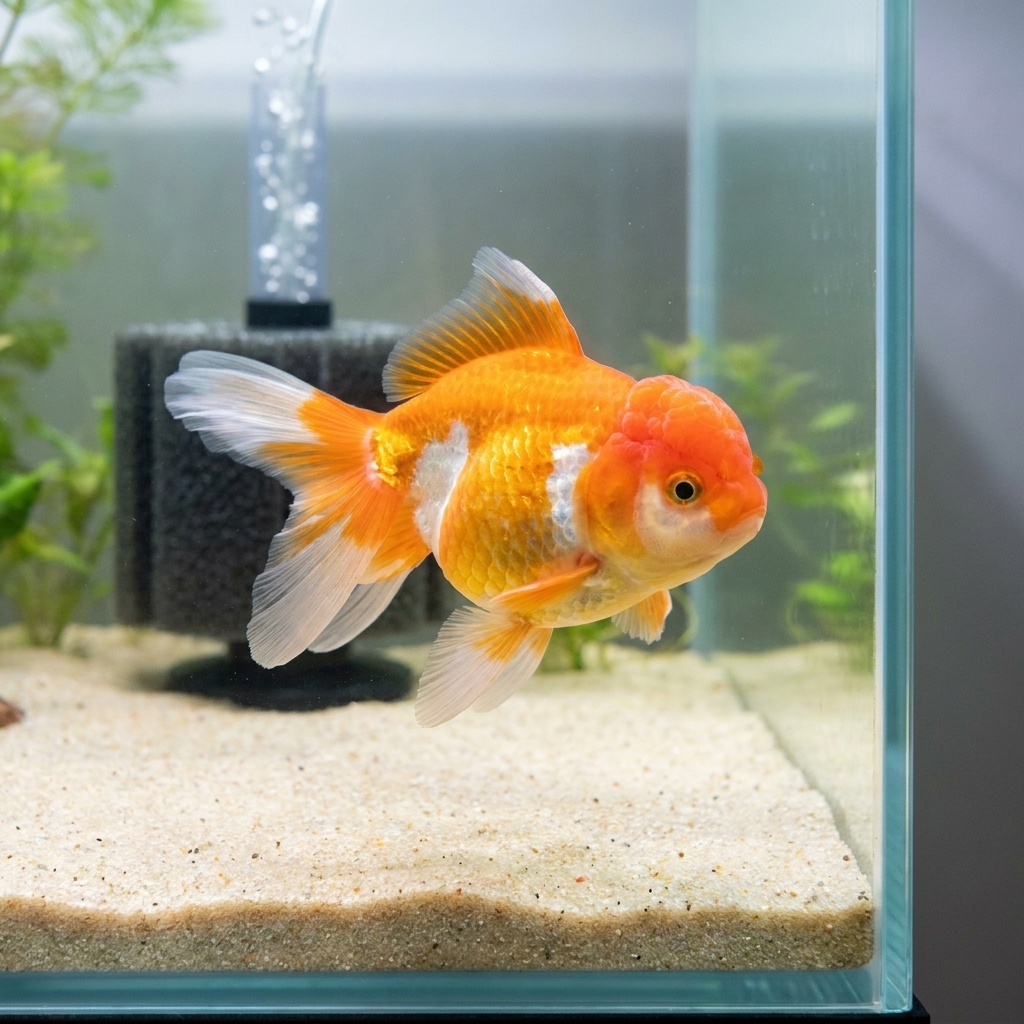
Quick overview
Both are “fancy” because their bodies are shortened and rounded compared to single-tail commons and comets. That cute shape comes with tradeoffs: reduced swimming efficiency, higher risk of buoyancy problems if they are overfed, and a tendency to overwhelm small tanks because they are heavy feeders with a high bioload.
- Oranda: Known for the fleshy headgrowth called a wen. Orandas tend to be a little slower and more delicate around the head area.
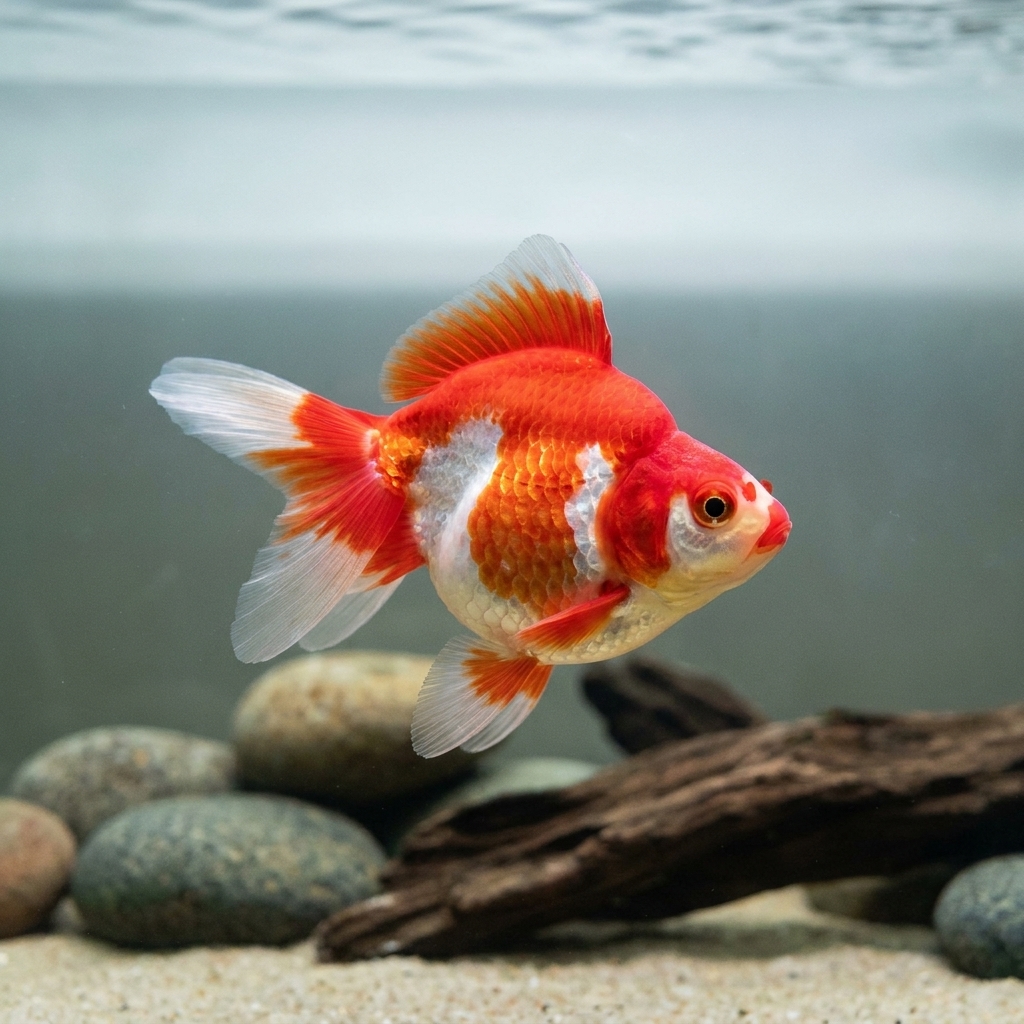
- Ryukin: Known for a pronounced shoulder hump and deep body. Ryukins are often strong eaters and can be surprisingly athletic for a fancy, but their body depth makes them prone to buoyancy stress if conditions are off.
Tank size
Fancy goldfish are often sold at 2 to 3 inches long. Adult orandas and ryukins commonly reach 6 to 8 inches, and some individuals push larger with excellent care. They also produce a steady stream of waste, and that waste load is what drives your filtration and water change schedule.
Recommended sizes
These are realistic, long-term starting points for average adult fancies, with the assumption that you are running serious filtration and staying consistent with water changes. If you keep very large individuals, feed heavy, or want extra stability, sizing up is never wasted.
- Single fancy goldfish: 30 gallons minimum
- Two fancy goldfish: 40 to 55 gallons (55 is more comfortable and stable)
- Three fancy goldfish: 75 gallons
Could you “get by” with less? Sometimes, for a while. But goldfish are the ultimate slow-burn lesson in aquarium stability. Extra water volume gives you breathing room when life gets busy, feeding gets a little generous, or a filter starts to clog.
Footprint over height
Choose a tank with a long footprint. Fancies are not vertical swimmers. They want horizontal cruising room and lots of oxygen exchange at the surface.
Filtration
Most goldfish problems I troubleshoot trace back to one root issue: filtration sized for “tropical community fish,” not for goldfish. Fancy goldfish are enthusiastic grazers that eat, digest, and keep your biofilter employed around the clock.
What strong filtration means
- High biological capacity: lots of media for nitrifying bacteria
- Strong mechanical capture: to pull out waste before it breaks down
- Excellent aeration: goldfish love oxygen-rich water
A practical starting target is about 6 to 10 times tank volume per hour in rated flow across your filters, as long as the current is not blasting them around. Two important notes:
- Manufacturer flow ratings are often optimistic once media is added and the filter is dirty, so “on paper” numbers can mislead.
- Turnover is not the whole story. A filter with roomy biomedia, good mechanical staging, and strong oxygenation will outperform a high-GPH filter with tiny media volume.
If your fish are getting pinned by flow or constantly fighting current, diffuse the output with a spray bar, aim it at the surface, or split flow across two gentler outlets.
Filter setups
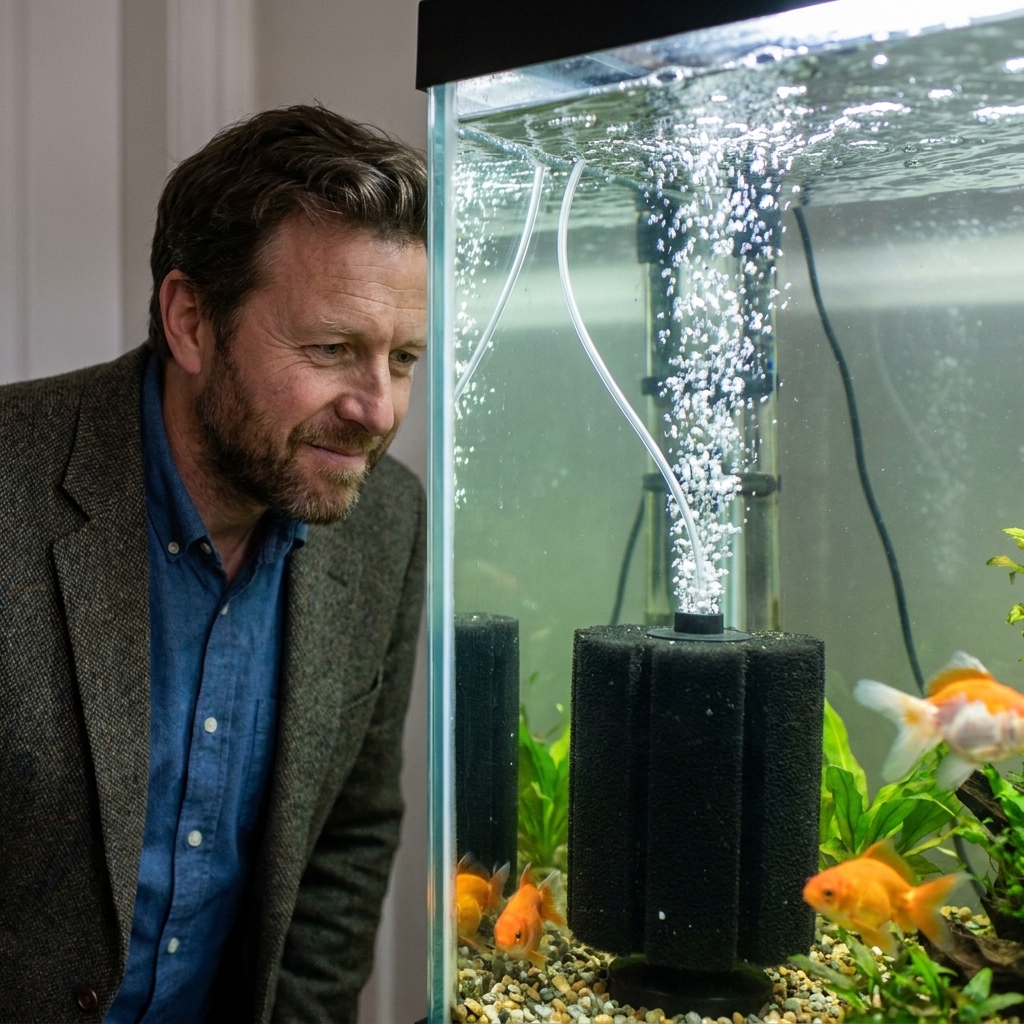
- Canister filter + sponge filter: My favorite combo for larger tanks. The canister handles heavy lifting; the sponge adds extra bio and backup aeration.
- Two large sponge filters: Great for simplicity and safety (no intakes to snag fins). Needs more frequent squeezing and water changes in heavy stocking.
- Hang-on-back (HOB) filter: Works on smaller setups if oversized and paired with a sponge prefilter on the intake.
Must-do: Put a sponge prefilter on any intake. Fancy goldfish fins are soft, and ryukins in particular can tear fins if they get pinned to an intake.
Water and temperature
Fancy goldfish tolerate a wider temperature range than many tropical fish, but stability and oxygenation matter more than chasing an exact number.
- Temperature: 68 to 74°F (20 to 23°C) is a comfortable range for most homes. Mid-60s to mid-70s also works if stable, with oxygenation adjusted accordingly.
- pH: 7.0 to 8.2 is usually fine if stable
- Ammonia: 0 ppm
- Nitrite: 0 ppm
- Nitrate: ideally under 20 to 40 ppm, lower is better for long-term health
Warmer water speeds metabolism, increases feeding demand, and can reduce dissolved oxygen. If you keep your home warmer, compensate with stronger aeration and slightly more frequent water changes.
Oxygen signs
Low oxygen can look like surface gulping, hanging near the outflow, unusual lethargy, or rapid gill movement. The quickest fixes are increased surface agitation, cleaning clogged mechanical media, adding an airstone or sponge filter, and avoiding unnecessary heat.
Cycling matters
If you only take one “boring” lesson seriously, make it this one: goldfish need a mature biofilter. An uncycled tank is how you get ammonia burn, stressed fish, and a constant cycle of emergencies.
Best case
Fishless cycle the tank before you buy the fish. Feed the filter an ammonia source, test regularly, and wait until ammonia and nitrite both process to zero within 24 hours.
If you already have the fish
You are doing a fish-in cycle, whether you meant to or not. Keep it humane by testing daily, doing immediate partial water changes as needed, using a quality dechlorinator, and feeding lightly. Seeding the filter with mature media from a healthy tank can dramatically speed things up.
Quarantine
New goldfish often arrive with parasites or bacterial issues that only show up after the stress of moving. A simple quarantine saves your display tank from becoming a hospital.
- Duration: 2 to 4 weeks of observation
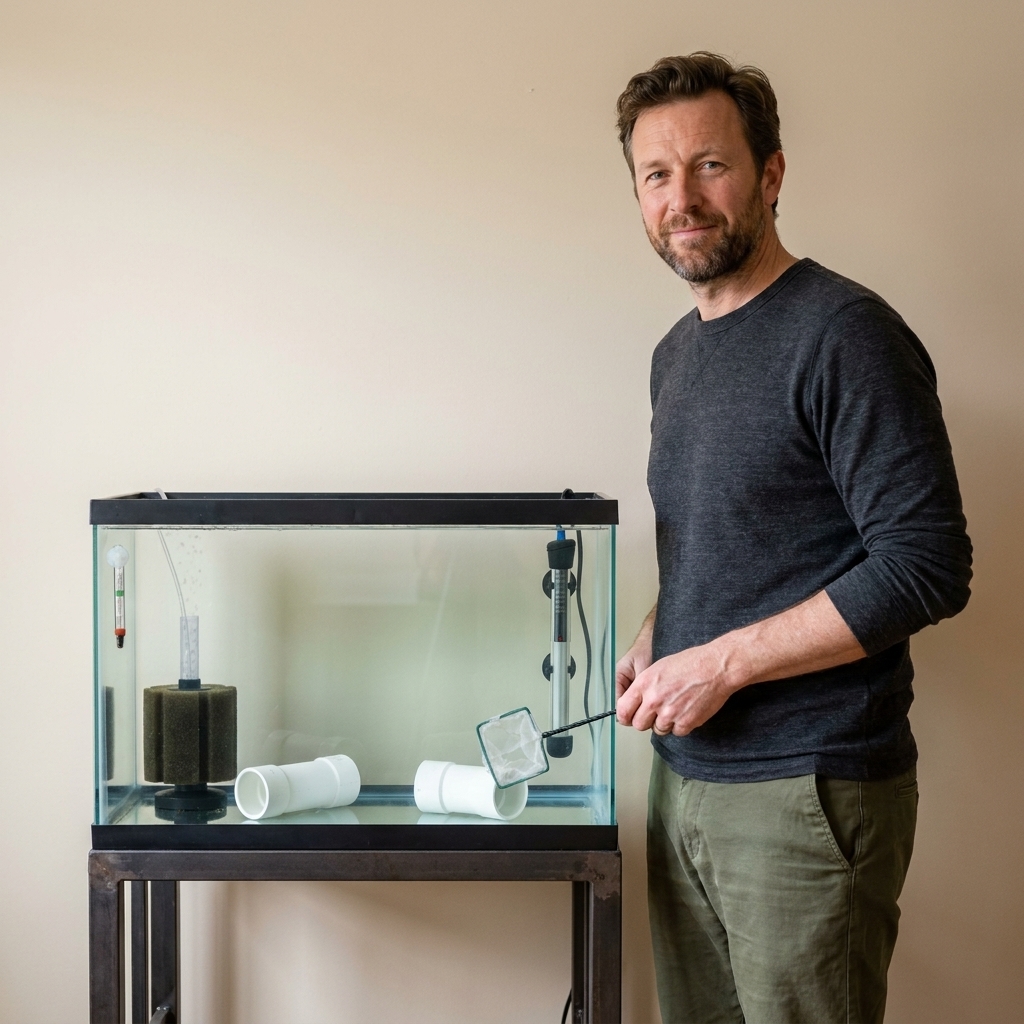
- Setup: bare bottom tank, sponge filter, heater only if needed, a few hiding spots (PVC works)
- Routine: test water, watch appetite and poop, and do frequent water changes
I prefer observation and clean water over automatic medication. Avoid shotgun medicating unless you have a clear diagnosis and a reason to treat.
Orandas
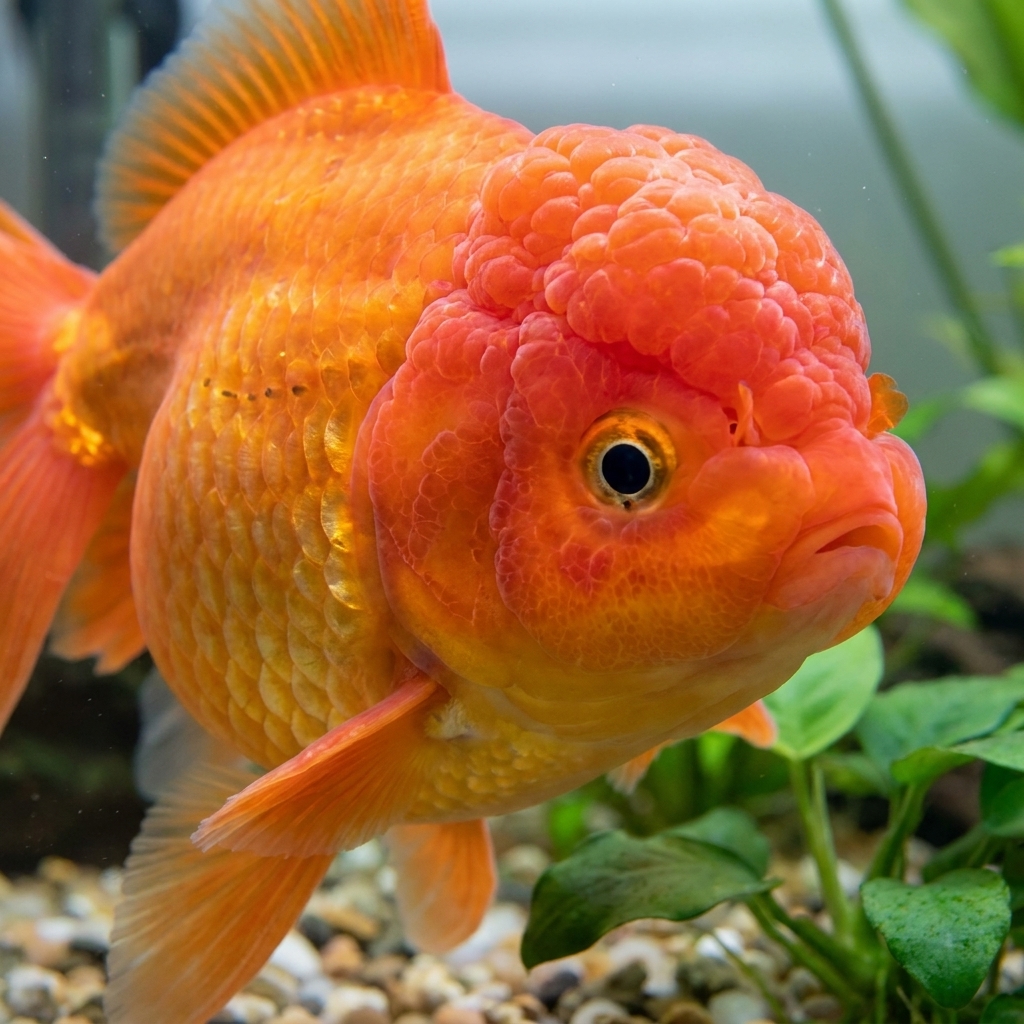
Orandas are famous for their wen, the fleshy headgrowth that develops with age. A healthy wen is not cottony, fuzzy, or eroding. It should look like firm, bumpy tissue, not mold.
Oranda care points
- Protect the head: Skip sharp rocks, jagged wood, and rough decor. Wens can get scraped and then infected.
- Watch for vision issues: A heavy wen can partially cover the eyes. That fish may need calmer tankmates and a predictable feeding routine.
- Be cautious with strong suction: Orandas can be slower and less maneuverable. Use intake sponges and avoid high-suction intakes.
If you ever see the wen turning pale, ulcerating, or developing fuzzy patches, treat it like a water-quality emergency first. Clean water and high oxygen fix more “mystery” head problems than medication does.
Ryukins
Ryukins have a high back and deep body with a distinct shoulder hump. That shape is part of the appeal, and it is also why ryukins can be more prone to buoyancy stress if they are overfed, constipated, or kept in subpar water.
Ryukin care points
- Keep food varied and fiber-friendly: pellets are fine, but balance them with gel food and greens.
- Limit frantic competition at feeding time: Ryukins can be aggressive eaters. In mixed fancy groups, make sure slower fish get their share.
- Provide open swimming lanes: Their deep body makes tight obstacle courses more of a hazard.
A ryukin that repeatedly floats, sinks, or tilts is telling you something. Sometimes it is diet. Often it is water quality. Occasionally it is long-term anatomy. Your job is to remove the solvable stressors first.
Aquascaping
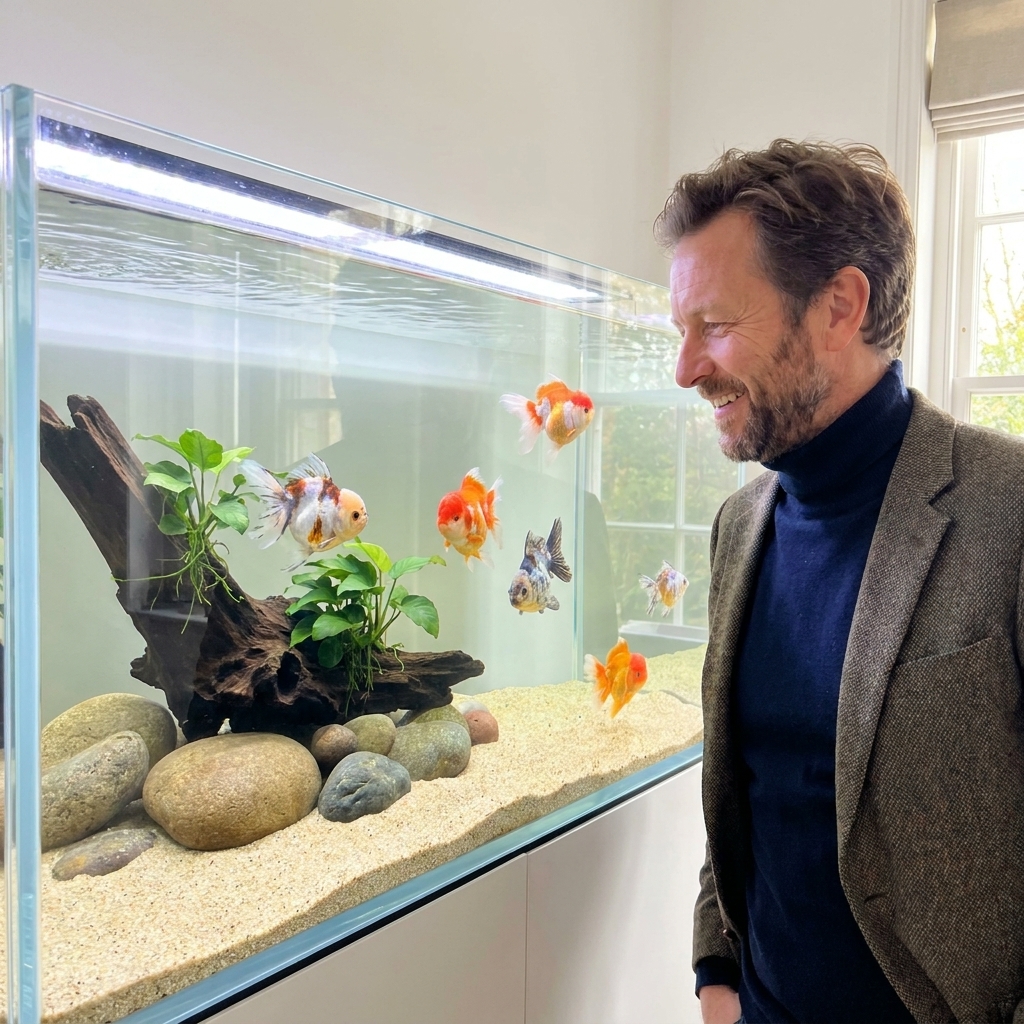
Goldfish tanks look best when they are designed around the fish, not around hardscape ambition. Orandas and ryukins do best with open space, gentle textures, and a layout that makes debris removal painless.
Substrate
- Bare bottom: Easiest to keep spotless, great for quarantine or grow-out
- Sand: My favorite for display tanks. Goldfish love mouthing sand and spitting it out. Use a smooth, fine aquarium sand.
- Gravel: Avoid small gravel that can be swallowed. Large, smooth river stones can work, but they trap debris.
Decor and plants
Goldfish are curious and will nibble. Some plants will get shredded. That is not misbehavior, it is goldfish being goldfish.
- Good options: Anubias (attached to rock or wood), Java fern, Bolbitis, hardy swords in pots, floating plants (with caution so they do not block surface exchange)
- Fast growers for nutrient control: Hornwort, elodea, water sprite (expect nibbling)
Keep any wood smooth and free of sharp points. If a decoration can snag pantyhose, it can snag fins.
Feeding
Fancy goldfish are enthusiastic beggars and they will keep eating. The goal is steady growth and clean digestion, not maximum chaos at feeding time.
What to feed
- Staple: A high-quality sinking goldfish pellet or soft gel food
- Weekly variety: blanched shelled peas, spinach, zucchini, daphnia, bloodworms (treat), brine shrimp
How often
For most adult fancies: 1 to 2 small meals per day. For juveniles growing out: smaller portions more often can work, but only if filtration and water changes keep up.
Floating vs. sinking
Sinking foods often help reduce frantic surface gulping and extra air intake. That said, buoyancy issues are not always caused by “air.” Constipation and inflammation are common culprits. A varied diet and excellent water quality do more than any single food trick.
Water changes
If I could hand every new fancy goldfish keeper a single habit, it would be a calm, consistent water change routine. Fancy goldfish reward stability, and nothing stabilizes a system like removing dissolved waste.
Practical schedule
- Light stocking, strong filtration: 30 to 40% weekly
- Typical fancy goldfish stocking: 40 to 60% weekly
- Heavy feeding or higher nitrate: 2 water changes per week (for example, 40% twice weekly)
Always dechlorinate new water, match temperature within a couple degrees, and avoid deep-cleaning all filter media at the same time. You want to preserve your beneficial bacteria.
Common health issues
Fancy goldfish are tough, but their body shape and high-bioload environment means small problems can snowball. The good news is that prevention is mostly husbandry.
1) Fin tears and scrapes
- Causes: sharp decor, rough nets, intake suction, cramped tanks
- Prevention: smooth aquascape, intake sponges, appropriate tank size
- First response: pristine water, extra aeration, observe for redness or fuzz
2) Buoyancy problems
- Common causes: constipation, poor diet, chronic stress, poor water quality, anatomy
- Prevention: varied diet with fiber, stable temps, avoid overfeeding
- First response: test ammonia and nitrite first, do an immediate partial water change if anything is off, then fast for 24 hours and offer soft greens or gel food
If buoyancy problems keep returning or worsen, do not rely on repeated fasting. Re-check water quality, review diet and feeding pace, and consider that infection or organ issues can be involved. Persistent cases are a reason to isolate and observe closely.
3) Wen infections (orandas)
- Causes: head scrapes followed by bacterial or fungal infection
- Prevention: gentle decor, clean water, avoid rough handling
- First response: isolate if needed, improve water quality, consider targeted treatment if lesions progress
4) Ammonia burn
This can show up as clamped fins, lethargy, flashing, red gills, or just a fish that looks miserable. In goldfish tanks, ammonia issues often come from an undersized filter, a new tank that is not cycled, or a filter that was over-cleaned.
If you are not already testing, a liquid test kit is one of the best investments you can make for goldfish.
Medication caution
Clean water is a treatment. Before you medicate, identify the problem as best you can and avoid stacking multiple meds “just in case.” Many goldfish crashes happen from stress, poor water, and aggressive dosing, not from a lack of medication.
Tankmates
In my experience, the happiest fancy goldfish tanks are either species-only or paired with very carefully chosen companions.
Best tankmates
- Other fancy goldfish with similar speed and body type
Possible, with caution
- Dojo loaches: sometimes works in large, cooler-water tanks, but they can be boisterous, grow large, and may outcompete slower fancies. Compatibility is individual and tank-size dependent.
Tankmates to avoid
- Fast single-tail goldfish (comets, commons): outcompete fancies for food and can bump them constantly
- Tropical community fish: temperature mismatch and stress
- Fin nippers: barbs, many tetras, and anything that “tests” fins
- Common plecos and some other large plecos: high bioload, potential temperature mismatch, and occasional slime-coat rasping incidents
Remember, fancy goldfish are slow, social, and a bit clumsy. A peaceful tank is part of their care.
Choosing healthy fish
Buying well saves you weeks of worry. Take a minute and really watch the fish, not just the color.
- Swimming: steady, level, not struggling to stay upright
- Breathing: calm gill movement, not rapid panting at the surface
- Fins: open, not clamped; no fraying edges
- Body: no pineconing scales, no sunken belly, no red streaking
- Wen (orandas): clean tissue, no fuzzy patches
- Behavior: alert, interested in food, not isolating in a corner
If the tank is crowded, cloudy, or smells strongly “fishy,” consider walking away. You are not being picky. You are protecting your future tank.
Care checklist
- Tank sized for adults: 30 gallons for one, 40 to 55 for two, bigger is easier
- Oversized filtration with gentle flow and intake sponges
- Strong aeration and surface agitation
- Smooth decor and open swimming lanes
- Varied diet, controlled portions, consistent schedule
- 40 to 60% weekly water changes for most setups
- Regular testing for ammonia, nitrite, and nitrate
- Cycled biofilter before adding fish, or a careful fish-in cycle if you already have them
- Quarantine new arrivals when possible
FAQ
Are orandas harder than ryukins?
Neither is “hard” when the tank is sized correctly and filtration is serious. Orandas can be more prone to head scrapes and wen issues, so they benefit from gentler decor and consistently clean water. Ryukins can be more prone to buoyancy stress if overfed or kept in poor water.
Do fancy goldfish need a heater?
Usually no, unless your home drops into the low 60s°F consistently. Stable temperature matters more than warmth. If you do heat, keep it modest and maintain strong aeration.
Can I keep them in a planted tank?
Yes, with the right plants and expectations. Choose hardy species, protect roots (pots can help), and plan for some nibbling. Plants help with nitrates, but they do not replace filtration or water changes.
Why is my fancy goldfish always begging?
Goldfish are opportunistic grazers. Begging is not always hunger. If water parameters are good and body condition looks healthy, stick to your portion plan. Overfeeding is the quickest route to cloudy water and buoyancy issues.