Do you really need an air pump or air stone? A practical, evidence-based look at oxygenation, surface movement, filtration flow, planted tank CO2 tradeoffs, ...
Freshwater aquarium guidance
Aquarium Power Outage Plan
A calm, step-by-step aquarium outage checklist for the first minutes, the first hours, and safe restart. Prioritize oxygen, protect beneficial bacteria, monitor temperature, and avoid filter disasters.

Written by
Oliver Bennett
Oliver Bennett is a lifelong aquarist with over 15 years of experience in freshwater tank setup, aquascaping, and fish health. Through TankRoot, he shares his passion for creating balanced underwater ecosystems, helping hobbyists of all levels build thriving, beautiful homes for their fish.
Published: October 18, 2026
•
Updated: October 18, 2026
Power outages are stressful because they take away the two things your aquarium depends on most: oxygen exchange and stable temperature. The good news is that fish usually do not need “heroics” to get through an outage. They need smart priorities, especially in the first hour.
I built this plan from the same hard lesson a lot of us learn once: fish rarely crash because the lights went out. They crash because water stopped moving, oxygen fell, waste built up, and then a filter was restarted without thinking about what happened inside it while it sat.
Your priorities
- Oxygenation and surface agitation (minutes matter most in heavily stocked tanks)
- Temperature management (hours matter, especially in cold rooms)
- Protecting beneficial bacteria in filters and media (keep it wet and oxygenated)
- Preventing a bad restart (do not just flip everything on without checking)
Everything else is optional until those are handled.
Quick triage
Not every tank needs the same response. Use this quick triage to decide how aggressively you need to act.
High urgency
- Heavily stocked community tanks (lots of fish for the water volume)
- Warm-water tanks (lower oxygen solubility at higher temperatures)
- Minimal surface area (tall tanks, covered tops with little gas exchange)
- High oxygen demand fish like goldfish, larger cichlids, big plecos, active schooling fish
- Any tank with fish already stressed (illness, recent shipping, recent medication use)
Moderate urgency
- Average stocking
- Planted tanks with decent surface movement (but remember plants consume oxygen at night)
- Rooms staying within a comfortable temperature band
Lower urgency
- Lightly stocked tanks in a stable, mild room temperature
- Coldwater tanks in a cool room (oxygen stays higher, and the temperature swing may be smaller when the room is already cool)
Red flag: fish gathering at the surface, “piping” (gulping air), rapid gill movement, lethargy, or shrimp climbing high and acting restless. Treat this as an oxygen emergency.
First 5 to 15 minutes
This is the window where you can prevent most losses in stocked tanks.
- Confirm it is actually a power outage. Check the breaker, GFCI outlet, and power strip. If you reset a GFCI and it trips again, stop and unplug equipment one-by-one to identify the fault.
- Start oxygenation immediately. Your fastest options are:
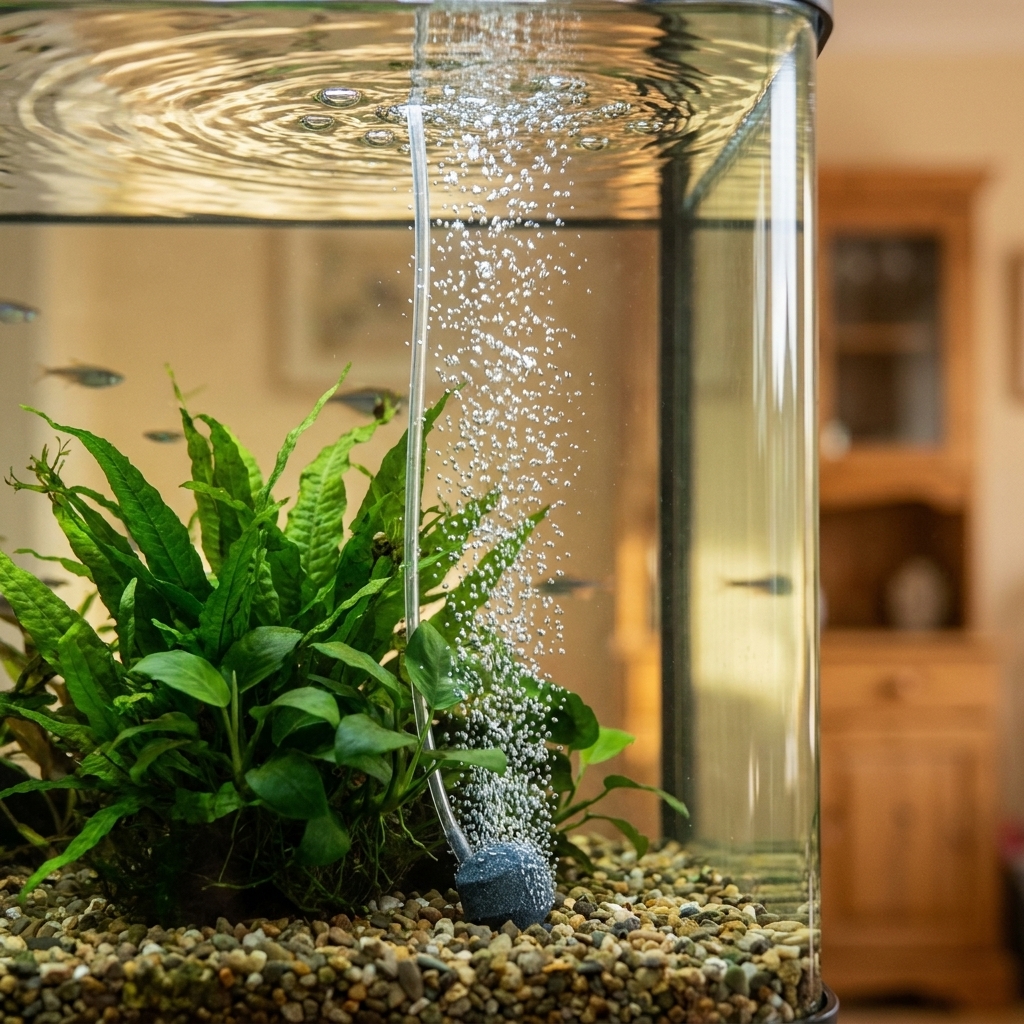
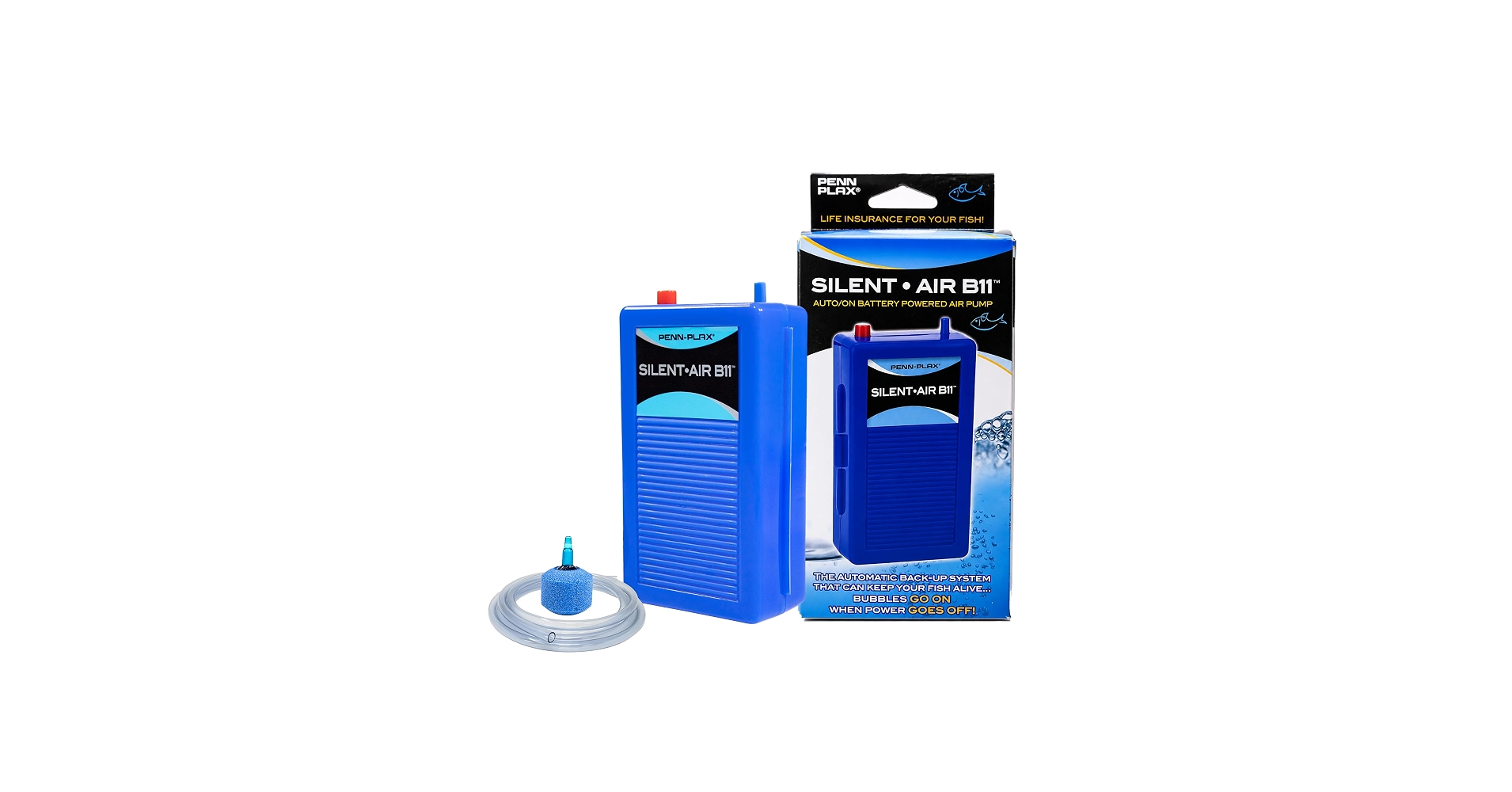
- Battery air pump + airstone (ideal). Place the airstone low enough to move water upward and break the surface.
- If you run sponge filters: a battery air pump on the sponge filter is a two-for-one fix because it adds aeration and keeps biofiltration working.
- Manual agitation if you have nothing else: use a clean, soap-free cup to scoop tank water and pour it back from a height to churn the surface. Repeat every few minutes for high urgency tanks.
- Open the lid or slide covers back slightly to improve gas exchange, especially if condensation is trapping air.
- Turn off and unplug heaters. This prevents dry-firing during partial outages, low water events, or power flickers.
- Unplug filters and pumps. This prevents an automatic restart after a long stagnant period. It also helps you control the restart order later. If your setup can back-siphon or drain in odd ways when unpowered, watch water levels closely and close valves where appropriate.
- Stop feeding. Food quickly turns into waste and an ammonia load. During an outage, your biofiltration is compromised and oxygen is limited.
If you only do two things, do these: add air and do not feed.
Next several hours
Oxygen plan
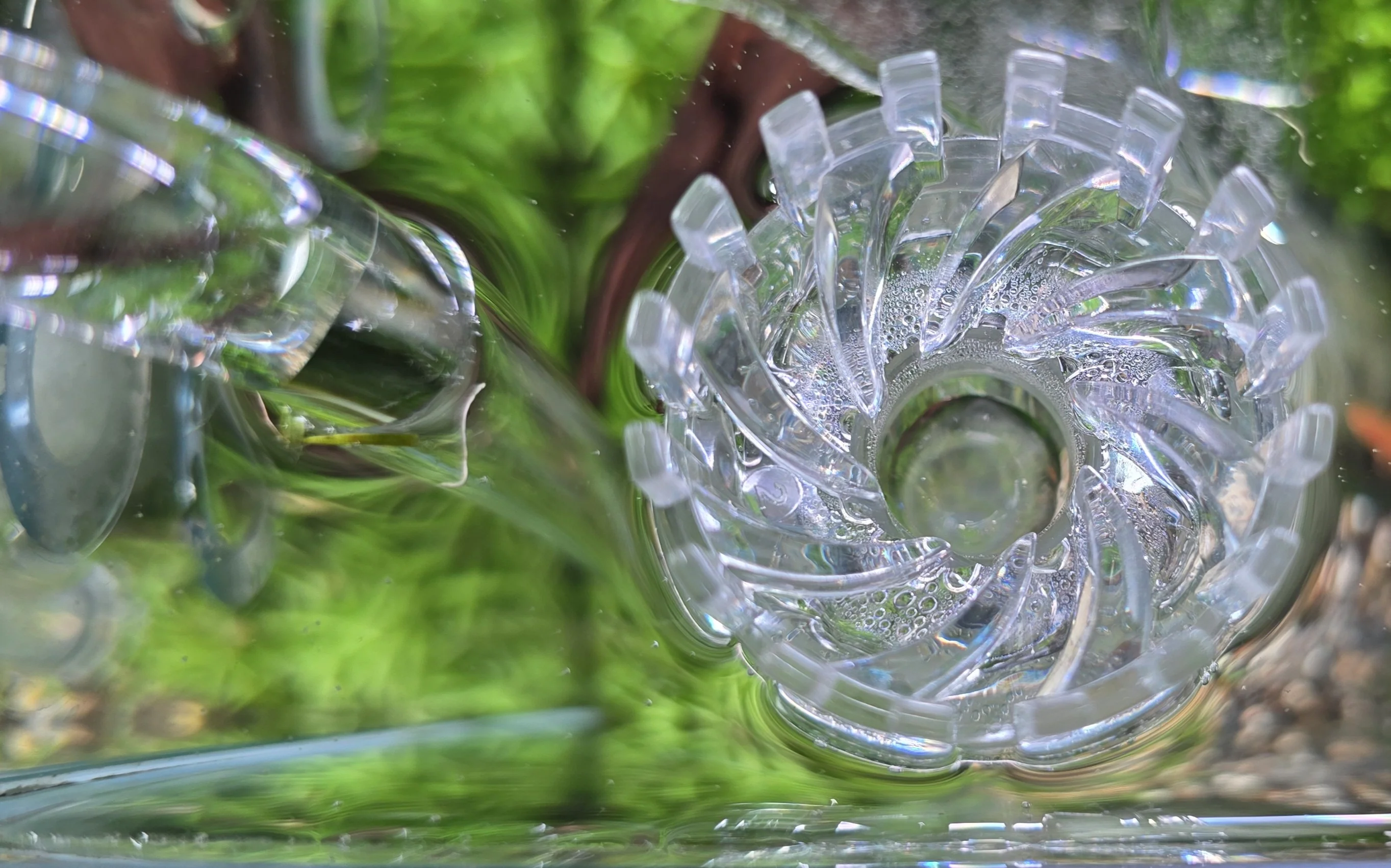
- Keep the surface moving. Airstones help because rising bubbles pull water up and create ripples. The ripples are the real oxygen exchange.
- Check fish on a simple cadence. In high urgency tanks, look in every 15 to 30 minutes for surface-gasping and rapid breathing. In lower urgency tanks, hourly checks are usually enough.
- Conserve battery air pumps. If you only have one pump for multiple tanks, rotate it based on urgency: high stocking first, warmer tanks first, tanks showing surface-gasping first.
- Do not rely on plants to “make oxygen.” In the dark, plants and algae consume oxygen just like fish. A heavily planted tank can still become oxygen-poor overnight.
Temperature plan
Fish tolerate gradual temperature changes far better than oxygen deprivation. Still, you want to slow swings.
- Measure temperature periodically. Use a battery thermometer, an instant-read kitchen thermometer (dedicated to aquarium use), or a simple glass thermometer. Write readings down if the outage is long.
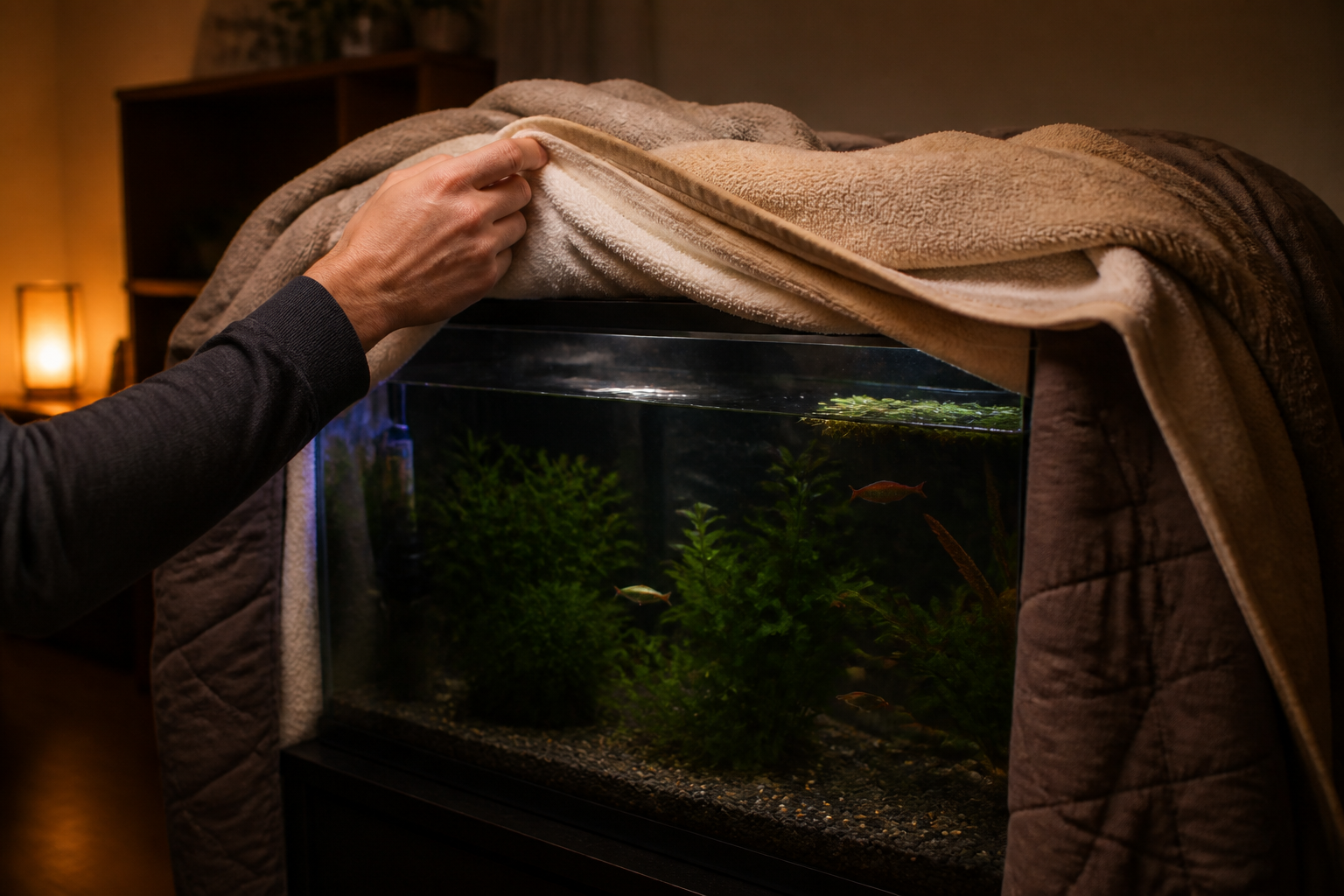
- Insulate the tank. Wrap the sides with towels or blankets. If the room is cold, cover more surface area. If the room is hot, remove insulation and increase ventilation.
- Keep the lid closed most of the time to hold heat, but crack it briefly for gas exchange if needed.
- In winter outages: focus on slowing heat loss. A small room with the door closed stays warmer than an open floorplan.
- In summer outages: overheating can be the bigger threat. Float sealed bags or bottles of cool water if the tank is creeping into dangerous territory, but avoid rapid drops.
Filter bacteria
Your biofilter bacteria need two things: water and oxygen. Without flow, oxygen inside filter media drops, and the filter can turn into a low-oxygen pocket of concentrated waste.
- Keep biological media wet. Do not let sponges, ceramic rings, or bio-balls dry out. Drying kills bacteria fast.
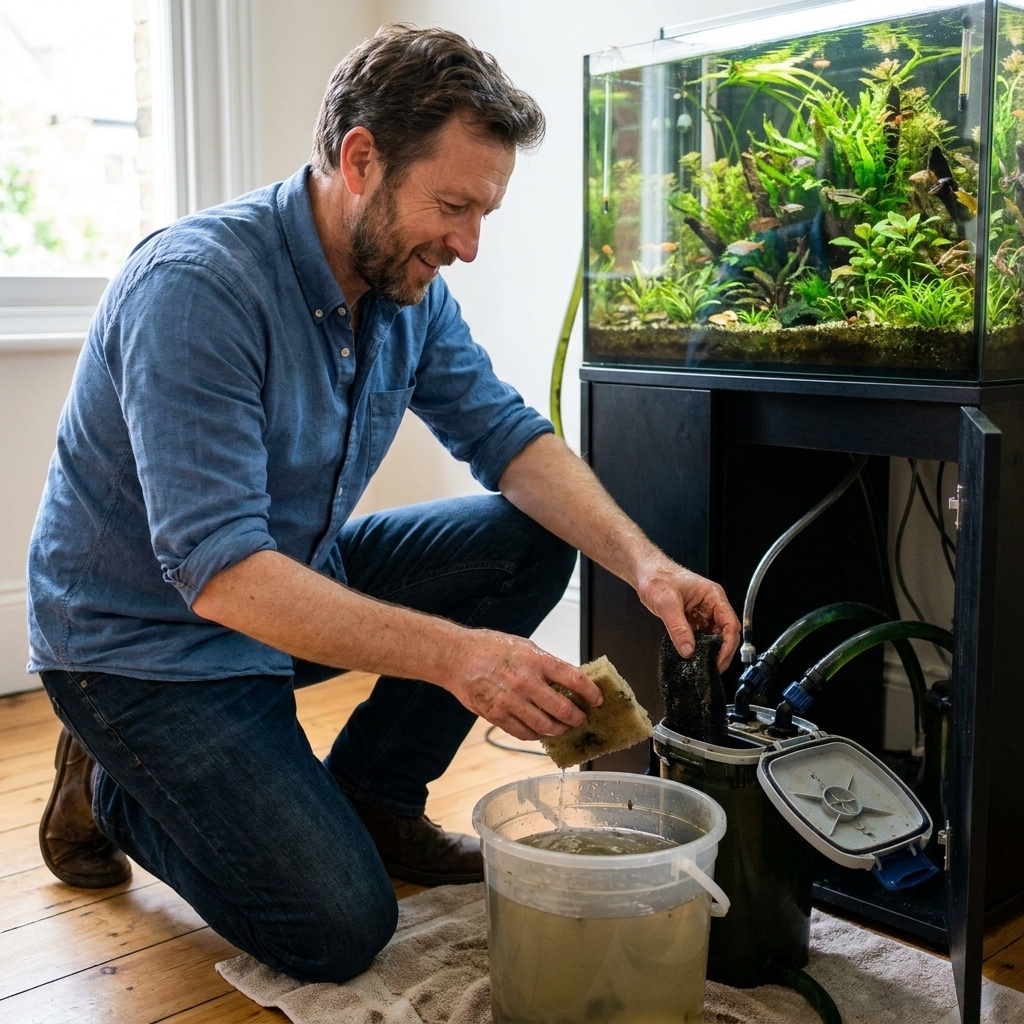
- If you can, keep media oxygenated. During a longer outage, open the filter and keep media submerged in tank water inside the filter body or a clean, soap-free bucket. If you have enough aeration to spare, add an airstone to that container.
- Avoid sealed stagnation. A canister filter sitting closed and unpowered can go oxygen-poor faster than you think. Many hobbyists use roughly 2 to 4 hours as the point where sealed canisters become risky, and warm temperatures or heavy organic load can shorten that window.
- Do not clean or replace media during an outage. This is exactly when you want to preserve bacteria, not disturb it.
- Skip chemical media swaps unless you have a specific reason. Carbon, resins, and other chemical media are not your priority during an outage, and changing them can add unnecessary instability.
Feeding and waste
- Do not feed for the first day if you can avoid it. Healthy fish can go quite a while without food. One skipped day is safer than a surprise ammonia spike.
- If the outage runs long and fish must be fed: feed extremely lightly, and only if you have reliable aeration running.
- Remove visible waste. If poop is building up, you can gently siphon into a bucket using a manual siphon, but do not do giant water changes unless you can temperature-match well.
Backup power
Backup power is best spent on oxygenation and heat in cold conditions, not on lights.
Battery air pumps and USB pumps
- Keep extra batteries charged and accessible. If your pump uses D-cells, store a fresh set with it.
- Use a check valve on airline tubing to prevent back-siphoning if the pump sits below water level.
UPS
- A UPS can keep an air pump or small powerhead running for a useful amount of time, but runtime varies wildly based on watt draw and the UPS battery capacity.
- Do a quick reality check before you need it: look up the device wattage, then run a simple test at home to see how long your UPS actually lasts.
- Most UPS units will not run a large heater for long. If you plug in a heater, runtime often drops to minutes.
Generators and inverters
I am going to be blunt here because it matters more than fishkeeping:
- Never run a generator indoors or in a garage, even with the door open. Carbon monoxide kills.
- Use outdoor-rated extension cords sized for the load. Coiled cords can overheat.
- Keep cords and power strips above flood level and away from dripping tanks, wet towels, and splashing.
- Let generators cool before refueling and store fuel safely.
- Use GFCI-protected outlets when possible.
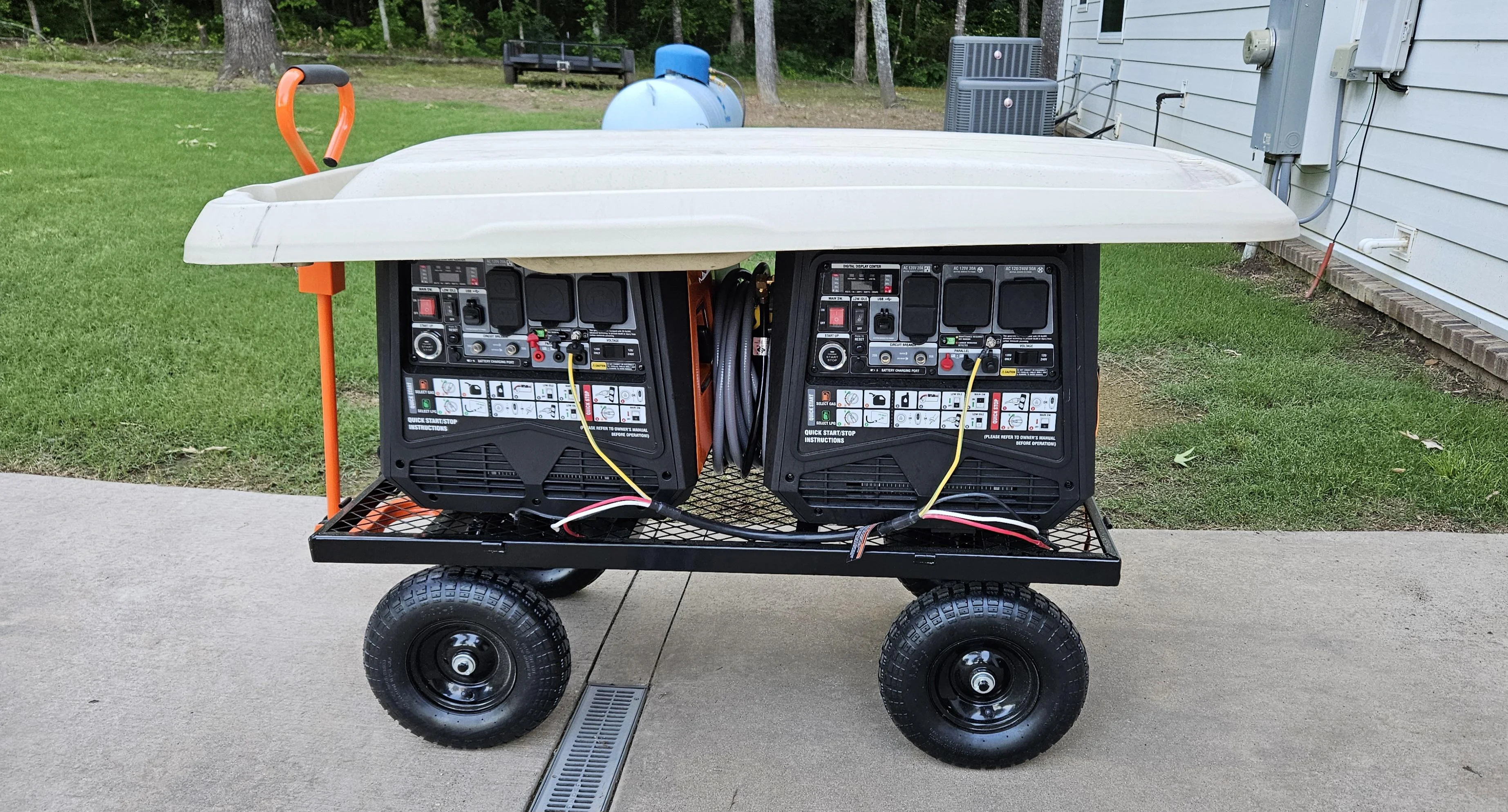
If you are not comfortable with generator wiring and load calculations, keep it simple: run an air pump, a small circulation pump, and if necessary a heater. Skip aquarium lights entirely.
Reef and saltwater note
If you keep a reef or saltwater system, treat oxygenation and circulation as even more urgent. Corals and inverts can be less forgiving of low oxygen and temperature swings, and many reef tanks depend on strong flow for gas exchange. If you have limited backup power, prioritize circulation and surface agitation first.
When power returns
A lot of “mysterious” post-outage fish deaths are actually filter restart problems. Stagnant filters can accumulate low-oxygen water, ammonia, and potentially harmful byproducts (including hydrogen sulfide). You do not want that dumped into the tank all at once.
Safe restart steps
- Check temperature first. If the tank cooled or warmed significantly, bring it back gradually. Do not crank a heater to max.
- Smell the filter water before restarting. If you open a canister or HOB and it smells like rotten eggs, swamp, or strong sewage, treat it as contaminated.
- If the filter was off briefly: you can usually restart normally, but watch fish behavior closely for the next hour.
- If the filter was off for several hours: use your judgment, but assume sealed filters are higher risk, especially in warm tanks. Then:
- Open it.
- Discard the foul water.
- Rinse mechanical gunk out using dechlorinated water or saved tank water, not straight chlorinated tap.
- Keep biological media wet, but remove obvious sludge that could fuel a spike.
- Restart with clean tank water inside the filter body.
- Restart equipment in order: aeration or circulation first, then filtration, then heater. Lights last.
- Do not feed right away. Give the system several hours to stabilize.
Watch for these signs
- Fish gasping at the surface
- Cloudy water that worsens quickly
- Strong odor from the filter output
- Sudden lethargy, clamped fins, or rapid breathing
Next 24 to 72 hours
Even if everything looks fine, assume the outage stressed your biofilter a bit. Your goal now is to catch a small problem before it becomes an emergency.
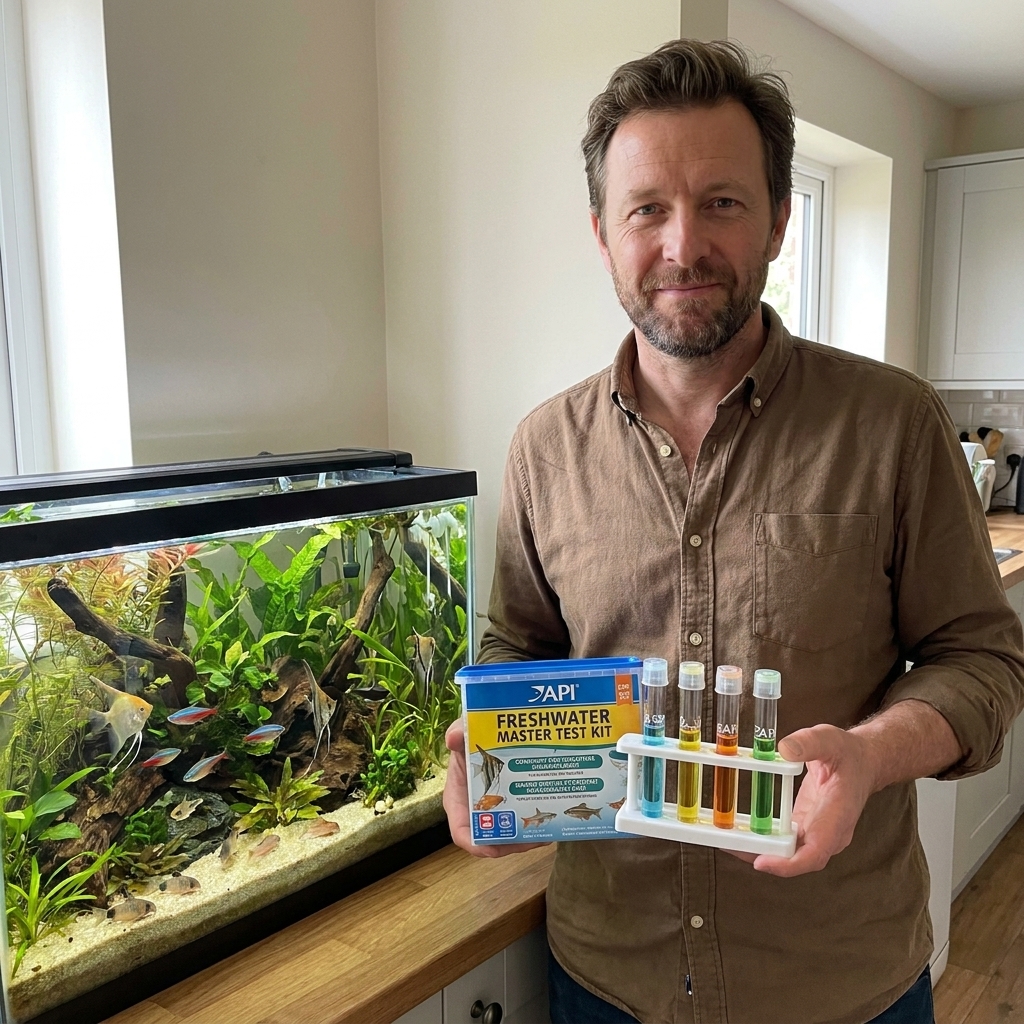
- Test ammonia and nitrite a few hours after restart, then daily for the next 2 to 3 days.
- If ammonia or nitrite is present:
- Do a temperature-matched, dechlorinated water change.
- Increase aeration.
- Reduce or pause feeding.
- Consider adding bottled bacteria if you suspect significant biofilter die-off. It is not magic, but it can help shorten a wobble.
- Keep lights reduced for a day if the tank is stressed. Fish recover better in a calmer environment.
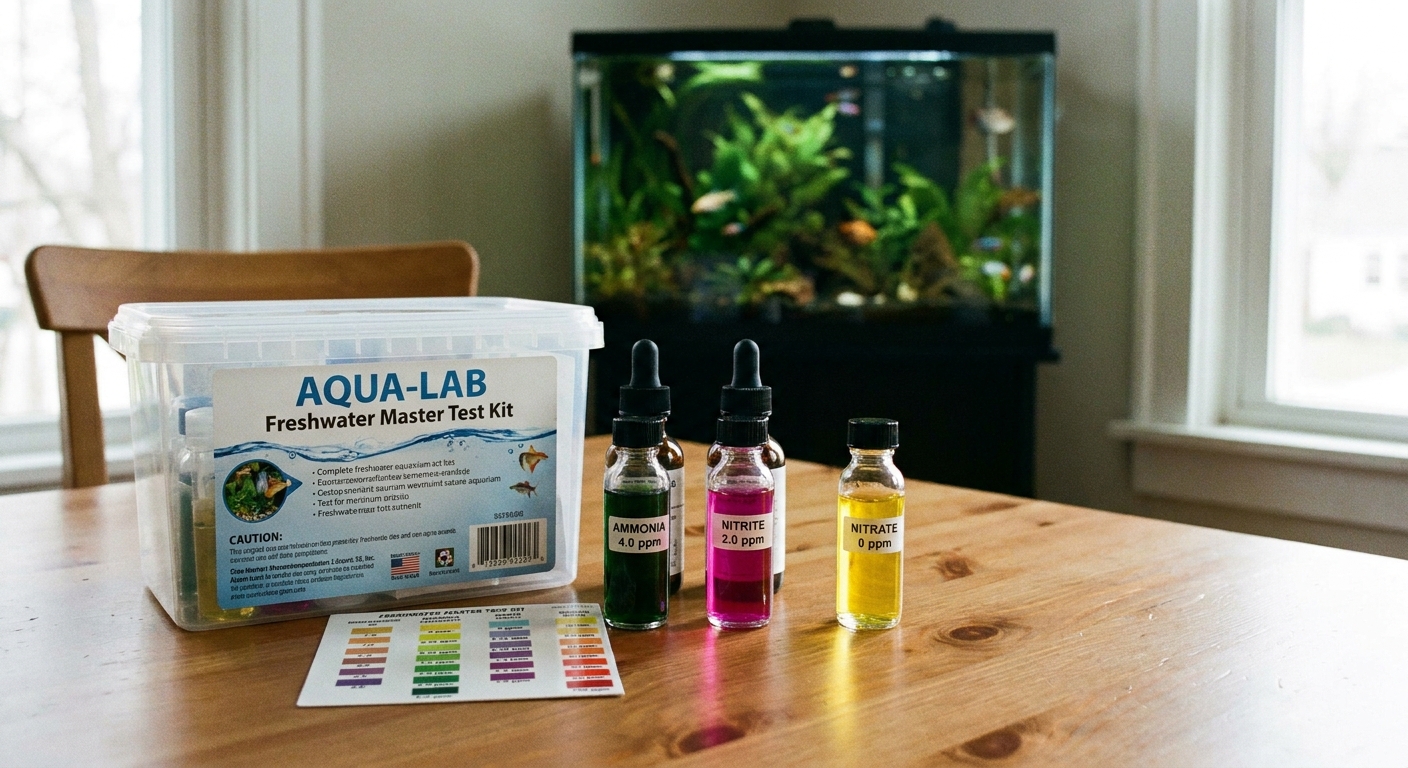
If you have sensitive fish or a heavily stocked tank, testing is not optional. It is how you prevent the delayed crash that hits a day later.
Outage checklist
First minutes
- Start battery air pump, sponge filter air, or manually agitate the surface
- Unplug heater
- Unplug filters and pumps to prevent an uncontrolled restart later
- Open lid slightly for gas exchange
- Do not feed
First several hours
- Maintain surface agitation continuously
- Check fish every 15 to 30 minutes in high urgency tanks
- Insulate tank if room is cold, ventilate if room is hot
- Keep bio media wet, and aerate it if you can during long outages
- Avoid media swaps and unnecessary maintenance
Power restoration
- Check temperature, correct gradually
- Inspect and smell filter before restart
- Discard stagnant filter water if foul, restart with clean tank water
- Turn on aeration first, then filter, then heater, then lights
- Test ammonia and nitrite after restart and for 2 to 3 days
Common questions
How long can fish survive without a filter?
Many tanks can go several hours without filtration if oxygen is maintained and you are not feeding. The true limiting factor is usually oxygen, not the absence of filter flow by itself. Stocking level and temperature decide the timeline.
Should I do a big water change during the outage?
Only if you can do it safely. A poorly matched water change can stress fish more than the outage did. During the outage, prioritize oxygen. After power returns, water changes are a great tool if ammonia or nitrite appears.
Will my plants keep the tank oxygenated?
No, not reliably. In darkness, plants consume oxygen. Even in daylight, oxygen exchange at the surface is what keeps an aquarium stable, especially when filtration is off.
What is the biggest mistake people make?
Feeding fish to “reduce stress,” and restarting a canister or HOB filter that sat stagnant for hours without checking it first.
Outage kit
- Battery air pump (or two) and spare batteries
- Airstones and airline tubing
- Check valves
- A dedicated thermometer
- Dechlorinator
- Ammonia and nitrite tests
- A clean, soap-free bucket and siphon
- Towels or blankets for insulation
If you do nothing else, buy the battery air pump. It is the single best dollar-for-dollar insurance you can give your fish.