Sponge, HOB, and canister filters all work, but they shine in different tanks. Compare flow, bio filtration, noise, cost, and maintenance so you can pick the...
Freshwater aquarium guidance
Breeding Corydoras Catfish at Home
A step-by-step Corydoras breeding guide: how to condition adults, trigger spawning with cooler water changes, collect and hatch eggs, and raise fry into healthy juveniles.

Written by
Oliver Bennett
Oliver Bennett is a lifelong aquarist with over 15 years of experience in freshwater tank setup, aquascaping, and fish health. Through TankRoot, he shares his passion for creating balanced underwater ecosystems, helping hobbyists of all levels build thriving, beautiful homes for their fish.
Published: October 17, 2026
•
Updated: October 17, 2026
Corydoras are some of the most rewarding fish you can breed in a home aquarium. They are peaceful, social, and once you learn what “good conditions” really mean to a Cory, they often do the rest. The trick is giving them seasonal cues and safe egg management, then keeping fry food and water quality consistent for the first few weeks.
This guide walks you through the whole process, start to finish: conditioning your adults, triggering a spawn, collecting and incubating eggs, and raising fry into sturdy juveniles.
Know your species
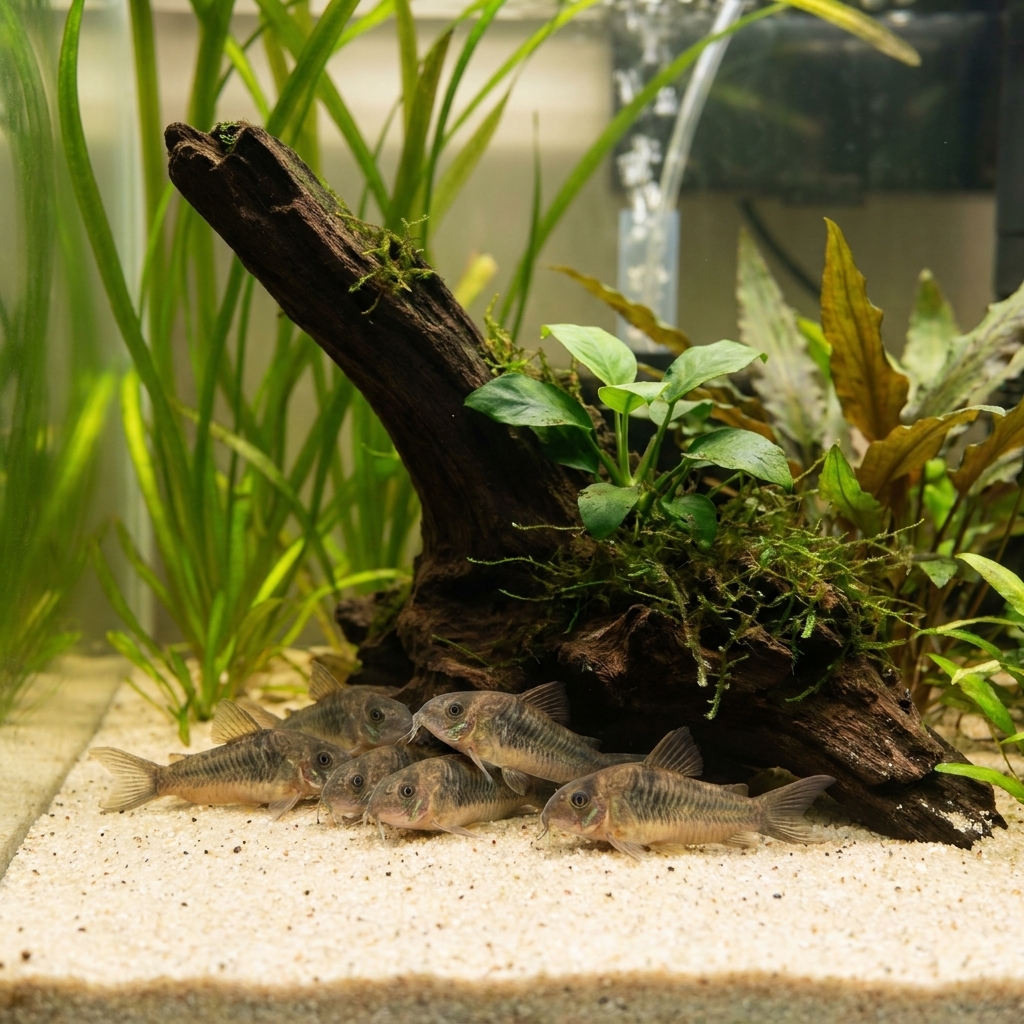
“Corydoras” is a big group, and different species can vary in size, temperature preference, and how readily they spawn. The good news is the basic method is very similar for most common aquarium Corys.
Beginner-friendly spawners
- Corydoras aeneus (Bronze Cory): very forgiving, prolific
- Corydoras paleatus (Peppered Cory): often responds strongly to cooler water changes
- Corydoras sterbai: slightly warmer preference, still very breedable
- Corydoras panda: breedable, but more sensitive to heat and low oxygen
If you are buying fish with breeding in mind, aim for a healthy, active group from the same source so they are more likely to be the same species and similar age.
Breeding setups
You can spawn Corydoras in a community tank, but raising fry there is a gamble. For consistent results, I prefer either a dedicated breeding tank or moving eggs to a separate hatch container.
Option A: Breeding tank
- Tank size: 10 to 20 gallons works for most species
- Substrate: bare bottom or thin sand (bare bottom makes egg and waste management easiest)
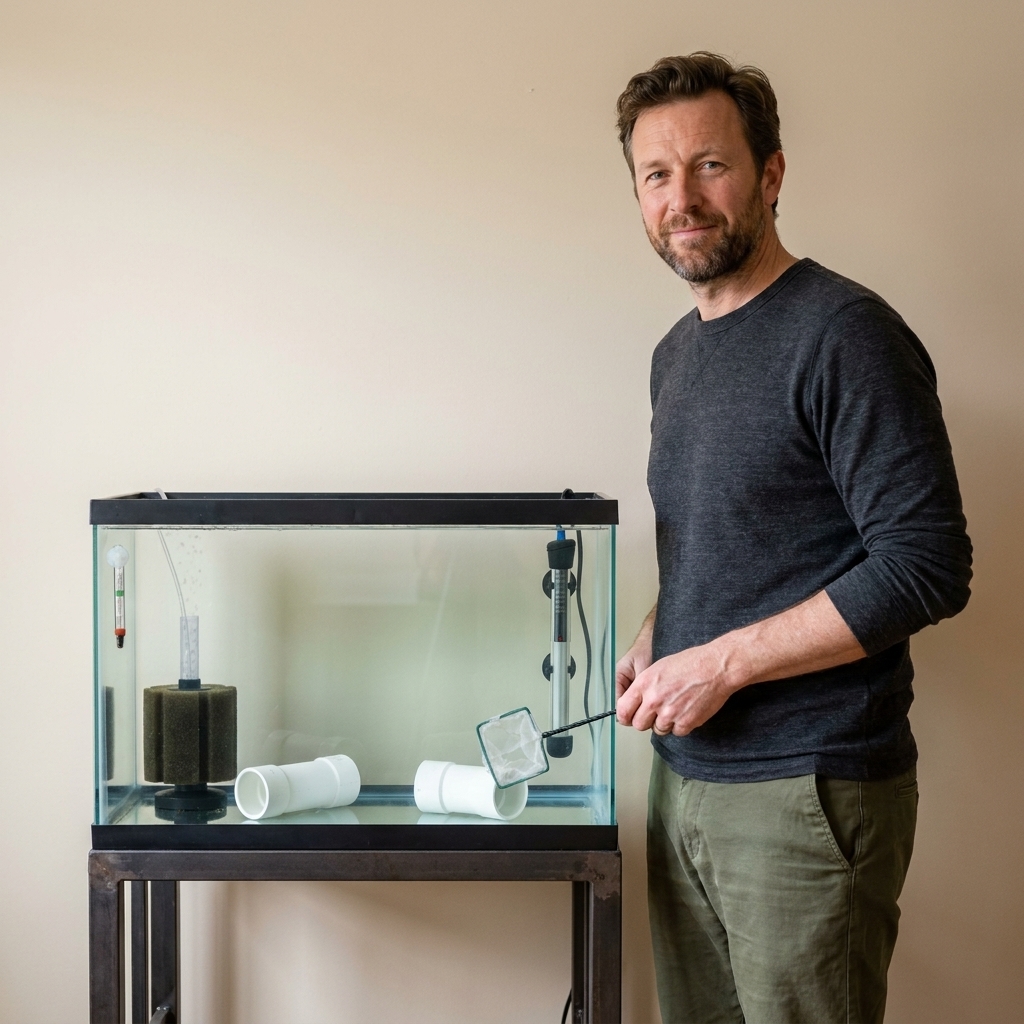
- Filtration: sponge filter (gentle, fry-safe, oxygen-rich)
- Flow and air: steady water movement and good surface agitation, not a blasting current
- Spawning surfaces: broad plant leaves (Anubias), spawning mops, or clean glass
- Lighting: normal day-night rhythm, nothing intense
A mature tank helps a lot. If the breeding tank is newly set up, seed the sponge filter from an established aquarium and confirm it is fully cycled before adding breeders.
Option B: Spawn in the main tank, move eggs
This works well if your adult Cory school is already established and comfortable. You will collect eggs from glass, plants, or hardscape and hatch them in a small container with gentle water movement.
Step 1: Build a breeding group
Corydoras are social spawners. You will get better behavior and a stronger spawning response when they feel like a real shoal, not a pair that was forced together.
- Group size: 6 to 10 is a great start, 10 to 15 is even better if tank space allows
- Sex ratio: many breeders use more males than females (often close to 2 males per female), but a balanced group can also work well, especially in smaller tanks where females could be stressed by constant attention
How to sex Corydoras
- Females: rounder and wider through the belly when viewed from above, especially when full of eggs
- Males: slimmer, sometimes slightly smaller, often more “torpedo-shaped” from above
Do your sexing after a few weeks of good feeding. Underfed fish are hard to sex because nobody has a proper body profile.
Step 2: Condition the adults
If I could only give one piece of advice, it would be this: conditioning is not “feeding more flakes.” Conditioning means high-quality, protein-rich foods plus stable, clean water for long enough that females can develop eggs and males are ready to chase.
Conditioning plan (10 to 21 days)
- Feed 2 times daily (small portions, no leftovers)
- Base diet: quality sinking pellets or wafers that list whole fish or shrimp as top ingredients
- Boosters (rotate): frozen bloodworms, frozen daphnia, frozen brine shrimp, live blackworms (from a trusted source)
- Water changes: 20 to 40% two to three times per week to keep nitrates low
Healthy Corys should look active, forage constantly, and show strong barbels. If barbels are shortening or faces look irritated, fix substrate cleanliness and water quality before you try to breed anything.
Target water parameters
Exact numbers vary by species and local water, but these are safe targets for most commonly bred Corydoras:
- Temperature: 72 to 78 F for many species (some prefer cooler, some warmer)
- pH: roughly 6.5 to 7.5 is fine for most tank-bred fish
- Hardness: soft to moderate can improve fertility and hatch rates for some species and lines, but plenty of tank-bred Corys spawn in moderate to even fairly hard tap water when conditions are clean and consistent
- Ammonia and nitrite: always 0
- Nitrate: keep it low, ideally under 20 ppm
Step 3: Trigger spawning
In the wild, Corydoras often spawn when rains arrive. In a home aquarium, we mimic that with a combination of cooler water changes, extra oxygen, and fresh food.
Reliable trigger routine
- Evening: feed a rich meal (frozen foods are great here)
- Next morning: do a 30 to 50% water change with water that is 2 to 5 F cooler than the tank
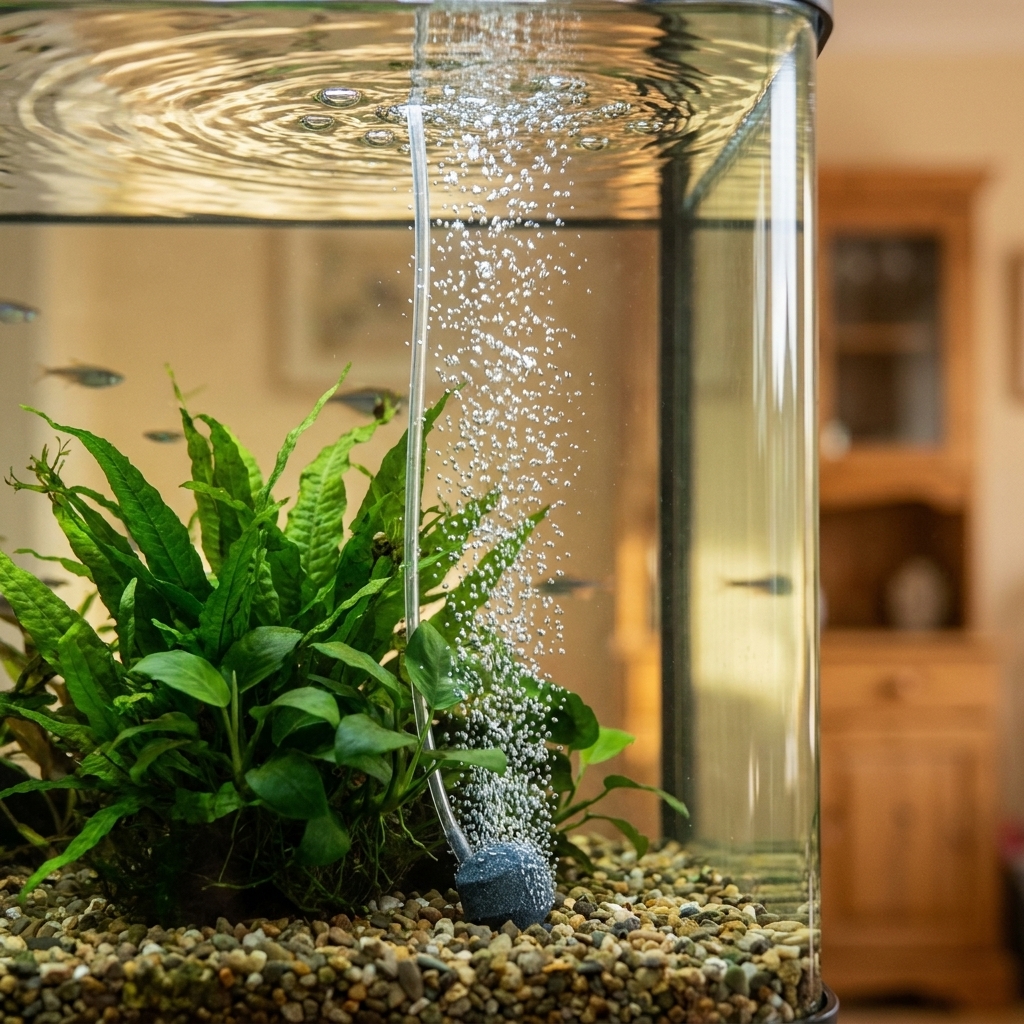
- Boost oxygen: add an airstone or increase sponge filter airflow so the surface stays broken up
- Repeat: once daily for 2 to 3 days if needed, while keeping water clean
Do not chase huge temperature swings. You are giving them a “fresh rain” cue, not shocking them.
Spawning behavior to watch for
- Increased chasing and activity, especially in the morning
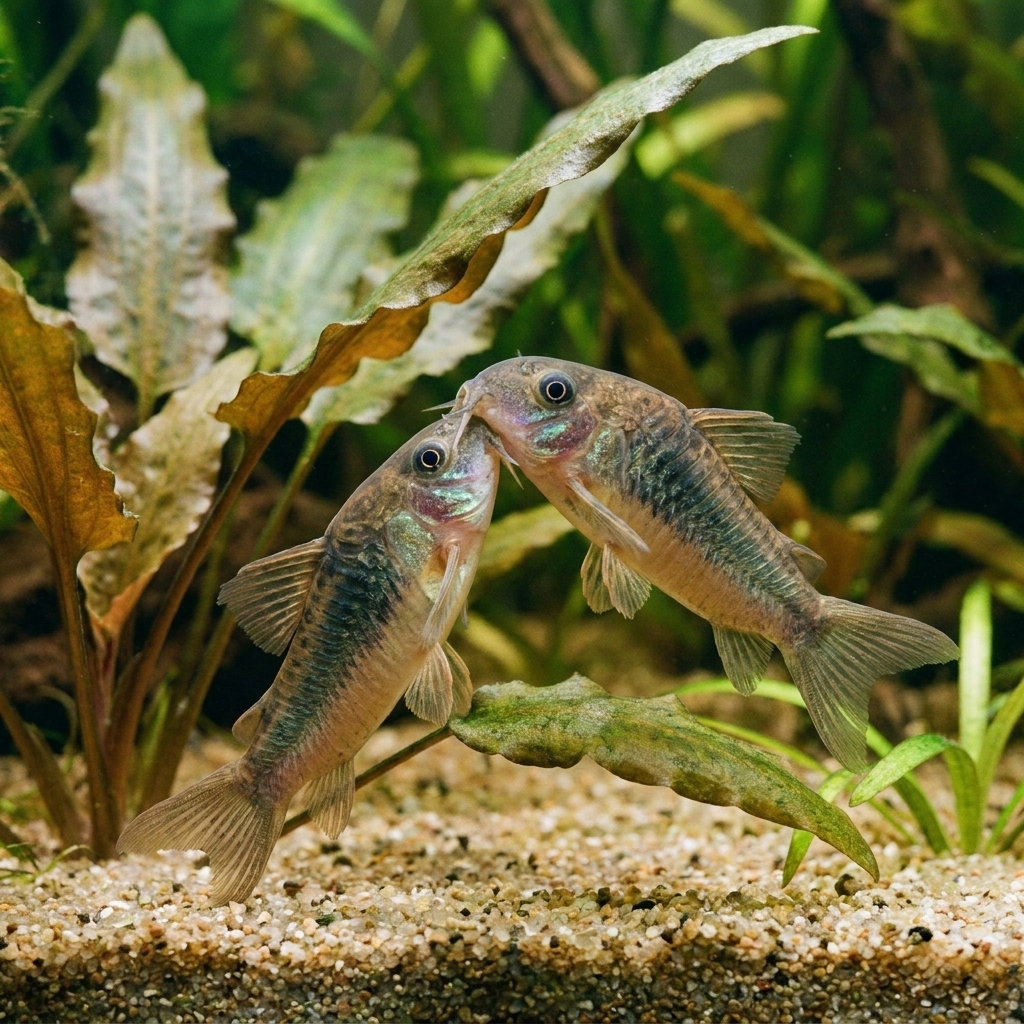
- The “T-position”: the female forms a T with a male near her head. This is classic Cory behavior during fertilization.
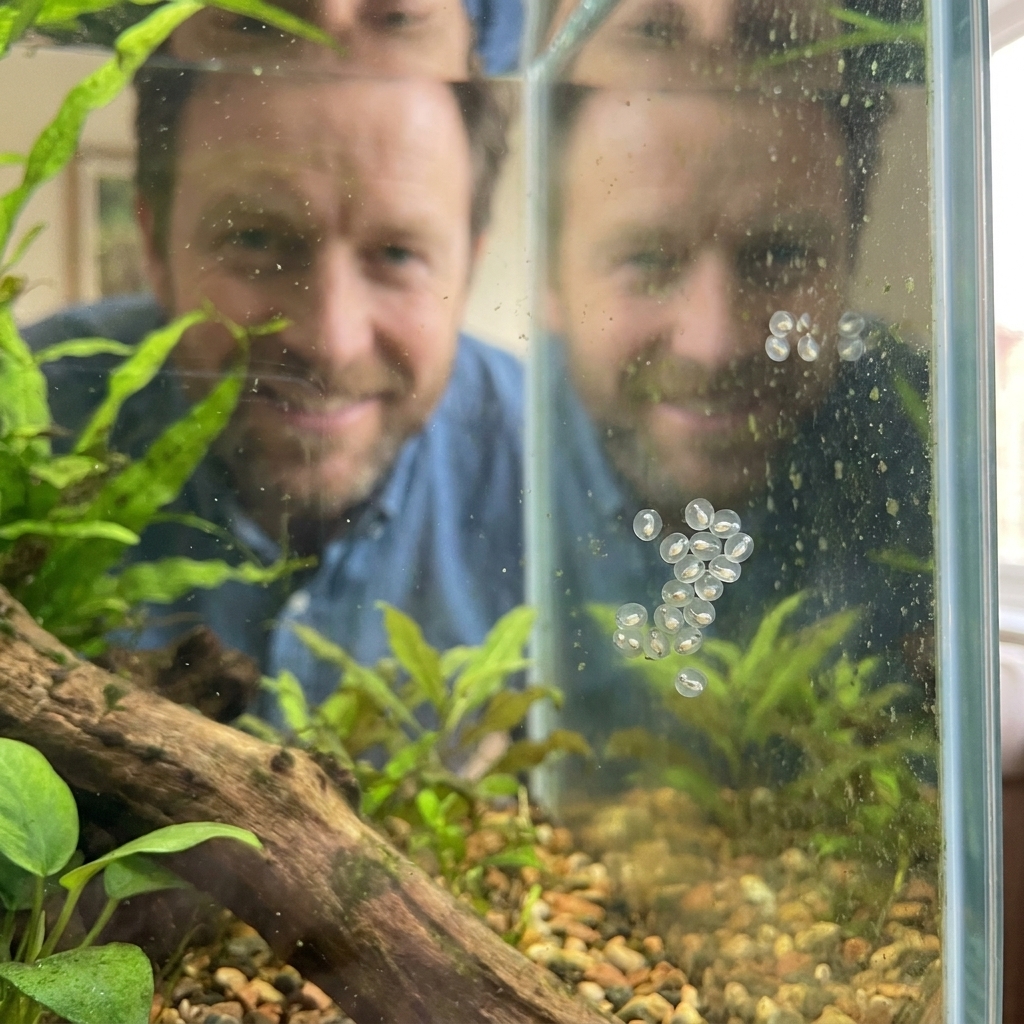
- Egg laying: females carry a few eggs at a time and press them onto glass, plants, filter tubes, or other surfaces
Step 4: Protect the eggs
Most Corydoras do not guard eggs. Adults and tankmates will often eat eggs, sometimes quickly, sometimes gradually over a day. If you want reliable hatches, plan to protect the clutch.
Option 1: Move the adults
After spawning, net the adults back to their home tank. Leave eggs in the breeding tank to hatch. This is simplest if the breeding tank is bare bottom and easy to clean.
Option 2: Remove the eggs
If eggs are on the glass, you can gently roll them off with a clean fingertip. A few handling habits make a big difference:
- Keep eggs submerged during removal and transfer whenever possible
- Avoid fingernail pressure. Use the soft pad of your finger, or a clean plastic card to lift and roll
- Transfer eggs in a small cup or container of tank water rather than carrying them dry on a tool
If eggs are on a leaf, you can trim the leaf and move it.
- Use a small container or breeder box with tank water
- Add water movement nearby so there are no stagnant pockets
- Keep temperature stable
Option 3: Use a removable surface
This makes collection much less stressful. Corys will often use a mop, a broad-leaf plant, or even a removable piece of smooth decor.
Preventing fungus
Some infertile eggs will turn white and fungus can spread. Your job is to keep water moving and remove bad eggs.
- Daily: remove opaque white eggs with tweezers or a pipette
- Water movement: steady flow reduces dead spots around the clutch
- Optional: many breeders use a small dose of methylene blue in a separate hatching container. The main risks are staining (silicone, decor) and potential suppression of beneficial bacteria, so it is best used in a simple, easy-to-clean container and then removed with water changes after hatching.
If you want a quick “good egg vs bad egg” visual: viable eggs usually stay clear to slightly tan or amber and you may notice a developing dark spot or subtle shape inside over time. Infertile eggs typically go opaque white and stay that way.
Step 5: Incubation and hatching
Cory egg development depends on temperature and species. As a practical expectation, many common Corydoras hatch in about 3 to 5 days around 75 to 78 F, with cooler water slowing the timeline and warmer water speeding it up.
- Day 1: eggs are clear to beige and firm
- Day 2 to 4: embryos become more visible, unfertilized eggs turn white
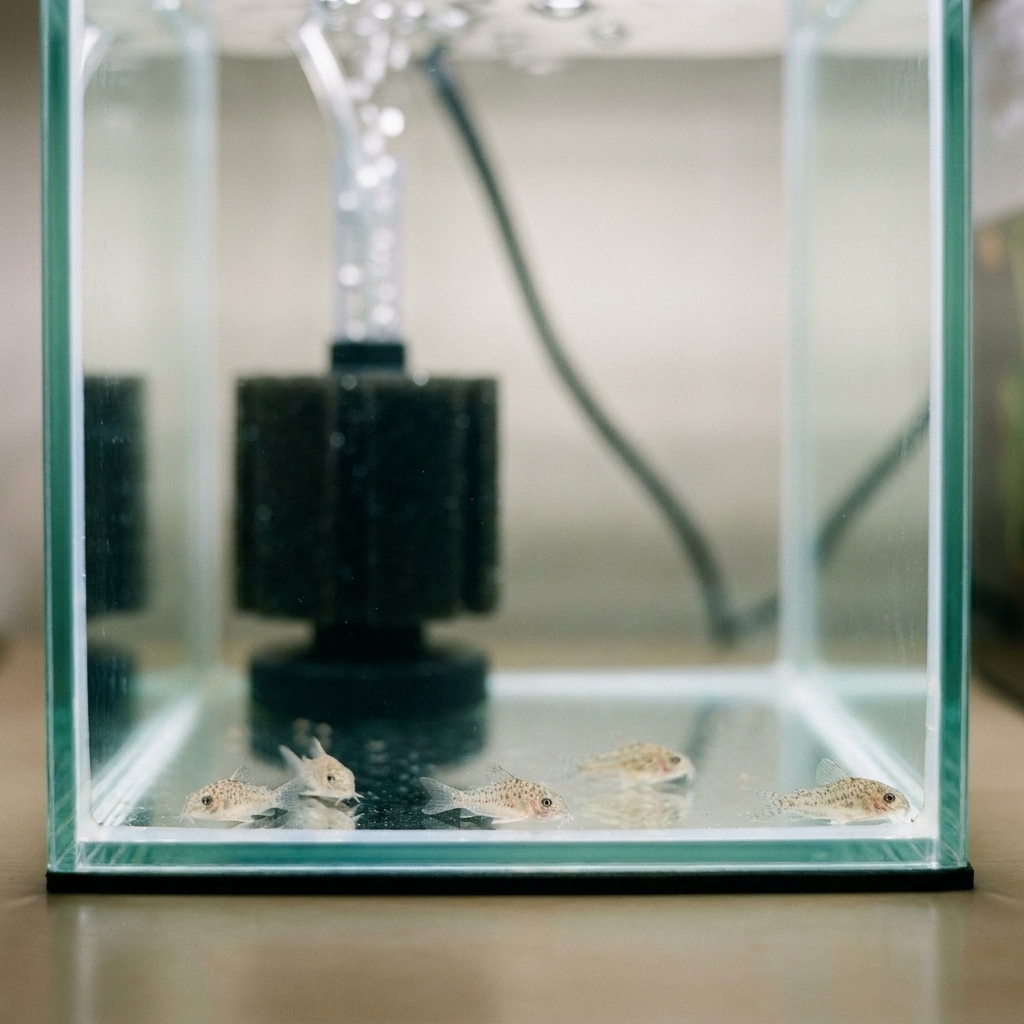
- Hatch day: fry emerge and rest on the bottom, absorbing yolk
Once fry hatch, keep lighting moderate and flow gentle. A normal photoperiod is fine, and I do not recommend running lights 24/7. Strong suction intakes are a common cause of early losses, which is why sponge filtration is so popular here.
Hatch day checklist
- Keep water moving and oxygen high, but do not blast fry around
- Do not feed immediately. Most fry do best with 24 to 48 hours to finish absorbing yolk
- If you used methylene blue in a separate container, begin removing it with small water changes. Activated carbon can also help clear it, if you are running a filter that can hold carbon
- Check for and remove any unhatched white eggs so they do not foul water
Step 6: Feeding Cory fry
Cory fry are tiny and they need frequent, appropriately sized food. They also produce waste fast relative to their size, so clean water is just as important as feeding.
First 48 hours after hatching
Most fry will not need food immediately while they finish absorbing yolk. Keep the tank clean and stable.
Best first foods
- Live baby brine shrimp (BBS): my top choice for fast growth and strong survival
- Microworms: great backup, especially if BBS hatching is inconsistent
- Commercial fry foods: can work, but powders are easy to overfeed and can trigger bacterial blooms that consume oxygen and crash a small fry setup fast
Feed small amounts 2 to 4 times per day. Your goal is that fry always find food, but the bottom should not be carpeted with leftovers.
When can they eat larger foods?
As fry grow, you can add crushed pellets, finely crumbled wafers, and small frozen foods. A good rule is: if it looks too big for their mouth, it is too big.
Step 7: Water quality for fry
Fry thrive in clean, oxygen-rich water, and Cory fry especially appreciate stability. I would rather see you feed slightly less than “perfect” than feed heavily while letting waste build up.
Fry tank routine
- Daily: siphon debris with airline tubing (bare-bottom tanks make this easy)
- Water changes: 10 to 20% daily, or 30 to 50% every other day depending on stocking and feeding
- Match temperature: new water should be close to tank temperature for fry
- Keep oxygen high: steady sponge filter airflow and a clean, rippling surface
If you are raising them in a small container, do not underestimate how quickly parameters can swing. Bigger water volume is safer.
Grow-out
Once fry are taking baby brine shrimp eagerly and you can clearly see the classic Cory shape, growth tends to accelerate. This is when you transition from hatching setup to a more spacious grow-out tank.
When to move fry
- When you are doing constant water changes just to keep up with waste
- When fry begin competing at feeding time and you see size differences widening
- When they are large enough not to be at risk from mild filtration flow
A 10 to 20 gallon grow-out with a sponge filter and frequent water changes is ideal. Keep them on smooth sand or bare bottom and continue with high-quality foods.
Timeline to rehoming size
This varies a lot by species, temperature, and how heavily you feed, but many common Corydoras reach a comfortable rehoming or sale size in roughly 8 to 12 weeks, with slower-growing batches sometimes taking longer.
Troubleshooting
No spawning
- Not conditioned long enough: extend conditioning to 2 to 3 weeks with richer foods
- Too warm, not enough oxygen: slightly cooler water and stronger surface agitation often flips the switch
- Group is too small: Corys act bolder and spawn more readily in a real shoal
- They are still young: some Corys take time to mature
Eggs fungus quickly
- Low flow around eggs: increase water movement near the clutch
- Too many infertile eggs: remove white eggs promptly
- Dirty hatching container: do small daily water changes
Fry die within a week
- Food too large or not frequent enough: start BBS or microworms, feed multiple times daily
- Water quality swings: increase change frequency and siphon uneaten food
- Intake danger: switch to sponge filtration or add a pre-filter sponge
Uneven growth
- Normal to a point: but big size gaps can lead to bullying at food time
- Solution: spread food out, add extra feedings, and consider separating the largest fry
FAQ
Will Corydoras breed in a community tank?
They can, and they often will. The issue is survival. Eggs and fry are easy snacks for most community fish, and even the Cory adults may eat the eggs. If you want numbers, collect eggs or move adults after spawning.
How many eggs do Corydoras lay?
It depends on species, size, and conditioning. Small spawns might be 20 to 50 eggs, while well-conditioned adult females can produce well over 100 in a productive event.
Do I need RO water to breed Corys?
Usually no. Many Corydoras in the hobby are tank-bred and will spawn in ordinary tap water as long as it is clean and stable. Softer water can help hatch rates in some cases, but focus on conditioning and water quality first.
How long until Cory fry look like mini Corys?
With good feeding and clean water, you will typically see the “mini Cory” shape within a couple of weeks, with steady growth over the next month. Timelines vary by temperature, food, and species.
Keep it repeatable
Breeding Corydoras is less about secret tricks and more about repeating a simple seasonal rhythm: feed well, keep water pristine, then provide that cool, oxygen-rich “rainy season” cue. Once you get one successful batch to juvenile size, you will realize you can do it again and again, and with far less stress than most people expect.
If you want to tighten your results, keep notes. Track conditioning foods, water change timing, temperatures, hatch dates, and what you fed in week one. Your Corys will teach you their preferences quickly when you are paying attention.