A complete Betta splendens care sheet covering proper tank setup, heating and filtration, water parameters, feeding, common health issues, and which tank mat...
Freshwater aquarium guidance
Betta Fish Tank Setup: Gear You Actually Need
Set up a calm betta tank the right way. Here’s the essential gear, ideal tank size, gentle filtration, heating, cycling, and simple aquascaping for a healthy, thriving betta.

Written by
Oliver Bennett
Oliver Bennett is a lifelong aquarist with over 15 years of experience in freshwater tank setup, aquascaping, and fish health. Through TankRoot, he shares his passion for creating balanced underwater ecosystems, helping hobbyists of all levels build thriving, beautiful homes for their fish.
Published: October 17, 2026
•
Updated: October 17, 2026
Bettas get marketed like desk ornaments. A cup, a vase, a “self-cleaning” bowl. I fell for that kind of advice as a kid, and the fish paid the price.
A betta is a tropical fish with a real metabolism and real oxygen demands, living in water that can turn toxic fast if the tank is too small or uncycled. The good news is you do not need a complicated, high-tech setup. You need a few pieces of gear that work together to create warm, stable, calm water.
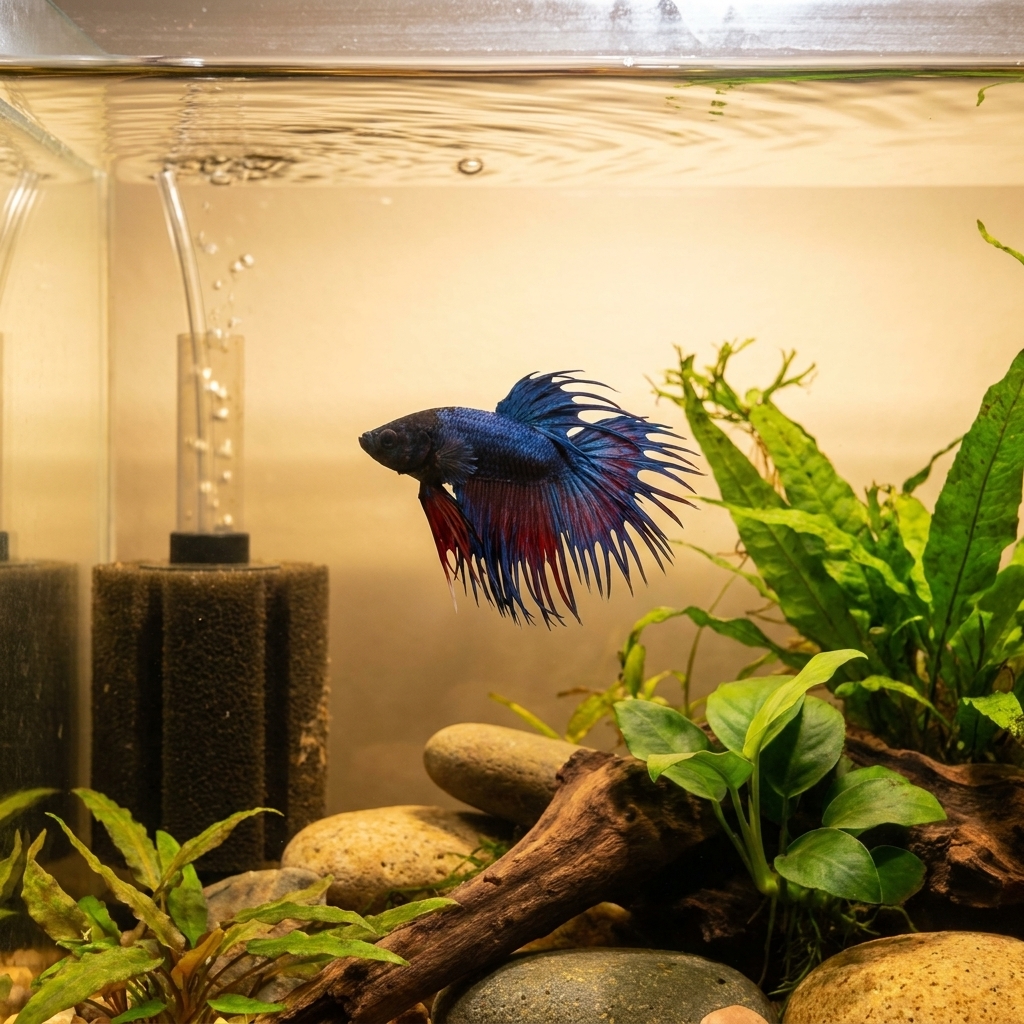
The short answer: what a betta tank needs
- Stable temperature: around 78 to 80 F for most bettas (a broader 76 to 82 F range is commonly used, but stability matters most).
- Calm circulation and oxygen exchange: light surface movement without blasting the fish.
- Biological filtration: a cycled filter where beneficial bacteria live.
- Enough water volume: so parameters do not swing wildly day to day.
- Safe resting and hiding spots: soft plants, smooth hardscape, and a place near the surface to chill.
Tank size: the upgrade that fixes a lot
Best all-around size: 5 to 10 gallons
If you want an “easy mode” betta tank, choose 5 gallons minimum, and consider 10 gallons if you have the space. More water equals more stability, which means fewer surprise ammonia spikes, fewer algae explosions, and less stress for the fish.
Can you keep a betta in 2.5 gallons?
You can keep water wet in 2.5 gallons, but it is rarely forgiving. Small tanks swing in temperature and water quality fast. If you are new, or if your home is cool in winter, 5 gallons is the minimum I recommend for consistent success.
Tank shape matters
- Long and shallow beats tall and narrow. Bettas breathe air occasionally and appreciate easy trips to the surface.
- Skip bowls. Many bowls make heating, filtration, and routine maintenance harder, and their shape often limits surface area compared with a similarly sized long tank.
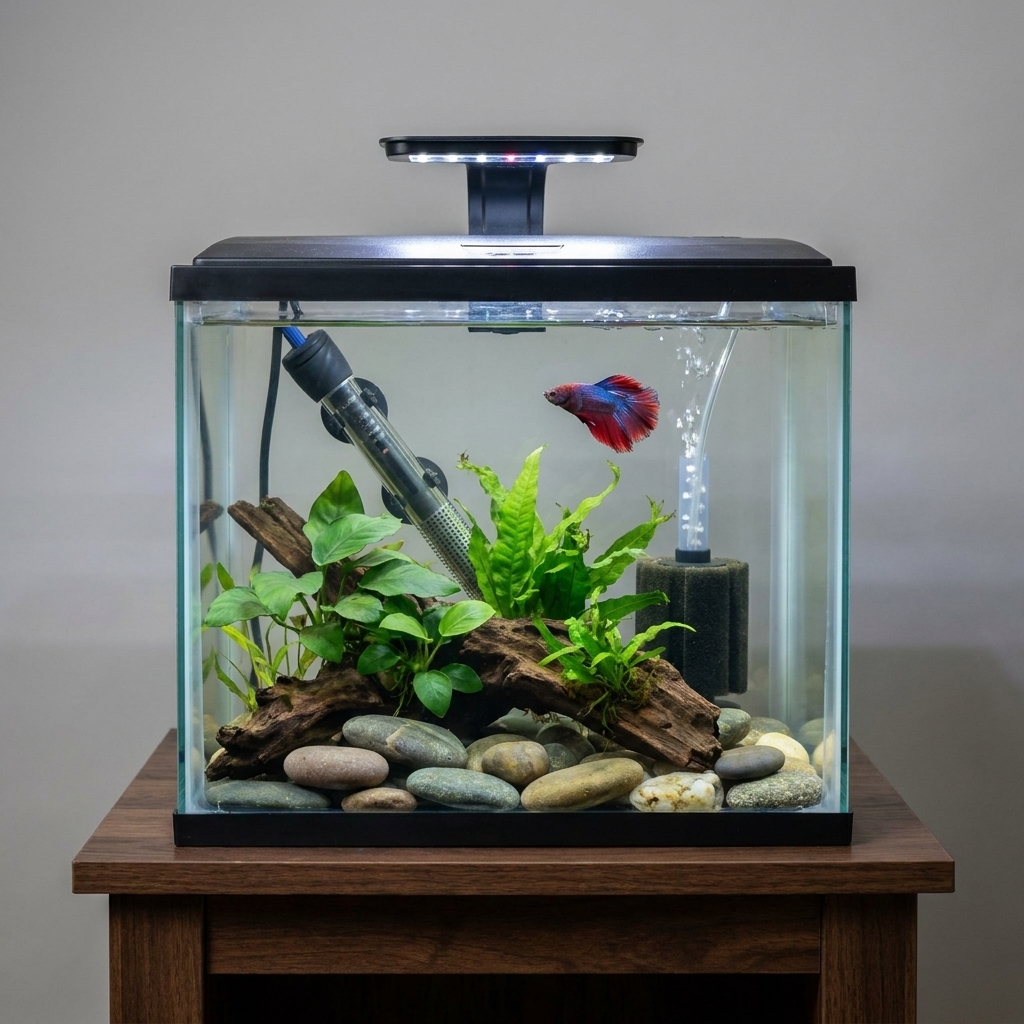
Lid or cover: non-negotiable
Bettas jump. Some jump once, and that is the end of the story. Use a proper lid or tight-fitting cover, and block any cable gaps with sponge or a small piece of plastic mesh.
A lid also helps keep warm, humid air above the water line, which is important for labyrinth fish like bettas that gulp air at the surface.
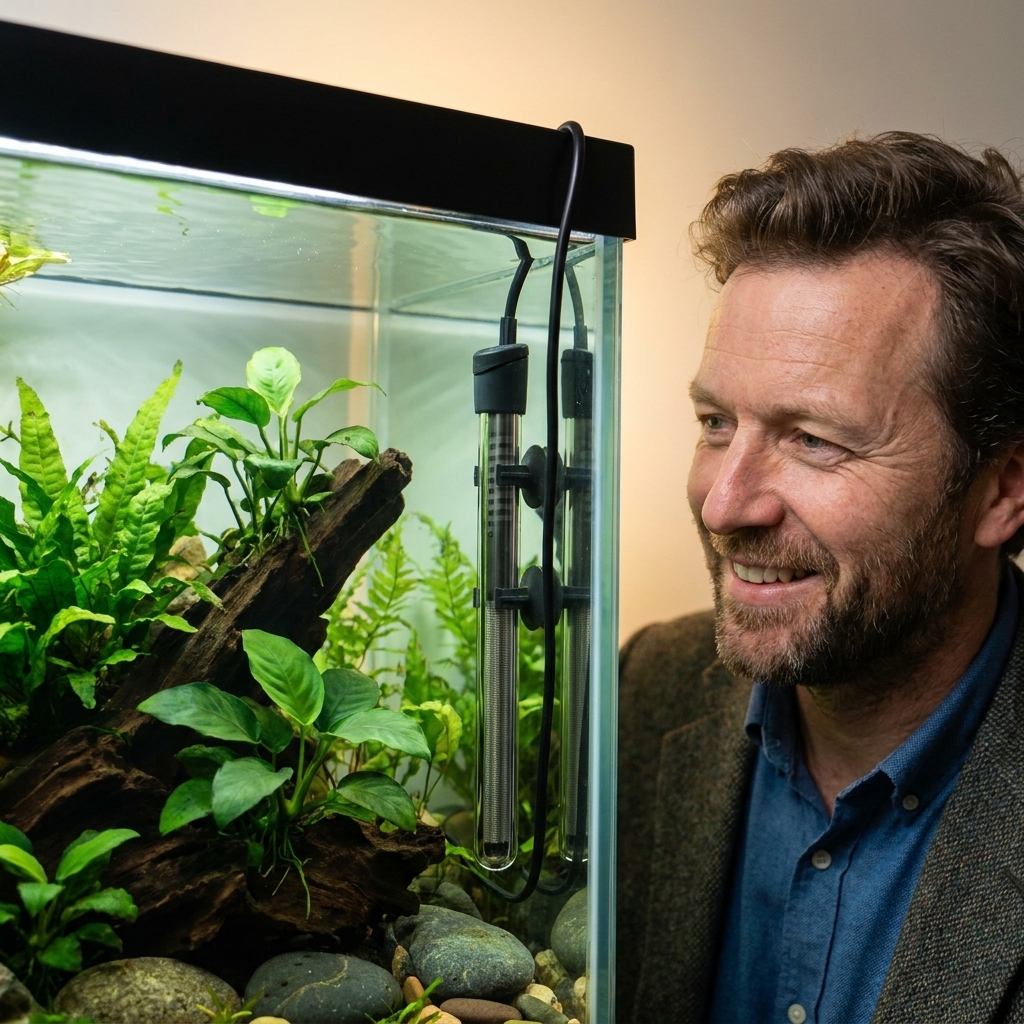
Heater: the overlooked life-support device
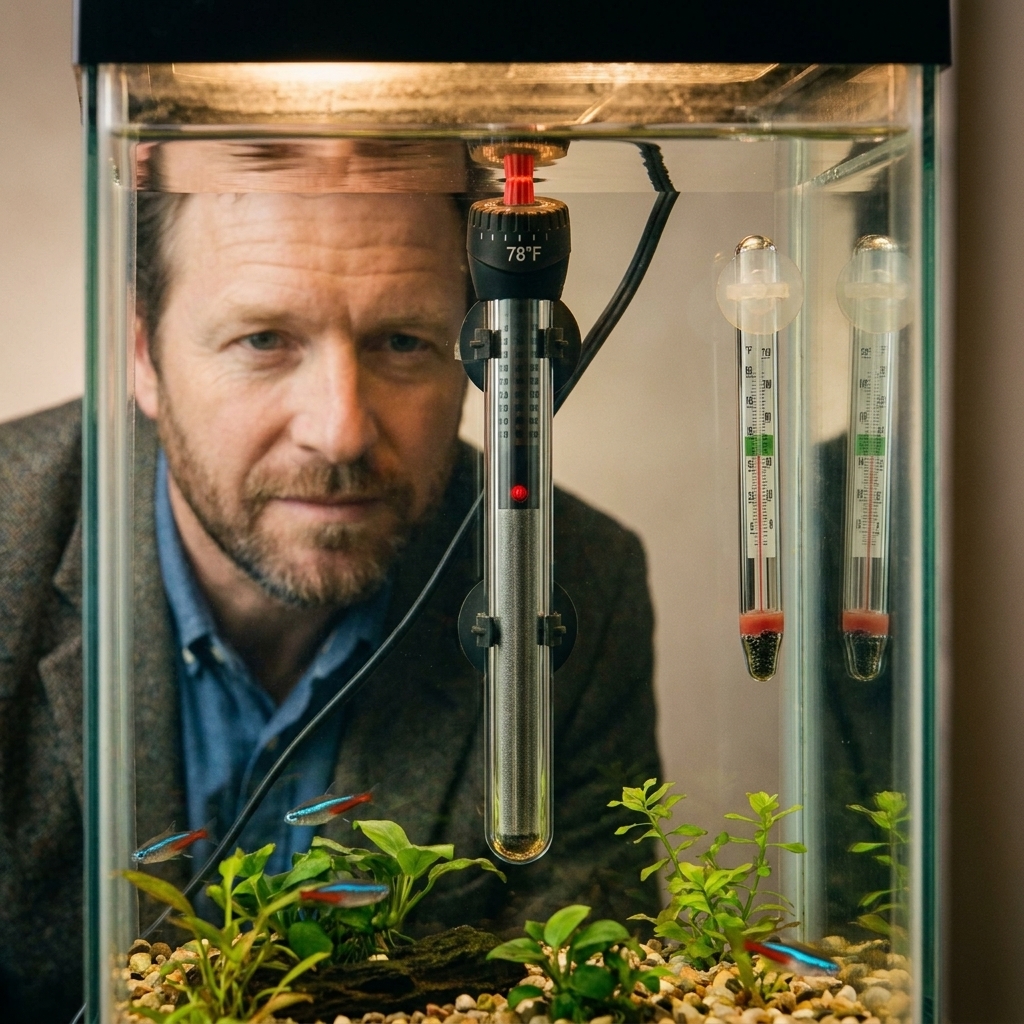
Get an adjustable heater
Preset heaters often run too cool or overshoot in small tanks. An adjustable heater lets you dial in a stable temperature and match your room conditions.
Heater size guideline
- 5 gallons: 25W to 50W (50W is safer in cooler rooms)
- 10 gallons: 50W
- 15 to 20 gallons (betta with tankmates): 75W
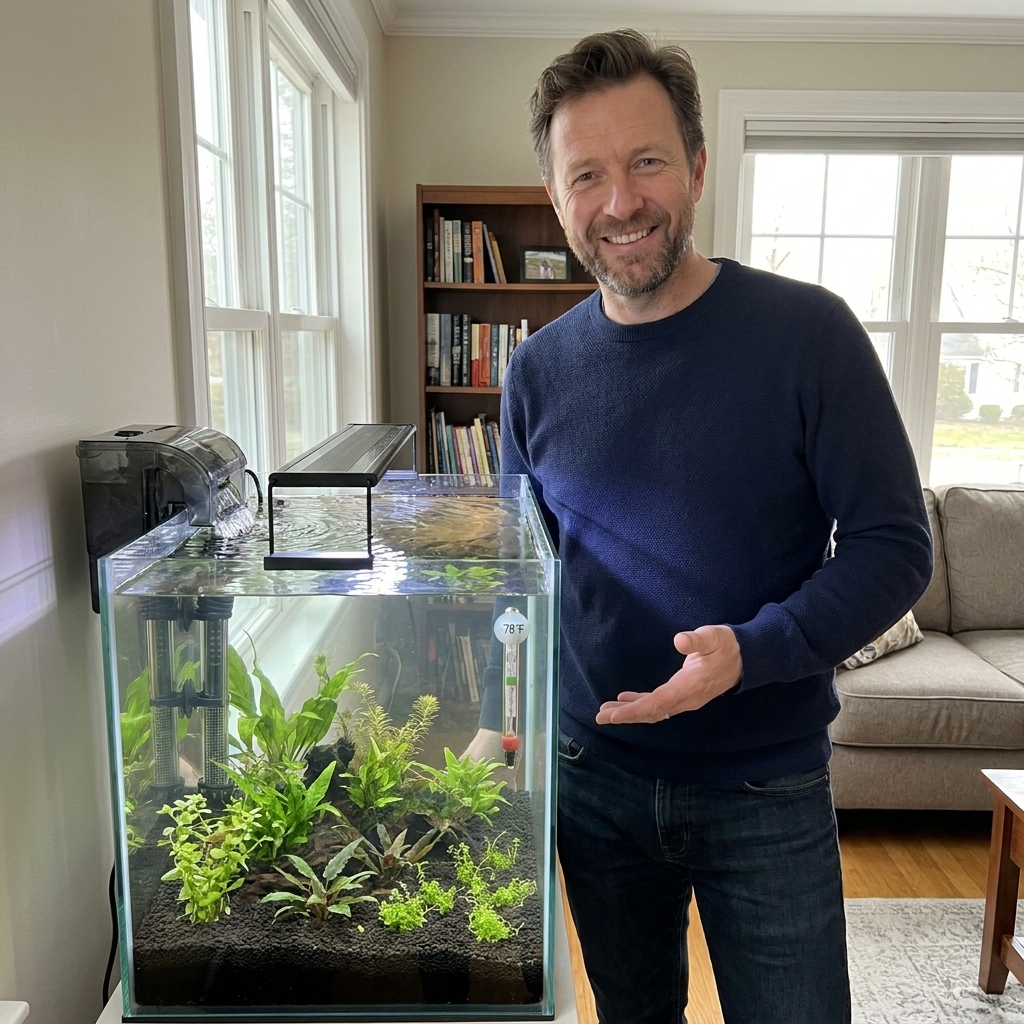
Pair it with a simple glass thermometer. I trust thermometers more than heater dials.
Filter: calm flow, strong biology
Most betta problems I see from “filtered” tanks come from one of two issues: the flow is too strong, or the filter has no mature bacteria yet. You want steady biological filtration with a soft current.
If you only remember one thing here, make it this: your betta should be able to cruise normally, not fight the tank.
Best filter types for bettas
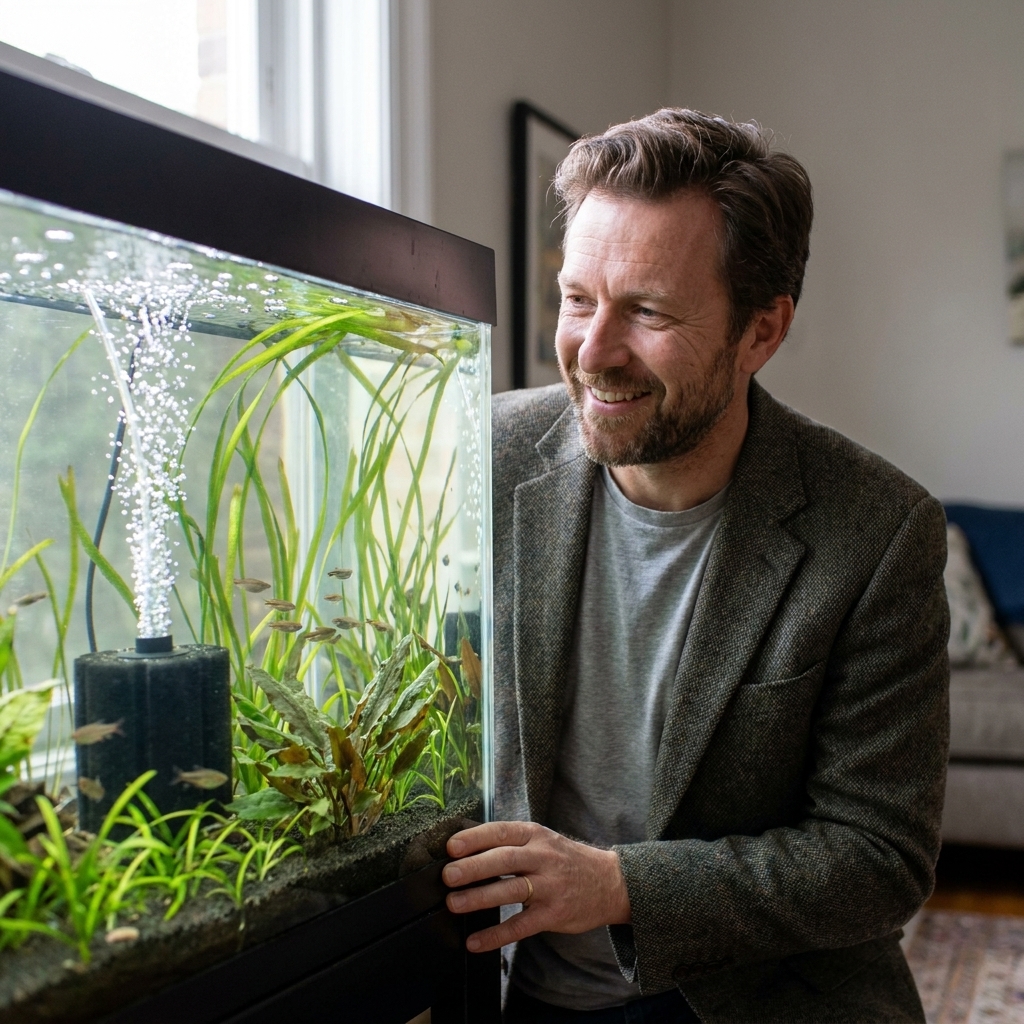
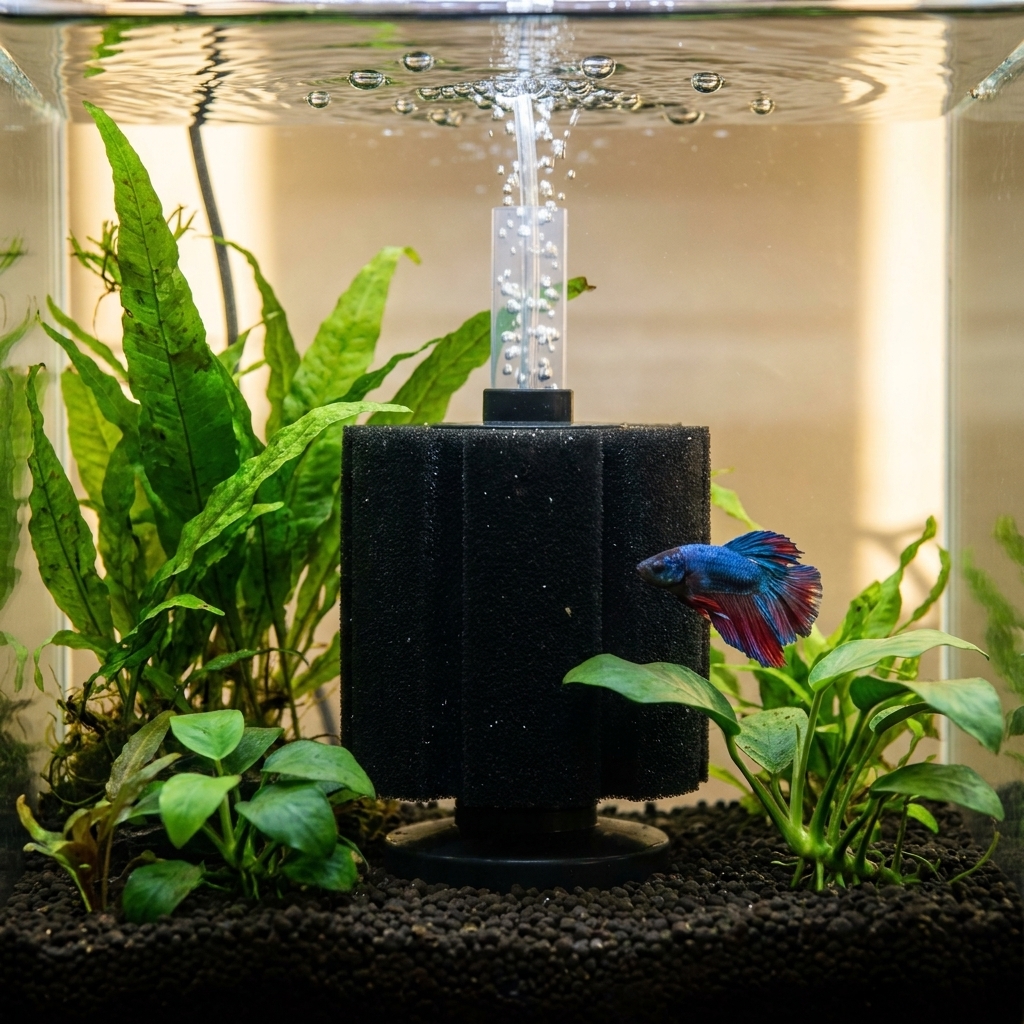
- Sponge filter (my favorite): very gentle, great bio media, cheap, and easy to clean. Needs an air pump and airline tubing.
- Hang-on-back (HOB) filter: works well if the flow can be reduced and the intake is protected. Add a sponge prefilter on the intake and baffle the outflow if needed.
- Small internal filter: can be fine if it has adjustable flow and you keep it on the lowest setting.
Flow should move the surface, not shove the fish
A good betta filter creates light surface agitation and mild circulation. Your betta should not get pinned to one side of the tank or avoid half the aquarium just to escape the current.
Fin type matters
Long-finned bettas (like many veiltails and halfmoons) get tired faster and usually need gentler flow than plakats (short-finned bettas), which tend to be stronger swimmers. Either way, calm water is the goal.
Avoid these common filter mistakes
- Replacing cartridges monthly. A big chunk of your biofiltration lives in the media. Replacing it can set back the cycle. Instead, rinse sponges or media in old tank water during a water change.
- Running carbon all the time. Carbon is optional. It is useful temporarily (like after medication) and can help polish water in some setups, but for daily use, sponge and bio media are the priority.
Air pump: only if your filter needs it
If you choose a sponge filter, you need an air pump, airline tubing, and a check valve to prevent back-siphon during power outages. Add a small air control valve so you can fine-tune bubble rate and keep things calm.
If you use a HOB or internal filter, you usually do not need an air pump. Bettas breathe air, but they still benefit from oxygenated water. Gentle surface movement from the filter is typically enough.
Substrate: easy cleaning and plant support
Low-stress options
- Sand: bettas look great over sand, waste stays on top, easy to siphon gently.
- Fine gravel: classic, forgiving, widely available.
- Plant-focused substrates: helpful if you want heavier planting, but not required.
If you are going planted, you can keep it simple: sand or fine gravel plus root tabs under heavy root feeders like swords and crypts.
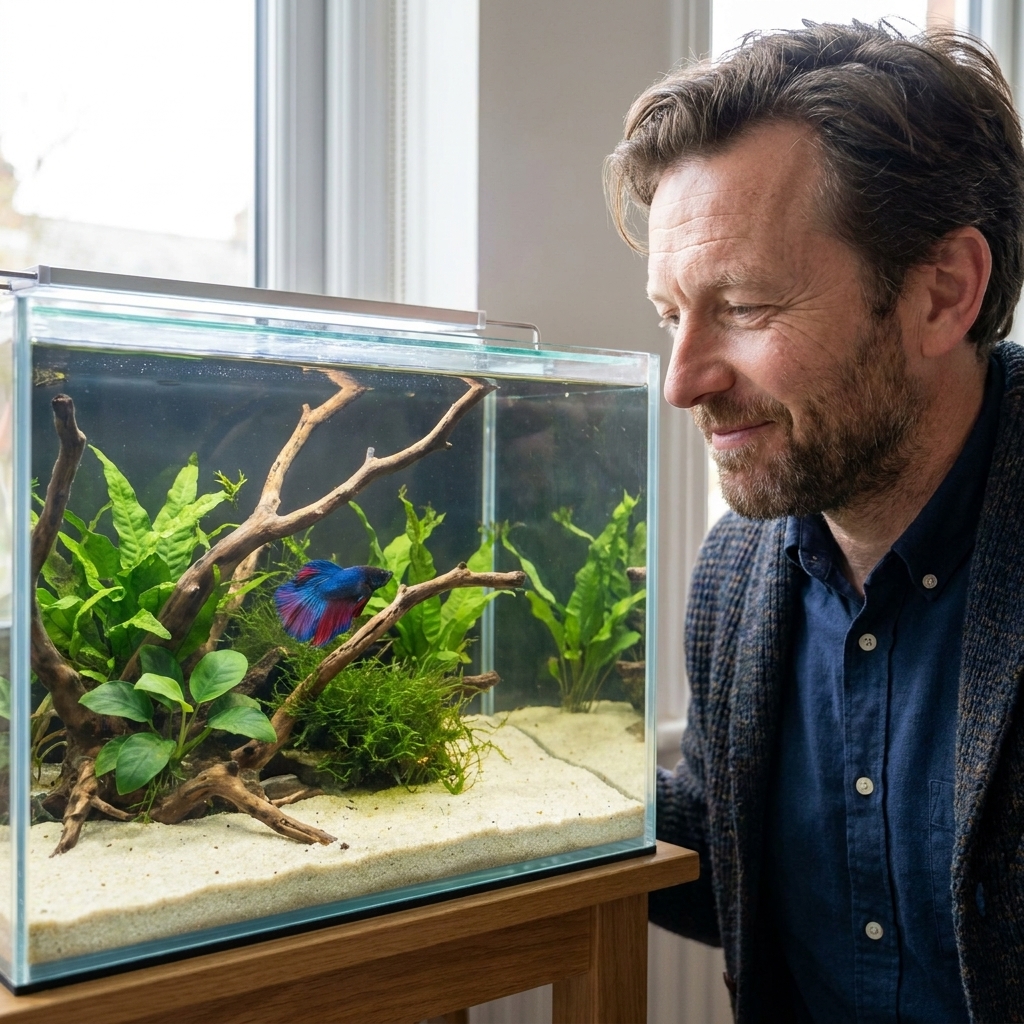
Light: enough for plants, not algae chaos
Bettas do not need intense light, but plants do. A basic LED aquarium light is perfect. Start with 6 to 8 hours per day on a timer.
- Beginner-friendly tip: A cheap outlet timer prevents the “oops, I left the light on all day” algae phase.
- Betta comfort tip: Provide shaded areas with floating plants or taller stems so your betta can get out of the spotlight.
Decor and plants: a calm territory
In the wild, bettas weave through dense vegetation. A good betta aquascape gives them cover, perches, and a few open lanes for cruising.
Best live plants for betta tanks
- Anubias (attach to wood or rock, slow growing)
- Java fern (attach, hardy, low light)
- Cryptocoryne (great midground, low demand)
- Amazon frogbit or Salvinia (floating cover, nitrate help)
- Moss (shrimp-friendly if you ever add shrimp later)
Hardscape and hides
- Driftwood: provides cover and can gently tint water, which many bettas seem to appreciate.
- Smooth caves: choose fish-safe décor without sharp edges.
The pantyhose test for sharp décor
If a piece of décor can snag pantyhose, it can tear betta fins. Sand it down or skip it.
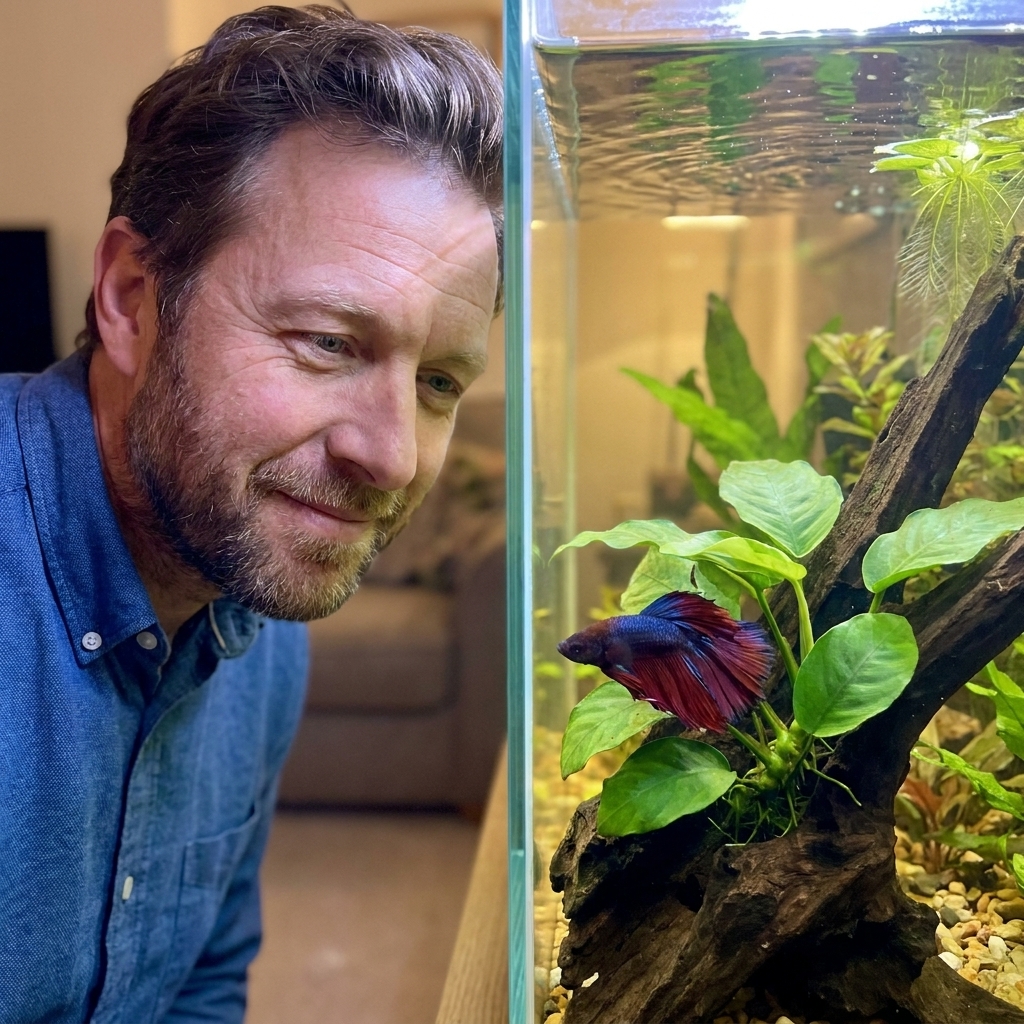
Water care gear: what keeps your betta healthy
A real liquid test kit
If you buy one thing beyond the tank and heater, make it a liquid test kit that measures ammonia, nitrite, nitrate, and pH. Strips are better than nothing, but liquid kits are far more reliable for cycling and troubleshooting.
Water parameter targets
- Ammonia: 0 ppm
- Nitrite: 0 ppm
- Nitrate: ideally under about 20 to 40 ppm (lower is better, especially in small tanks)
- pH: stable matters more than “perfect.” Do not chase pH with quick-fix chemicals.
Dechlorinator
Tap water needs a quality water conditioner that neutralizes chlorine and chloramine. Use it every time you add new water.
Gravel vacuum and bucket
A small siphon makes water changes quick and gentle, even in a planted tank. Use a dedicated aquarium bucket only.
Optional but helpful
- Bacterial starter: can help, but it does not replace patience or testing.
- TDS meter: useful if you are blending RO water, but unnecessary for most betta keepers.
Cycling: the step big-box advice skips
A filter is not “ready” when it turns on. It is ready when it is colonized by beneficial bacteria that convert ammonia into nitrite, then into nitrate. That process is the nitrogen cycle, and it is what prevents invisible poisoning in new tanks.
Best practice: fishless cycle
If you have not bought the betta yet, cycle the tank first. Add an ammonia source, run the filter and heater, and test until the tank can take a dosed amount (commonly about 1 to 2 ppm ammonia) down to 0 ammonia and 0 nitrite within about 24 hours, with nitrate rising.
If your betta is already home
Do a fish-in cycle carefully with frequent testing and water changes. The goal is always the same: keep ammonia and nitrite as close to zero as possible while the filter matures.
Acclimation: avoid sudden swings
When you bring your betta home, take a few minutes to acclimate. Float the container to match temperature, then gradually mix small amounts of tank water into the cup over 15 to 30 minutes. Sudden temperature and pH shifts are a fast way to stress a fish that is already having a big day.
Stocking: one betta, then go slow
For most beginners, the best betta tank is a single betta with plants and maybe a snail. Bettas are individuals. Some tolerate tankmates, some do not.
Common betta-compatible additions (tank size matters)
- Nerite snail: algae grazer, typically peaceful.
- Mystery snail: bigger bioload, fun personality, needs stable calcium and clean water.
- Shrimp: can work in heavily planted tanks, but many bettas will hunt them.
If you want a community tank, start at 15 to 20 gallons, research species carefully, and plan hiding spaces and escape routes.
The betta setup shopping list (essentials only)
- Tank: 5 to 10 gallons, long footprint preferred
- Lid: tight-fitting cover
- Heater: adjustable, properly sized
- Thermometer: glass or digital
- Filter: sponge filter plus air pump, or low-flow HOB with intake sponge
- Substrate: sand or fine gravel
- Light: basic LED plus timer
- Plants and safe décor: live plants strongly recommended
- Water conditioner: dechlorinator
- Test kit: liquid ammonia, nitrite, nitrate, pH
- Maintenance tools: siphon and dedicated bucket
Nice-to-have upgrades (after the basics)
- Prefilter sponge: protects fins and improves bio filtration on HOB intakes
- Floating betta log or leaf hammock: easy surface resting spot
- Background film: reduces stress by limiting reflections
- Root tabs and easy fertilizer: for better plant growth
- Quarantine tank: a simple spare tub and sponge filter can save lives long-term
Common betta tank mistakes I see
- Cold water. A betta kept at 72 to 74 F often becomes sluggish, stressed, and more prone to disease.
- Too much flow. Torn fins and constant “fighting the current” stress.
- Uncycled tanks. New tank syndrome is still one of the most common silent killers.
- Overfeeding. Most bettas need small portions, not constant pellets.
- Sharp plastic plants. Silk or live plants are much safer.
Maintenance: keep it simple
Once the tank is cycled, a consistent routine beats heroic deep-cleaning.
- Water changes: 25 to 40 percent weekly is a solid baseline for a cycled 5 to 10 gallon tank, then adjust based on nitrate readings, feeding, and plant growth.
- Filter cleaning: do not sterilize it. Swish sponges or media in a bucket of removed tank water, then put it back. If you run a sponge filter, squeeze it out gently in old tank water when flow slows.
FAQ
Do bettas need a bubbler?
Not usually. If your filter creates gentle surface movement, that is enough. If you run a sponge filter, the bubbles are part of the filtration, so yes in that case.
Do bettas like still water?
They like low flow, not stagnant water. A cycled filter and mild surface agitation keep oxygen exchange healthy and prevent dead zones.
What temperature should a betta tank be?
Most do best around 78 to 80 F, and many keepers do well anywhere in the 76 to 82 F range. Stability matters as much as the exact number.
How often should I change water in a 5 gallon betta tank?
It depends on stocking, feeding, and plant mass. As a baseline, 25 to 40 percent weekly is a solid routine once the tank is cycled. Use your nitrate readings and overall cleanliness to fine-tune.
Is a 10 gallon too big for a betta?
No. A 10 gallon is excellent. Just keep the current calm, provide plants and hiding spots, and keep a lid on.
My simplest reliable betta setup
If you want the least drama with the most payoff, here is the setup I point friends toward:
- 10 gallon tank with lid
- 50W adjustable heater plus thermometer
- Sponge filter with a quiet air pump and control valve
- Sand or fine gravel
- Anubias, java fern, crypts, and one floating plant
- LED light on a timer, 7 hours per day
- Liquid test kit and dechlorinator
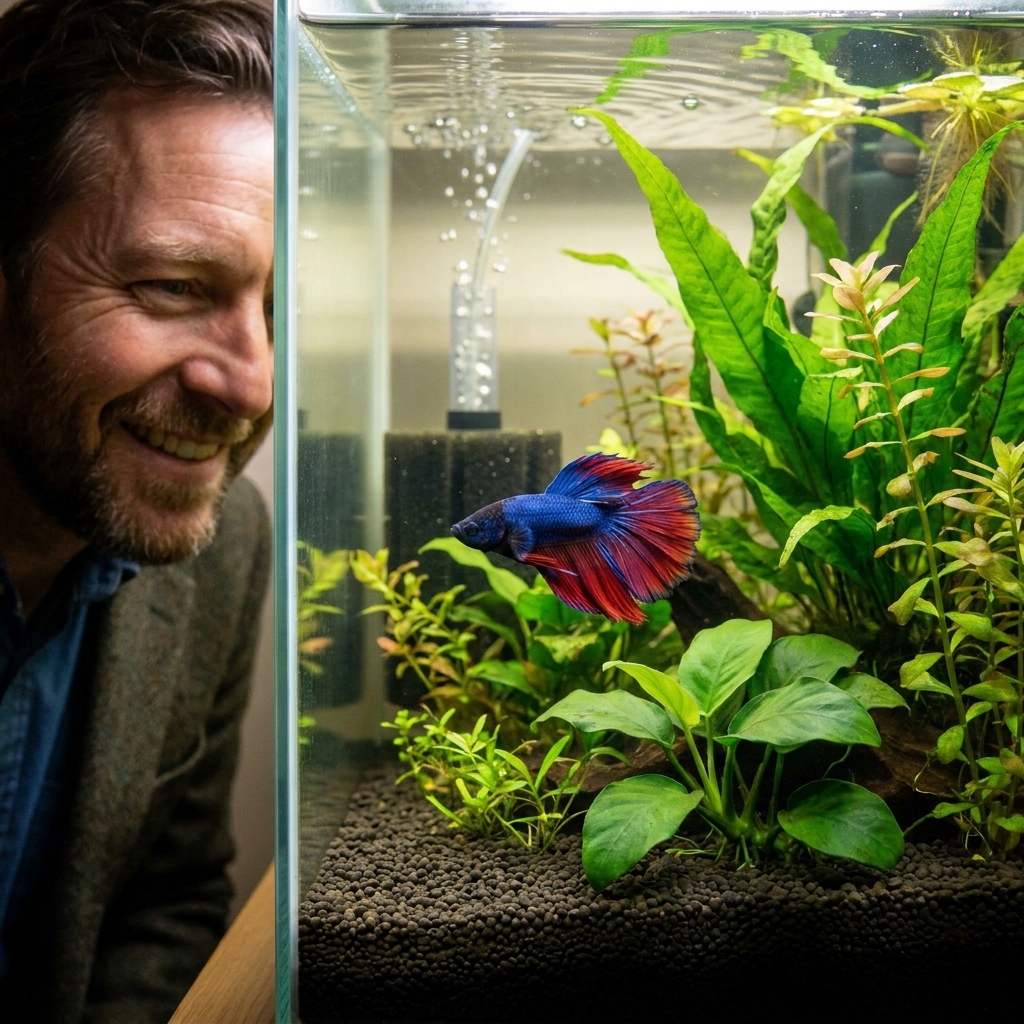
That combination creates warm, stable, calm water that lets a betta do what it does best: explore, build nests, nap on leaves, and flare at its own reflection like it owns the place.